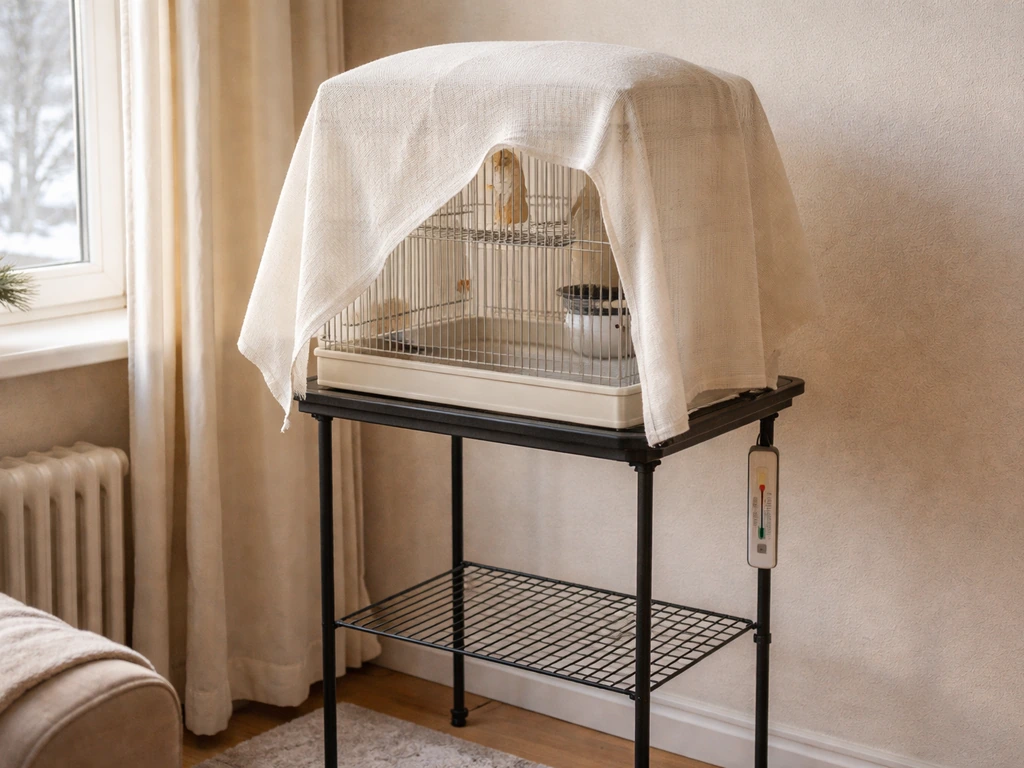
Yes, you can cover your bird cage with a blanket, and for most birds it genuinely helps. Done right, it creates the 10 to 12 hours of darkness most pet birds need each night, muffles household noise, and reduces drafts. The key word is 'right.' A thick, poorly ventilated blanket draped over every side of the cage can trap heat, block airflow, and turn a good idea into a health risk. Use a breathable fabric, leave at least one side partially open, and watch your bird's reaction the first few nights. That is basically the whole framework, and everything below fills in the details.
Can I Cover My Bird Cage With a Blanket Safely

Maya Bennett
9 Jun 2026
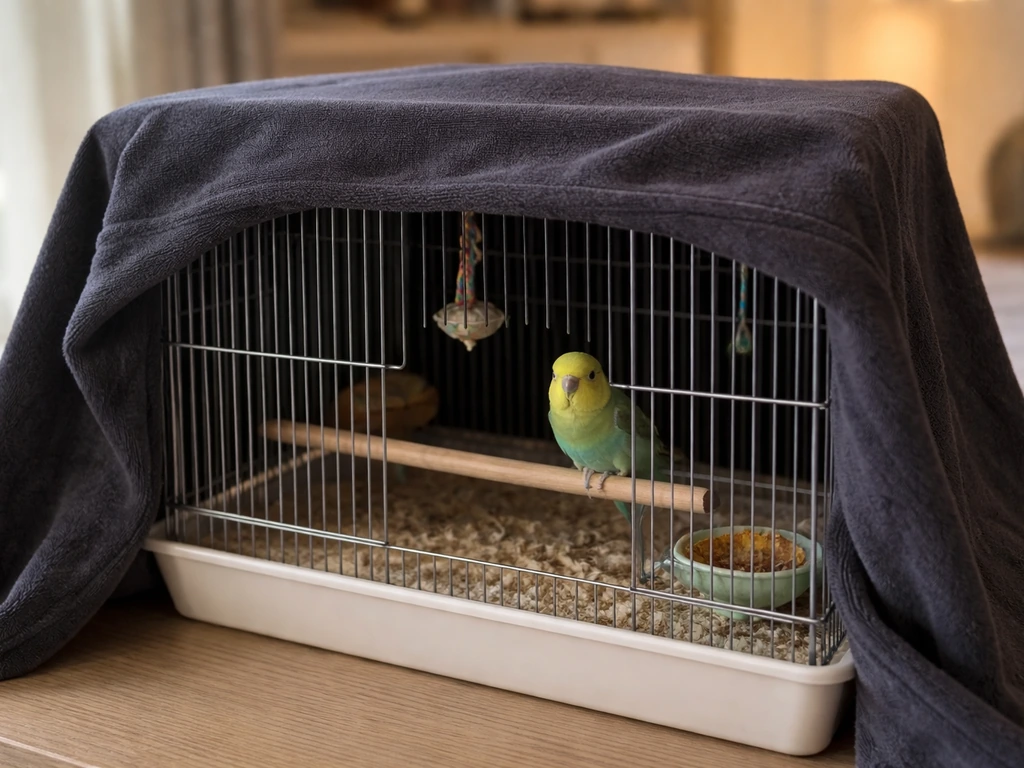
When covering a bird cage actually helps (and when it doesn't)
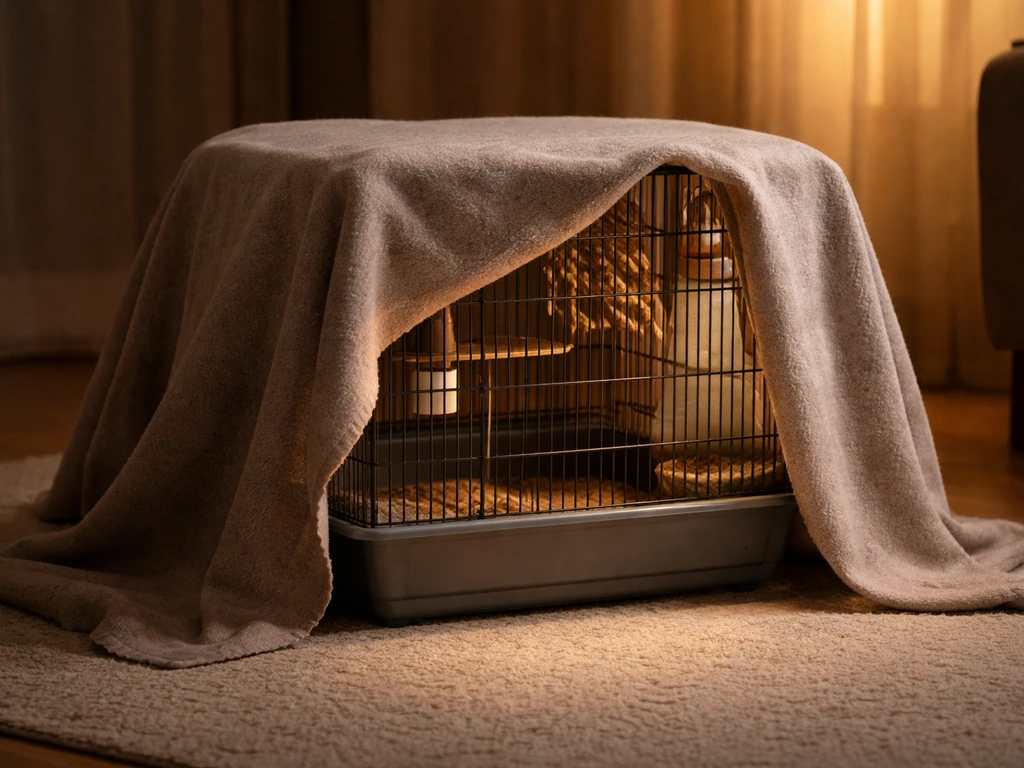
Covering works well in a handful of situations. The most common one is sleep. Most pet birds need 10 to 12 hours of uninterrupted darkness each night, and if your living room lights stay on until midnight, a cover solves that problem immediately. It also helps if your bird startles easily at shadows, passing headlights, or late-night TV movement. A cover cuts down that visual stimulation and keeps the cage environment calmer and more predictable.
Draft control is the second big use case. If the cage sits anywhere near a window, a door that opens to cold air, or an HVAC vent, a cover on the exposed sides acts as a simple buffer. That said, the better long-term fix is repositioning the cage entirely. Purdue's veterinary guidance and the Merck Veterinary Manual both flag HVAC vents and drafty windows as genuinely dangerous spots for birds, not just inconvenient ones. A blanket helps in the short term, but it is not a substitute for good placement.
Covering helps less when your bird is already stressed, sick, or running hot. If your bird is ill, a partial cover can provide calming privacy during short-term supportive care, but a full cover over a sick bird who needs monitoring is the wrong call. Similarly, in summer or in a warm room, adding a blanket can push temperatures toward a dangerous range, especially for species like budgies and cockatiels that are sensitive to heat.
If you are trying to figure out how to heat a bird cage safely, focus on safe room temperature changes or approved heating methods instead of trapping heat under a cover a blanket can push temperatures. And if you have never covered your bird before and it panics, flaps hard, or vocalizes in distress when you do, stop. blank" rel="noopener noreferrer">Purdue's husbandry guidance is direct about this: if covering causes agitation, do not cover the cage.
Safety rules you need to follow every time
Ventilation comes first
The Association of Avian Veterinarians emphasizes that good ventilation is essential to a bird's health. When you cover a cage, you are potentially restricting the air exchange that keeps oxygen fresh and prevents moisture buildup. Always leave at least one full side of the cage uncovered so air can move freely. Do not wrap the blanket under the cage or tuck it tight against the bars on all four sides. Think of the cover as a windbreak, not a tent.
Temperature is a real emergency risk
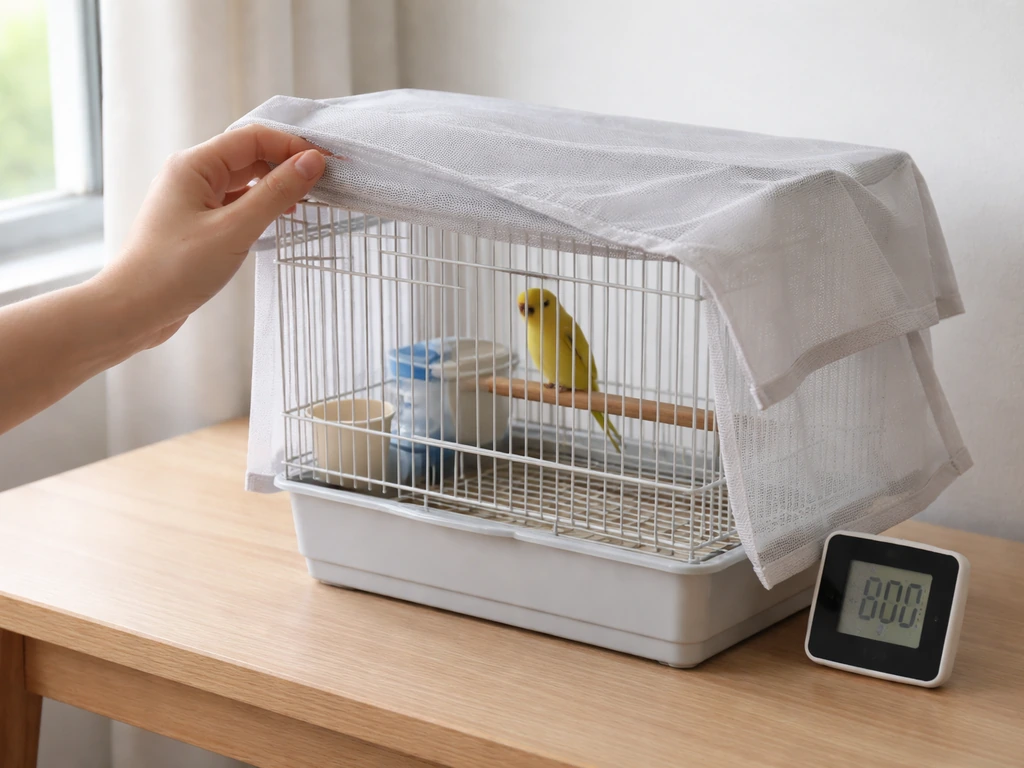
Overheating in birds is not a slow process. If your bird's feet and beak feel hot and it is panting with an open mouth, that is an emergency and you should contact a vet immediately. That warning comes directly from the Merck Veterinary Manual.
A cover that traps heat can accelerate this, especially in a warm room or during summer. If your room temperature is above 80°F (27°C), skip the full cover entirely or switch to a lightweight single layer of breathable fabric with the bottom fully open. To keep a bird cage warm safely, focus on partial, breathable coverage and good placement rather than trapping heat under a thick blanket skip the full cover entirely.
Keep a thermometer near the cage so you actually know what the temperature is doing overnight.
You need to be able to see your bird
A completely opaque cover from top to floor means you cannot check on your bird without disturbing it. Leave the front or bottom front portion accessible so you can do a quick visual check without lifting the whole cover. If you hear unusual sounds at night, labored breathing, or frantic flapping, you want to be able to look in fast.
Picking the right blanket: material, weight, and size
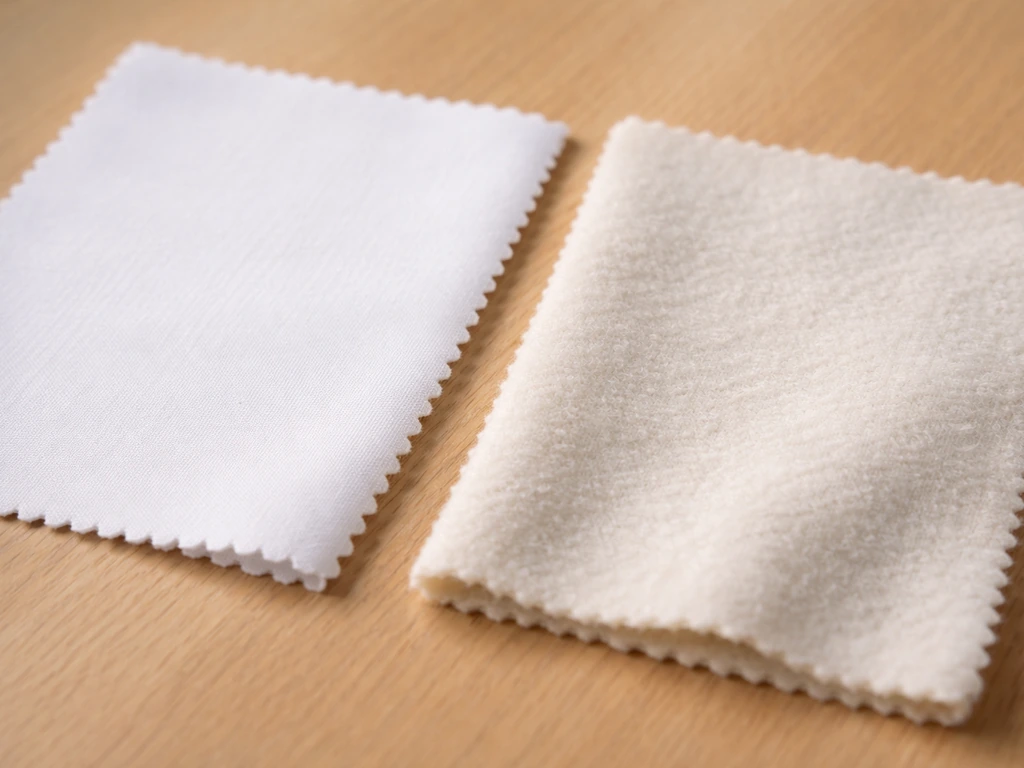
Material matters more than most people think. The goal is something breathable, lint-free, and tightly woven enough that your bird cannot pull threads through the bars. Loosely knit or loosely woven fabrics are the biggest hazard because a bird can grab a thread, pull it through the cage bars, and get a toe, foot, or neck tangled. That is not a fringe concern. blank" rel="noopener noreferrer">Safety documents specifically flag threads and holes in fabric covers as entanglement hazards, and it is the main reason a random old sweater or fluffy knit blanket is a bad choice.
| Material | Breathability | Chew/Thread Risk | Recommended? |
|---|---|---|---|
| 100% cotton (tight weave, like canvas or muslin) | Good | Low if tight weave | Yes |
| Fleece (no-pill, tightly knit) | Moderate | Low to moderate | Use with caution |
| Loosely knit wool or acrylic | Good | High (loose threads) | No |
| Polyester fleece (loose/fluffy) | Poor | High (fibers) | No |
| Electric blanket (any) | Poor | Fire/burn hazard | Never |
| Purpose-built cage cover (breathable fabric) | Designed for it | Low | Best option |
Electric blankets deserve a hard no. They create an overheating and fire risk that no benefit offsets. Stick with unheated fabric only. For size, you want the blanket to drape over the top and down the sides you are covering without hanging loose and bunched up at the bottom. A cover that pools on the floor creates a climbing and entanglement hazard. Measure the cage height and width before you grab something from the linen closet.
How to actually cover the cage: partial vs. full step-by-step
Partial coverage is the approach I recommend for most setups, especially at first. It gives your bird the darkness it needs while keeping airflow open. Full coverage is fine for birds already comfortable with it, in a well-ventilated room, with a breathable fabric. Here is how to do each.
Partial coverage (recommended for beginners and warm rooms)
- Inspect the blanket before use. Check for loose threads, holes, or pulled fabric. If you find any, use a different piece.
- Drape the blanket over the top of the cage and down the back and one or both side panels. The front should remain at least half open.
- Leave the bottom of all sides open by at least 4 to 6 inches so air can flow in from below.
- Do not tuck, clip, or tie the blanket tightly to the bars. It should hang loosely so your bird cannot pull it through the cage and so air is not sealed in.
- Check that no part of the blanket is accessible from inside the cage. If your bird can reach it through the bars, either switch to a tighter weave or reposition the fabric.
- Note the room temperature and check on your bird 15 to 20 minutes after covering for the first few nights.
Full coverage (for birds accustomed to it, in ventilated rooms)
- Use a single layer of tightly woven cotton only. No polyester, no fleece for full coverage.
- Drape over all sides and the top, but leave a 6-inch gap at the bottom all around.
- Make sure the front of the cage can be accessed quickly without lifting the entire cover.
- Place a small thermometer inside or just outside the cage to monitor temperature.
- Never use full coverage if room temp is above 80°F, during illness, or if your bird is new to being covered.
Troubleshooting common problems
Your bird is chewing the blanket
If your bird is actively pulling at or chewing the cover, that is a sign the fabric is too close to the bars. Reposition so the blanket hangs a few inches away from the cage walls, or switch to a purpose-built cover that sits further from the bars. If the chewing continues, move to a fitted cage cover that does not drape loosely. Ingesting synthetic fibers or getting a thread looped around a toe can become a vet emergency fast.
Your bird seems stressed or panicked under the cover
Some birds, especially those new to covering, will flap, vocalize loudly, or act frantic when the cage goes dark. Start with partial coverage only, and try covering just the back and top for a few nights before adding the sides. If the bird remains distressed after a week of gradual introduction, covering is not the right tool for this bird. A dim night light and good cage placement (away from drafts and light sources) may work better.
The cage feels warm in the morning
If you notice warmth under the cover, condensation on the bars, or your bird is panting when you uncover it in the morning, the cover is trapping too much heat. Switch to partial coverage immediately, use a lighter single-layer fabric, or stop using the blanket altogether until the room cools down. Panting, open-mouth breathing, and hot feet or beak are heat stress signs that warrant immediate action and potentially a vet call.
Condensation and mold on the cover or bars
Moisture buildup under the cover is a sign of poor airflow and is a mold risk for both the cage and your bird's respiratory health. To increase humidity in a bird room, focus on safe, monitored moisture sources and avoid creating condensation under cage covers. This usually happens when the cover is too thick or when all sides are fully sealed. Open up more ventilation gaps, use a lighter fabric, and wash the cover weekly. If you see visible mold on the fabric, replace it. Do not just wash it and reuse it.
When a blanket isn't the right tool
A purpose-built cage cover is almost always a better choice than a repurposed blanket. Designed covers are sized to fit, made from breathable fabric, and sit at the right distance from the bars to minimize chewing access. They also tend to be easier to wash and inspect. If you are covering the cage nightly, investing in a proper cover is worth it.
For draft control specifically, repositioning the cage is more effective than any cover. Keeping the cage away from windows, exterior doors, and HVAC vents eliminates the draft problem at the source rather than adding a layer on top of it. Seasonal warmth is a related topic worth thinking through carefully: covering a cage does add a small amount of insulation, but it is not a reliable heating solution. To learn the best winter approach, see the detailed steps for how to cover bird cage in winter safely without trapping too much heat. If keeping your bird warm through winter is the goal, a dedicated ceramic heat panel or safe heating approach is the right tool, not a blanket.
A dim night light can be a good alternative for birds that panic in full darkness. A low-lumen bulb on a timer keeps the room just light enough that your bird can reorient if it startles, without disrupting its sleep cycle. Blackout curtains near the cage, rather than on the cage itself, can also block early-morning light without any ventilation risk. And for birds that need light therapy or close health monitoring, skip the cover entirely and focus on noise reduction and consistent lighting schedules instead.
Your safety checklist before covering tonight
- Fabric is tightly woven cotton or a purpose-built cover (no loose knits, no electric blankets, no fleece with loose fibers)
- The blanket has been inspected for loose threads, holes, or worn patches
- At least one full side and the bottom 4 to 6 inches are left open for airflow
- The fabric cannot be reached through the bars by your bird
- Room temperature is below 80°F and you have a thermometer nearby
- The cage is not positioned directly next to an HVAC vent, window, or exterior door
- You can access the front of the cage quickly without removing the entire cover
- Your bird is healthy and not showing any signs of illness or respiratory distress
- You plan to check on your bird 15 to 20 minutes after covering for the first several nights
- If your bird shows stress, panting, or refuses to settle, you are ready to stop and try a different approach
Start tonight with partial coverage on just the back and top, give your bird a few nights to adjust, and build from there based on what you observe. Most birds adapt quickly and genuinely sleep better with a properly ventilated cover in place. The ones that do not will tell you clearly in the first few nights, and that is useful information too.
FAQ
How often should I wash the blanket or cage cover I use?
If you cover your bird nightly, wash the fabric weekly (or sooner if it smells musty). After washing, let it fully dry before reuse, and keep an eye out for loose threads or pilling that could pull through the bars.
Can I cover only part of the cage, like the top and one side, instead of leaving one entire side open?
Yes, partial coverage is usually the safest approach. Aim to keep at least one full side area clearly exposed for airflow, avoid wrapping the blanket around the cage, and ensure the cover does not touch or bunch against the bars in ways your bird can grab.
What if my bird gets tangled in the fabric or pulls it down?
Stop using that cover immediately. Untangle carefully without yanking, check toes and feet for constriction, and look for redness or swelling. If a toe or foot appears trapped or you cannot safely free the bird, contact an avian vet promptly.
Is it okay to use a patterned blanket or one with loose fringe on the edges?
Avoid anything with fringe, tassels, or loose decorative edges. Those details increase entanglement risk and are harder to secure so they stay away from the bars.
Can I cover the cage during the day for naps?
Often yes, but only if your bird still has consistent airflow and temperature. Use partial coverage, avoid covering during active feeding or for long periods when you need to monitor health, behavior, or droppings.
Should I cover the cage if I’m using a ceiling fan or running HVAC at night?
If airflow is coming from a vent, a cover can worsen draft issues in the wrong direction. Keep at least one side exposed and confirm your bird is not getting cold blasts or overheating, if you feel strong airflow near the cage, consider repositioning instead of adding more fabric.
What’s the safest way to check on my bird without ruining sleep?
If your cover is leaving a front opening, use that access for quick checks. Look with minimal light changes (brief dim flashlight or dim phone light) and avoid repeatedly lifting the whole cover, because sudden changes can trigger panic flapping in some birds.
How can I tell the difference between a “scared” response and a heat-stress response?
Fear often looks like flapping, vocal distress, and frantic movement, while heat stress looks like open-mouth breathing, panting, hot beak or feet, and lethargy. If you see panting or open-mouth breathing, treat it as urgent and contact a vet.
If it’s cold in the room, should I use the blanket to provide warmth?
No, blankets are not a reliable heating method. If the room is cold, focus on safe room temperature control or approved heating options, and avoid thick full covers that trap heat. Use partial coverage only and monitor temperature with a thermometer close to the cage.
Is there a time when I should never cover the cage?
Don’t cover if your bird is actively sick and needs frequent monitoring, or if your bird repeatedly panics or escalates behavior when covered. Also avoid covering when the room is very warm, when you see condensation on bars, or when the fabric shows mold or damage.
Next Article
How to Keep a Bird Cage Warm in Winter Safely
Step-by-step winter setup for safe cage warmth: placement, draft barriers, humidity, and safest heat options with troubl