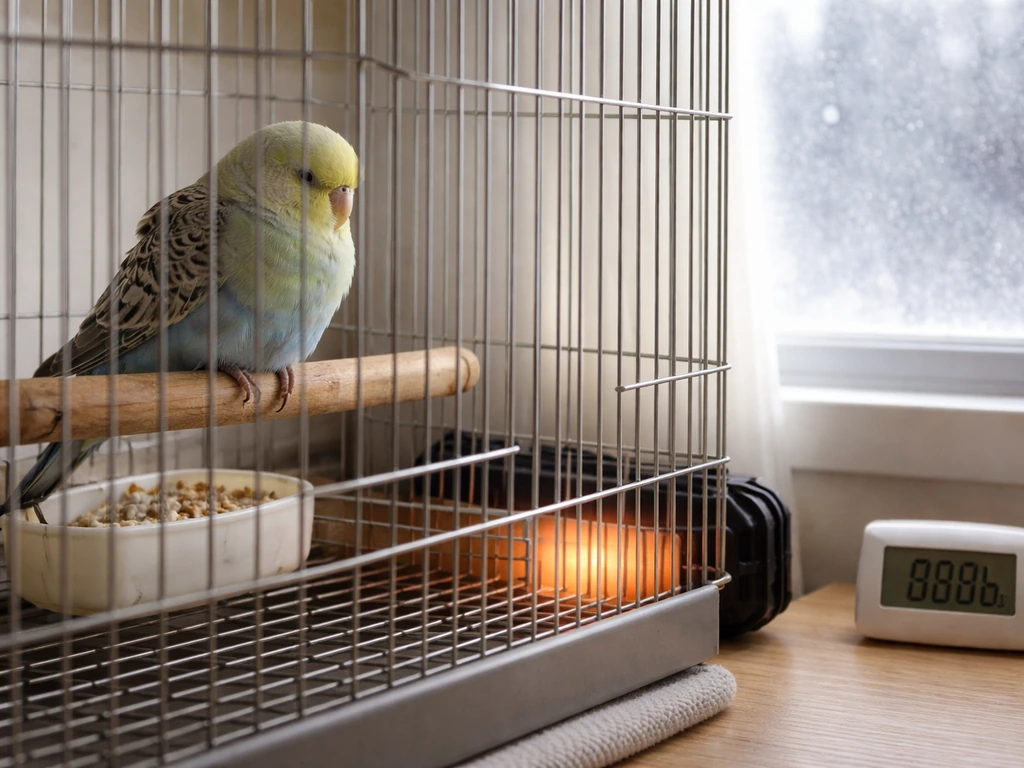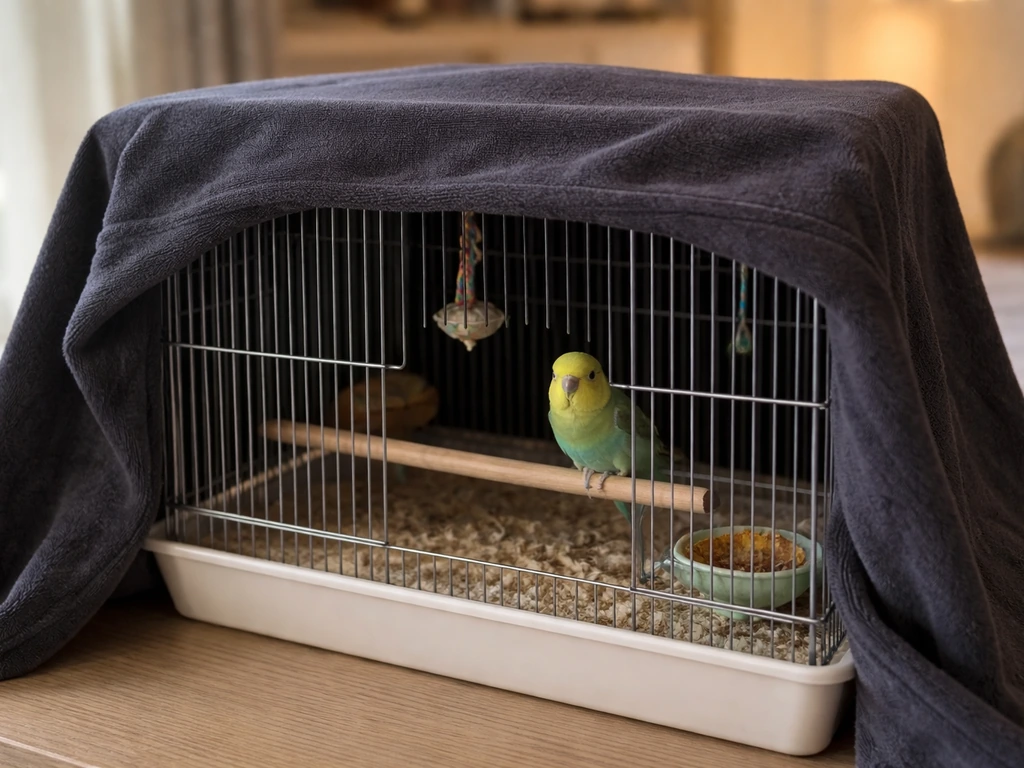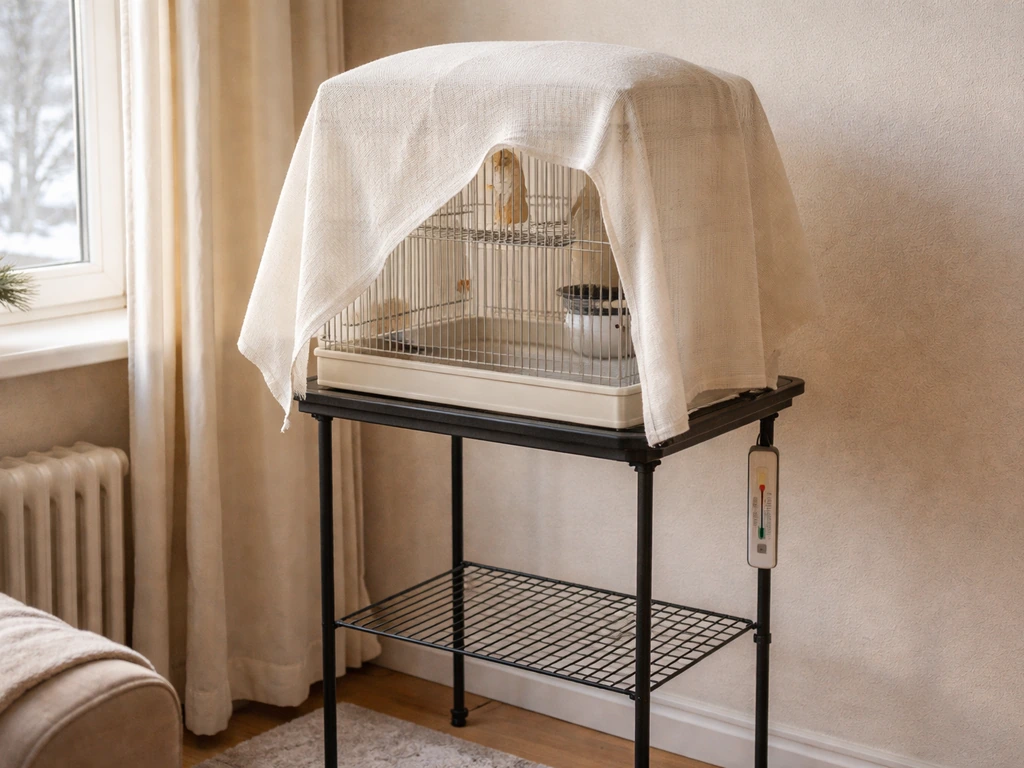
Yes, covering a bird cage does help retain warmth, but probably not as much as you're hoping. A cover acts like a windbreak and light insulator: it traps the ambient air the bird has already warmed with its body heat, blocks cold drafts, and slows the rate at which heat escapes the cage. What it can't do is generate new heat. If your room is already at 60°F, a cover will take the edge off but won't raise the cage interior to a safe 70–80°F on its own. So the real answer is: covers help, but they're a supplement to good room temperature management, not a replacement.
Does Covering a Bird Cage Keep It Warm Safely

Maya Bennett
2 Jul 2026
What covering the cage actually does for temperature
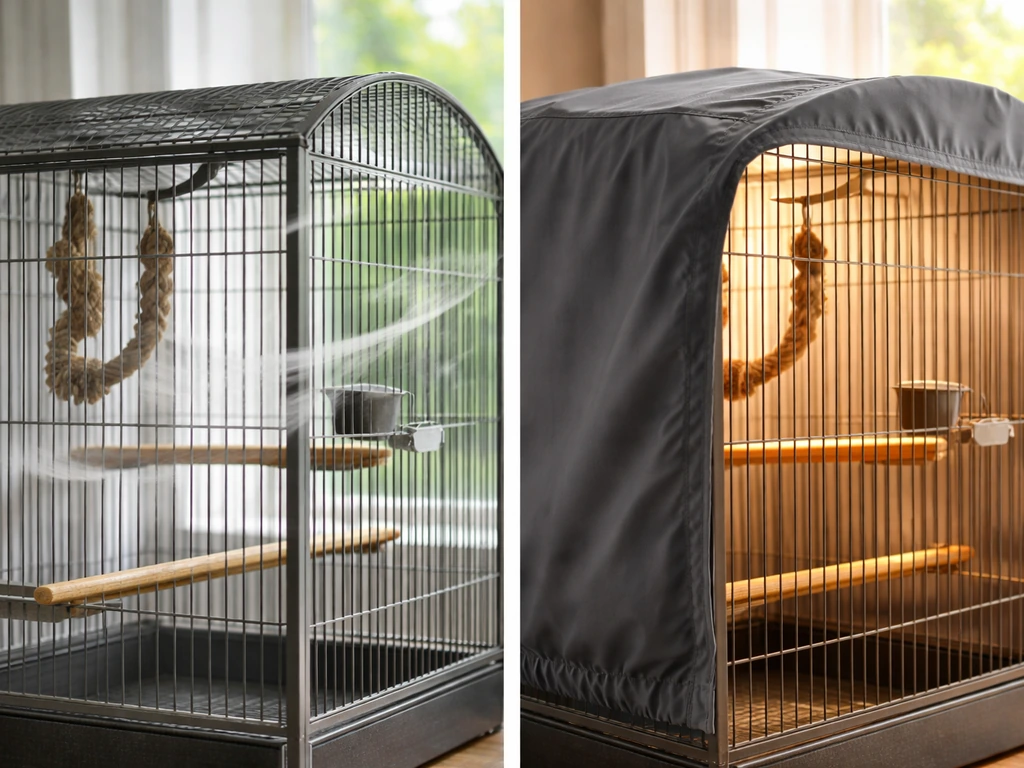
Think of a cage cover the same way you'd think of a windbreaker jacket. It doesn't generate heat, it just stops the air around your bird from being pulled away. Convective heat loss (cold air circulating through the bars) is one of the main ways a bird gets chilled, and a cover cuts that significantly. A snug but breathable cover can raise the microclimate inside the cage by roughly 2–5°F compared to an uncovered cage in the same room, mostly by trapping the bird's own radiated body heat and slowing airflow.
There's also the psychological effect. Darkness created by a cover can calm a bird and reduce the restless movement that burns energy (and therefore heat). A quieter, calmer bird at night loses less body heat than one that's startled and active. So even the temperature benefit you do get from a cover is partly behavioral, not just physical insulation.
What covers are not good at: raising a cold room's temperature, protecting against prolonged exposure to genuinely cold air (below 60°F), or replacing a heat source when your bird is already chilled and showing symptoms. If you're relying on a cover to solve a serious warmth problem, you need to also fix the room temperature.
How to tell if your bird actually needs extra warmth
The first thing to check is whether your species is even cold-stressed at your current room temperature. Most common pet birds are comfortable in a 65–80°F range. Cockatiels, budgies, lovebirds, and conures generally do fine anywhere in that window. Tropical species like eclectus parrots, finches from warmer climates, or any bird that was recently imported or is recovering from illness may need the upper end of that range (closer to 75–80°F).
| Species | Comfortable Range | Extra Warmth Needed Below |
|---|---|---|
| Cockatiel | 65–80°F | 65°F |
| Budgerigar (parakeet) | 65–80°F | 65°F |
| Conure | 68–80°F | 68°F |
| African Grey / Amazon | 68–80°F | 65°F |
| Finch / Canary | 65–75°F | 65°F |
| Lovebird | 65–80°F | 60°F |
| Eclectus / Tropical species | 72–85°F | 72°F |
The behavioral signs are your most reliable real-time indicator. A bird that is cold will fluff its feathers and hold them away from the body to trap warm air underneath. That fluffing is a normal thermoregulation behavior in cooler weather. You'll also see a bird pull one leg up and tuck it into the feathers, and sit very still to conserve energy. If your bird is doing these things and the room is below 65°F, it's telling you it needs more warmth.
Important safety note: fluffed feathers combined with other signs like labored breathing, discharge from the nostrils or eyes, loss of appetite, or unusual droppings is a different situation entirely. That combination points to illness or significant chilling, and a cage cover won't fix it. blank" rel="noopener noreferrer">Get that bird to an avian vet. Don't try to solve a sick bird's temperature needs with DIY cover adjustments alone. If you want to use a blanket, make sure it doesn't block airflow and that the bird still has a safe partial opening for ventilation cage cover.
Safe cover types and how to use them
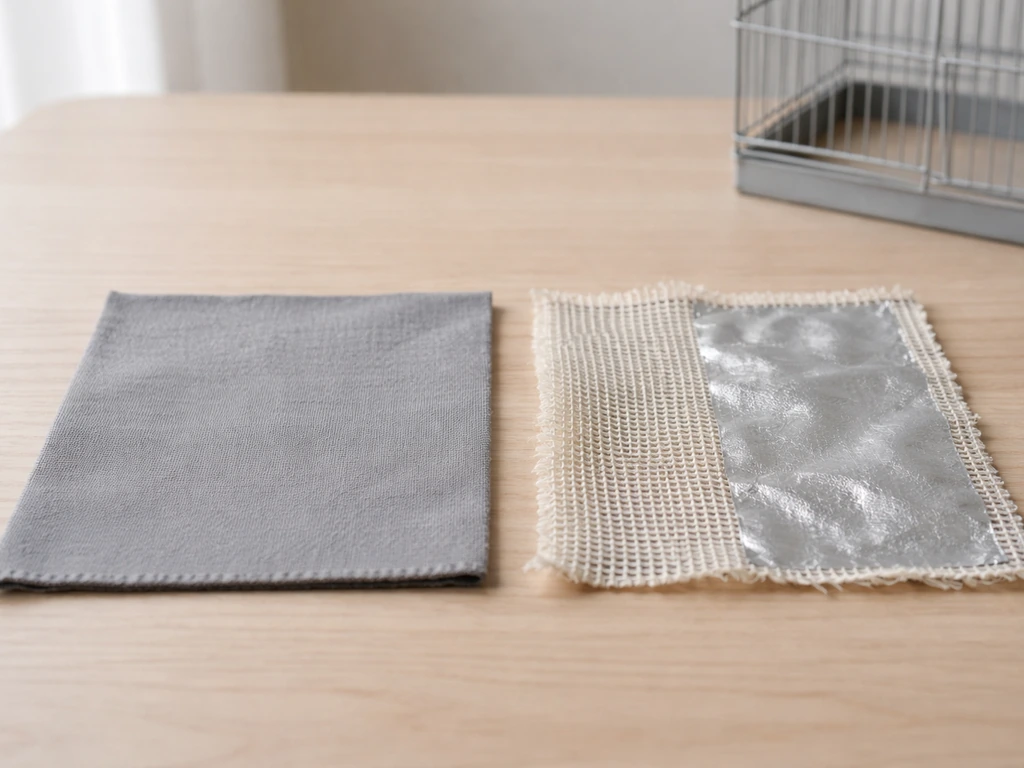
The safest materials for cage covers are tightly woven but breathable fabrics: cotton, cotton-polyester blends, and purpose-made cage cover cloths. Avoid anything with loose weaves, fringe, or dangling threads that toes and beaks can get caught in. Avoid synthetic fleece or foam-backed materials that restrict airflow entirely. Wool blankets can work but check for any loose fibers a bird could pick at and inhale.
- Purpose-made cage covers (sold by most bird supply brands): best fit, designed for ventilation
- Tightly woven cotton sheet or pillowcase: affordable, easy to wash, breathable
- Cotton-poly blend blanket: slightly more insulating, fine for cold nights if not too thick
- Breathable blackout fabric cut to size: good for light blocking without sealing airflow
- Avoid: fleece blankets with tight backing, towels with loops, anything with fringe or tassels
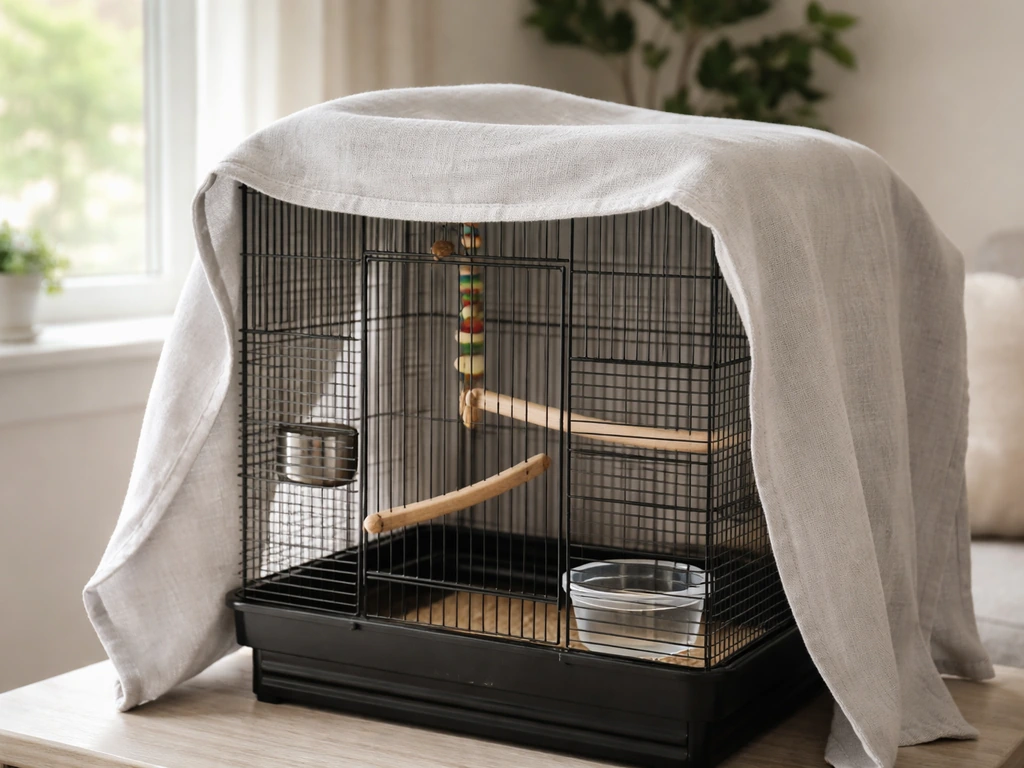
How you place the cover matters as much as what you use. Never cover all four sides plus the top completely flush. Always leave at least one side partially open (typically the front or back bottom edge lifted 3–4 inches) to allow fresh air circulation. Think of it as draping, not sealing. For maximum warmth on very cold nights, cover three sides and the top fully, and leave a narrow gap at the front bottom. That configuration blocks drafts from the sides and above while still letting air exchange happen.
Ventilation, airflow, humidity, and air quality when covered
This is the part most people skip, and it's where things go wrong. An airtight cover on a cage is genuinely dangerous. Birds have highly efficient respiratory systems and produce CO2, moisture vapor, and dander rapidly. Seal them in with no airflow and you get three problems: rising humidity that promotes bacterial and mold growth, CO2 buildup, and concentration of any airborne pathogens or dander the bird is shedding.
Aim to keep relative humidity in the bird room between 40–60% during normal conditions. If you need to increase humidity in the bird room, focus on controlled, breathable ways to add moisture so you do not trap damp air under the cage cover how to increase humidity in bird room.
Veterinary intensive-care settings sometimes push humidity up to 70% for sick birds, but in a home cage setup, anything above 65% consistently means you have a condensation and mold risk. In hospitalized or sick avian cases, a typical veterinary thermal support target is around 80, 85°F with humidity near 70% humidity up to 70% for sick birds.
If you're seeing moisture beading on the inside of the cover, it's too sealed. Open up more of the bottom edge or switch to a more breathable material.
Test your setup with a cheap digital thermometer/hygrometer placed inside the cage before you leave your bird covered for a full night. Check it after 30 minutes. If temperature has risen more than 5°F from ambient room temperature or humidity is above 65%, adjust the cover drape before going to bed. This one step will save you a lot of guesswork.
Placement across seasons: drafts, sun, and heat sources
Where the cage sits in the room makes covering far more or less effective. The University of Florida's small animal care guidance specifically calls out placing cages away from direct drafts from A/C or heating vents. I'd add: also away from exterior walls in winter (which can be significantly colder than interior walls), away from windows that get direct morning sun in summer, and never against a sliding glass door where nighttime temperature drops are extreme.
Winter placement
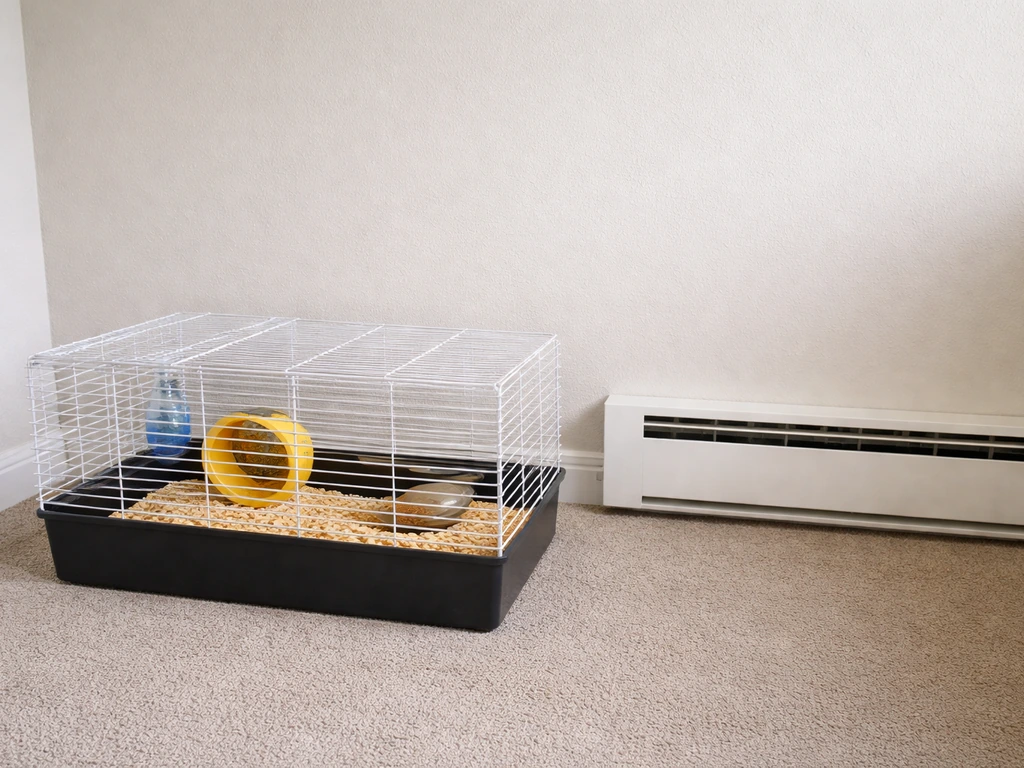
In winter, position the cage on an interior wall at least 12 inches away from the nearest heating vent. Covering is most useful in winter, especially at night when room temps can drop. Keep the cage off the floor (cold air sinks) and away from windows. A cover plus a consistent room temperature of 68–70°F is usually all a healthy bird needs.
Summer placement
In summer, covering for warmth is rarely needed, but many people cover at night for sleep and light control. In warm weather, use only a single lightweight cotton sheet, cover the top and two sides only, and make sure the room temperature isn't so warm that the cover traps uncomfortable heat. A covered cage in a 78°F room on a summer night can get stuffy fast. When room temps are above 75°F, skip the cover or use only a partial drape over the top for light blocking.
During transitional seasons (spring and fall)
Temperature swings in spring and fall are the trickiest. A 15–20°F drop between afternoon and midnight is common and is generally tolerated well by healthy birds per veterinary guidance, but pairing those swings with drafts from open windows or A/C kicking on creates rapid temperature changes that are harder on a bird's system. In shoulder seasons, use a cover at night and keep windows near the cage closed after sunset.
Risk checks before you cover
Covering is simple but there are real hazards if you don't think them through.
- Overheating: The most underestimated risk. A cover plus a nearby heat lamp plus a small room can push cage temps well above 85°F. Always verify with a thermometer before leaving the setup unsupervised.
- Burn hazard: Never place a cover over or touching a heat lamp, ceramic heat emitter, or any electrical heating device. The cover must be on the cage bars only, with any external heat source fully clear of the fabric.
- Night fright: Some birds (cockatiels are famously prone to this) startle violently at noises in the dark and can injure themselves thrashing against bars. If your bird has a history of night fright, leave a dim nightlight on near the cage rather than covering to full blackout.
- Entanglement: Loose threads, fringe, tassels, or stretched weave can trap toes, nails, or wing feathers. Inspect covers before each use and retire anything that's starting to fray.
- Poor air quality: As covered above, sealed covers concentrate CO2, dander, and moisture. Always leave a ventilation gap.
- Pest control side effects: A cover that stays damp from condensation or humidity becomes an ideal environment for mites and mold. Wash covers weekly in hot water and dry them fully before reuse.
- Stress from sudden covering: If your bird is not used to being covered, introduce it gradually over a few nights, covering only the top first and working down the sides over a week.
Quick safe warmth setup: do this today
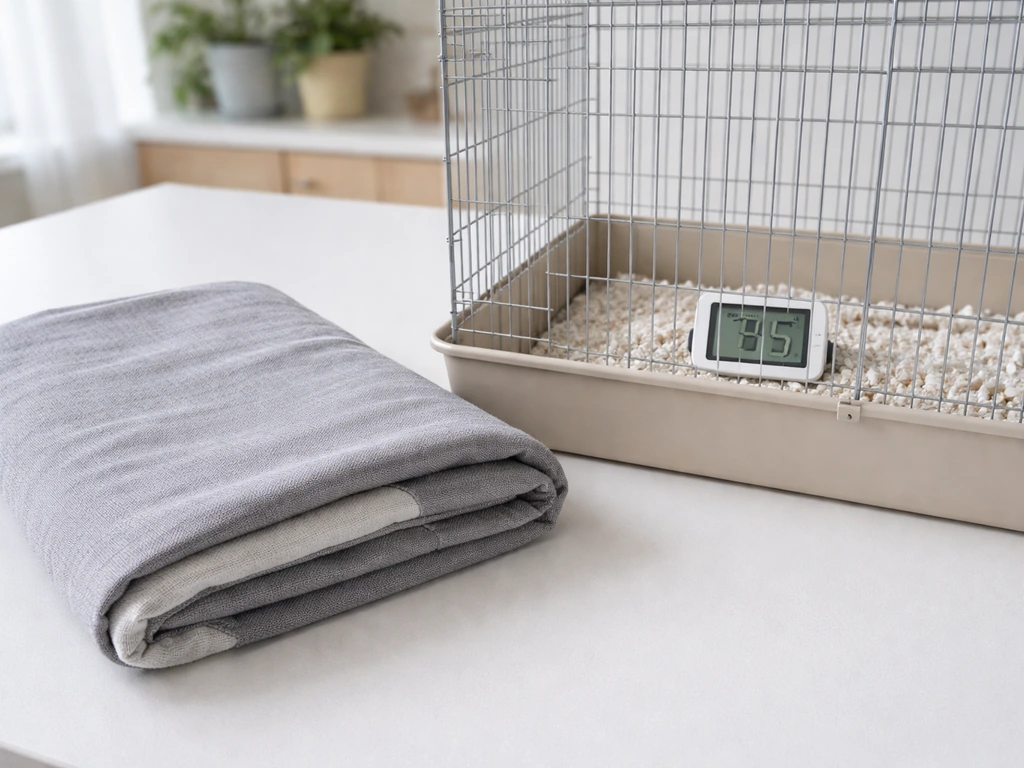
Here's what to gather and how to set it up in the next hour.
What you need
- A tightly woven cotton or cotton-poly sheet or purpose-made cage cover (no loose weave, no fringe)
- A digital thermometer/hygrometer small enough to sit inside the cage (under $15 at most hardware stores)
- A room thermometer if you don't already have one
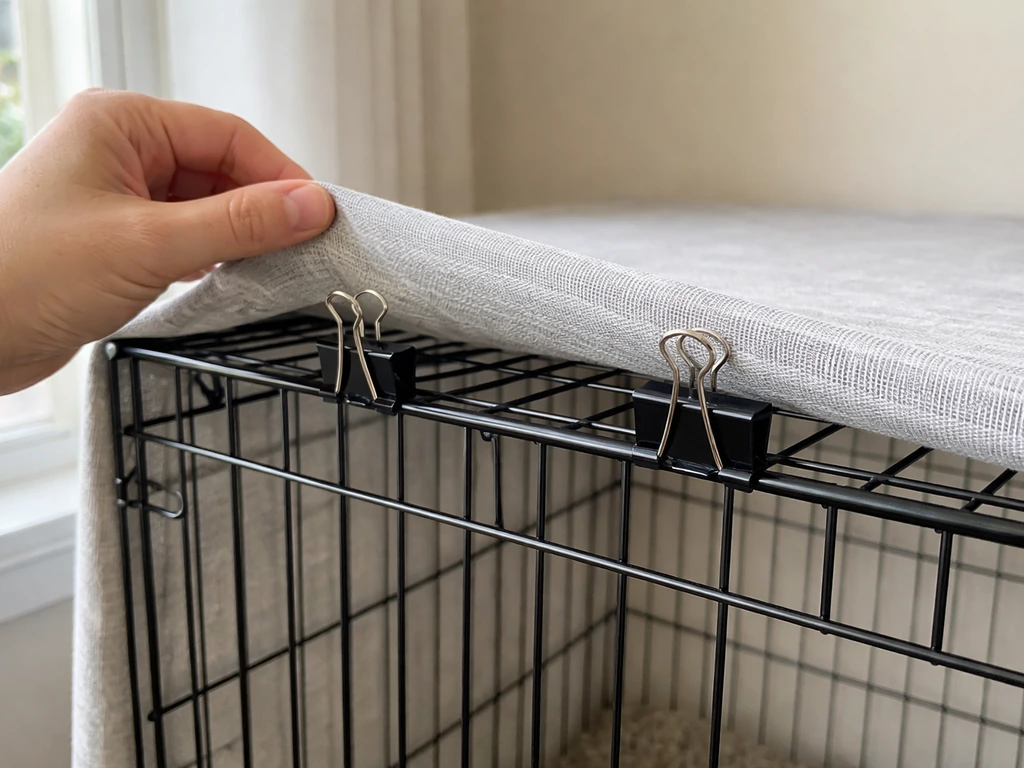
- Optional: a small clip or binder clip to hold one side partially open
Step by step
- Check your room temperature right now. If it's consistently above 68°F, a cover for warmth is optional. If it's below 65°F, you need both a cover and some form of supplemental heat.
- Move the cage away from any direct draft source: A/C vents, heating vents, exterior walls in winter, or windows that get cold at night.
- Place the digital hygrometer/thermometer inside the cage, toward the middle or lower perch level where your bird sits.
- Drape the cover over the top and three sides of the cage, leaving the front bottom edge open 3–4 inches. Clip or tuck lightly so it doesn't sag into the bars.
- Wait 30 minutes with your bird inside, then read the thermometer. Target: 68–78°F inside the cage. Target humidity: under 65%.
- If the cage temperature is too high (above 80°F), open the cover lower on one more side. If humidity is above 65%, switch to a thinner or more loosely woven cover.
- If the cage temperature is still below 65°F after covering and the room is genuinely cold, a cover alone won't be enough. Add a low-wattage avian safe panel heater or ceramic heat emitter positioned outside and below one side of the cage, never inside or above it, and re-test.
- Once the setup is dialed in, stick to the same routine nightly. Birds do best with consistency: cover at the same time each evening (usually around your own bedtime), uncover in the morning when the room is active and warmer.
Troubleshooting common problems
| Problem | Likely Cause | Fix |
|---|---|---|
| Cover keeps slipping off | No anchor points on cage top | Use two binder clips to attach cover to horizontal bars at the top |
| Humidity above 65% in the morning | Cover too airtight | Switch to a thinner cotton material or open the front bottom gap wider |
| Bird seems agitated or restless after covering | Night fright or stress from sudden darkness | Introduce covering gradually over one week; add a dim nightlight |
| Temperature still too low after covering | Room genuinely too cold for cover alone | Add supplemental heat outside the cage (panel heater or ceramic emitter) |
| Condensation beading on cover interior | Poor ventilation and high moisture | Increase ventilation gap, lower room humidity, wash and fully dry cover before reuse |
| Bird chewing or pulling at the cover | Curiosity or boredom; fabric accessible through bars | Use a stiffer cover material that doesn't drape through the bars, or use a purpose-made fitted cover |
When covering won't be enough
If your room temperature is consistently below 65°F, or if you have a tropical species that needs 75°F or warmer, covering alone is a band-aid. The better long-term solutions are keeping the bird room itself in the right temperature range (70–80°F is the sweet spot recommended by veterinary guidance), using a dedicated avian-safe panel heater, or a thermostat-controlled ceramic heat emitter mounted outside the cage.
Covering works beautifully as a layer on top of those measures, blocking drafts and reducing overnight heat loss. If you need to raise a bird cage's temperature safely, focus on room temperature first, then add the right breathable cover and ventilation gap Covering works beautifully. On its own in a genuinely cold space, it's not enough.
If you're dealing with a bird that's already showing signs of chilling (persistent fluffing, lethargy, loss of appetite), prioritize getting the room temperature right and contact your avian vet. A cover is not a substitute for proper thermal support in a bird that's already struggling. If you still need more than a cover can provide, use safe heating methods designed for birds rather than trying to warm the cage itself with unsafe heat sources heat bird cage.
FAQ
If I cover the cage, do I still need a heat source if my home is 60°F or lower?
Yes. A cover mainly reduces drafts and slows heat loss, it does not raise the cage interior to a safe target. If your room stays at or below about 60°F, use room-temperature control first, then add the breathable cover as a top layer. If your bird shows active chilling signs, contact an avian vet rather than relying on the cover.
Can I use a towel, blanket, or comforter and tuck it all around the cage for maximum warmth?
You should avoid fully wrapping or tucking all edges tightly. The main risk is blocking fresh air, which can raise humidity and CO2 inside the microclimate. If you use bedding-style fabrics, keep at least one side partially open near the bottom (for example, a 3 to 4 inch gap) and confirm airflow by checking for condensation after 30 minutes.
How do I know whether the cover is making things too humid or stuffy?
Use a small digital thermometer or hygrometer inside the cage during the test period. If humidity rises above roughly 65% or you see moisture beading on the inside of the cover, it is too sealed or too thick. Adjust by lifting the bottom gap more, switching to a more breathable fabric, and recheck after another 30 minutes.
Is covering a bird cage safe for every bird species?
Most companion birds tolerate covering for nighttime light and draft reduction, but species with higher warmth needs (tropical birds, recently imported birds, or birds recovering from illness) may require consistently warmer room conditions. If your species needs closer to 75 to 80°F, a cover alone is unlikely to meet that need reliably.
Should I cover the cage during the day or only at night?
Nighttime is usually the priority because heat loss is greater during colder hours. During the day, covering can be used mainly for draft control or calming, but avoid using it when the room is already warm, since it can trap heat and make the bird uncomfortable.
Will a cage cover prevent my bird from getting cold if the bird is already fluffed and lethargic?
No. Fluffed feathers plus lethargy, appetite loss, labored breathing, or discharges can indicate significant chilling or illness. In that case, focus on warming the environment safely and contact an avian vet. A cover should not be used as the only response when symptoms appear.
Can I put the thermometer/hygrometer outside the cage instead of inside?
Prefer inside the cage for accuracy. The microclimate under a cover can differ from the room, especially with different drape tightness and fabric thickness. Placing the sensor inside helps you catch problems like higher humidity or insufficient temperature rise before your bird is covered overnight.
What’s the safest way to cover if my cage is near a window or an exterior wall?
Avoid placing the cage flush against cold surfaces. Use an interior location when possible, keep it away from windows at night, and do not let the cover touch or block anything that increases draft effects. In winter, prioritize keeping the cage off the floor and away from exterior walls where temperatures drop more.
Does covering affect ventilation if my cage has bars versus solid sides?
Yes. Most heat loss for birds occurs through airflow around the bars, so a breathable cover helps there. With cages that have more solid sides, still keep the ventilation gap, because fully enclosing any cage can trap moisture and CO2 regardless of bar design.
Is it okay to use a heat lamp or space heater near the covered cage?
Be very cautious. Heating methods should be bird-safe and controlled, and they should not create overheating near the cover or risk contact burns. If you need more heat, use thermostat-controlled, avian-appropriate equipment and keep it positioned so it does not heat the cover directly or reduce airflow.