
The safest way to heat a bird cage is to warm the room first, then add a thermostat-controlled cage-level heat source (like a heated perch or a panel heater mounted outside the cage bars) only if room heat alone isn't enough. Keep the ambient temperature inside the cage between 65°F and 80°F for most common pet birds, use a digital thermometer clipped inside the cage to verify it, and always give your bird a cooler side of the cage to move to. That last part matters more than people think: birds can't sweat, so if they get too warm they have no easy way out unless you've given them one.
How to Heat a Bird Cage Safely Step by Step

Maya Bennett
20 Jun 2026
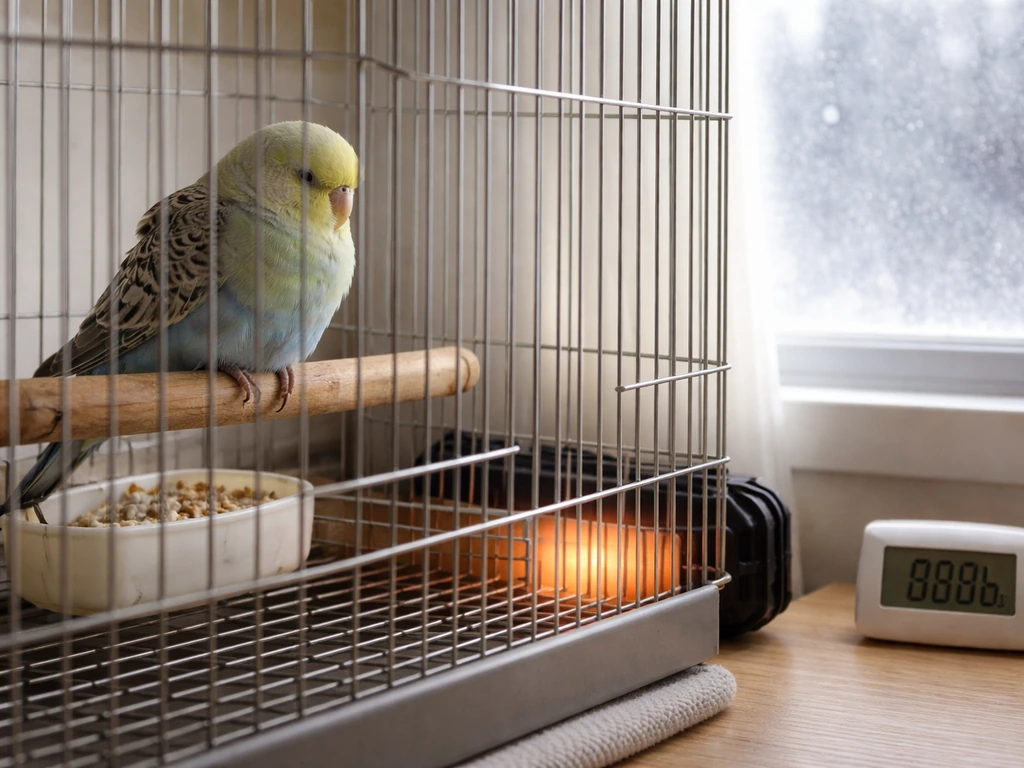
Do you actually need to heat the cage?
Most healthy adult birds in a typical home don't need supplemental cage heat if your house stays above 65°F. Before you buy anything, answer three questions: What species do you have? What's the actual temperature near the cage right now? And is your bird showing any signs of being cold or unwell?
Canaries and finches are comfortable between 65°F and 80°F. Cockatiels, budgies, and lovebirds are similar, though they're more sensitive to sudden drops than to a steady cool temperature. Tropical species like conures, eclectus parrots, and caiques prefer the warmer end of that range, around 70°F to 80°F, and handle cold less gracefully. Baby birds, elderly birds, molting birds, and any bird recovering from illness all need to be kept at the warmer end, closer to 75°F to 80°F, because their ability to regulate body temperature is compromised.
Cold behavioral signs to look for include fluffed-up feathers (the bird is trapping air to stay warm), huddling with the head tucked toward the back, sitting low on the perch or dropping to the cage floor, and general inactivity. Those signs overlap with illness signs, which is an important distinction.
Purdue’s husbandry guidance also stresses that fluffed feathers and inactivity can signal illness, so the bird’s overall condition should be evaluated rather than assuming it is only a heating issue Those signs overlap with illness signs.
If your bird is fluffed and quiet but perks up when the room warms up, it was probably just cold. If it stays fluffed, lethargic, or is showing open-mouth breathing or tail bobbing after the temperature is comfortable, stop treating this as a heating problem and call an avian vet.
Measure the temperature and set a target before doing anything else
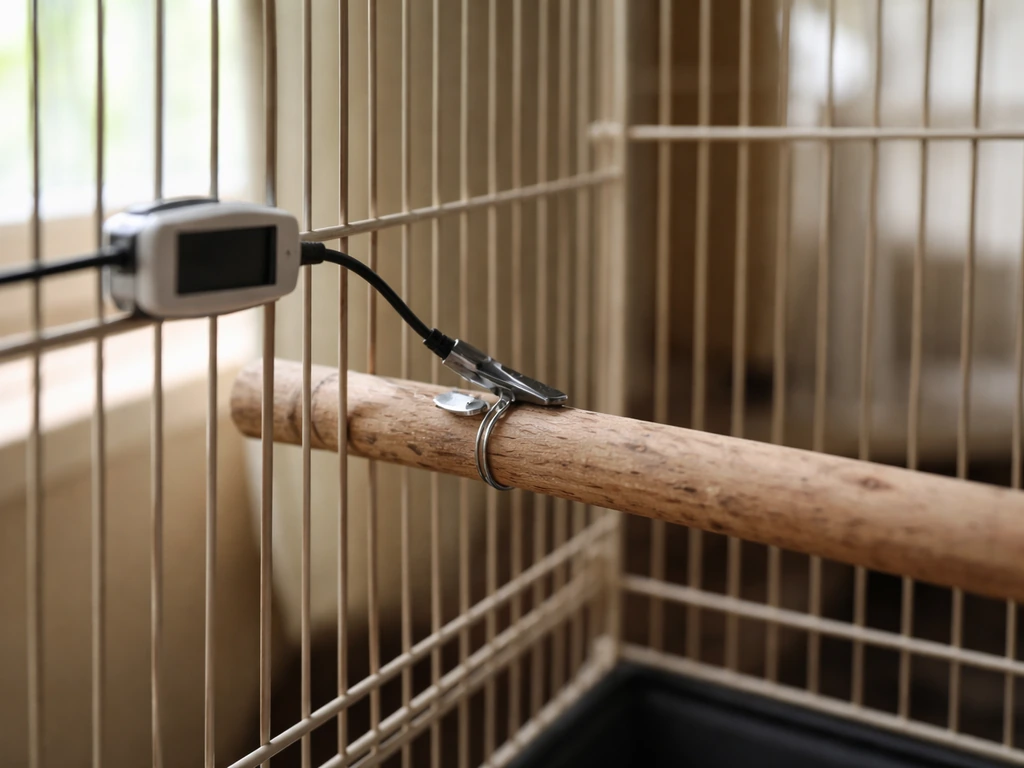
Don't guess. The temperature at your thermostat across the room is not the temperature your bird is sitting in. Cold air sinks, drafts from windows or HVAC vents create cold pockets, and a cage on a stand near an exterior wall can easily be 5°F to 10°F colder than what your wall thermostat reads. Get a small digital thermometer, clip or hang it at perch level inside the cage (not touching the bars, which conduct cold), and give it 15 minutes to stabilize. That's your real number.
Target ranges to work with: 65°F to 80°F is the safe window for most pet birds. Aim for the middle, around 70°F to 75°F, for healthy adults. Bump that up to 75°F to 80°F for sick birds, chicks, or birds in recovery. Never let the cage drop below 60°F, even briefly. And don't push above 85°F: at that point you're stressing the bird with heat, which can be just as dangerous as cold. If your bird's feet and beak feel hot to the touch and it's panting or holding its wings away from its body, that's heat stress and it's an emergency.
Room heat vs. cage-level heat: which one to use
Room heating is always your first and best option. If you need a quick checklist for how to keep bird cage warm, start with room heating first and then add cage-level warmth only when necessary. If you can get the room to a stable 70°F to 72°F, most birds will be fine and you don't need anything else. The advantage of room heat is that it's even, it doesn't create hot spots inside the cage, and there's no electrical device in or near the cage to worry about. The downside is that it's less efficient if only one room stays cold, or if your bird's cage sits in a drafty spot near a window or door.
Cage-level heating is the right move when room heat isn't enough, when your bird is sick or young, or when you're dealing with a persistent cold draft that room temperature alone doesn't fix. The best cage-level options are heated perches (like the K&H Thermo-Perch, which has an internal thermostat), radiant panel heaters designed for reptiles or birds mounted on the outside of the cage, and in some setups, a low-wattage ceramic heat emitter (no light, just heat) placed outside the cage with a thermostat controller. Heating pads placed under part of the cage can work in a pinch but require more care to avoid trapping heat.
| Method | Best For | Main Risk | Thermostat Needed? |
|---|---|---|---|
| Room heater (space heater or HVAC) | Healthy adult birds in a cool room | Drafts if positioned badly; fumes from non-stick coatings | No, but monitor cage temp |
| Heated perch (e.g., K&H Thermo-Perch) | Single bird, targeted warmth, bird chooses contact | Overheating if bird can't get off it; cord chewing | Built-in thermostat |
| Radiant panel heater (outside cage) | Consistent gentle warmth, larger cages | Overheating one side if too close | Yes, strongly recommended |
| Ceramic heat emitter (outside cage) | Sick or cold-sensitive birds, overnight warmth | Too hot without thermostat; dries air quickly | Yes, required |
| Heating pad under cage (partial) | Emergency warmth, short-term use | Traps heat underneath, uneven temps | Use with probe thermometer |
One thing I always tell people: avoid using standard household space heaters pointed directly at a cage. Many non-stick coated heating elements release fumes that are harmless to humans but potentially lethal to birds. If you use a space heater in the room, keep it away from the cage, make sure it doesn't have a non-stick or PTFE-coated element, and never use it as the primary heat source positioned within a few feet of the cage.
How to install cage heating safely
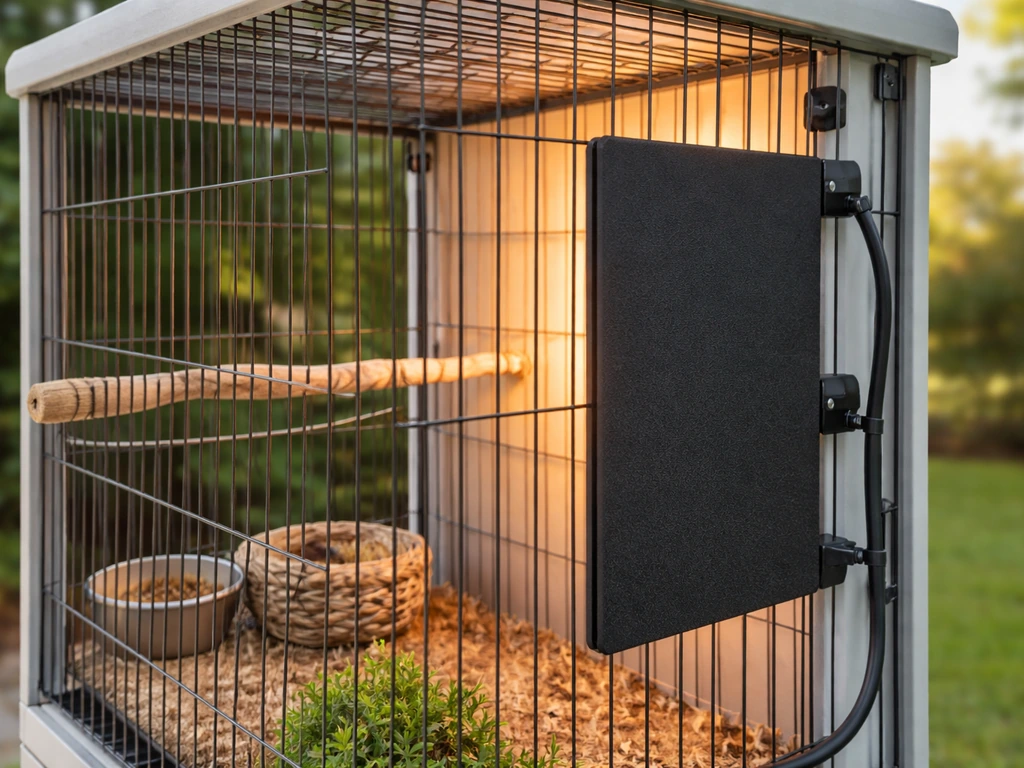
Placement rules
- Always mount external heat sources to one side of the cage, never the back or all sides. This gives your bird a temperature gradient: warm on one side, cooler on the other, so it can self-regulate.
- Keep radiant panels and heat emitters at least 6 to 12 inches from the cage bars unless the manufacturer specifies otherwise. Closer than that risks overheating the side nearest the source.
- Position the cage away from windows, exterior walls, air conditioning vents, and doorways before adding any supplemental heat. Fixing the draft source is always more effective than fighting it with more heat.
- Never place a heating device on top of the cage where heat is trapped inside with no airflow escape.
- Route all cords outside the cage and secure them away from where the bird can reach. Cord chewing is a real risk with curious birds.
Using a thermostat and timer
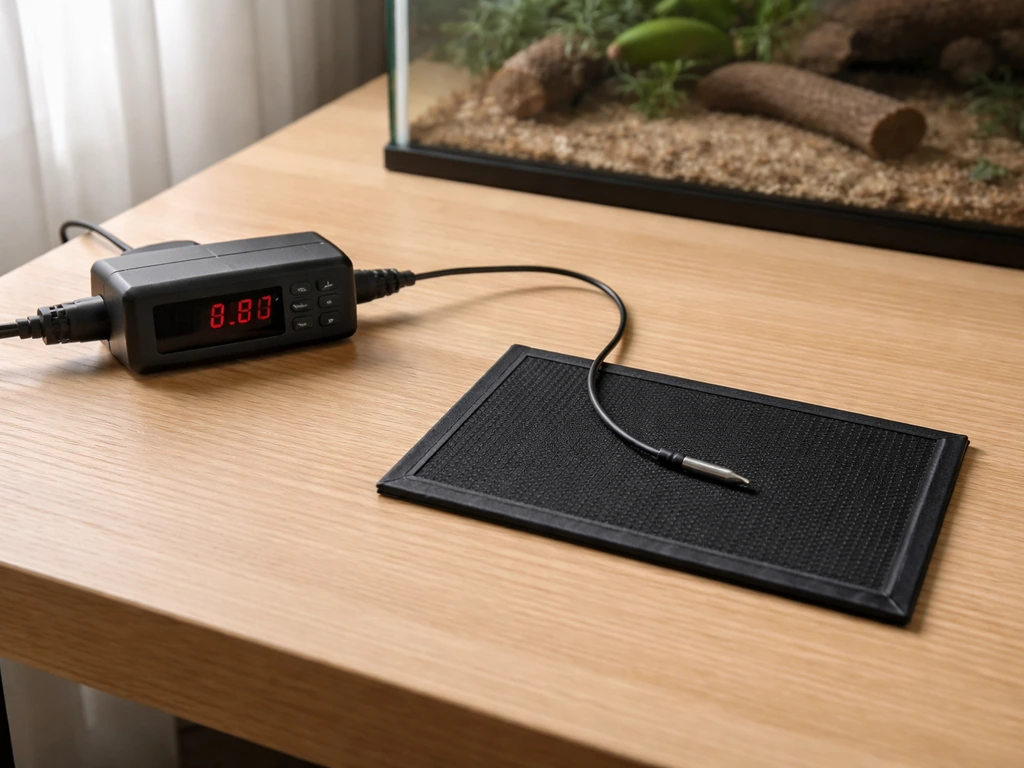
If you're using anything more than a heated perch (which has its own thermostat built in), plug your heat source into a reptile or small animal thermostat with a probe. Set the probe at perch level inside the cage. Set the thermostat to your target temperature, usually 72°F to 75°F for a healthy bird. The thermostat cycles the heater on and off to hold that temperature, which is far safer than running a heater continuously and checking manually. Controllers like the RightTemp Jr. use a sensor probe to monitor and regulate temperature precisely, and that kind of setup is worth the extra cost if your bird needs consistent overnight warmth.
A timer is useful for overnight heating but is not a replacement for a thermostat. If you use a timer without temperature control, the heater runs on a fixed schedule regardless of actual cage temperature, which can lead to overheating on warm nights or under-heating when it's colder than expected. Use both if you want the best control: a thermostat to regulate temperature and a timer to limit heating hours to overnight if that's all you need.
Draft protection and cage covers done right
Covering part or all of the cage is one of the easiest ways to retain warmth, but it goes wrong when people block airflow entirely. If you cover a bird cage, make sure there is still enough airflow and avoid blocking ventilation so the bird does not overheat covering a bird cage. A bird that's too warm and can't ventilate the cage is in trouble, especially if you're also running a heat source inside or underneath. The goal of a cage cover in winter is to block drafts and reduce heat loss, not to seal the cage.
For draft protection, use a breathable cover (cotton or fleece) that covers three sides and the top, leaving the front open or partially open for airflow. If the draft is coming from a specific window or wall, use an acrylic draft shield panel zip-tied to that side of the cage specifically, rather than wrapping the whole thing. If you want to keep the cage warmer at night, a fitted cover that leaves the bottom third open on one side maintains warmth without trapping air. The topic of whether covering keeps a cage warm and how to do it properly in winter are things worth thinking through separately from heating, since covers and heaters interact with each other.
Never use plastic sheeting, garbage bags, or airtight covers. These trap moisture and carbon dioxide, reduce oxygen, and can cause condensation that leads to mold on perches and food. Stick to fabric or purpose-made cage covers with ventilation gaps built in. If you are trying to keep the cage warmer in winter, focus on covering it correctly with breathable protection, not airtight materials cover bird cage in winter.
Common mistakes, hazards, and how to troubleshoot problems
Overheating
Overheating is more common than people expect, especially when owners combine a covered cage with a heat source and then the room temperature rises during the day. Signs: your bird is holding wings away from its body, panting (open-beak breathing with visible throat movement), or sitting very still with eyes partially closed. Immediately remove any cage cover, turn off or move the heat source, and check your thermometer. If the bird's beak and feet feel hot and it's panting, this can escalate quickly. Get the temperature down by moving the cage to a cooler spot and offering cool (not cold) water, and call your vet if the bird doesn't recover within a few minutes.
Dry air and respiratory irritation
Heating, especially with ceramic emitters or space heaters, dries out the air fast. Low humidity irritates birds' respiratory systems. Watch for dry, flaky feet, excessive preening, sneezing, or a slightly crackly voice in birds that vocalize. If you're running supplemental heat, also monitor humidity. A small room humidifier near (not inside) the bird's space, or even a bowl of water placed near (not on) a gentle heat source, can help. Keeping humidity between 40% and 60% is a good target. This connects to the broader challenge of managing humidity in a bird room during winter heating season.
Uneven heat and cold spots
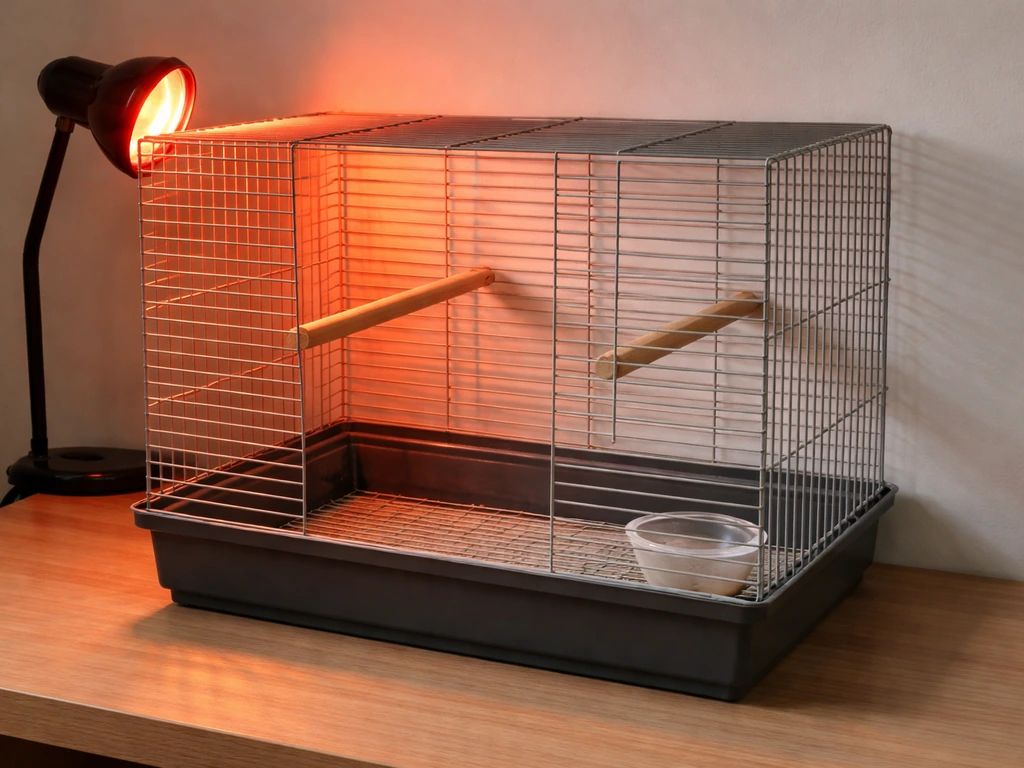
If your thermometer reading swings more than 5°F from one reading to the next, you have an uneven heat situation. Common causes: the heat source is too close and heating one side intensely while the other side stays cold, or the heater is cycling too aggressively without a thermostat to stabilize it. Move the heat source further from the cage, add a thermostat if you haven't, and check that nothing is blocking airflow between the heat source and the cage (like a cage cover on that side).
Mistakes to avoid
- Don't use heat lamps designed for reptiles directly inside a bird cage: the light disrupts sleep cycles and the heat is too intense and directional.
- Don't put a heating pad directly under the entire cage floor with no way for heat to escape: heat builds up underneath and the bird has nowhere to go.
- Don't use non-stick coated heating elements anywhere near your bird: PTFE fumes are lethal to birds at temperatures the element can easily reach.
- Don't use scented candles or plug-in air fresheners near the cage when heating: concentrated warmth carries more volatile particles into the air.
- Don't cover the cage completely and run a heater at the same time without checking the internal temperature frequently.
- Don't assume a heated perch alone is enough for a very cold room: if ambient temperature is below 60°F, the perch helps but the bird's whole body except its feet is still cold.
What to do today and when to call the vet
Your action checklist for today
- Clip a digital thermometer inside the cage at perch height and read the actual temperature. Don't rely on your wall thermostat.
- Check for drafts: hold your hand near each side of the cage and note if any side feels cooler. Move the cage away from windows, exterior walls, and HVAC vents if possible.
- Observe your bird for 10 minutes: is it fluffed, huddled, on the floor, or quiet? Or is it active and normal?
- If the cage temperature is below 65°F, raise the room temperature first. If that's not possible or not enough, order a thermostat-controlled heated perch or small radiant panel heater.
- If you add a heat source, set up your thermometer probe at cage level and monitor for the first 2 to 3 hours to confirm temperatures are stable.
- Check your cage cover (if you use one) to confirm it isn't blocking ventilation. Leave at least one open panel for airflow.
- Note humidity. If air feels dry or you're running heating continuously, consider a small humidifier nearby.
Quick shopping and tool list
- Digital thermometer with probe (clip-on style for cage use)
- Thermostat controller with probe (for any non-perch heat source)
- Heated perch with built-in thermostat (e.g., K&H Thermo-Perch, sized for your bird)
- Radiant panel heater rated for small animals (if perch heat isn't enough)
- Breathable cage cover or fleece panels for draft blocking
- Small hygrometer (optional but useful) to track humidity
- Power strip with surge protection for any electrical devices near the cage
When to stop DIY and call an avian vet
Call an avian vet if your bird is fluffed and lethargic and doesn't improve within an hour of the temperature being corrected. Call immediately if you see open-mouth breathing, tail bobbing with each breath, labored breathing or audible respiratory sounds, the bird is on the cage floor and not moving, or the bird's beak and feet feel hot and it's panting. These are not cold symptoms. These are emergency illness or heat stress symptoms that need a professional, not a thermometer adjustment. The heating setup can wait. The bird can't.
FAQ
How do I measure the temperature correctly, so I am not guessing? (My thermostat and the cage reading differ.)
Place the thermometer at perch level inside the cage where the bird actually rests, and let it sit for about 15 minutes after you change room heat or turn on a heater. Avoid letting the probe touch metal bars or the heater body, since conduction can make the reading look warmer than what the bird feels.
What is the difference between cold symptoms and illness symptoms during heating changes?
If the bird stays fluffed and quiet, but quickly perks up once the room warms, it usually indicates cold rather than illness. If the bird remains fluffed and inactive after the cage reaches your target range, or you see open-mouth breathing, tail bobbing, or it holding wings away from its body, treat it as an emergency medical issue rather than a heating adjustment.
Can I use a timer instead of a thermostat to heat my bird cage overnight?
Do not rely on a timer alone. Use a temperature-controlled thermostat or heated perch with built-in control so the heater shuts off when the cage hits your target. Timers can overheat birds on warm afternoons and underheat during sudden cold snaps, even if the schedule worked the day before.
What should I do if my cage temperature keeps fluctuating more than a few degrees?
Start by improving room conditions first, then troubleshoot hotspots. If readings swing more than 5°F, move the heat source away from the cage, add or upgrade to a thermostat with a probe at perch level, and confirm airflow is not blocked by a partially sealed cover.
My bird seems too hot. What is the fastest safe response?
If your bird is showing heat stress signs such as panting, wings held away from the body, or hot beak and feet, remove any cage cover immediately and turn off or move the heat source away from the cage. Provide cool (not icy) water and move the cage to a cooler area, then contact an avian vet if the bird does not improve within a few minutes.
If I cover the cage, do I still need supplemental cage heat?
Yes, but keep it controlled. A breathable cover helps reduce drafts, but it must leave airflow, especially if you are running any supplemental heat. Avoid covering in a way that seals ventilation, and never use plastic or airtight materials because trapped moisture can worsen respiratory irritation.
Are heating pads under the cage safe, and what mistakes should I avoid?
Yes, but only with care. Heating pads under part of the cage can trap warmth unevenly, especially if the bird chooses to sit on the hottest spot. If you use one, monitor closely with a thermometer at perch level, consider adding thermostat control, and ensure you are not creating a hot side that the bird cannot move away from.
How does supplemental heating affect humidity, and what signs mean it is drying out my bird?
Many ceramic heaters or heat emitters can be too drying, and space heaters can dramatically shift airflow and humidity. If you notice dry flaky feet, sneezing, or a crackly voice, add humidity in the room using a gentle humidifier positioned near the bird area (not inside the cage) and aim for roughly 40% to 60%.
What is wrong with using a regular household space heater to warm the bird cage area?
Avoid placing any household space heater close to the cage, especially if the heater has non-stick coated or PTFE-type elements. If you must warm the room with a space heater, keep it well away from the cage, ensure it is not the primary heat source for the bird, and keep air movement from directly blasting the enclosure.
Should I set the target temperature differently for babies, older birds, or molting birds?
Rely on the bird’s actual conditions, not just its species label. Chicks, elderly birds, molting birds, and birds recovering from illness need the warmer end of the range, closer to 75°F to 80°F, while healthy adult birds often do fine near the middle of the safe window.