Keep your bird's cage warm in winter by doing three things together: placing the cage away from drafts and cold windows, covering it with a breathable fabric cover at night, and warming the room to 65–80°F (18–27°C) with a thermostat-controlled heater. You do not need expensive gear. What you do need is consistency, good placement, and a firm understanding of what makes warmth dangerous for birds (fumes, overheating, blocked airflow, and rapid temperature swings). SpectrumCare notes that many companion birds feel comfortable around 65, 80°F (18, 27°C) as long as drafts and sudden temperature shifts are avoided blank" rel="noopener noreferrer">rapid temperature swings. Everything else follows from that.
How to Keep a Bird Cage Warm in Winter Safely

Maya Bennett
29 Apr 2026
Know your bird's temperature needs and why "warm" must be safe
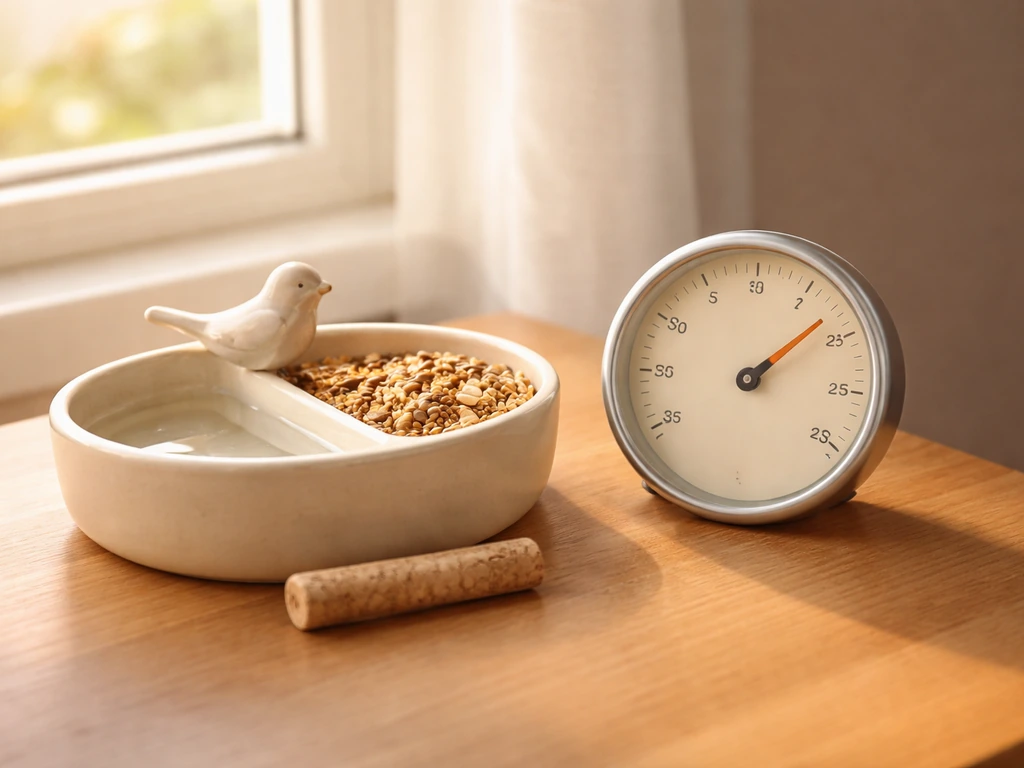
Most common pet birds, including budgies and cockatiels, are comfortable in the same temperature range that feels pleasant to most people. Budgies do well at roughly 70–80°F (21–27°C), and cockatiels are comfortable anywhere from 65°F to 80°F. If your house stays in that range, your bird is probably fine, and all you really need to manage is drafts and nighttime drops. The problem in winter is that ambient temperatures can dip well below 65°F in unheated rooms or near exterior walls, and birds do not deal well with sudden changes. A healthy bird can generally tolerate a gradual shift of about 10–20°F, but a sharp overnight drop of 20°F is a different story.
The critical safety point is that "warm" is not always better. Overheating is just as dangerous as chilling, and the signs of heat stress (panting, wings held away from the body, sluggishness, eyes half-closed) require urgent action. Sick or recovering birds may need a warmer environment, sometimes as high as 85°F, but that is a short-term medical measure, not a daily target. For a healthy bird in a normal home, your goal is stable warmth in the 68–78°F band, not the hottest environment you can manage.
Best cage placement in winter
Placement is the single most effective tool you have, and it costs nothing to fix. Cold drafts are the main winter threat, and they come from places most people overlook: gaps under doors, the edge of window frames (not just the glass itself), air vents blowing conditioned air directly across the cage, and cat or dog doors. Put your hand around the cage at bird level on a cold day and feel for moving air. If you feel any, the cage needs to move.
The best spot is an interior wall, away from windows and exterior doors, at a height that keeps the bird at roughly eye level with you. Avoid corners that trap stale air and avoid placing the cage directly above or beside a baseboard heater or floor vent, since those create hot blasts rather than steady warmth. Never put the cage in the kitchen. Beyond the fire risk, kitchens swing between extreme heat and cold, and cooking fumes (including those from nonstick pans, which are lethal to birds at high temperatures) make the kitchen genuinely dangerous.
- Interior wall, away from windows and exterior doors
- Not directly above or beside any vent or baseboard heater
- Out of the kitchen entirely
- Away from drafty hallways or rooms that are left unheated at night
- High enough that air from under doors doesn't reach the bird
- Not in direct strong sunlight, which can overheat the cage on sunny winter days
Safe cage coverings and insulation strategies
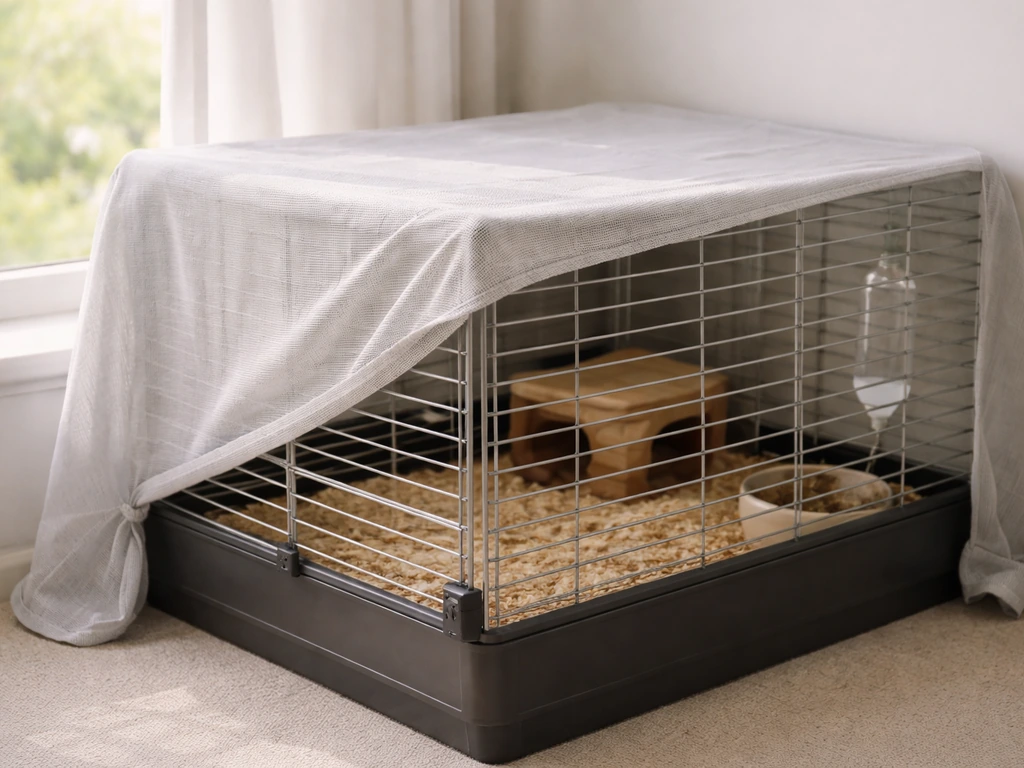
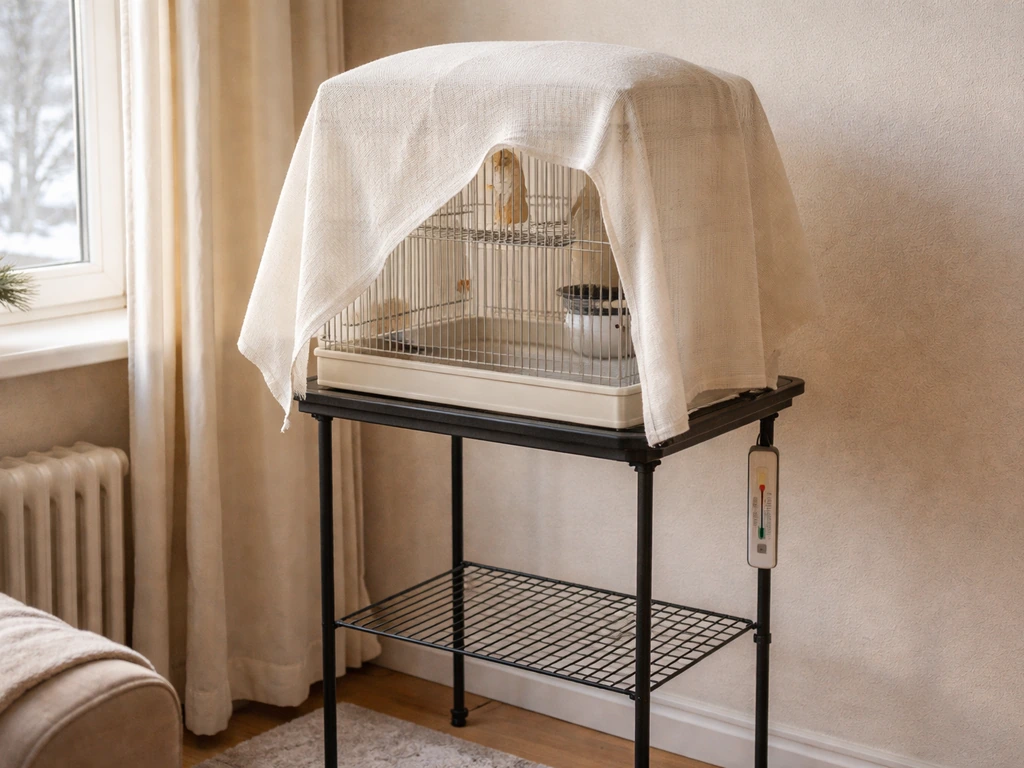
A cover helps retain heat overnight and reduces drafts, but the cover itself has to be breathable. This is non-negotiable. A fabric that traps CO2 inside the cage can cause respiratory distress. A quick test: hold the material up to your face and breathe through it. If it feels suffocating or very restricted, do not use it. Loosely woven cotton, muslin, and purpose-made cage covers pass this test easily. Thick fleece and layered blankets often do not, especially if they drape all the way to the tray and seal the bottom.
The goal is to cover the top and three sides of the cage (the sides exposed to the room or any draft source) and leave the front or one side at least partially open for air exchange. This also lets the bird see you coming so it doesn't startle awake. If the room is particularly cold and you want more insulation, you can add a second breathable layer, but avoid wrapping the cage in anything waterproof or non-porous.
Related to this, a cover by itself is not a substitute for a warm room. It slows heat loss but doesn't generate warmth, so if your room is dropping to 50°F overnight, a cover alone won't keep your bird in a safe range.
For a DIY windbreak (useful if the cage can't be moved far from a cold wall), cut a sheet of clear acrylic or coroplast and attach it loosely to the back and sides of the cage with zip ties or binder clips, leaving the front open. This blocks radiant cold from the wall without sealing the bird in. It's a simple build that takes about 20 minutes and makes a noticeable difference in drafty rooms.
Heating options: warm the room vs. heat sources near the cage
Room-level heating is almost always the safest approach. A thermostat-controlled space heater that keeps the whole room at 70°F is far preferable to any device placed near or on the cage, because it creates even, consistent warmth without hot spots. Set the thermostat to hold a minimum of 65–68°F overnight and you've solved most of the winter problem without adding any cage-specific hardware.
If you need cage-local heat (for example, in a large room you can't efficiently heat, or for a bird that needs extra warmth), use a thermostat-controlled pet heat pad placed on the outside of the cage, not inside it, and never covering more than one third of the cage floor projection. Pet heat pads designed for animals are self-limiting: their surface temperature adjusts based on ambient conditions and the animal's contact, which makes them much safer than improvised heat sources. Always protect the cord from chewing, and make sure the pad is not jammed against the cage in a way that blocks airflow.
| Heating method | Safety rating | Best use case | Watch out for |
|---|---|---|---|
| Thermostat-controlled room heater | Best | Standard winter setup for any bird | Place heater away from cage; avoid direct air blast |
| Central heating with a programmable thermostat | Best | Whole-home setup, consistent temps | Set a minimum overnight temp so it doesn't drop too far |
| Pet heat pad (outside of cage, thermostat-controlled) | Good | Single bird in a large or poorly heated room | Cord chewing, blocking airflow, placing inside the cage |
| Ceramic heat emitter (with thermostat) | Moderate | Aviary or large bird room setups | Needs a separate thermostat; can dry the air quickly |
| Heat lamp (incandescent, no PTFE coating) | Moderate | Temporary supplemental heat only | Too close = overheating; keep at least 12 inches away |
| Nonstick/PTFE-coated heat sources | Never | N/A | Releases lethal fumes to birds at high temperatures |
One important principle is that heating should create a gradient, not a uniform blast. The idea is that the bird can move closer to or further from the warmth to self-regulate. A heat pad on one side, or a warm corner of the room versus a slightly cooler area, gives the bird agency. A cage that is uniformly blasted with heat removes that option and can lead to heat stress even at temperatures that seem reasonable to you.
Avoid these common mistakes
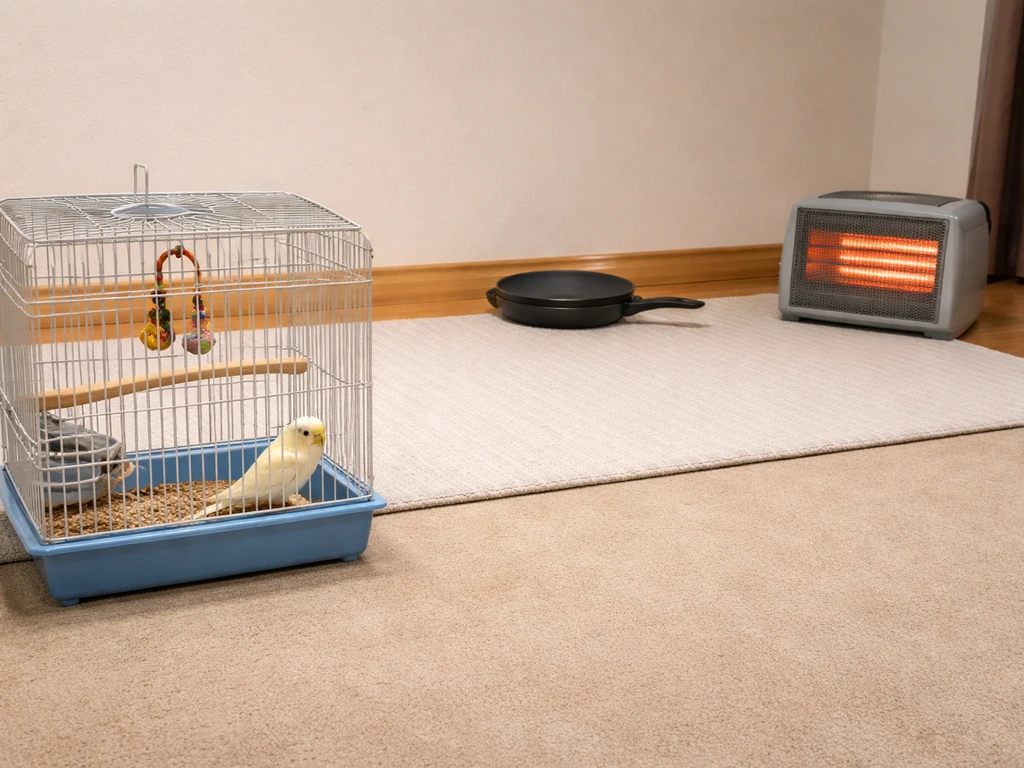
The most dangerous mistake is using any heat source with a PTFE or fluoropolymer coating. That includes many nonstick pans, some space heaters, and certain heat lamp bulbs. At temperatures above 280°C (536°F), PTFE releases toxic particles and acidic gases. A Teflon PDF notes that PTFE pyrolysis begins around 392°F (about 200°C), which is why overheating fluoropolymer-coated items can release hazardous products PTFE releases toxic particles and acidic gases. Birds have extremely sensitive respiratory systems and can die within minutes of exposure. Even a briefly overheated nonstick pan in an adjacent kitchen can be lethal. Check any heat source you use for PTFE coatings and replace it with a bird-safe alternative.
- Never use nonstick or PTFE-coated heaters, lamps, or pans anywhere near your bird
- Don't seal the cage completely with a cover: always leave airflow on at least one side
- Don't point a space heater directly at the cage, even from a distance
- Don't assume covered means warm enough: check actual room temperature with a thermometer
- Don't use plastic tarps, waterproof covers, or non-breathable material as cage covers
- Don't place the cage near gas appliances or use aerosol sprays, candles, or air fresheners nearby
- Don't heat only overnight without monitoring: temperature can swing unexpectedly
Dryness is the other common winter problem people miss. Heating systems pull moisture out of the air, and winter indoor humidity can drop well below the 40–50% range that's ideal for most birds. Dry air irritates the respiratory tract and can contribute to illness. A simple digital hygrometer placed near (not inside) the cage will tell you where you stand. If humidity is consistently below 40%, a room humidifier helps, but choose a model you can clean thoroughly and regularly, use distilled water if possible, and keep it out of the direct spray path of the cage.
Troubleshooting: uneven temps, condensation, and reading your bird's behavior
Condensation on the cover or cage bars
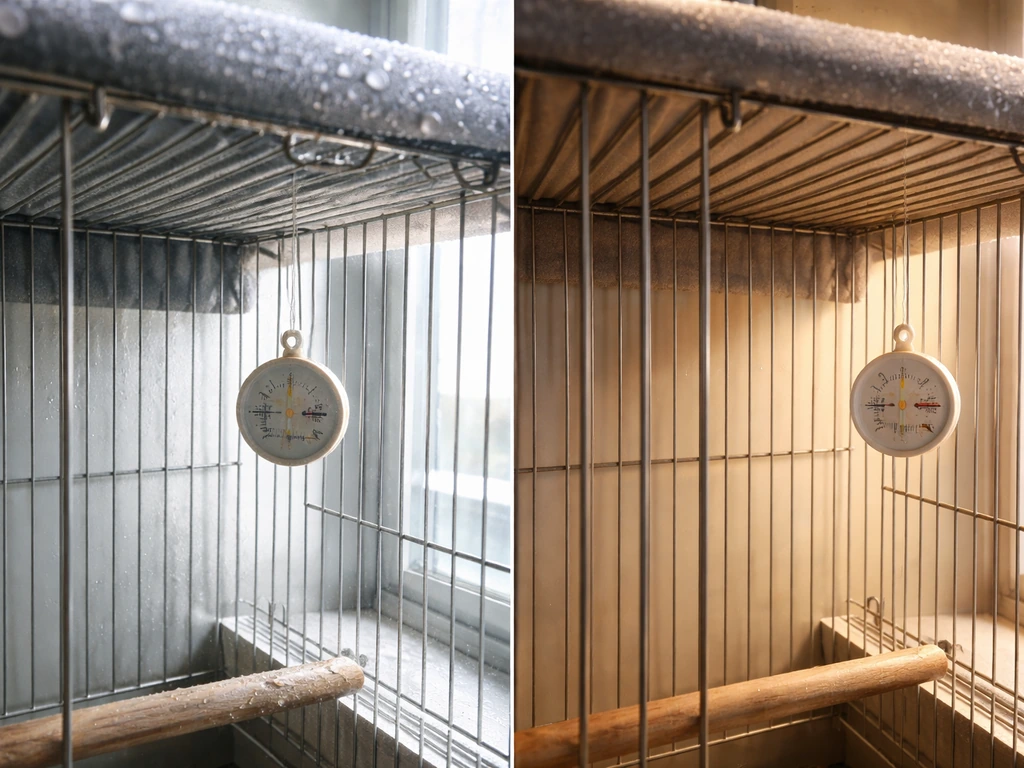
If you're finding wet or damp fabric on the cover in the morning, the cage interior is generating moisture (from the bird's breath and droppings) that can't escape through the cover fast enough. Switch to a more open-weave fabric or reduce how much of the cage is covered. A fully sealed cover in a cold room is a condensation trap. If the bars themselves are wet or frosty, the cage is in a cold spot with high ambient humidity: fix the placement first.
Uneven temperatures across the cage
If one side of the cage is noticeably warmer than the other, identify the source. A nearby vent, a drafty window on one side, or a heat pad placed unevenly will all create this. Use a small digital thermometer to check multiple spots at bird level. A temperature difference of more than about 10°F across the cage is worth correcting. In most cases, moving the cage slightly or repositioning the cover solves it.
Reading your bird's body language
Your bird is your best real-time sensor. A bird that is consistently fluffed up, hunched, or sitting on the cage floor may be cold, but fluffing can also signal illness, so don't assume it's purely a temperature issue. A bird that is panting, holding its wings away from its body, or acting lethargic and sluggish is likely too warm or in heat stress and needs immediate cooling and possibly a vet visit. Open-mouth breathing is always a warning sign. If your bird is alert, active, and holding its feathers normally, your setup is working.
One practical habit: check the cage thermometer every morning before you turn any heating up or down. Over a week, you'll see the actual range your bird is living in overnight, and you can adjust from there. Birds are also much better at tolerating a stable 64°F than a room that swings from 72°F to 58°F every night.
Your quick winter checklist and DIY next steps
Run through this today and you'll have a solid picture of where you stand and what actually needs fixing.
- Put a digital thermometer at bird level in the cage and record the overnight low for two to three nights in a row
- Walk around the cage with your hand open and feel for drafts at bird height, especially near windows, doors, vents, and the floor
- If the overnight low is below 65°F, identify whether a room heater or better cage placement can fix it before adding any cage-local heat source
- Check your cage cover: breathe through the fabric. If it feels suffocating, replace it with a looser-weave cotton or purpose-made cover
- Leave at least the front of the cage uncovered or use a cover with ventilation panels so air can circulate
- Check the room humidity with a hygrometer: target 40–50%. If it's below 40%, add a room humidifier and clean it weekly
- Audit every heat source near the cage for PTFE coatings and remove anything that isn't confirmed bird-safe
- Confirm your room heater has a thermostat or set a programmable thermostat to hold at least 65°F overnight
- Watch your bird each morning for behavioral cues: alert and active is good, panting or persistently fluffed needs attention
If you want to go further, the next logical steps are building a simple draft barrier for the cage back wall (clear coroplast works well and costs under $10), dialing in a humidity routine for the driest months, and choosing the right nighttime cover that won't trap moisture. Heating the cage versus heating the room is a choice worth thinking through carefully too, since each approach involves different trade-offs in safety and comfort. Getting the basics right, good placement, a breathable cover, and a stable room temperature, handles 90% of the problem without any additional hardware. If you're wondering how to cover a bird cage in winter, focus on using breathable materials and leaving the front or one side partly open for air exchange breathable cover.
FAQ
Should I cover my bird cage all night, or only part of the night?
Covering overnight is usually fine, but keep it breathable and avoid a fully sealed wrap. If your room temperature is near the lower end, check morning behavior and humidity, and adjust the coverage so one side or the front stays partially open for steady air exchange.
How do I know if my bird is too cold versus just sleeping?
Cold is more likely when the bird is fluffed and hunched in a sustained way, staying low or off its normal perching habits. Sleeping birds may look relaxed but are usually still responsive, with normal feather position when you approach.
What temperature should I target if my house is outside the 65–80°F range?
If the room regularly falls below about 65°F overnight, focus first on drafts and room-level heating. If you still cannot reach a stable minimum, consider a thermostat-controlled pet heat pad on the outside of the cage (with a gradient), but treat this as short-term support while you improve the room setup.
Is it safe to use a heat lamp or space heater near the cage to warm it faster?
Generally no, because hot spots and unsafe coatings are common with those devices. Prefer a thermostat-controlled heater for the room, or a thermostat-controlled pet heat pad on the outside with no more than one third of the cage floor projection warmed.
Can I place the cage in front of a window if I cover it?
Avoid placing it directly by cold windows or drafty window edges, even if you cover the cage. Radiant cold from the glass can create a cold side, leading to a temperature difference greater than about 10°F across the cage, which is a sign you need repositioning.
What should I do if I notice wetness or condensation on the cover in the morning?
Wet or damp fabric usually means the cover is trapping moisture. Switch to a more open-weave, breathable fabric and reduce how much of the cage you cover, especially if the cover fabric drapes down and seals the bottom.
Can I wrap the cage in plastic or a waterproof cover to stop drafts?
No. Non-porous or waterproof materials prevent proper moisture escape and can trap CO2, increasing respiratory stress risk. Use breathable materials only, and if you need a windbreak, build it with clear coroplast or acrylic that still leaves the front open.
How much of the cage should I warm if I use a heat pad?
Aim for a gradient. Place the thermostat-controlled pet heat pad so it warms only up to about one third of the cage floor projection, leaving the rest cooler so the bird can move to regulate its comfort.
What humidity range is safest for birds in winter?
Most birds do best around the 40–50% relative humidity range. If your hygrometer shows consistently below 40%, use a humidifier that you can clean regularly, and keep the mist out of the direct spray path of the cage.
What is the best way to check for drafts around the cage?
Use your hand at bird level and feel for moving air, not just cold glass or the obvious window area. Check under doors, around the edge of window frames, near vents, and any pet door drafts, because these are frequent causes of sudden overnight drops.
My cage feels unevenly warm on one side, what should I troubleshoot first?
Start with nearby sources that create asymmetry, such as a vent, a drafty window on one side, or uneven heat pad contact. Then verify with a small digital thermometer at multiple spots, and correct anything that creates more than about a 10°F difference across the cage.
What symptoms mean I should act immediately instead of waiting to adjust the setup?
Heat stress signs include panting, holding wings away from the body, lethargy, and eyes half-closed. These warrant immediate cooling and possible veterinary care. Also treat open-mouth breathing as a serious warning sign.
Next Articles
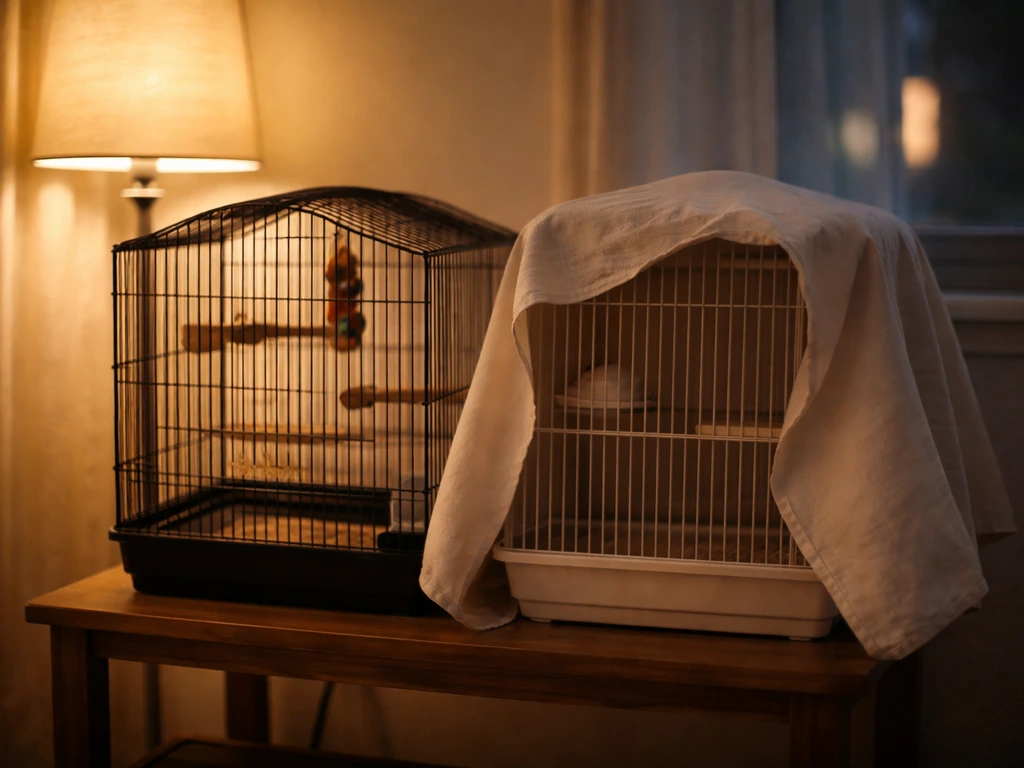
Should You Cover a Bird Cage at Night? Safe Guide
Yes or no on covering a bird cage at night, with safe materials, step-by-step cover tips, and do’s and don’ts.
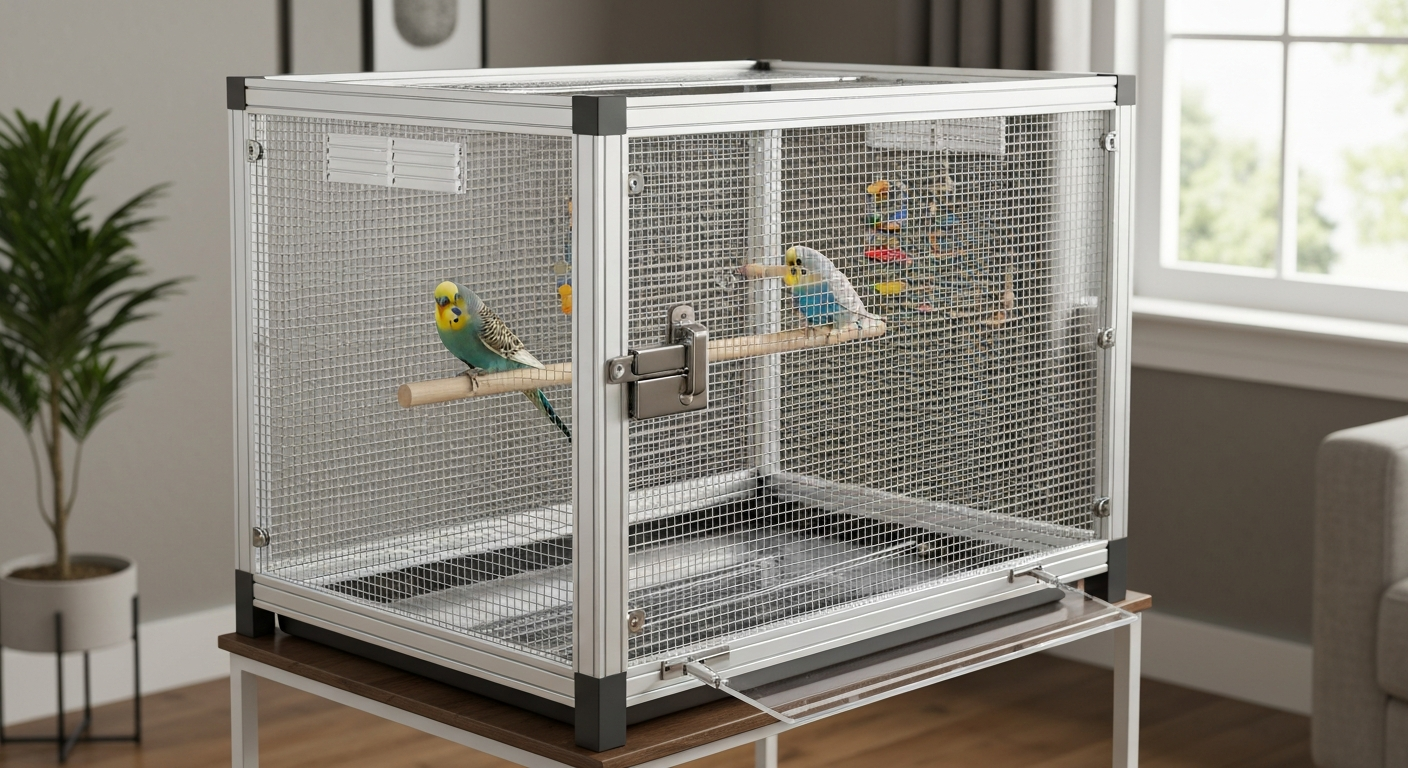
How to Make an Acrylic Bird Cage: Complete Species‑Safe Guide
Step-by-step guide: how to make an acrylic bird cage with species-specific designs, safe materials, templates, and door/
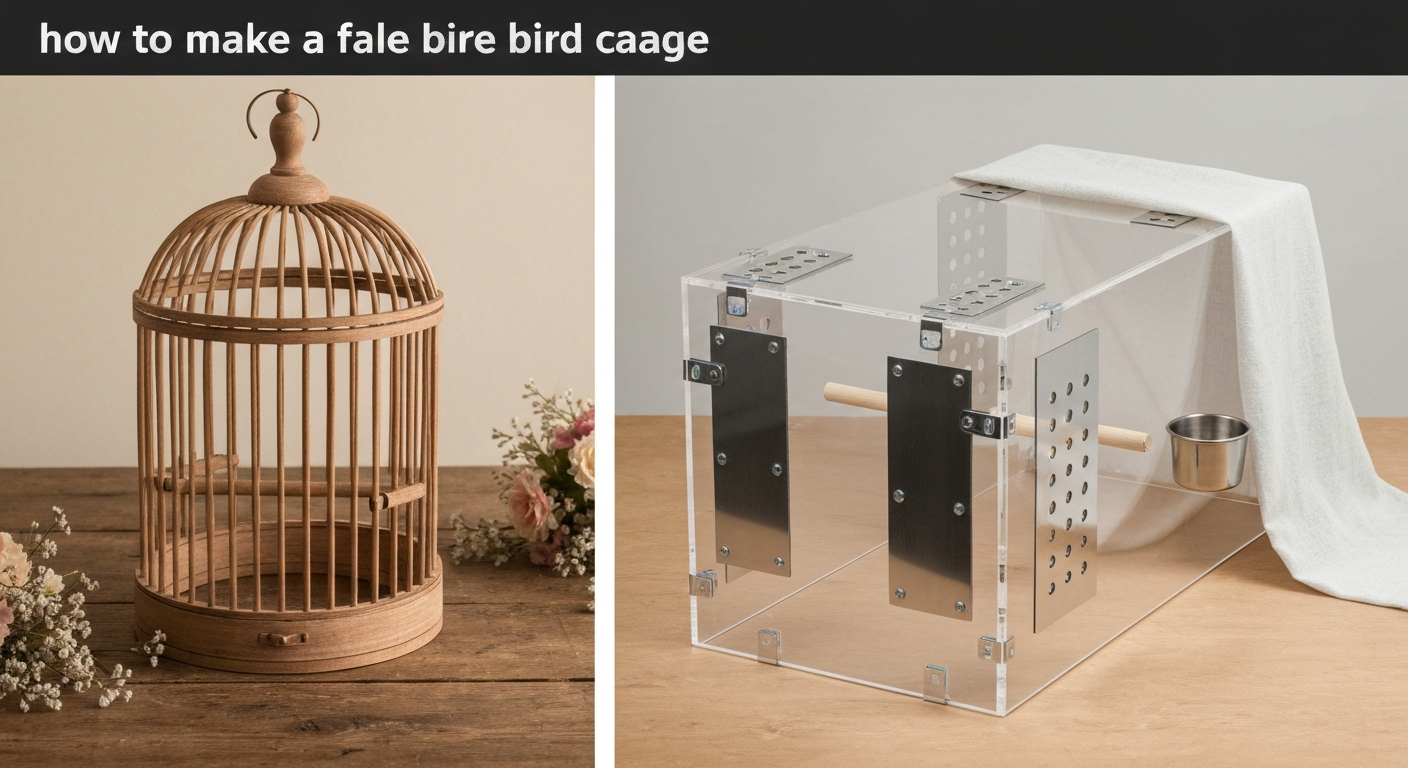
How to Make a Fake Bird Cage: Safe DIY Plans & Rules
DIY guide: how to make a fake bird cage safely, plans, materials, measurements, ventilation, and welfare checks.