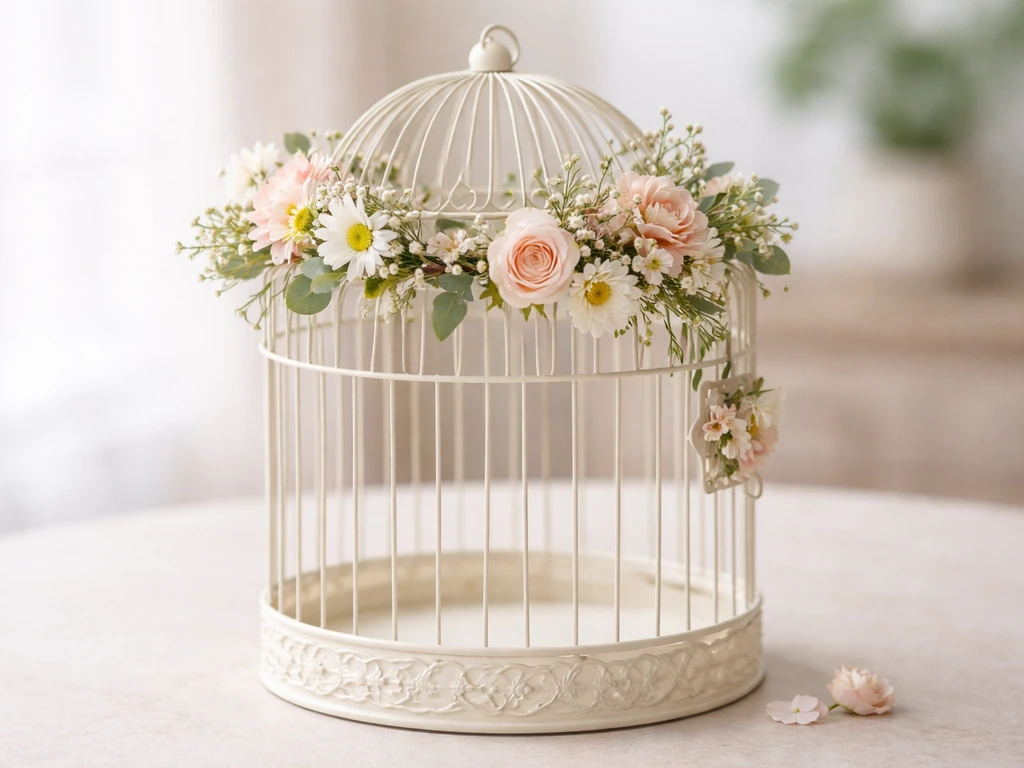
You can absolutely make your bird's cage look festive for Christmas, but the key rule is simple: every decoration stays outside the cage, attaches securely so nothing can fall or swing inside, and uses only non-toxic, bird-safe materials. If you want decorative bird cages beyond the holidays, focus on the same bird-safe rules, especially how you choose materials and place all decorations outside the cage non-toxic, bird-safe materials. No tinsel, no scented anything, no small breakable ornaments, no loose strings or ribbons. Work within those boundaries and you can build a genuinely cheerful holiday setup that your bird barely notices, which is exactly what you want.
How to Decorate Bird Cages for Christmas Safely

Maya Bennett
2 May 2026
Choose safe Christmas materials and cage-safe design rules
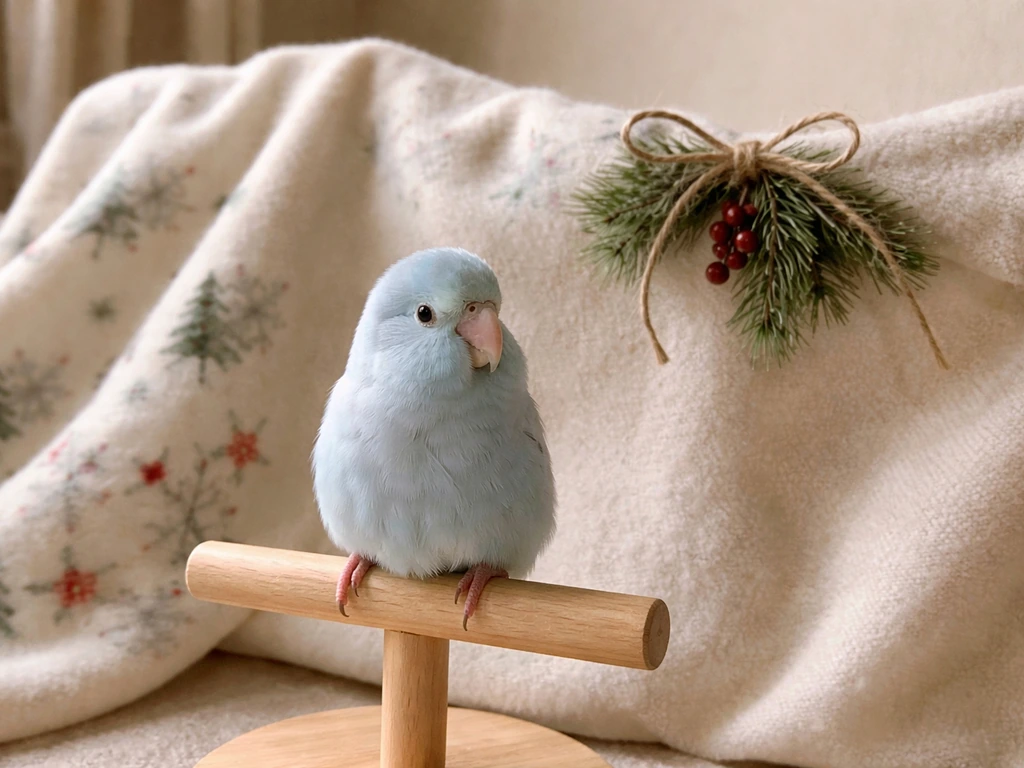
Before you buy a single decoration, get clear on what's off the table. The American Humane Society specifically calls out tinsel and small or breakable ornaments as dangerous for pets because of choking and injury risk. Tinsel, ribbons, and fine string also appear on Poison Control's hazard list for the same reason. If it can unravel, fragment, or snap into sharp pieces, keep it away from the cage entirely.
Chemical fumes are the other big danger people overlook. The World Parrot Trust lists aerosol sprays, scented candles, incense, air fresheners, paints, and solvents as household toxins for parrots. One r/parrots thread similarly centers fumes and smoke as the main concern when discussing non-scented candles around parrots. PetMD and Best Friends Animal Society echo this, specifically flagging spray cleaners and scented products as respiratory hazards. This means no spray-painting ornaments near the cage, no scented holiday candles in the same room, and no aerosol adhesives or glitter sprays on anything near your bird.
Reflective surfaces are a less obvious hazard. Research from Audubon Pennsylvania and the Environmental Literacy Council both document that mirrors and reflective materials cause behavioral confusion and collision risk in birds. Avoid mirror-finish ornaments, metallic Mylar garlands, and shiny foil decorations placed where your bird has a direct line of sight.
Here's a clear reference for what to use and what to skip:
| Material / Item | Safe? | Notes |
|---|---|---|
| Plain fabric (cotton, fleece) | Yes | Use for cage covers and backdrops |
| Untreated natural wood | Yes | Good for DIY wreath hangers |
| Paper decorations (non-dyed) | Yes | Foraging enrichment opportunity |
| Large, solid plastic ornaments (cage exterior only) | Yes | Must be clipped firmly, not hung on string |
| Tinsel / metallic garland | No | Choking, entanglement, ingestion risk |
| Small or glass/breakable ornaments | No | Shattering and ingestion hazard |
| Ribbons, loose string, wire twist-ties | No | Entanglement and ingestion risk |
| Scented candles / incense | No | Toxic fumes for bird respiratory systems |
| Aerosol sprays (glitter, adhesive, paint) | No | Respiratory toxin, off-gassing risk |
| Reflective/mirror-finish ornaments | No | Behavioral confusion and collision risk |
| Christmas tree (real, near cage) | No | Needles, sap, and pine oils are toxic |
Quick holiday decoration ideas that won't stress birds
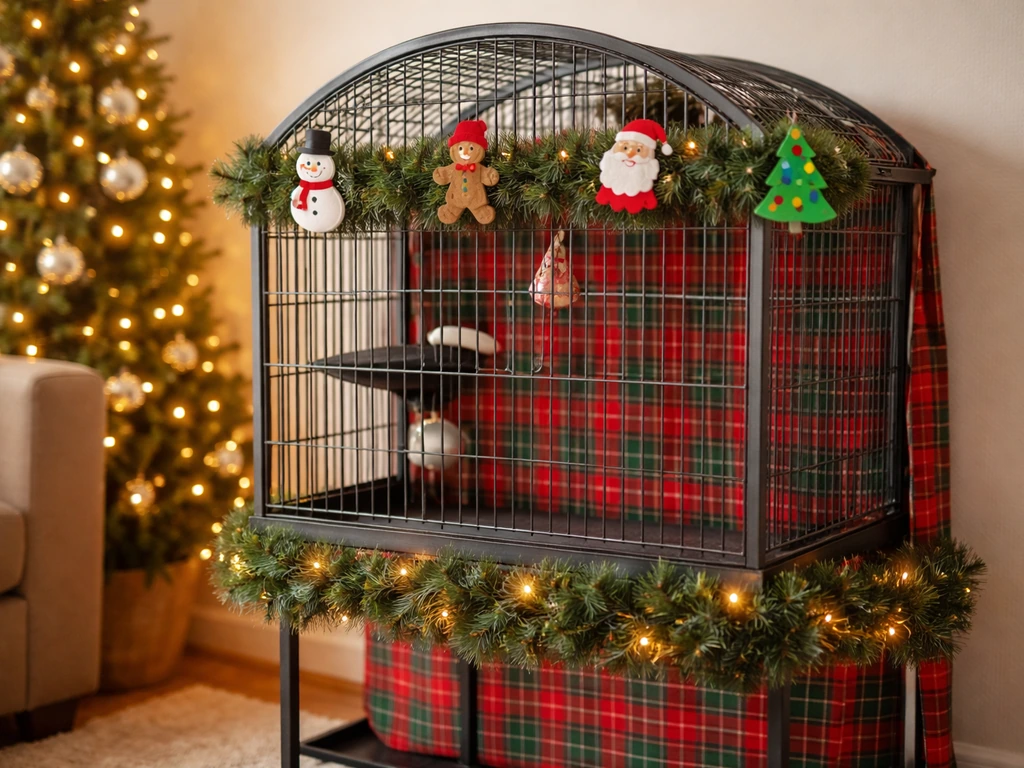
The easiest approach is to decorate the area around the cage rather than the cage itself. If you want flowers specifically, treat them like any other decoration by keeping stems and petals outside the cage and using only bird-safe, non-toxic materials. A themed backdrop, a few safely clipped ornaments on the exterior bars, and a festive cage cover are all you need for a genuinely holiday-looking setup. If you want more ideas, learn how to decorate with bird cages using simple, cage-safe backdrops and exterior ornaments festive cage cover. If you want more, here are ideas that scale from low-effort to a bit more involved.
- Swap the cage cover for a red or green fleece one, or sew a simple Christmas-print cotton cover. Fleece doesn't fray, so there's no loose fiber risk.
- Hang a small fabric wreath (no wire, no glitter, no fake berries) on the outside of the cage door using a cage clip or zip tie trimmed flush.
- Place a small unlit tabletop decoration like a wooden nutcracker or ceramic Santa figure on a shelf near the cage, not touching or overhanging it.
- Tape or pin a festive paper banner or printable Christmas sign to the wall directly behind the cage for a photo-ready backdrop.
- Use natural, unscented greenery (fresh eucalyptus or rosemary sprigs) in a vase nearby if your species tolerates the mild scent, but keep it off the cage itself.
- Add a short strand of large-bulb LED lights around the cage stand or shelf, not touching or threaded through the cage bars.
For species-specific notes: smaller birds like canaries and finches are more easily startled by visual changes, so stick to subtle color swaps (a new cover) rather than adding lots of objects. Parrots are more adaptable but are also enthusiastic chewers, so everything within beak reach must be either completely bird-safe or completely out of reach.
Step-by-step: add a Christmas-themed cage cover or backdrop
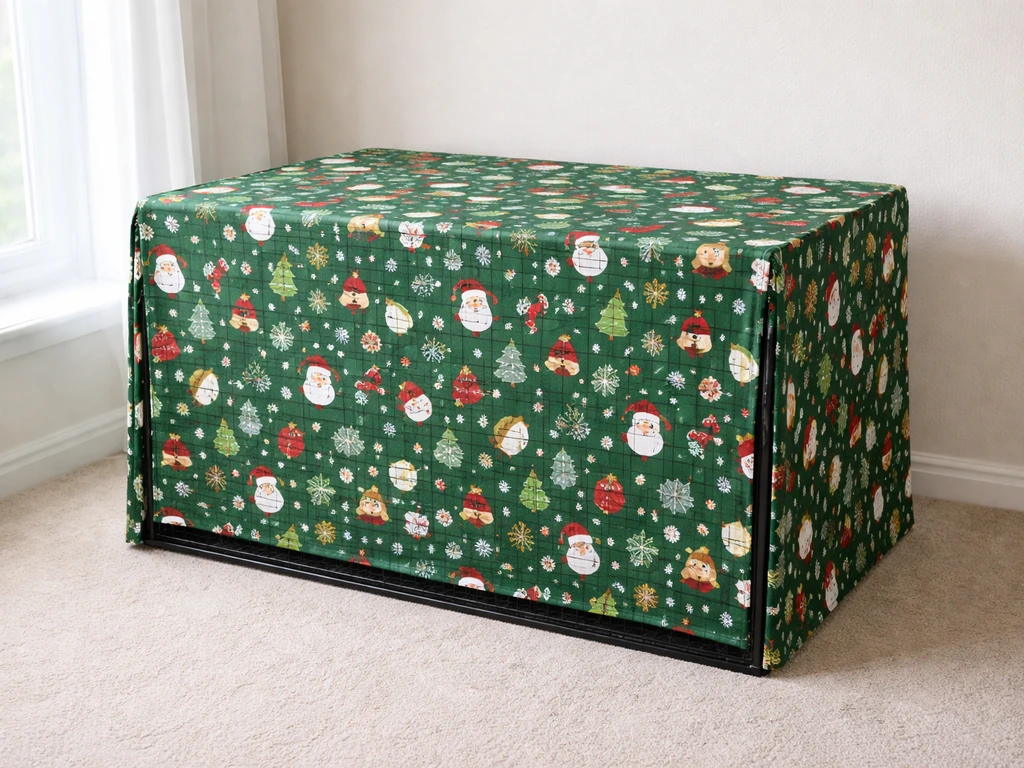
A custom cage cover is the single highest-impact, lowest-risk holiday upgrade you can make. These ideas also include how to decorate with bird cages without putting your bird at risk. Here's how to do it properly.
What you'll need
- Christmas-print cotton or fleece fabric (pre-washed, unscented)
- Measuring tape
- Fabric scissors
- Sewing machine or iron-on hem tape (no-sew option)
- Velcro strips or binder clips for attachment
- Optional: plain red or green felt for a quick no-sew version
The steps
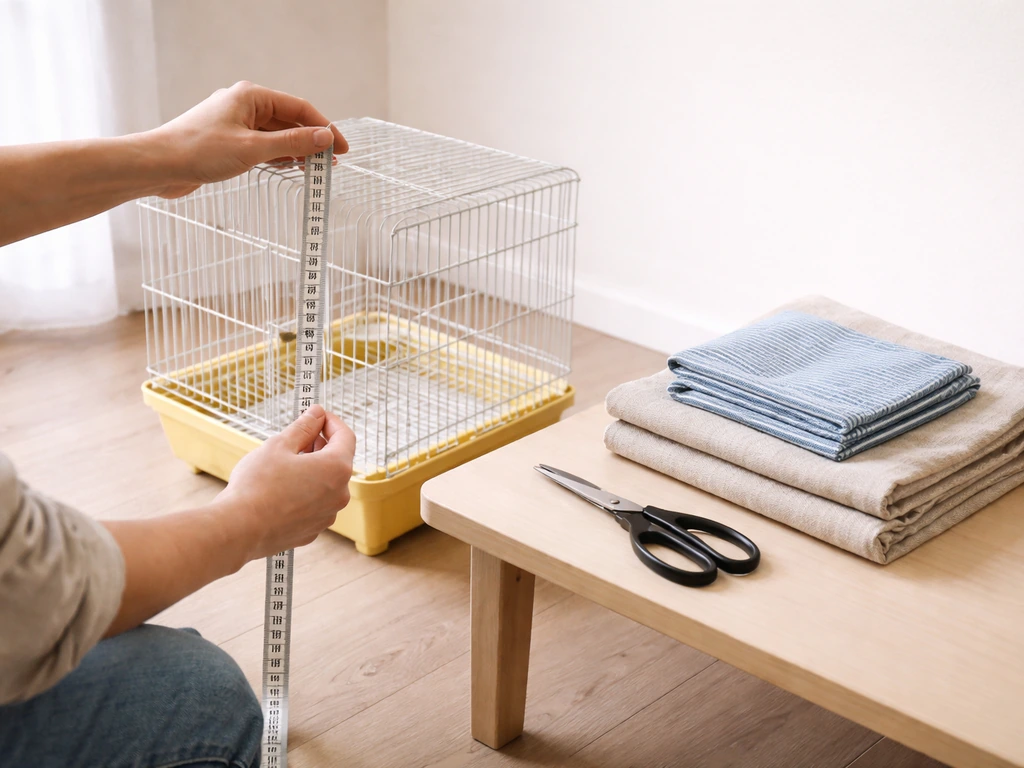
- Measure your cage: height, width, and depth. Add 4 inches to each dimension for overlap and a hem allowance.
- Pre-wash the fabric without scented detergent or fabric softener. Scent residue can irritate bird respiratory systems. Let it fully air-dry.
- Cut the fabric into panels: one for the top, one for each side, and one for the back. The front panel is usually left open or made shorter for ventilation access.
- Hem all edges with a 1-inch fold. Use a sewing machine or iron-on hem tape. Avoid decorative trim with loose threads, beads, or sequins.
- Attach panels together at the top corners using a few hand stitches or Velcro tabs so the cover stays in shape but can be removed easily for cleaning.
- Drape the cover over the cage and check that it doesn't sag into the cage interior at any point. There should be at least 1 to 2 inches of clearance between the fabric and the bars on all sides.
- Secure the bottom edges using binder clips on the outside of the bars, or Velcro straps looped around the base. Do not tuck fabric through the bars.
- For a backdrop instead of a full cover: print or purchase a large Christmas-themed poster, mount it on a foam board, and stand it behind the cage against the wall. Keep at least 3 to 4 inches between the board and the back of the cage for airflow.
Check the cover again after your bird has been near it for an hour. Look for any puckering or sagging that has pulled fabric closer to the bars, and re-clip as needed. If your bird is a chewer and reaches the fabric through the bars, switch to the foam board backdrop method instead.
How to hang and attach ornaments safely (and what to avoid)
The golden rule for ornaments: attach to the cage exterior only, use rigid clips instead of string, and make sure nothing can swing inward through the bars. Here's the right way to do it.
- Choose only large, one-piece solid ornaments made of hard plastic or wood. They should be bigger than your bird's head to eliminate any choking concern if they somehow get access.
- Remove any hanging loop, wire hook, or string from the ornament before attaching it. These are the entanglement hazard, not the ornament itself.
- Attach the ornament directly to an exterior bar using a stainless steel cage clip, a zip tie trimmed flush with no tail, or a small binder clip. The ornament should not move or rotate once clipped.
- Position ornaments only on the top exterior or upper side bars, never near the door, feeding ports, or any gap your bird could reach through.
- After clipping, tug the ornament firmly. If it shifts, wobbles, or could be pulled through the bars, remove it. Only leave it if it's completely stationary.
- Keep a gap of at least 2 bar spacings between any ornament and the nearest bar opening to prevent your bird from reaching it.
What to avoid: ornament hooks (the thin metal S-hooks that come with most Christmas balls), any string or ribbon used as a hanger, sticky tape directly on the cage bars, and clip-on ornaments designed for Christmas trees since those can be pried off easily. Also skip anything with a bell inside, as the small clapper is a swallowing hazard if the bell breaks.
Placement, lighting, and temperature control during the holidays
The holidays bring a lot of changes to a home: more people, different lighting, candles, heaters, open windows for guests, and general household chaos. All of these affect your bird, and placement decisions during December matter more than at any other time of year.
Lighting
LED string lights are the only lights safe to use near a bird cage because they run cool and don't off-gas like incense candles or oil warmers. If you're wrapping lights around the cage stand or shelf, use large-bulb LED strands and keep them on the stand structure itself, not touching the cage. Put them on a timer so your bird gets consistent light/dark cycles. Blinking or strobing light modes can startle birds, so use steady-glow settings only. Never place the cage directly next to a Christmas tree with traditional incandescent lights; those bulbs run hot and the tree itself (especially a real pine) poses toxic needle and sap risks.
Temperature and drafts
The Merck Veterinary Manual specifically warns about injury from open windows and doors around birds. During holiday gatherings, front doors and windows get opened constantly. Position the cage away from any hallway or entryway where cold air rushes in. Birds are highly sensitive to temperature swings, so avoid placing the cage near a fireplace, space heater, or heating vent, all of which can cause overheating or off-gas fumes. The ideal cage temperature is 65 to 80 degrees Fahrenheit with no direct drafts.
Routine and noise
Holiday parties and increased household activity are stressful for birds that are used to a quiet routine. Keep the cage in its normal location rather than moving it to a more festive spot in the house. If you're hosting a large gathering, consider covering the cage earlier than usual and placing it in a quieter room temporarily. Maintaining feeding and interaction times as close to normal as possible will prevent stress behaviors from developing.
Cleanup, mess control, and storage between holidays
Holiday decorating creates more cleanup work, especially around a bird cage where food debris, feathers, and droppings already need regular attention. A few simple systems keep things manageable.
- Place a large washable mat or tray liner under and around the cage base during the holiday period. This catches any debris from decorations like dried greenery or paper confetti, making sweeping faster.
- Wipe down exterior cage bars weekly using plain warm water or a bird-safe diluted white vinegar solution on a cloth (not sprayed). Never use aerosol cleaners near the cage.
- If you've added a fabric cover or backdrop, wash it every two weeks at minimum using unscented detergent. Don't let it go the whole holiday season without washing.
- Inspect all attached ornaments and clips every few days. Look for any sign of rust, cracking, or loosening. Remove anything that's degraded.
- After the holidays, wash and fully dry all fabric decorations before storing them. Store ornaments in a lidded box away from humidity. Check everything before reuse next year.
For storage between years: label a single dedicated bin for your bird's holiday decorations. Keep it separate from your household decoration storage so you always know exactly what's been vetted as bird-safe. Add a simple checklist inside the lid with your safe/avoid rules so you don't have to re-research next December.
Troubleshooting: stressed birds, chewing, entanglement, pests, and damage
Your bird seems stressed or is acting differently
If your bird is feather-fluffing, refusing to eat, screaming more than usual, or sitting at the bottom of the cage after you've added decorations, remove the new items immediately and give them a day to settle. Then re-introduce one element at a time, starting with the least visually dramatic change, like a new cover color. Parrots in particular can be sensitive to unfamiliar objects in their visual field. Smaller birds like finches and canaries may show stress simply from a change in the room's light pattern, so check that any new lighting isn't casting unfamiliar shadows across the cage.
Your bird is chewing or pulling at the cage cover
CAARE's guidance on parrot cages specifically warns that birds who chew cage covers can become tangled in loose fibers or ingest them. If your bird is actively working at the cover fabric through the bars, you have two options: switch to a stiffer backdrop (foam board mounted behind the cage, out of reach) or accept that a full cover isn't suitable for your bird right now and use a simple wall banner or shelf decorations instead. Never leave a partially chewed cover on the cage overnight.
An ornament has fallen or is now loose
If a clipped ornament falls off the exterior, remove it and inspect the attachment point on the cage bar. If the bar has any sharp edge from the clip, file it smooth before reattaching anything. If the ornament cracked when it fell, discard it. Never reattach a damaged ornament. Replace it with the same rigid clip method using an undamaged ornament.
Pests attracted to holiday decorations
Natural greenery, dried fruits used in decorative garlands, and paper or straw elements can attract mites, ants, or grain beetles if they're near a bird cage where food is present. If you notice tiny insects near the cage, remove all natural or food-based decorations immediately. Clean the cage area with warm water and a diluted white vinegar wipe, not aerosol pest sprays, which are toxic to birds. For recurring pest issues, stick exclusively to fabric and hard plastic decorations and keep the cage area vacuumed regularly through the holiday season.
The decorations are looking worn or damaged mid-season
Fabric covers fade and get food-stained quickly near an active cage. Keep a backup cover ready so you can rotate and wash without leaving the cage uncovered at night. If a backdrop warps from humidity near a kitchen or bathroom, replace it with a laminated poster or foam board which holds its shape better. Check all zip ties and binder clips monthly since plastic clips can become brittle in cold rooms and fail without warning.
If you're interested in going beyond the holiday season, the same principles here apply to decorating bird cages for other occasions or for purely aesthetic purposes year-round. If you're wondering what to do with old bird cages, these same safety rules can help you decide what to keep, clean, or replace before putting anything back in use decorating bird cages for other occasions. The safe attachment rules, non-toxic material choices, and backdrop techniques all transfer directly. The holiday setup is really just a great excuse to build habits that make your bird's environment both safer and more visually interesting all year long.
FAQ
Can I hang ornaments inside my bird cage so they look nicer from every angle?
No. Keep every decoration outside the cage, even if it seems secure. Inside items can swing, loosen, or break, and birds can chew or peck at them. If you want the “inside look,” use an exterior backdrop plus cage-bar exterior ornaments that cannot dangle inward.
Is it okay to use hot glue, double-sided tape, or mounting putty to attach decorations to the bars?
Avoid adhesive on or right against the cage bars, because it can release or create sharp residue, and some adhesives off-gas. Use rigid clips or secure cage-safe attachments from the outside only. If you must use any adhesive for a backdrop off to the side, confirm it is bird-safe when cured and keep it well away from beak reach.
What should I do if my bird chews the decorative cover or backdrop fibers?
Remove the item immediately if you see active chewing, fraying, or snagging behavior. Do not leave a partially chewed cover overnight. Switch to a stiffer, harder-to-tear option like a foam-board backdrop mounted behind the cage and out of reach, or use simpler wall/shelf decorations.
Are Christmas tree needles and pine decor safe near the cage?
They are risky if they are within reach or create ongoing contact with the area around the cage. Keep real greenery, dried botanicals, and pine-sap items away, and remove anything that attracts insects. If you want a natural look, use fabric or hard plastic pieces placed well away from the cage and never inside the cage footprint.
Can I use glitter, metallic sprays, or scented ornaments for a more festive look?
Skip glitter and any aerosol or spray effects near the bird. Even if the decoration is “craft-safe,” particles and residues can be respiratory or ingestible. Choose non-toxic, solid (non-flaking) materials and avoid anything scented, including scented candles, diffusers, or holiday potpourri.
Are LED string lights always safe, or can the cord and attachments still pose a problem?
LEDs are the safer choice, but you still need to manage access. Keep cords and any clips on the stand or shelf structure, never touching the cage, and route cables so your bird cannot peck at wire insulation. Use steady light modes, and confirm the bulbs stay cool to the touch during use.
How do I prevent accidents if a decoration falls off or the clip loosens?
If an exterior ornament falls, stop and inspect before reusing anything. Check the specific bar where the clip attached for sharp edges, file smooth if needed, and discard any ornament that cracked or warped. Reattach only with rigid clips using the same secure method, not string or ribbon hangers.
My bird seems stressed after I add decorations, but nothing obviously dangerous happened. What’s the next step?
Treat it as a reversible change. Remove the most visually dramatic new element first, then reintroduce one item at a time after a full day. Also check lighting patterns, shadows, and reflective surfaces, since behavioral confusion can happen even without chew or breakage.
Do reflective ornaments or metallic decorations pose a risk even if they are outside the cage?
Yes. Reflective materials can cause collision risk or panic, especially if they sit directly in the bird’s line of sight. Choose matte finishes and avoid mirror-like ornaments, Mylar garlands, or foil pieces that create sharp reflections.
Can I decorate year-round using the same techniques, or do holidays require different safety rules?
The safety principles carry over. The only “extra” holiday risks are seasonal lighting, extra open doors/windows from guests, and scented holiday products. For non-holiday use, still avoid the same hazards (tinsel, breakable items, adhesives near the bars, fumes, reflective confusion, and dangling attachments).
How should I store Christmas decorations so I do not accidentally reuse something unsafe next year?
Keep a dedicated, labeled bin for bird-vetted holiday items only, separate from your general home décor. Add a simple safe/avoid checklist inside the lid, so you quickly confirm materials before setting up. Also inspect clips for brittleness if your storage area is cold.
Next Article
How to Decorate Bird Cage With Flowers Safely
Step by step safe flower decor for bird cages: pick non toxic plants, avoid hazards, and attach ideas that prevent chewi