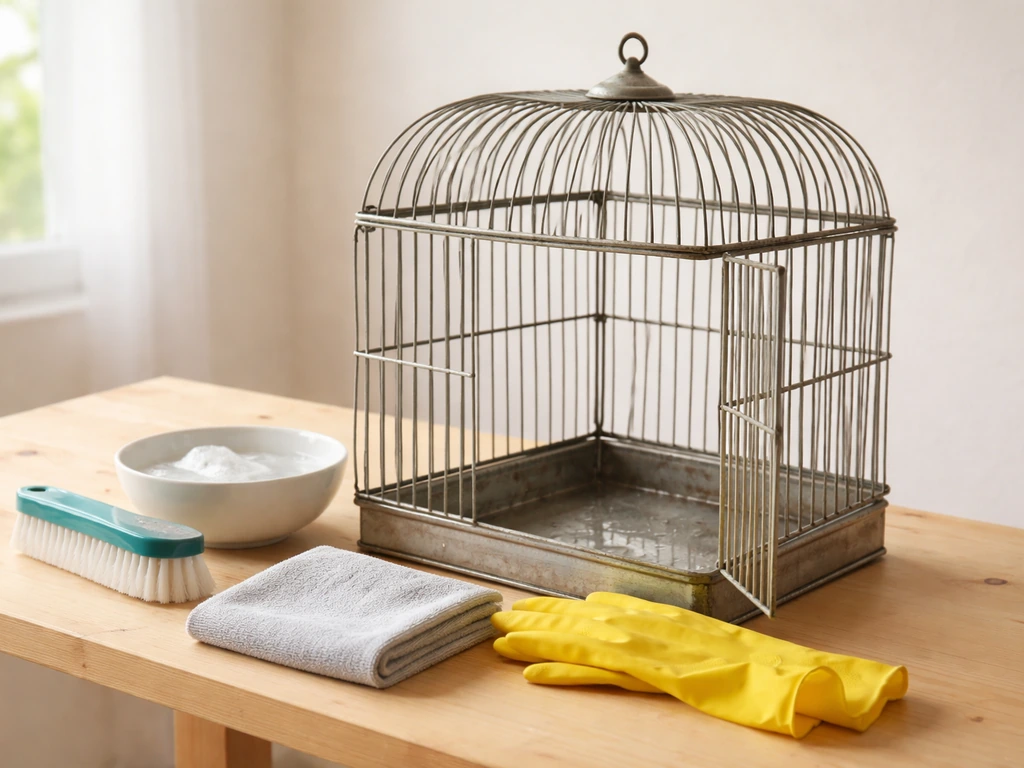
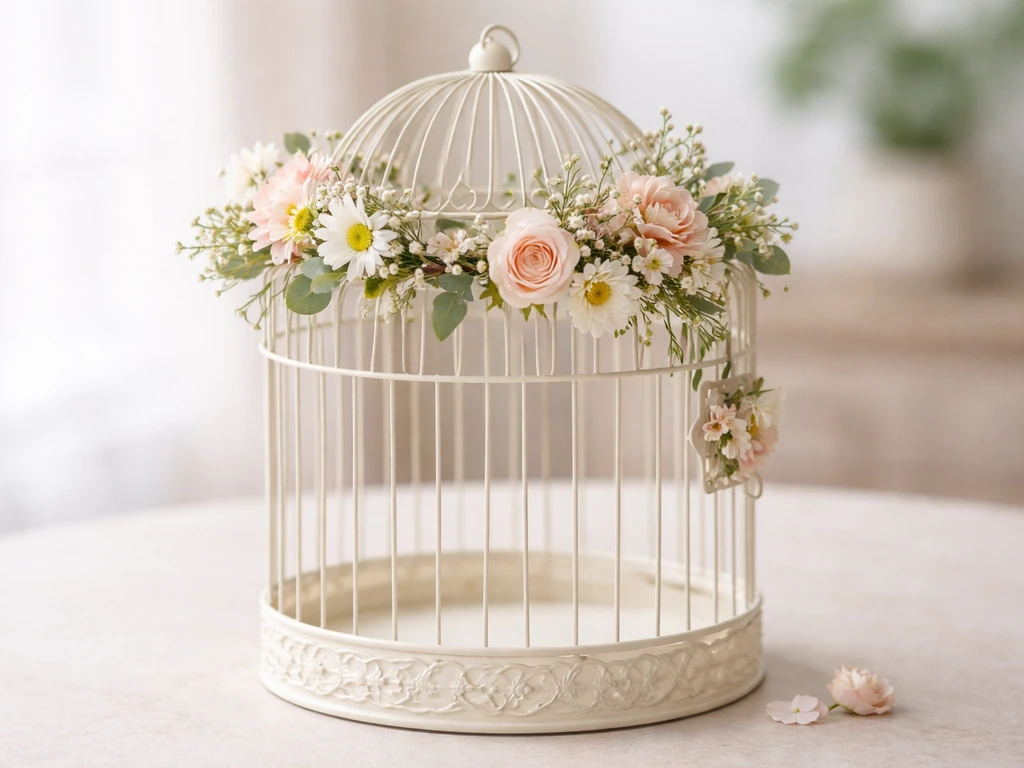
You can decorate a bird cage with flowers, but the safest way to do it keeps almost all live or dried plant material on the outside of the cage, not inside it. For birds that are living in the cage, flower decor works best as an external display: silk or high-quality artificial flowers wired to the outside bars, a floral wreath hung on the stand, or a potted bird-safe plant placed close enough to look great but far enough that your bird can't reach it. If you do want something inside, you're limited to a short list of truly bird-safe botanicals and you need to commit to daily mess checks. This guide walks you through all of it: what's safe, what's not, how to attach things, and how to keep it looking fresh without creating a hazard.
How to Decorate Bird Cage With Flowers Safely

Maya Bennett
26 Apr 2026
Safety first: what's safe to hang inside or near a cage
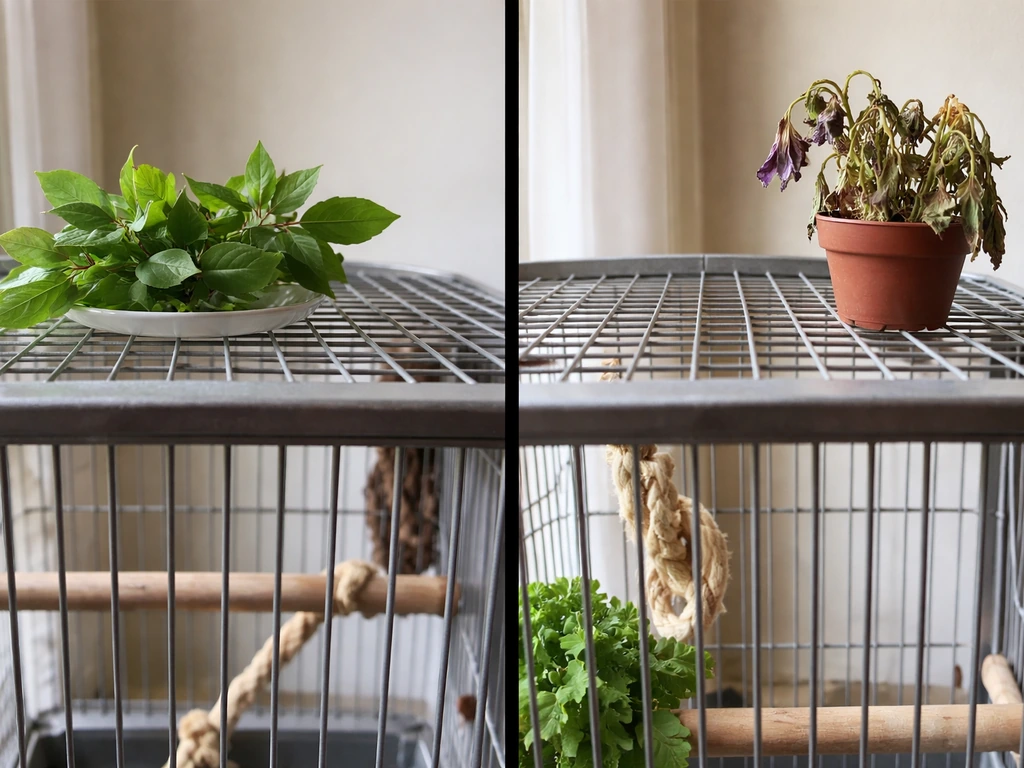
This is the part most decor guides skip, and it's the most important piece. blank" rel="noopener noreferrer">Many common ornamental flowers are toxic to birds. Avian vets flag oleander as 'beautiful but deadly,' and the VCA toxic plant list includes blank" rel="noopener noreferrer">peace lily, pothos, philodendron, lily of the valley, and multiple other lily varieties. Budgie-specific hazard lists add bird of paradise (including the seeds), anemone, cardinal flower, and castor bean. The problem is that birds don't just look at things. They chew, shred, and taste everything within reach. A flower that's harmless to you can cause serious organ damage or death in a small bird.
Beyond toxicity, avian vets generally do not recommend putting any plants inside a bird's cage because cages are hard to keep clean when plant material is present. Dropped petals, pollen, standing water from stems, and decomposing leaves all create sanitation problems quickly. Keep that in mind as your baseline: outside the cage is almost always the right call.
Flowers and plants that are considered bird-safe
If you want to use real flowers as an interior accent or as perch enrichment, stick to species that appear on established bird-safe lists: roses (pesticide-free, thorns trimmed), dandelions, chamomile, hibiscus, and marigolds are commonly cited as non-toxic. Even with these, buy organic or grow your own. Store-bought cut flowers are almost always treated with pesticides, fungicides, or preservative dips that are harmful to birds. If you can't confirm the flower is pesticide-free, treat it as unsafe and keep it outside the cage.
What to avoid completely
- Oleander (toxic even in small amounts)
- Lily of the valley (Convallaria majalis, listed in the Merck Veterinary Manual as toxic)
- Peace lily, philodendron, and pothos (common houseplants that are all toxic to birds)
- Bird of paradise, including seeds
- Anemone, cardinal flower, and castor bean
- Any cut flower purchased from a florist or grocery store unless confirmed pesticide-free
- Flowers with pollen that causes heavy dust or fine particles (airborne irritants)
Artificial flowers: the practical workaround
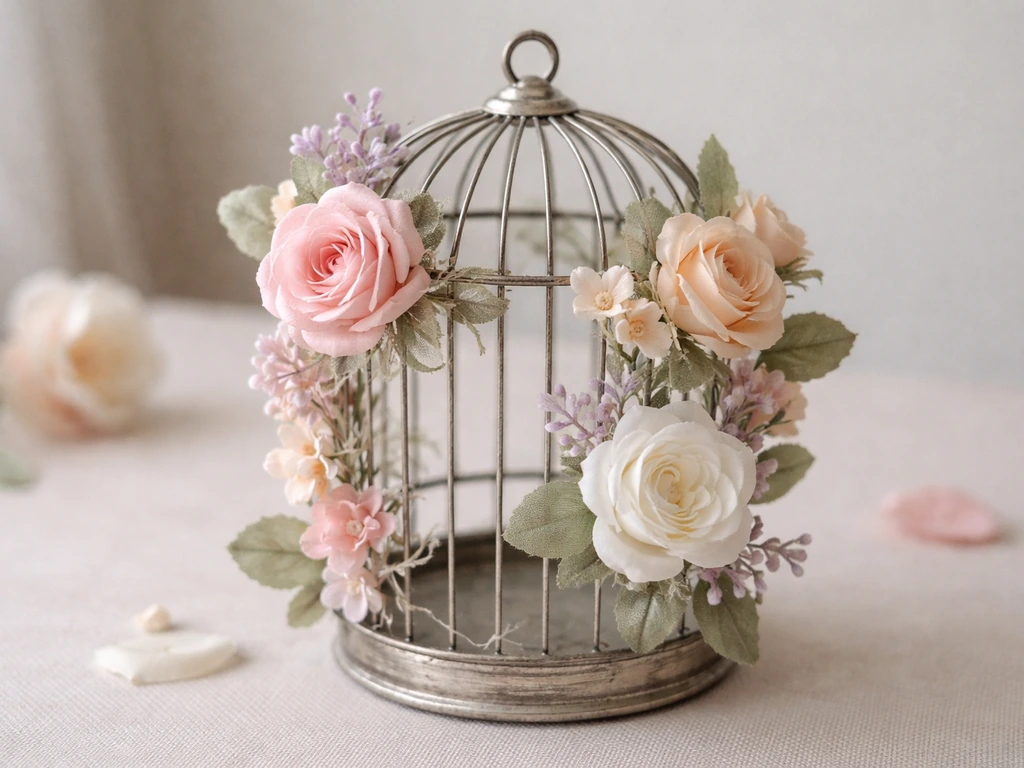
High-quality silk or fabric artificial flowers are the most practical solution for most setups. They look realistic, they don't drop pollen or petals, they don't attract pests, and they're easy to wipe clean. The one check you need to do: inspect every artificial flower for small wire ends, plastic stamens that can break off, or loose beads and embellishments. Birds will find and chew anything detachable. Clip any exposed wire flush, remove decorative extras, and only use flowers where the fabric petals are securely stitched, not glued.
Simple flower decor for any cage size
The easiest approach for any cage size is to work from the outside in. Start with the stand or surrounding space, then decide whether you want anything on the cage bars, and only then consider whether anything goes inside. This keeps decor looking intentional and layered without creating interior hazards.
- Floral wreath on the cage stand or hanging above the cage top: works on any size, zero interior risk
- Silk flower garland woven through exterior bars: easy to scale from a small tabletop cage to a large floor-standing enclosure
- Single stem clusters zip-tied to the outside of bar intersections: minimal, clean, easy to remove
- A small potted bird-safe plant (like a rosemary bush or herb pot) placed on a shelf or table near the cage: looks integrated without touching the bars
- Seasonal dried flower bundles hung above the cage on a hook: adds visual height and texture without contact
- For inside the cage only: a single pesticide-free rose or hibiscus bloom clipped to a bar holder as a temporary foraging treat, removed within a few hours
For large cages or aviaries, you have more options because you can position decor high on the cage exterior where the bird can see it but not reach it. For small cages, the outside-only rule is even more important because the bird is always close to the bars and can reach or chew anything wired nearby.
Step-by-step: decorating a small bird cage
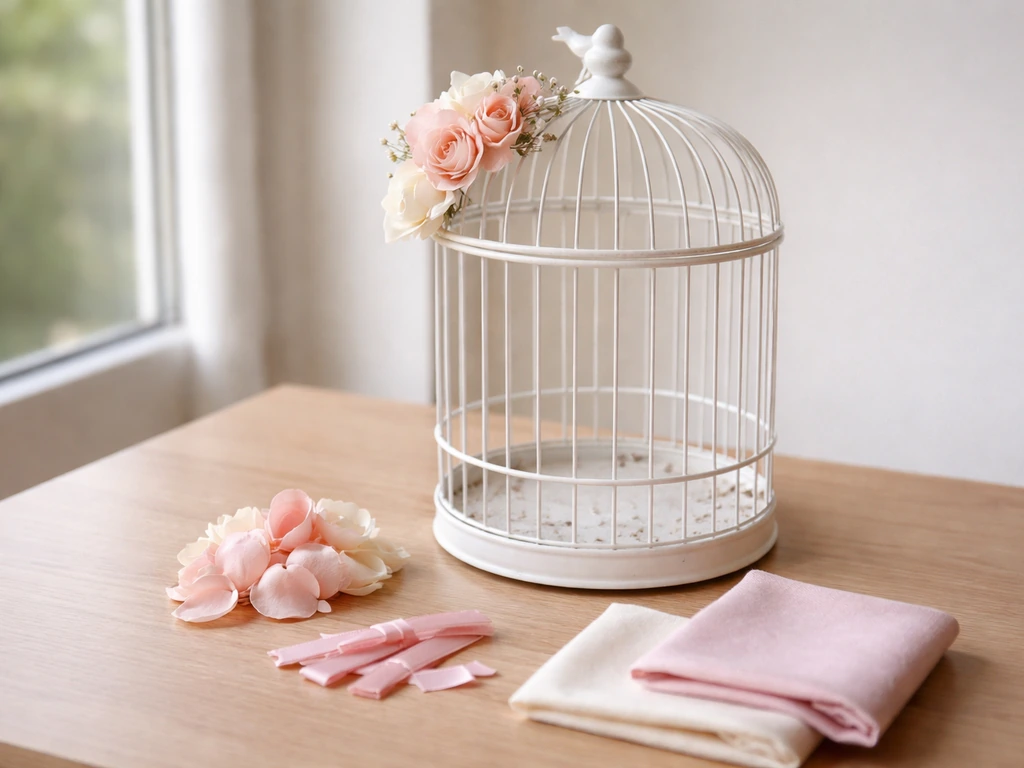
This walkthrough is aimed at a small cage like a budgie or canary setup, but the same steps apply to any cage where the bird has full contact with the bars. Gather your materials before you start so you're not improvising around a bird.
What you'll need
- Silk or fabric artificial flowers (petals securely stitched, no loose embellishments)
- Plastic-coated twist ties or bird-safe stainless steel cable ties
- Wire cutters and needle-nose pliers to trim and fold tie ends
- Scissors
- A small spray bottle with water and a drop of bird-safe dish soap (for cleaning flowers before use)
- Optional: a small floral foam ring or wreath form for the cage top
- Remove your bird from the cage and set it in a safe, supervised space. Never work on cage decor with the bird inside.
- Inspect each artificial flower thoroughly. Tug on petals, stamens, and any wire stems. Remove anything that pulls loose. Clip all wire ends flush with needle-nose pliers so no sharp points stick out.
- Wash the flowers with your soap solution and let them dry fully before attaching. This removes any manufacturing residues.
- Choose your attachment points on the cage exterior only. Focus on the top corners, along the outside of the top frame, or on the stand. Avoid placing anything on the lower half of exterior bars where it can be reached through the bars from inside.
- Attach each flower using a plastic-coated twist tie or cable tie through the stem and around a bar intersection. Fold any tie end back on itself tightly so there is no loose tail that could poke through to the inside.
- Step back and check airflow. Flowers should not block more than a small section of any one side. The bird needs full ventilation from at least two sides of the cage.
- Reintroduce your bird and watch for 10 to 15 minutes. If your bird shows intense interest in trying to reach the decor through the bars, reposition or remove the pieces closest to areas where the bird perches.
Placement and attachment methods that won't harm wings or beaks
How you attach decor matters as much as what you attach. The risks you're managing are entanglement (threads, wires, or loose ties catching a toe or wing), puncture (exposed wire ends), and ingestion (small parts chewed off). Here's how to get the attachment right.
| Method | Best for | Watch out for |
|---|---|---|
| Plastic-coated twist ties | Light silk flowers on exterior bars | Loose tails must be folded back flush; replace if fraying |
| Stainless steel cable ties | Heavier garlands or wreath forms on the cage top or stand | Trim the locking tab flush with wire cutters after cinching |
| S-hooks (stainless or nickel-free) | Hanging a wreath or garland loop from the cage top dome | Check hook gauge; gaps wider than the bar spacing let birds get a foot through |
| Hook-and-loop fabric tape (Velcro) | Attaching a floral foam ring to the flat top of a rectangular cage | Check adhesive is dry and not accessible from inside; replace when it weakens |
| Zip ties (plastic) | Stand decor and external frame attachment | Cut the strap tail completely flush; stubs can scratch |
For placement, the top of the cage and the stand are the two safest zones for any flower decor. Along the sides, stay in the top third of the exterior. Never place decor at perch height on the outside bars because birds will press against the bars and can get a beak or toe caught in whatever you've woven there. Leave the front door area completely clear so you can access the cage without disturbing decor or stressing the bird.
If you're decorating for photos or display and the bird won't be in the cage during that time, you have more flexibility. Some people decorate empty vintage or ornamental cages entirely differently from a bird's working enclosure. If you need ideas for what to do with an old bird cage, use the placement and display-only approach to turn it into safe decor without putting your bird at risk what to do with old bird cages. If you're working with a real pet bird and want a safe plan for decorating while it stays inside, focus on exterior placement and bird-safe attachments how to make decorative bird cages. If that's your situation, the sibling topic covering how to decorate with bird cages (using cages as home decor vessels) goes into much more detail on display-only setups. If you want display ideas for a home setting, you can follow the guide on how to decorate with bird cages for more detailed tips.
Weather and season planning: freshness, mess control, and cleanup
If your cage is indoors in a climate-controlled room, artificial flowers need very little maintenance. Dust them with a dry cloth or a low-power blow dryer on the cool setting every couple of weeks. Wipe the bar sections where ties contact the cage with a damp cloth during regular cage cleanings. Artificial flowers don't fade quickly indoors, but if you get a few months of direct sun through a window they'll lose color, so rotate seasonal designs.
For outdoor or patio cages where weather is a factor, the calculus changes. Real flowers wilt within a day in heat, attract insects, and drop debris into food and water dishes. Artificial flowers in outdoor settings need UV-resistant material, otherwise they become brittle and the petals crack. Check your artificial flowers before every outdoor season and replace any that have gone stiff or discolored, since brittle petals break off into small pieces more easily. The guide on how to decorate a bird cage for outside covers outdoor-specific setups in more detail, including wind and rain protection.
Seasonal swaps
Changing your flower decor seasonally is a nice way to keep a cage looking fresh. Spring and summer work well with bright hibiscus or sunflower-style silk flowers in yellow, orange, and pink. Autumn suits dried-look silk flowers in burgundy and rust. Winter setups with poinsettia-style accents look festive, though note that real poinsettia is mildly toxic to birds, so only use artificial versions. If you want to do a full holiday theme, there's a separate guide specifically on how to decorate bird cages for Christmas that covers seasonal materials in more detail.
Mess control basics
- If using any real flowers as a temporary interior treat, remove the entire flower within 2 to 4 hours and replace cage liner paper the same day
- Check that artificial flowers near feeding areas aren't collecting seed hulls or droppings in petal folds, which can harbor bacteria
- Wipe all exterior bar-level decor during each weekly cage cleaning
- Replace twist ties or cable ties immediately if they show any fraying or discoloration
Troubleshooting: chewing, pests, and respiratory concerns
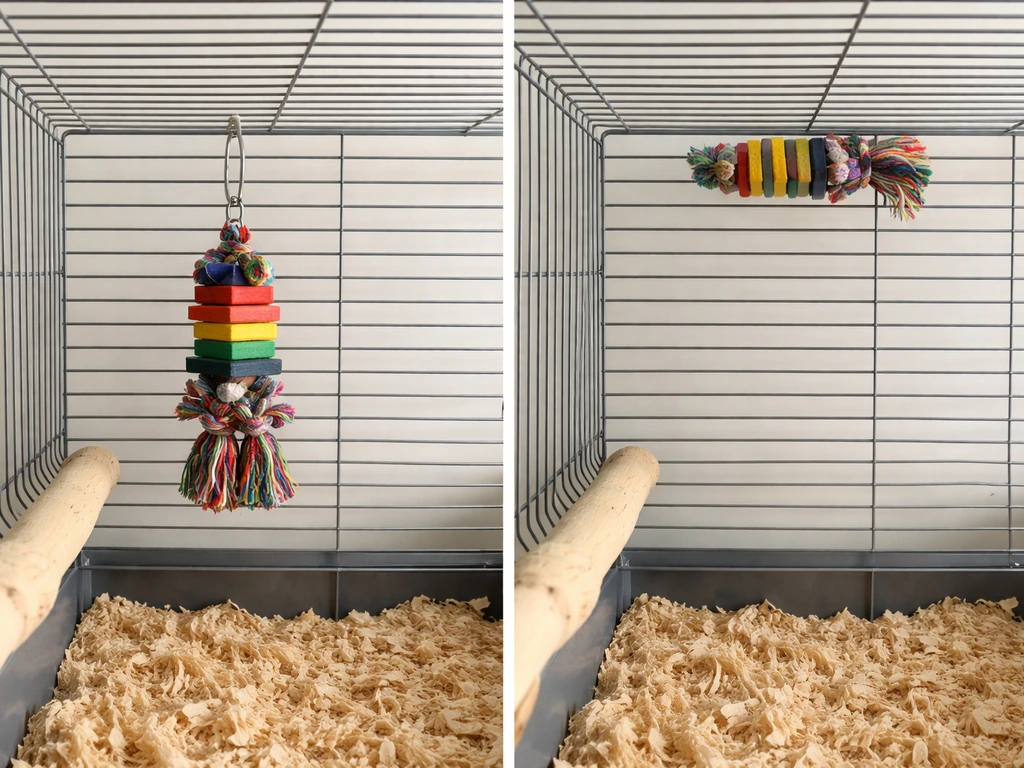
My bird keeps chewing or pulling the decor
This is the most common problem and it's almost always a placement issue. If the bird can reach the decor from any perch position, it will chew it. Reposition everything higher on the exterior or shift to the cage top and stand only. If your bird is specifically targeting the bars where decor is attached (chewing at the ties), try a different attachment style or cover the attachment point with a stainless steel clip so the tie itself isn't accessible. Some birds are just persistent chewers and the safest fix is to keep all decor off the cage entirely and use the stand and surrounding space instead.
Pests attracted to flowers
Real flowers, even fresh ones kept outside the cage, can attract gnats, fruit flies, and mites if they begin to decompose. Replace real flowers daily if you use them at all, and don't let any plant material sit in standing water near the cage. If you notice small flying insects around the cage area, remove all real plant material immediately and do a thorough clean of the surrounding surface. Artificial flowers don't attract pests in the same way, which is one more reason they're the practical default.
Allergy and respiratory concerns
Birds have highly sensitive respiratory systems. Pollen from real flowers can act as an airborne irritant, especially in a small room where air circulation is limited. Signs of respiratory distress in birds include tail bobbing, open-mouth breathing, clicking or wheezing sounds, and discharge from the nares. If you add any real flower to or near the cage and notice any of these signs, remove the flowers immediately and move your bird to clean air. Fragrant flowers are particularly risky because volatile aromatic compounds can irritate avian airways even without visible pollen. Stick to unscented options and avoid placing any flower variety inside an enclosed or low-ventilation space with a bird.
Artificial flowers carry their own version of this problem on day one: some fabric flowers off-gassing from dyes or coatings. Wash all artificial flowers before use as described in the step-by-step section, and let them air out for 24 hours in a room away from the bird before bringing them near the cage. If you notice your bird sneezing repeatedly after a new decor addition, remove it and air everything out before reintroducing.
Quick reference: problem and fix
| Problem | Likely cause | Fix |
|---|---|---|
| Bird is chewing decor | Decor within reach from a perch or through bars | Move all decor to cage top or stand only |
| Petals falling into food/water | Interior or low-exterior placement | Reposition higher on exterior or switch to artificial |
| Gnats or fruit flies appearing | Decomposing real flowers or standing water in stems | Remove all real plant material, clean surrounding surface |
| Bird sneezing or showing breathing changes | Pollen, fragrance, or off-gassing from new artificial flowers | Remove decor immediately, move bird to fresh air, consult vet if symptoms persist |
| Wire ends snagging feathers | Tie ends not trimmed and folded flush | Clip all wire ends flush and fold back with pliers |
| Artificial flowers fading or cracking | UV exposure outdoors or aging indoors | Replace brittle pieces, use UV-resistant materials for outdoor setups |
Decorating a bird cage with flowers is absolutely doable and can look really beautiful, but the bird's safety has to drive every single decision. Start with artificial flowers on the exterior, get the attachment right, and build from there. Once you're confident in the setup and you know your bird's chewing habits, you can experiment with safe real blooms as temporary enrichment. The goal is a cage that looks great and stays a healthy, stress-free space for your bird.
FAQ
How do I tell whether my bird can reach the flower decor?
If your bird can reach the flower from any perch position, assume it will eventually chew it. Move the decor to the cage top or stand area, or place it on the outside only in the top third, and leave the front door zone clear so you can work without disturbing or feeding the bird access through your hands.
What attachment method is safest for flowers on the outside of a cage?
For exterior attachments, avoid anything that can unravel, stretch, or fray. Use secure wiring or ties that sit flush, clip any exposed wire ends, and do a tug test (pull firmly for 10 seconds) before the bird is allowed near the bars.
Can I use real cut flowers outside the cage to decorate?
Skip cut flowers unless you can confirm they are pesticide-free and you can remove mess immediately. Even bird-safe blooms can become risky once petals, pollen, or stem water start breaking down, so if you notice dropped petals or any standing water nearby, remove the real flowers right away.
Are artificial flowers always safe, and what parts should I check first?
Artificial flowers can still create risk if parts detach. Inspect for loose beads, plastic stamens, and any wire tails, then remove decorative add-ons that are only glued or barely secured, even if the flower looks intact at first glance.
What’s the safest way to use a potted plant as an exterior “look” behind the cage?
Yes, but only if the bird cannot contact the plant leaves or soil. If you use a potted option for looks, place it close to the cage yet outside reach, cover soil if possible, and plan on more frequent checks for gnats or residue near the base of the pot.
What should I do if my bird targets the ties where the flowers are attached?
If your bird is a persistent chewer, the safest strategy is “exterior only” plus tamper-proof attachment points. Relocate the decor higher, change tie styles, and consider using an over-covering barrier at the attachment point (a stainless steel clip or protective cover) so the tie itself is not chewable.
Why would my bird sneeze after adding artificial flowers?
Wash artificial flowers before use, then keep them away from the bird while they air out for about a day, especially if they have a strong chemical smell. After placement, watch for repeated sneezing, then remove the flowers and repeat airing before trying again.
What are the main outdoor weather issues with artificial flower decor?
In outdoor or patio setups, choose UV-resistant artificial flowers. Before each outdoor season and after storms, look for brittleness or cracking (common with lower-quality fabric), and replace any flowers that shed flakes because those tiny pieces can be chewed and swallowed.
What signs mean the floral decor is harming my bird’s breathing?
A sudden change in breathing is a stop-and-remove signal. If you see tail bobbing, open-mouth breathing, wheezing or clicking, or discharge from the nares, remove all flower material immediately, move the bird to clean, well-ventilated air, and contact an avian vet for guidance.
How can I switch flower themes seasonally without creating a hygiene problem?
If you have a seasonal changeover, do a “reset clean” first: wipe down exterior bar areas where ties touch and remove any dust buildup from flowers. This prevents grime from embedding into new attachments and reduces the chance of the bird becoming extra attracted to the newly placed pieces.
Next Article
What to Do With Old Bird Cages: Reuse, Clean, Repurpose
Learn what to do with old bird cages: clean safely, assess damage, repurpose into bird-safe DIY projects, or recycle.