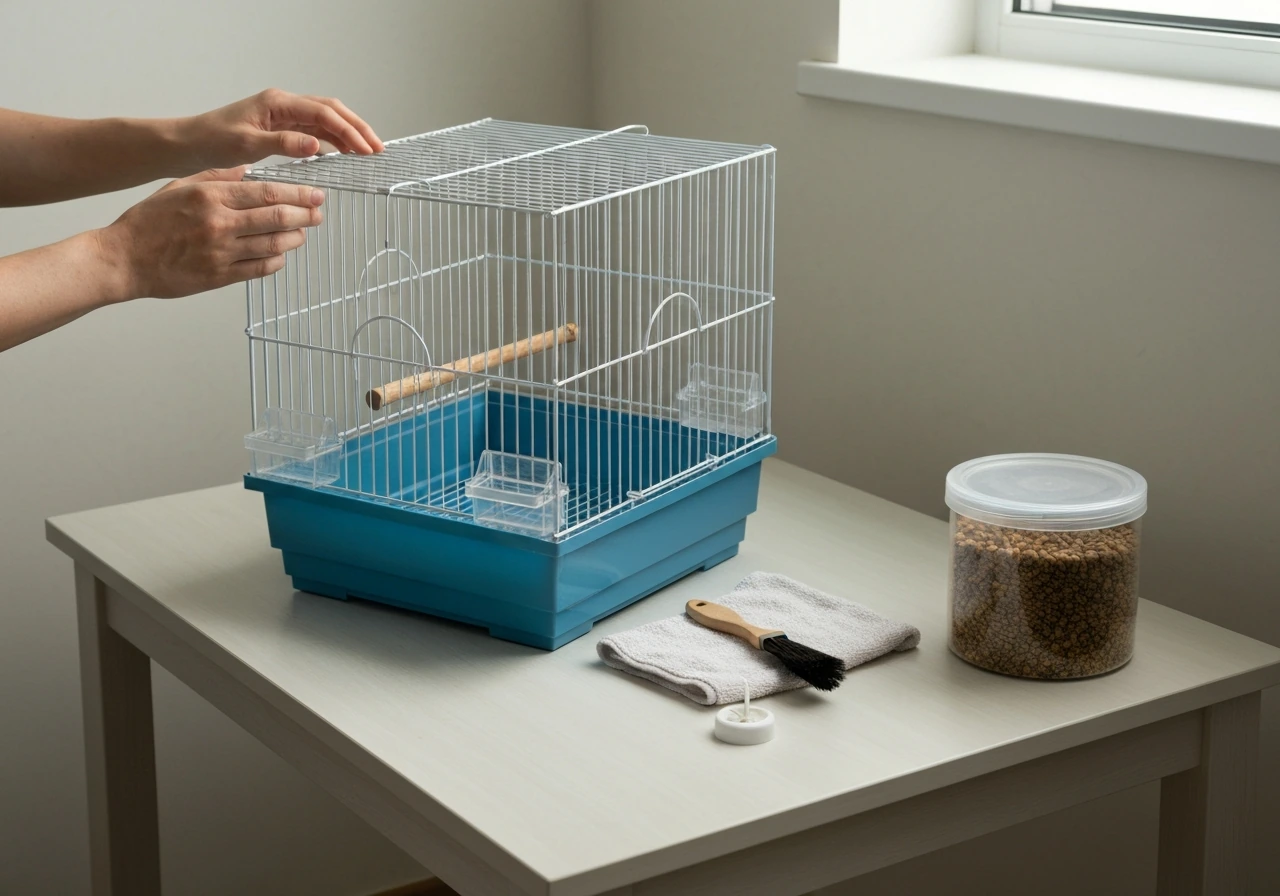
You can make a bird cage snake-proof today by sealing every gap larger than 1/4 inch, upgrading door latches, wrapping exposed sections with 1/4-inch galvanized hardware cloth, and repositioning the cage away from walls and floor-level hiding routes. The physical fixes take an afternoon. The key is methodically checking every entry point, not just the obvious door, because snakes can squeeze through a gap as small as 1/8 inch and will find the one spot you missed.
How to Make Bird Cage Snake Proof: Step-by-Step Fixes

Maya Bennett
7 Jul 2026
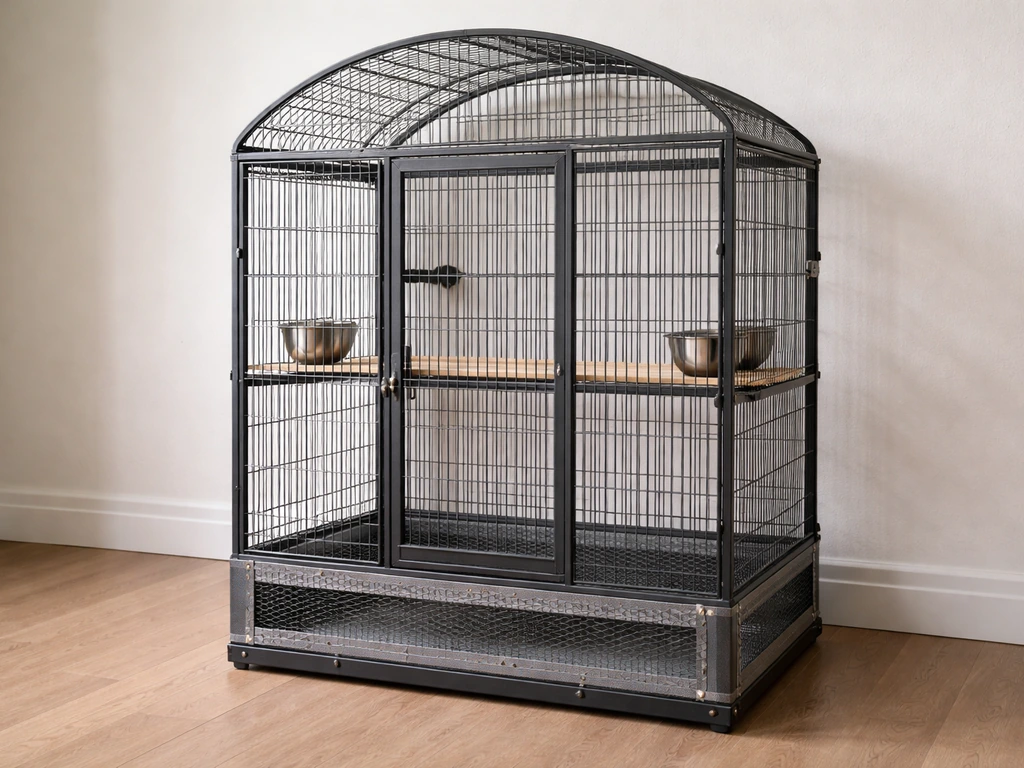
Why snakes get into bird cages
Snakes aren't hunting your bird out of spite. They're following a simple logic: warmth, food, and cover. Minnesota DNR also notes that snakes are attracted to places with ample cover and easy meals, such as lots of rodents near the area [warmth, food, and cover](https://www. dnr.
state. mn. us/livingwith_wildlife/snakes/deterring. html).
A cage that smells like seed, droppings, and feathers also smells like a small prey animal. If there are rodents or insects near the cage area, those are equally attractive stepping stones. Snakes typically enter buildings at ground level, seeking cool, dark, damp spots, and they follow scent trails right to the source. Snakes usually [enter buildings at ground level](https://humanepro.
org/sites/default/files/documents/SnakeFactsheetFINAL1024SG032923. pdf) and can fit through tiny cracks or holes no more than one-eighth inch wide, so prioritize sealing those entry routes. Once they're inside the room, the cage is just another obstacle to investigate with their tongue. Flying bugs around the bird cage can also draw predators toward the area, so it helps to manage the insect population too rodents or insects.
The scariest part is how small a gap they need. Some species can push through a crack as narrow as 1/8 inch. Most can fit through a 1/2-inch opening without difficulty. Standard bar spacing on a budgie or finch cage can be 1/2 inch or wider, and the gap around a poorly fitted door latch or a seam where two cage panels meet can easily exceed that threshold. This is why a visual check alone isn't enough. You need to physically test every seam, corner, and hinge point.
Snake-proofing gaps: doors, bars, and seams
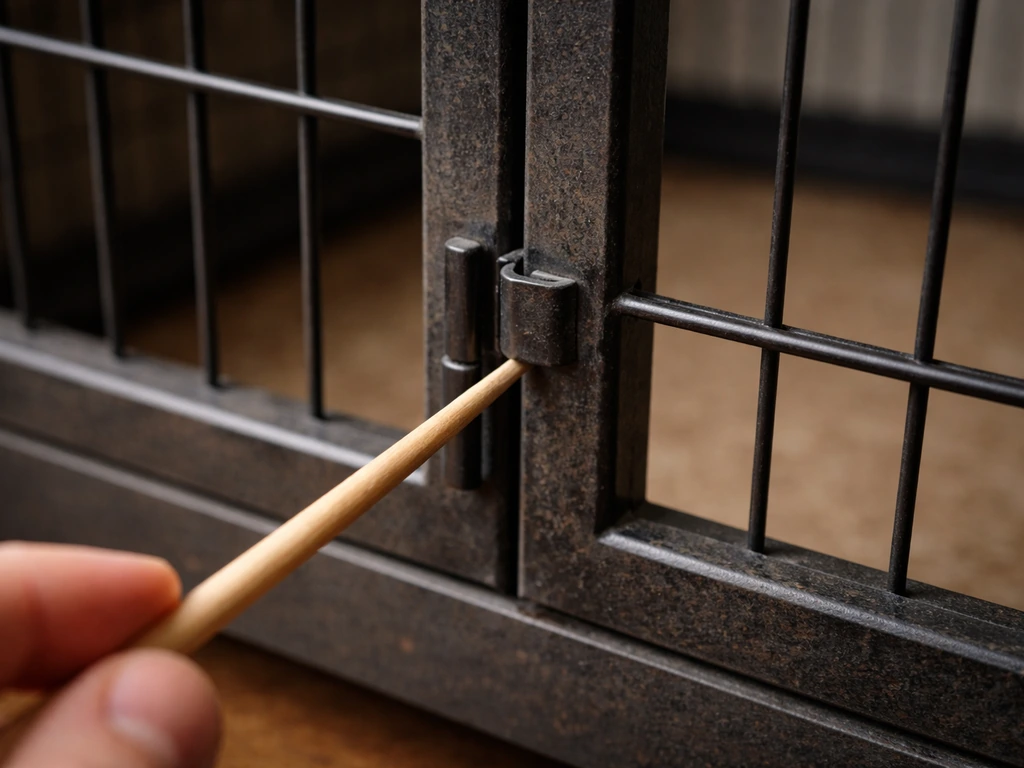
Start by doing a full gap audit before you touch any hardware. Go around the entire cage with a 1/4-inch wooden dowel or a pencil. If the dowel tip fits into a gap, that gap is large enough for a small snake to probe and potentially exploit. Mark every problem area with a piece of tape so you don't lose track.
The most common entry points are the door latch area, seams where panels connect, corners where the base meets the side walls, and any pre-cut feeding or watering port. Door latches are particularly risky because many stock cage doors rely on a simple spring clip or slide bolt that leaves a gap between the door frame and the cage body when closed. A snake can nose into that gap and push the door open, or simply slip through the gap itself if the latch plate doesn't sit flush.
- Run a 1/4-inch dowel along every seam, corner, and door frame to find gaps. Mark each one with tape.
- Check the gap between the door and its frame when the door is fully latched. It should be zero visible daylight.
- Inspect every feeding port, watering access hole, and ventilation cutout. These are often overlooked.
- Look at where the cage base tray slides in. That seam is frequently a loose fit of 1/2 inch or more.
- Check bar spacing across all four sides and the top. For small snakes, anything wider than 1/4 inch is a risk.
- Examine hinge attachment points where the metal may have bent or warped over time, creating new gaps.
Once you've mapped the gaps, address the door latch first since it's the most accessible entry. Replace a simple spring clip with a two-step locking mechanism, such as a carabiner-style clip or a sliding bolt paired with a secondary snap hook. The goal is that opening the door requires two deliberate hand movements, which a snake physically cannot perform. For the seams and bar spacing, the fix is hardware cloth, covered in the next section.
Choosing safer cage materials and modifications
The gold-standard material for snake exclusion is heavy galvanized hardware cloth with 1/4-inch mesh. This is the same specification used in professional reptile exclusion fencing and it's the material cited by wildlife extension services across North America. The 1/4-inch opening is small enough to stop all but the thinnest juvenile snakes, it allows full ventilation and visibility, and it doesn't corrode quickly. Avoid plastic mesh, chicken wire (hexagonal openings are inconsistent), or any coated wire that might be chewed by the bird or contain zinc that flakes off.
| Material | Mesh Size | Safe for Birds | Snake-Proof | Notes |
|---|---|---|---|---|
| Galvanized hardware cloth | 1/4 inch | Yes (no sharp edges if edges are folded) | Yes | Best overall choice; durable and ventilated |
| Stainless steel mesh | 1/4 inch | Yes | Yes | More expensive but no rust risk; ideal for humid rooms |
| Plastic mesh / netting | Varies | Risky (can be chewed or torn) | No | Not recommended; snakes can push through or enlarge holes |
| Chicken wire (hex mesh) | 1 inch typical | Conditionally | No | Openings too large; irregular shape gives false confidence |
| Aluminum window screen | Very fine | Yes | Yes for small snakes | Poor airflow; can overheat cage; only useful as a secondary layer over vents |
To modify an existing cage, cut panels of 1/4-inch hardware cloth to size, fold all raw edges back on themselves with pliers (a folded edge is smooth and won't cut a bird's foot or face), and attach the panels to the outside of the cage using J-clips or small zip ties at 2-inch intervals. Apply it to any section where bar spacing exceeds 1/4 inch. For the base tray gap, cut a strip of hardware cloth that wraps around the bottom perimeter and sits between the tray and the cage body, eliminating that seam gap entirely.
Physical barriers that still let birds breathe and feed
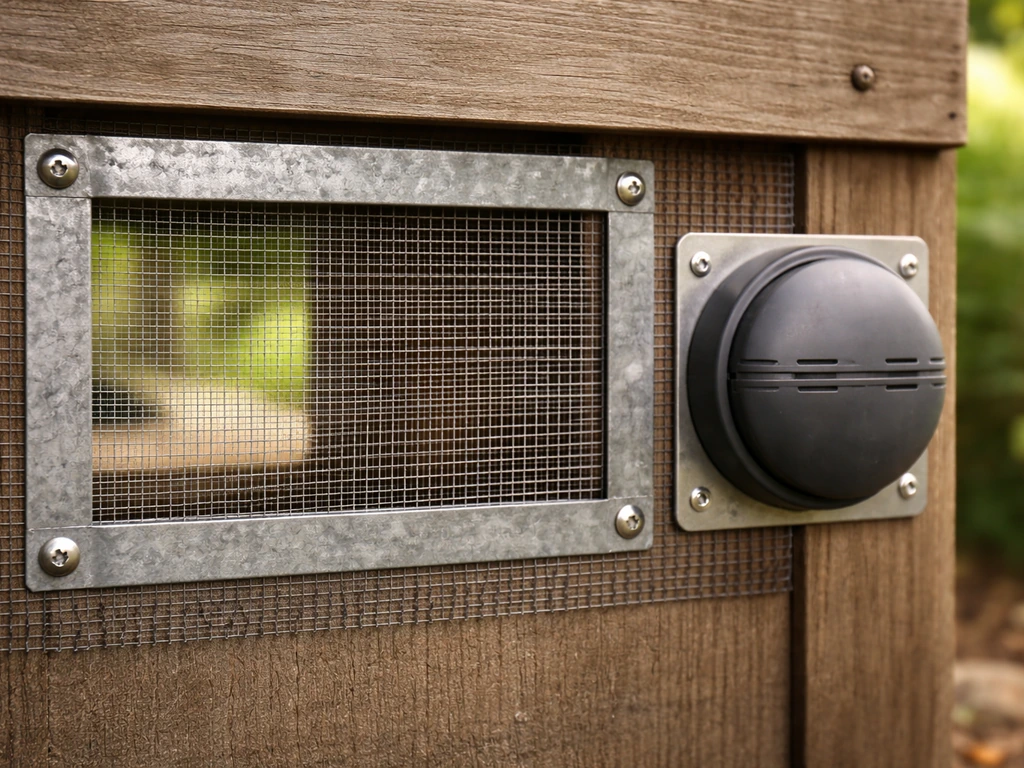
The biggest mistake people make when adding physical barriers is blocking airflow. Birds have extremely sensitive respiratory systems and need steady cross-ventilation. Hardware cloth with 1/4-inch mesh passes air almost as freely as open bars, so it's the right tool here. To get the same benefit for bird noise, you can use sound-deadening materials around the cage area while still keeping ventilation and airflow open soundproof a bird cage. What you want to avoid is layering it with window screen or plastic sheeting to get an even finer barrier, because that will trap heat and humidity inside the cage.
For feeding ports, the solution is a port cover that uses a two-piece sliding panel or a small spring-loaded flap. These are available commercially for rabbit and small animal hutches and can be adapted to most bird cages. The flap allows you to insert a food cup but snaps shut behind it, leaving no persistent gap. If you're making your own, cut a piece of hardware cloth slightly larger than the port opening, hinge it at the top with a zip tie, and add a small magnet closure at the bottom so it stays shut when not in use.
For the main door, a secondary barrier works well: attach a panel of 1/4-inch hardware cloth to the inside of the door frame so it covers the opening when the door is open, like a screen door. This means you can open the main door for feeding and cleaning without the cage interior being fully exposed. The bird can move freely inside while you work, and a snake can't slip in through the open main door.
Placement and environmental controls
Where you put the cage matters almost as much as how you modify it. Snakes enter buildings at ground level and move along walls, under furniture, and through gaps around pipes and utility lines. A cage sitting directly on the floor or pushed against a wall is far more accessible than one mounted on a freestanding stand in the center of a room.
- Place the cage on a metal stand with smooth, vertical legs. Snakes can climb textured or wooden surfaces but struggle with smooth metal poles.
- Keep at least 12 inches of clearance between the cage and any wall, shelf, or furniture that could serve as a bridge.
- Seal every gap around pipes, wires, and cables entering the room through the floor or wall. Use copper mesh (such as Stuff-Fit) or hardware cloth pushed into the gap, followed by expanding foam or mortar on the outer layer.
- Check where the cage stand legs meet the floor. If the stand has rubber feet, a snake can climb over them. Consider placing each leg inside a smooth metal cup or a wide, slick plastic tray it cannot grip.
- Keep the area under and around the cage clean. Seed hulls, droppings, and insects attract the rodents and bugs that attract snakes in the first place.
- If the cage is near a window, check the window frame seal. Gaps at corners where window trim meets the sill are a common entry point.
If you're keeping the cage in a garage, shed, or outbuilding, the environmental risk is higher. Remove any wood piles, brush, or stored bags of seed within a few feet of the area. If you are also dealing with fruit flies around the cage, reducing food residues and managing the area around the perch can help eliminate them get rid of fruit flies in a bird cage. These are exactly the cool, dark, damp hiding spots that snakes use as staging areas. Keeping the surrounding area open and tidy removes the cover they depend on to approach unnoticed, which is consistent advice from wildlife extension services and something you can act on immediately.
Preventing snake entry without harming birds
You'll find a lot of suggestions online for chemical repellents, but most of them are either ineffective, unsafe, or both in a bird context. Mothballs (naphthalene) are actually illegal to use as snake repellents in the United States. The one EPA-registered chemical repellent that exists (Snake-A-Way) has limited real-world effectiveness and hasn't been tested for safety in enclosed spaces where birds live. Essential oils like clove or cinnamon are sometimes suggested, but ASPCA guidance is clear that essential oil diffusers should not be used around birds because of serious respiratory risks. Skip the chemical route entirely.
Mechanical deterrents that are bird-safe and actually work include smooth stand legs (discussed above), a fine-grit or slick surface applied around the base perimeter of the stand, and keeping a clean buffer zone around the cage. Mechanical deterrents that are bird-safe and actually work include smooth stand legs (discussed above), a fine-grit or slick surface applied around the base perimeter of the stand, and keeping a clean buffer zone around the cage, which also helps with how to keep roaches out of bird cage by reducing crumbs and hiding spots. Cedar shavings are sometimes mentioned but the oils in cedar are harmful to birds, so don't use them in or near the cage. Sticky glue boards catch snakes but also catch birds if they're placed anywhere near the cage, so rule those out.
The most effective deterrent is simply removing what's attracting the snake in the first place. If you're dealing with a persistent snake problem near the cage, check whether there are insects building up in the cage area (fruit flies, moths, or ants near spilled seed are common, and these are problems that come up with bird cages regardless of snakes). If ants are already showing up, focus on removing spilled seed, cleaning the tray, and blocking access points so they cannot move into the cage area insects building up in the cage area (fruit flies, moths, or ants near spilled seed are common. Eliminating those food chain links removes the reason the snake is in that part of the house at all.
Testing, ongoing checks, and troubleshooting
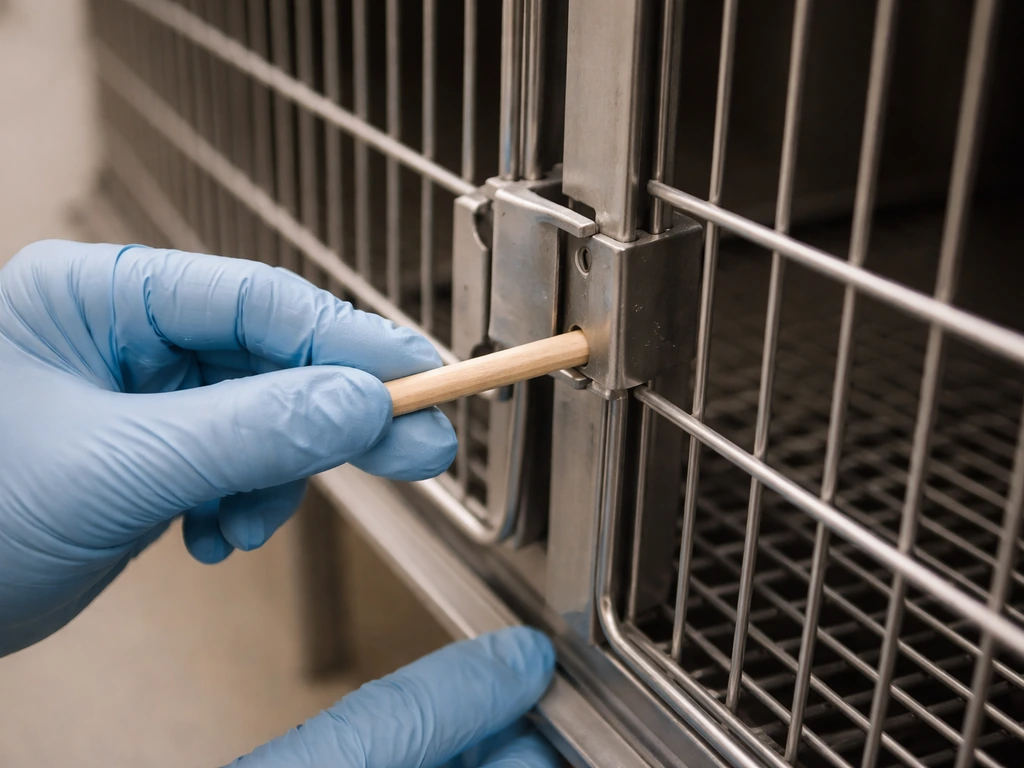
Once you've made all your modifications, don't just assume they're holding. Run a proper verification pass before you consider the cage secure.
- Repeat the dowel test on every seam, port, corner, and latch area after all modifications. If the 1/4-inch dowel tip can be inserted and moved around, the gap is still too large.
- Do a flashlight test at night with the room light off. Shine a flashlight inside the cage and look from the outside for light leaking through any seam or gap you haven't patched.
- Run the tape test on sliding or hinged sections: put a thin strip of painter's tape across the gap you've sealed and close everything up. After 24 hours, if the tape is broken or shifted, something is moving that shouldn't be.
- Check all zip ties and J-clips holding hardware cloth panels. Tug each one firmly. Any that flex more than a few millimeters should be doubled up.
- Do a full re-inspection every 30 days. Cages flex slightly with temperature changes, wood stands warp, and clips work loose over time.
- After cleaning the cage, re-check the base tray gap. Tray removal and replacement is the most common way a barrier strip gets dislodged.
What to do when you find a new gap
If your monthly check turns up a new gap, don't patch just that one point and stop. A new gap usually means the cage has shifted or a component has worn, which means other areas may have shifted too. Redo the full dowel and flashlight test from scratch. This sounds tedious but it takes less than 10 minutes once you've done it a couple of times, and it's far less stressful than finding out the hard way that you missed something.
If a snake still gets in despite your fixes
If you find evidence a snake has been inside or near the cage even after sealing, the entry point is almost certainly in the room itself, not the cage. Go back to the walls, floor, and ceiling of the room with fresh eyes. Check around every pipe, electrical conduit, baseboard gap, and door sweep. A gap at the bottom of a door or where a baseboard meets the floor is often the true culprit. Seal those room-level gaps with hardware cloth backed by expanding foam or mortar, and you cut off the snake's access to the room entirely, which is the most complete solution.
The principle is the same at every scale: find every gap 1/4 inch or larger, seal it with a physical barrier the snake can't push through, verify the seal holds, and repeat the check on a regular schedule. That process works whether you're securing a single parakeet cage in a bedroom or a large flight aviary in an outdoor building. The materials and scale change, but the logic doesn't. You can apply these gap-sealing and barrier strategies as a complete how to protect bird cage from cats checklist.
FAQ
What’s the safest way to check gaps if I can’t remove the cage from the room?
Use a bright flashlight plus the 1/4-inch dowel method from multiple angles (door hinge side, corners, base perimeter). Keep the tip pressed gently against seams to feel “widening” gaps, then re-check with a phone flashlight while the cage door is open and closed, since latch alignment can change with door position.
Will 1/4-inch hardware cloth stop all snakes, including very small juveniles?
It stops most realistic entry attempts, but no barrier is “perfect.” If you have confirmed juvenile snakes in the area, prioritize full coverage at seams, feeding ports, and around stand legs, then do a verification pass after any door use or cleaning, because shifting is the common failure point.
How do I deal with bar spacing that’s larger than 1/4 inch on an older cage with uneven bars?
Don’t only add cloth patches to the “worst” section. Cover any continuous region where bar spacing exceeds 1/4 inch, and secure cloth to the outside structure at regular intervals (about every 2 inches) so the cloth cannot bow away and create a new gap.
Can I use zip ties or clips if the cage has powder coating, enamel, or paint?
Yes, but place attachment points where they won’t snag or chip during door movement. If cloth edges sit against painted surfaces, periodically inspect for peeling at attachment points, because exposed metal or lifting paint can widen gaps over time.
Is it okay to wrap the bottom tray seam with hardware cloth if the tray slides in and out?
Yes, but confirm the cloth sits between the tray and cage body without interfering with tray removal. Leave just enough clearance for the tray to move, then run the dowel test along the tray track area after every few tray cycles, since sliding action can pull a poorly secured strip.
How can I make the secondary “screen door” on the inside without stressing the hinges?
Mount the cloth panel to the inside frame, not to the moving door edge where loads concentrate. Use a lightweight panel and ensure the latch still fully closes the main door, because partial closure can create a larger gap than the cloth layer covers.
What should I do if there are ventilation gaps or decorative openings near the cage?
Treat those openings as entry points. If the opening is larger than 1/4 inch, cover it with properly folded-edge hardware cloth, or reposition the cage so that any wall-adjacent openings are not reachable from the snake’s path along the floor.
Do sound-deadening materials reduce airflow enough to harm birds?
Some materials do, so keep them outside the air path. The safe approach is to avoid covering the actual cage bars or front openings, and instead add sound control to the room surfaces while keeping at least the same cross-ventilation you had before modifications.
Can I use any kind of repellent spray around the cage after sealing gaps?
Avoid repellent chemicals and essential oil diffusers around birds, even if the cage is “sealed,” because vapors and residue can still reach the bird. If you need a non-chemical approach, focus on sanitation, reducing insect attraction, and mechanical barriers around the cage stand and room-level routes.
How often should I re-check for new gaps after making the fixes?
Do a full dowel and flashlight check after any cage movement, door replacement, or cleaning that involves removing trays or covers. Otherwise, schedule a monthly verification pass, because component wear and latch misalignment are common causes of new openings.
If a snake appears near the cage but never seems to get inside, what’s the best next step?
Assume the entry is in the room, not the cage, and inspect room-level gaps at the baseboard, around pipe penetrations, behind furniture edges, and around door sweeps. Seal those access routes with a physical barrier, then repeat the cage gap test to confirm nothing changed during the room repairs.
What’s the fastest bird-safe way to reduce “cover” around the cage that might help snakes approach?
Create a tidy buffer zone around the stand, remove nearby debris like wood piles and seed bags, and clean up spilled seed and droppings promptly. This reduces the cool, dark staging spots snakes use and also helps with common insect problems that bring predators toward the area.
Next Article
How to Get Rid of Moths in a Bird Cage Safely
Step-by-step, bird-safe moth removal for cages: clean-out, find source, use safe traps, and prevent repeats.