Move your bird to a safe, separate space first, then do a full cage wipe-down with plain warm water and white vinegar, eliminate whatever food or moisture is attracting the ants, and use physical barriers like water moat stands or sticky tape around cage legs to block re-entry. Skip any sprays, essential oils, or boric acid near the cage. Done right, you can have the cage clean and ant-free the same day, with a simple routine that keeps them from coming back.
How to Get Rid of Ants in a Bird Cage Fast and Prevent Them

Maya Bennett
27 Apr 2026
Quick safety check before you treat the cage
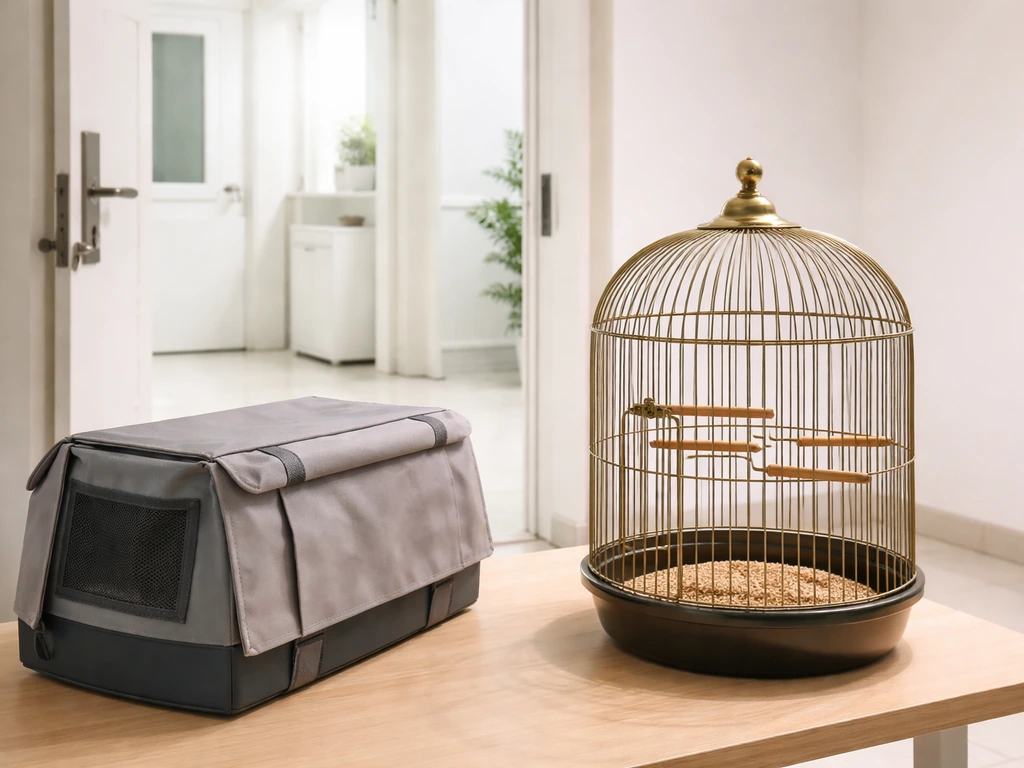
Before you touch a single ant, get your bird out of the cage and into a separate, secure room with clean air. This is non-negotiable. Birds have extremely sensitive respiratory systems and can be harmed by fumes, airborne dust, and even strong odors. If you use any cleaning agent, even a mild one, your bird should not be back in the cage until the cage is fully dry and aired out. The same applies to any product you plan to use nearby.
Do a quick visual scan before cleaning. Note where the ants are concentrated, whether that is the food dish, the water bottle area, the cage liner, or along the bars. That tells you what to focus the cleaning and prevention effort on. Also check whether the cage has any existing damage like rust, cracked plastic trays, or worn liner edges, because those gaps become ant highways.
- Remove your bird to a clean, ventilated room before doing anything else
- Cover or remove all food, treats, and water dishes from the cage
- Check the room for open windows, vents, or gaps where ants might be entering from outside
- Avoid any spray cans, aerosol insecticides, or essential oil diffusers near the cage area
- Do not use boric acid, ant bait stations, or permethrin-based products in spots where your bird can access or chew them
That last point matters more than most people realize. Even products labeled 'safe around birds and pets' often rely on proper placement to stay safe. For example, products like the Perky-Pet AntGuard contain permethrin, a pesticide, and their safety around birds depends entirely on keeping the product in the designated housing, not letting the bird contact it directly. When in doubt, keep any chemical product out of the cage environment entirely. The NPIC fact sheet notes that some permethrin aerosol products may pose a hazard to birds by inhalation, especially for spray and fogger formulations When in doubt, keep any chemical product out of the cage environment entirely..
Find the ant source: where they're coming from and what's attracting them
Ants do not wander into a bird cage randomly. Something specific is drawing them in, and until you find that thing, you will be cleaning ants forever. The most common attractants are food residue, spilled seed, fruit or veggie scraps, sugary water from water bottles, and moist cage liner material. Fruit flies are drawn to the same kinds of leftover fruit, spilled seed, and sugary moisture, so clean up those attractants quickly and remove anything fermenting. Bird cages are basically an ant buffet when they are not cleaned on a tight schedule.
Common ant attractants in and around a bird cage
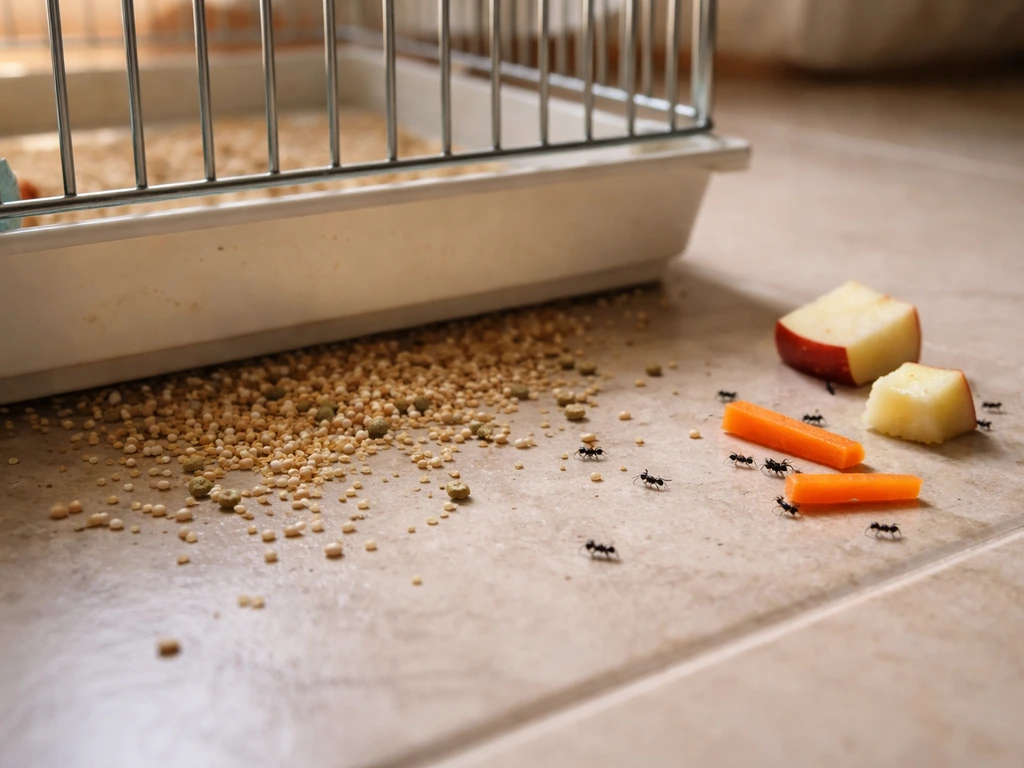
- Seed scatter on the cage floor or tray: hulled seeds, millet sprays, and pellet crumbles are high-calorie ant food
- Fruit and veggie leftovers: fresh food left more than a few hours starts to break down and emit sugary, fermented odors
- Water bottle drips: even a small leak creates a steady moisture source on the cage base or floor
- Sugary treats like honey sticks or fruit-based treats left in the cage overnight
- Dirty cage liner or paper tray with absorbed food juice and droppings
- Soft food bowls not cleaned after each feeding
Once you know what is attracting them, trace the trail back to the entry point. Follow the ant line to the wall, baseboard, or floor. Common entry routes include: cage legs touching the floor directly, cords or chains that the cage hangs from touching a wall, or the cage sitting close to a wall where ants can bridge across. CAFA Bird Club also recommends using cage legs in small bowls of water to help manage ants safely around bird cages cage legs touching the floor directly. If the cage is outside or near a window, check the windowsill and any nearby plants, as ants often nest in soil and use plant foliage as a bridge.
Safe step-by-step cleaning to remove ants from the cage
This is your same-day fix. It takes about 30 to 45 minutes for a standard cage and leaves no toxic residue for your bird. You do not need any specialty cleaners. Warm water and plain white vinegar handle almost everything here, and the vinegar smell dissipates quickly once dry.
What you need
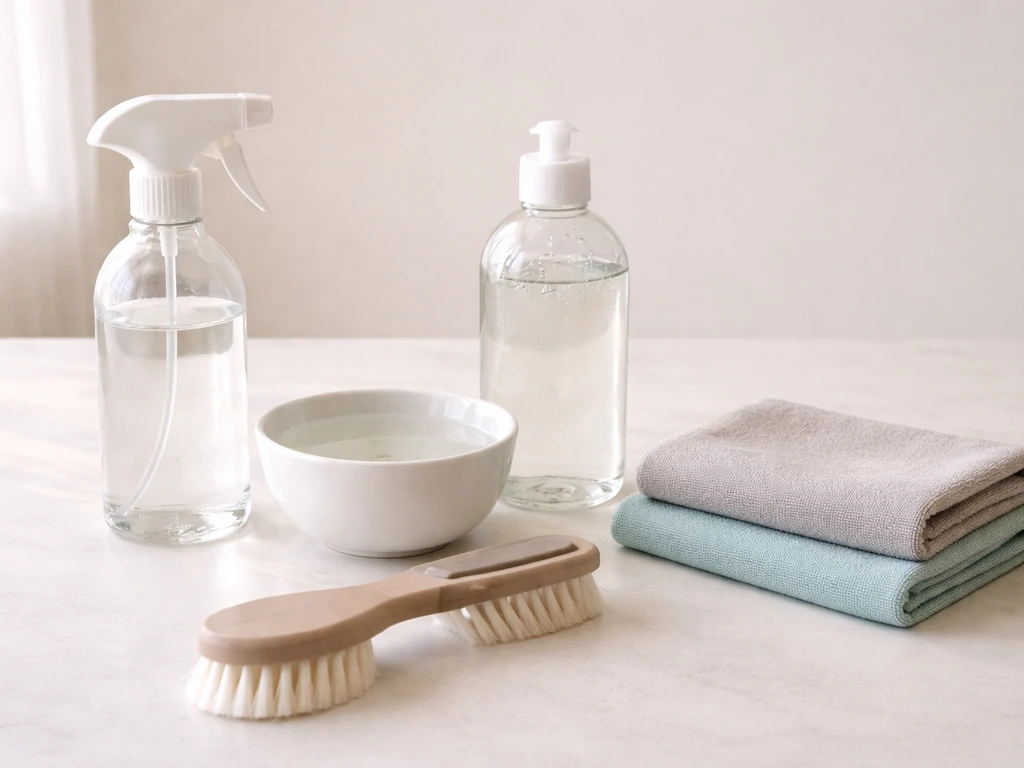
- Warm water
- White vinegar (diluted 1: 1 with water in a spray bottle)
- Mild unscented dish soap
- Soft scrub brush or old toothbrush for bar crevices
- Microfiber cloths or paper towels
- Clean replacement liner (unscented paper, newspaper, or paper towels)
- A bucket or tub large enough to soak removable parts
Step-by-step cage cleaning
- Remove your bird first, then take out every removable item: food dishes, water bottles, perches, toys, and the cage liner or tray
- Shake or wipe loose ants off all removable parts outdoors or over a trash bag, away from the cage
- Soak food dishes, water bottles, and plastic perches in warm soapy water for 5 to 10 minutes, then scrub and rinse thoroughly
- Spray the cage bars, tray, and base with your 1: 1 vinegar-water solution; wipe down every surface including the inside of the tray
- Use the scrub brush on bar joints, tray corners, and any crevices where food or dead ants may have collected
- Rinse all surfaces with plain warm water to remove vinegar residue
- Dry everything completely before reassembling; wet surfaces attract new insects
- Replace the liner with fresh, clean paper
- Reassemble the cage with cleaned accessories only
- Allow the cage to air out for at least 20 to 30 minutes in a ventilated space before returning your bird
Pay extra attention to the cage tray. That is where most of the food residue, droppings, and moisture accumulates, and it is the first place ants establish a foraging path. A quick wipe-down is not enough if the tray has grooves or ridges. Scrub it thoroughly and rinse it well.
Bird-safe ant control options that work in and around cages
The number of truly safe options inside the cage itself is small, and that is actually fine. Most effective ant control for bird cages is about physical barriers and eliminating what draws ants in, not about applying chemicals. Here is what actually works without putting your bird at risk.
What works (and why)
| Method | Where to use it | How it works | Bird-safe? |
|---|---|---|---|
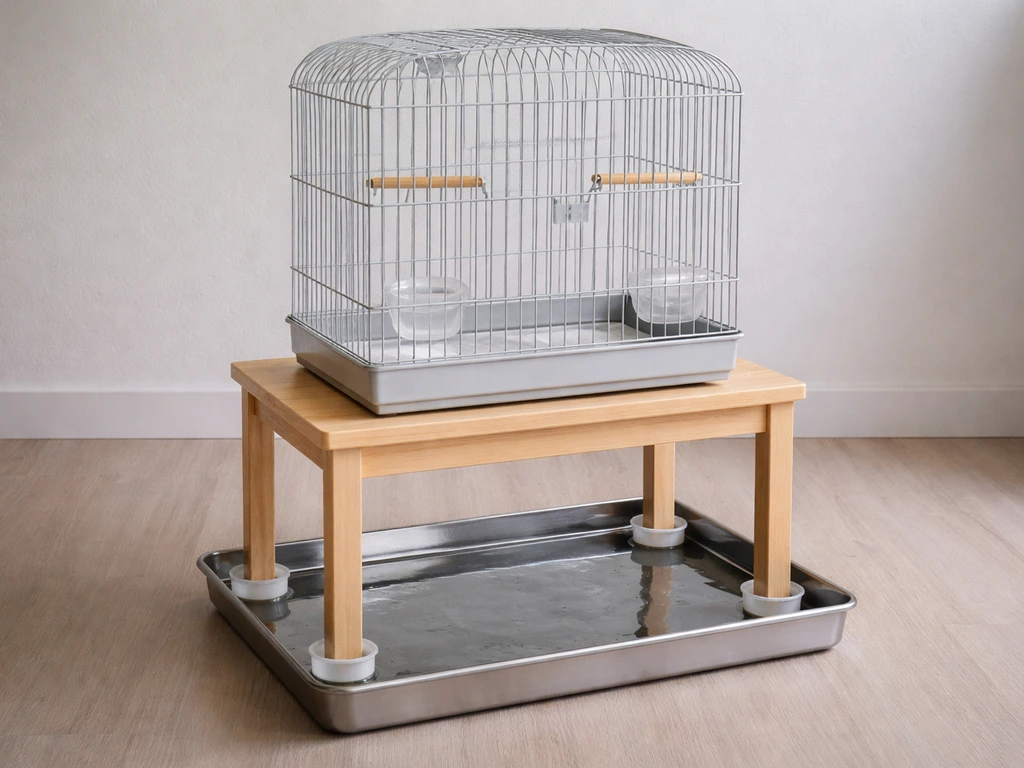
| Water moat or water dish stand legs | Under cage legs or stand feet | Ants cannot swim across standing water | Yes, fully safe |
| Double-sided tape or sticky barriers | Around cage stand legs | Ants stick to it and cannot pass | Yes, if placed out of bird's reach |
| Food-grade diatomaceous earth (DE) | Around the base of the stand on the floor, not inside cage | Damages insect exoskeleton on contact | Use with caution, keep out of cage and away from bird's breathing zone |
| White vinegar spray | Wipe-down of cage surfaces between cleanings | Disrupts ant scent trails | Yes, rinse after and allow to dry |
| Cinnamon powder barrier | On the floor around stand feet | Natural ant deterrent, disrupts scent trails | Generally considered low-risk but keep out of cage |
| Ant moat (for hanging cages) | On the chain or hook above the cage | Water-filled ring blocks ant travel down the chain | Yes, no chemical contact with bird |
What to avoid completely
- Aerosol insecticide sprays anywhere near the cage, even when the bird is out (residue stays on bars)
- Essential oils including peppermint, tea tree, and citrus oils: these are volatile, can transfer onto feathers during preening, and are known to be potentially toxic to birds
- Ant bait stations placed inside or on the cage: birds are curious and will chew on them
- Boric acid anywhere near the cage: it is toxic under conditions of high exposure and should never be within reach
- Diatomaceous earth inside the cage or near the bird: even food-grade DE is an inhalation and eye irritant when airborne, and birds are especially sensitive to dust
If you have an outdoor cage or aviary, flying insects alongside ants can become a combined problem. The same approach applies: physical barriers first, no sprays, keep food cleaned up. Moths can be discouraged in the same way by removing any light-attracting and food-related sources around the cage and keeping the area clean and dry how to get rid of moths in bird cage. If you are also dealing with flying bugs around the cage, that is a related problem worth addressing at the same time with appropriate mesh or cage covers. If you’re also seeing flying bugs around the cage, address them at the same time with screens and proper ventilation so nothing is drawn in to the bird’s space.
Prevent ants from returning: block entry, fix attractants, and seasonal habits
Getting rid of ants today is straightforward. If you also want to reduce noise from outside, learn how to soundproof a bird cage with simple materials and safe placement. Keeping them out long-term is about building habits and fixing the structural things that invite them back. If you are dealing with roaches too, use the same approach by removing attractants and sealing entry points, which is key for how to keep roaches out of bird cage. Most people who have a recurring ant problem around a bird cage are dealing with one of three things: the cage stand is touching the floor or wall directly, the feeding and cleaning routine is too loose, or the cage is in a spot that naturally pulls in ants like near a kitchen, a window, or an outside wall.
Block physical entry points
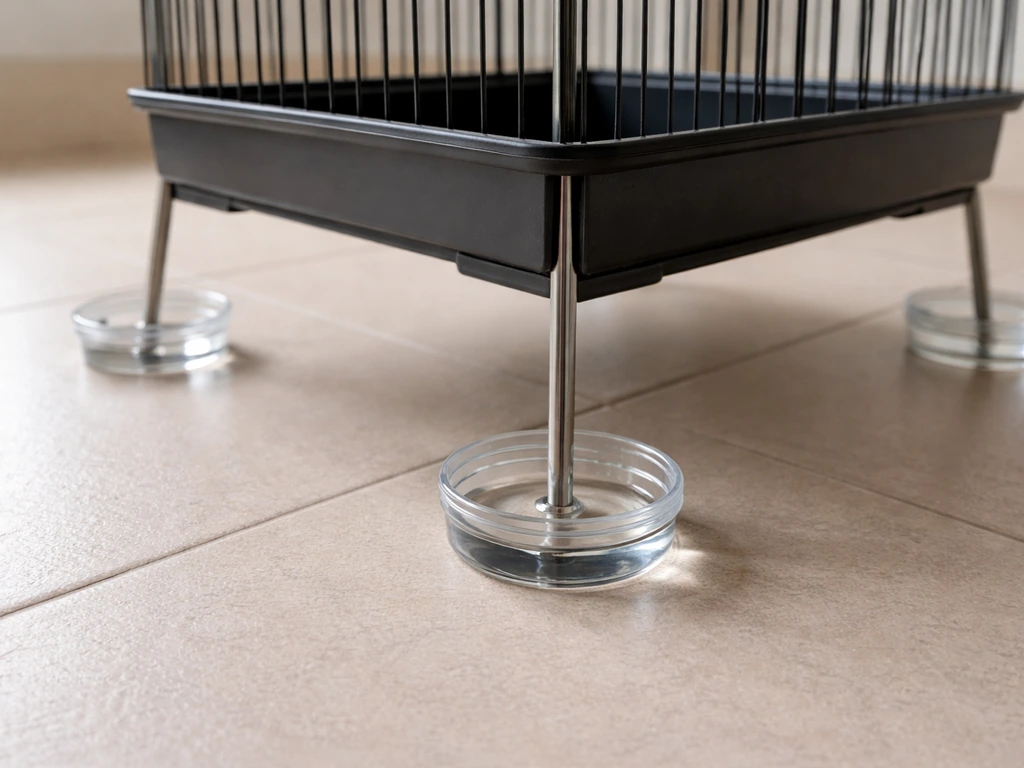
- Set cage legs or stand feet in small water-filled dishes (replenish the water weekly)
- Use an ant moat on the hanging chain if your cage is suspended
- Move the cage at least 6 inches away from walls to eliminate bridging
- Check that no toys, ropes, or cage covers are draped down to the floor and acting as an ant ladder
- Seal any cracks or gaps in the baseboard or floor near the cage with caulk
Fix what is attracting them
- Remove all uneaten fresh food within 2 to 3 hours of offering it
- Check water bottles daily for drips and replace or repair leaking bottles immediately
- Use a cage skirt or seed catcher to contain scattered food and clean it out daily
- Switch to a shallow, wide food dish rather than a deep bowl, which tends to collect wet residue at the bottom
- Store bird seed in sealed airtight containers, not open bags near the cage
Adjust for seasons
Ant pressure increases significantly in spring and early summer when colonies are expanding and foraging ranges widen. That is the time to be most vigilant. Check your water moats weekly rather than monthly, refresh vinegar wipe-downs more frequently, and take a look at the room's baseboards and window seals. Late summer and fall can bring a second wave in some regions as ants look for food to overwinter. If your cage is near an exterior wall, that matters more in cold months when ants seek warmer shelter.
Set up an ant-free maintenance routine
A consistent routine is what separates people who solve this problem once from people who deal with ants every few months. To protect a bird cage from cats, place the cage in a room cats cannot reach and use sturdy physical barriers like a secure stand or covered enclosure protect bird cage from cats. This does not need to be complicated. The goal is to catch attractants before ants find them, and to spot any new entry paths before they become established trails.
Daily tasks
- Remove all uneaten fresh food
- Wipe down the food dish and tray with a damp cloth
- Check the water bottle for drips
- Quick visual scan of the cage base and stand legs for any ant activity
Weekly tasks
- Full replacement of cage liner
- Scrub the tray and food dishes with warm soapy water
- Wipe down cage bars and perches
- Top up water in moat dishes and check for algae buildup
- Inspect the cage stand legs and nearby floor for any new ant trails
Monthly tasks
- Deep clean of the full cage including all accessories
- Check the cage placement, look for any new contact points with walls or furniture
- Inspect seed storage containers for signs of pest activity
- Replace sticky tape barriers if they have lost adhesion or collected debris
Common mistakes that bring ants back
- Cleaning the cage bars but not the tray thoroughly: the tray holds most of the residue
- Forgetting to clean under the seed catcher where fine dust and hulls accumulate
- Letting the water moat dish dry out: an empty dish is useless as a barrier
- Leaving honey sticks or fruit-based treats in the cage overnight
- Placing the cage back against the wall after cleaning: even a few inches of gap contact is enough for ants to bridge across
- Using scented cage liners or paper with inks that may attract insects
If you follow this routine and still see ants, the entry point is probably somewhere you have not identified yet. Go back to basics: watch where the ant trail starts and follow it backward to the source. The trail almost always leads to either a food residue you missed or a physical bridge you have not blocked. Fix those two things and the problem resolves. Ants are persistent, but they are also predictable. Cut off the food and the access, and they move on.
FAQ
Can I use ant sprays or bait gel if the bird is out of the cage for a few hours?
Avoid sprays, essential oils, and boric acid near the cage environment. Even when the bird is removed, residues and fumes can linger on nearby surfaces, and some products can be accessed by the bird later. If you must use anything beyond vinegar and barriers, apply it only in distant, closed-off areas that the bird cannot reach, and never on cage parts the bird contacts.
How do I know whether the ants are coming from outside the room or from inside the cage?
Check where the trail begins. If ants are mainly appearing at the cage legs or along a nearby wall, the entry is likely external and they are bridging into the cage area. If they concentrate around the tray, liner edges, or the food zone, the source is usually inside from residue or moisture. Follow the line backward to the first consistent start point for a clear decision.
What is the safest way to clean the cage if the vinegar smell is strong?
Use the warm water and vinegar wipe-down, then keep the bird out until the cage is completely dry and the odor is no longer noticeable to you. Also wipe and rinse any areas you contacted with vinegar, especially the tray and bars, since damp vinegar residue can attract ants and can be irritating if the bird returns too soon.
Do ants ever nest in the cage or stand, and what should I check?
Yes, if there is ongoing moisture and food residue, ants may establish foraging routes or even small nests in cracks near the cage stand. Inspect the stand joints, any baseboard gaps, and wiring or chain attachment points. If you find ants repeatedly returning to the stand area even after the cage is cleaned, the stand or wall contact point is the priority to fix.
My cage has a stand or legs with gaps, how should I create barriers without blocking ventilation?
Use barriers like a water moat stand when possible, and keep sticky tape away from spots where the bird or droppings could contact it. Ensure the cage remains ventilated, especially if you add a cover. The goal is to stop foot access and bridging, not trap air or create a humid pocket that keeps the tray moist.
How often should I refresh the water moat and the vinegar cleaning to prevent a relapse?
If the infestation was active recently, check moats weekly and refill promptly when the water level drops or becomes contaminated. For preventive wiping, do a quick tray-focused cleaning more frequently at first, then taper to your routine once you do not see new trails for a couple of weeks.
What if the ants show up even when the food dish is empty?
They can be drawn to sugars, droppings moisture, and any leftover seed or fruit residue around the tray, liner edges, or room surfaces. Remove and clean the tray thoroughly, wipe the area under and behind the cage, and inspect the water bottle base for leaks, since a tiny constant dribble can sustain ants.
Should I replace the cage liner or tray components after getting rid of ants?
Not always, but replace or thoroughly scrub anything with grooves, ridges, or worn edges where residue and moisture collect. If the liner is heavily soiled or you cannot get food residue out of seams, replacing it reduces the hidden food source ants use to restart the trail.
Are there any bird-safe ways to deal with ants outside the cage area?
Focus on removing attractants near the cage, sealing obvious entry routes, and keeping the surrounding floor dry and clean. Avoid applying pesticides in the bird’s reach zone. If you need treatment outside, limit it to crack and crevice work in areas the bird cannot access, and keep all products fully away from cage surfaces until everything is dry and safe.
What should I do if I still see ants after the same-day clean and barriers?
Re-check for a missed attractant, especially the tray grooves, the water bottle base, and any spilled seed under the cage. Then trace the trail again to confirm the entry point, because ants often switch routes. If the trail keeps starting at a wall or nearby plant/soil (common near windows or outdoors), block the bridge and clean that connecting path.