Moths in or around a bird cage almost always trace back to one of two culprits: pantry moths (most likely Indian meal moths) feeding on stored birdseed or dry food nearby, or clothes moths drawn to natural fiber items like wool, feather-stuffed cushions, or fabric cage covers. Once you know which type you're dealing with, the fix is straightforward: find the food source, remove it, clean the cage thoroughly, use bird-safe traps, and seal up storage. No harsh sprays, no foggers, no fumigants near your bird.
How to Get Rid of Moths in a Bird Cage Safely

Maya Bennett
25 Jun 2026
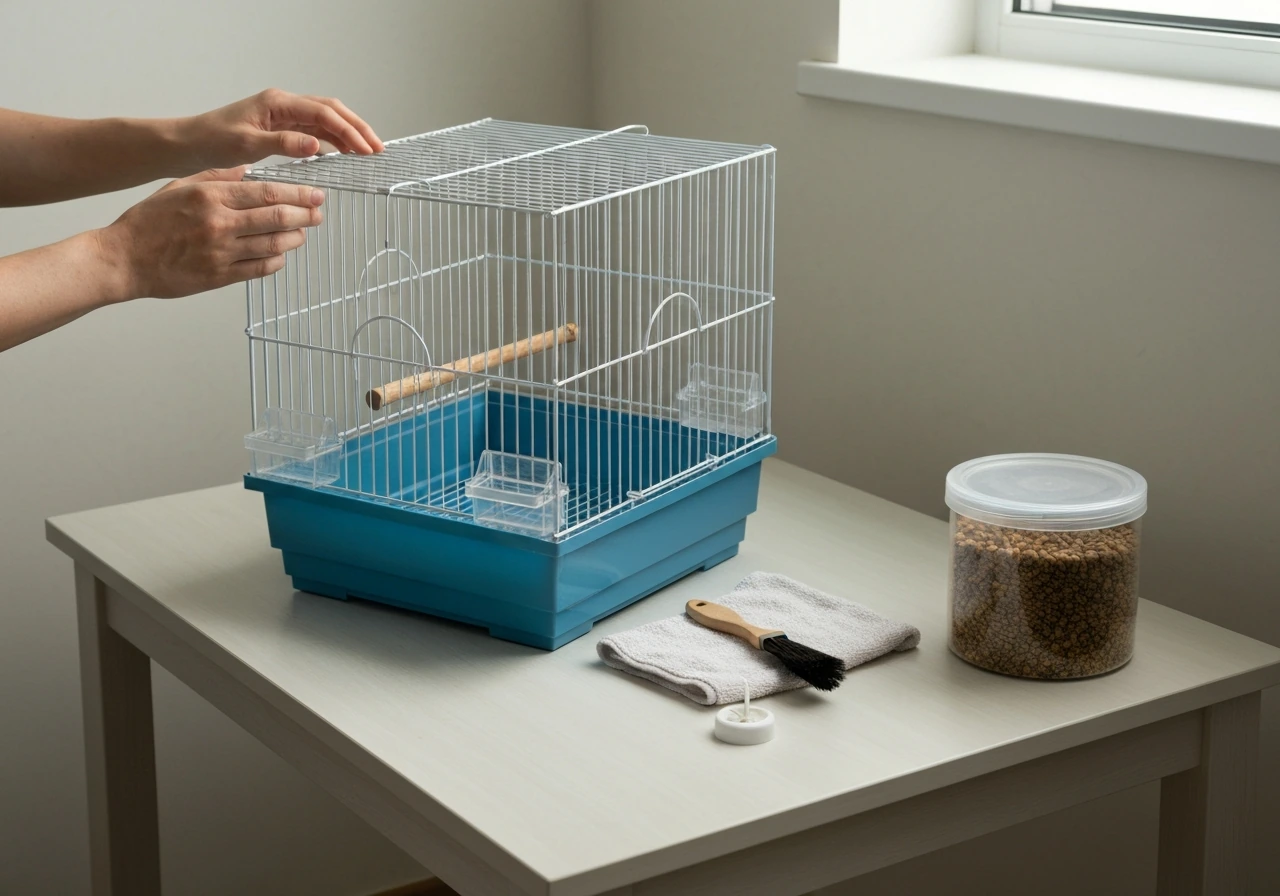
Figure Out Where the Moths Are Actually Coming From
Before you touch anything else, spend five minutes figuring out what kind of moth you have and where it's breeding. This saves a lot of wasted effort cleaning the wrong things.
Indian Meal Moths (the most common culprit near bird cages)
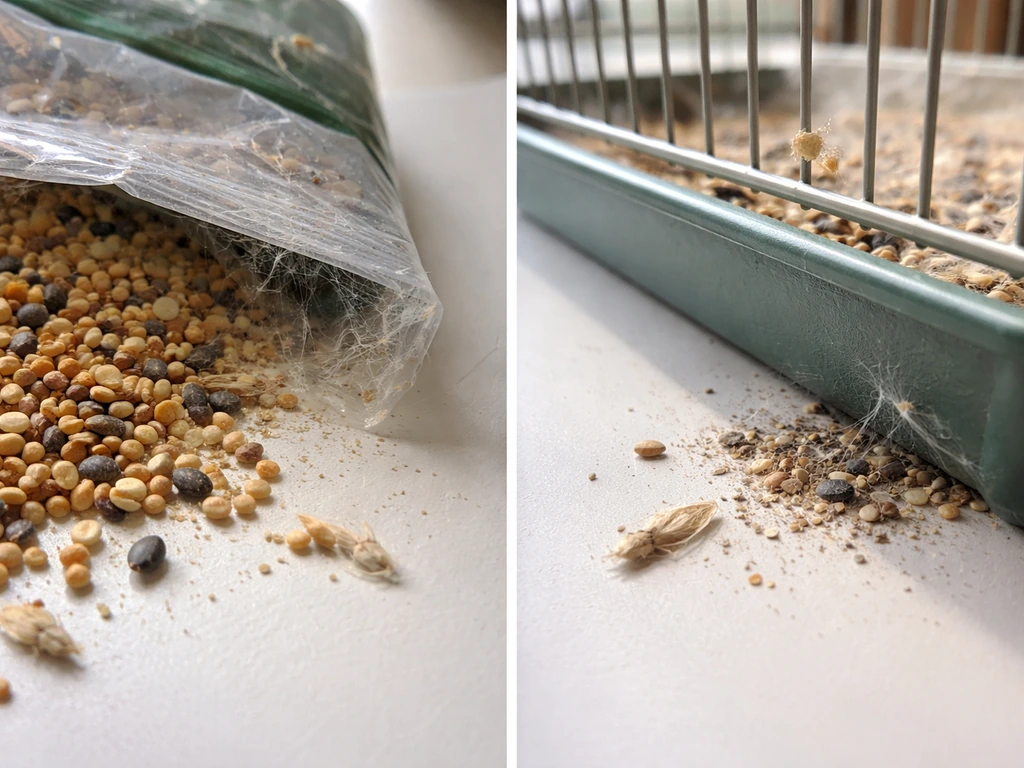
Indian meal moths (Plodia interpunctella) are by far the most likely pest you'll find around a bird cage. Their larvae feed on dry plant-based foods: birdseed mixes, pellets, millet, dried fruit, crackers, cereal, spices, and anything similar stored nearby. The adult moths have a distinctive two-toned wing pattern, reddish-brown at the tips and pale near the body. You'll spot them fluttering around the kitchen or near the cage, usually in the evening. The real giveaway is inside the food container: look for silken webbing that binds seed or grain particles together, plus small caterpillar-like larvae crawling through the food.
Clothes Moths (less common, but worth ruling out)
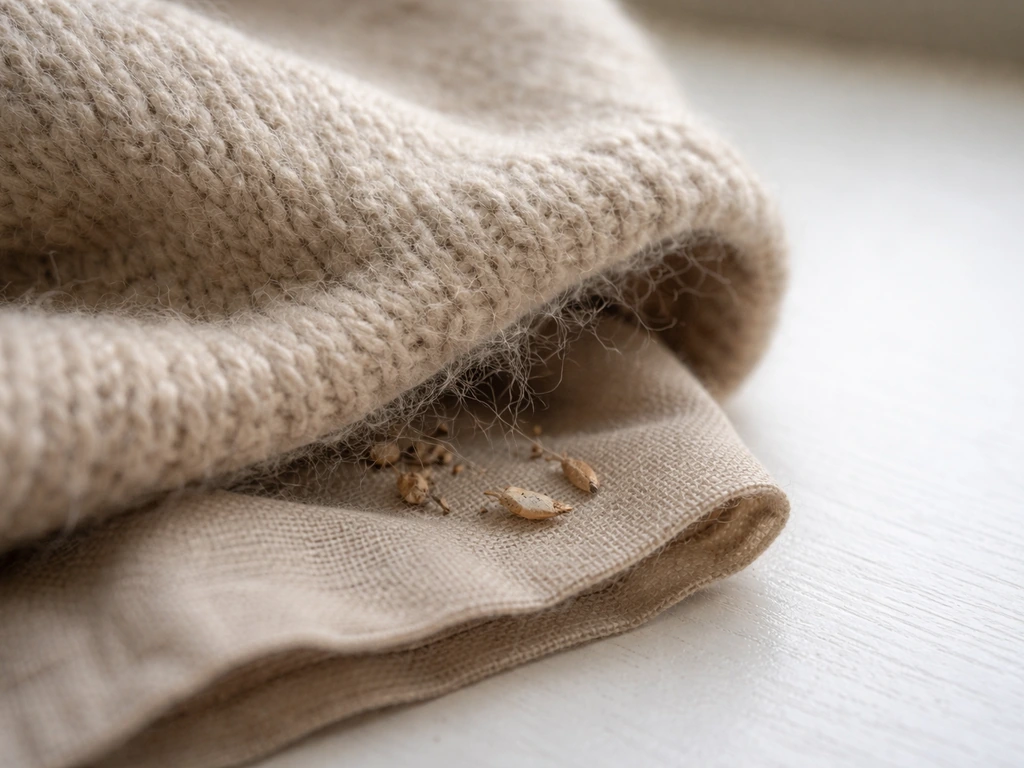
Webbing clothes moths (Tineola bisselliella) and casemaking clothes moths (Tinea pellionella) only eat keratin-based animal fibers: wool, silk, fur, feathers, and hair. They do not eat birdseed. If you're seeing small, cream-colored moths hovering near fabric cage covers, wool rugs, feather-stuffed items, or natural-fiber perch wraps, clothes moths are likely the issue. Their larvae leave behind patchy fabric damage and silky webbing on the surface of the material they're feeding on. If you've ruled out any natural-fiber fabrics near the cage, clothes moths are probably not your problem.
Check these specific spots first
- Open or loosely sealed bags of birdseed, pellets, dried fruit, or treats stored near or under the cage
- The cage seed tray and any seed catchers or skirts, especially in corners where old seed accumulates
- Inside foraging toys, seed hoppers, and food cups that aren't cleaned weekly
- Nearby pantry shelves: cereal, pasta, spices, nuts, dried herbs, and flour all attract Indian meal moths
- Fabric cage covers, especially any made from wool or natural fibers
- Wool rugs, upholstered furniture, or down-filled items near the cage
Protect Your Bird First Before You Do Anything Else
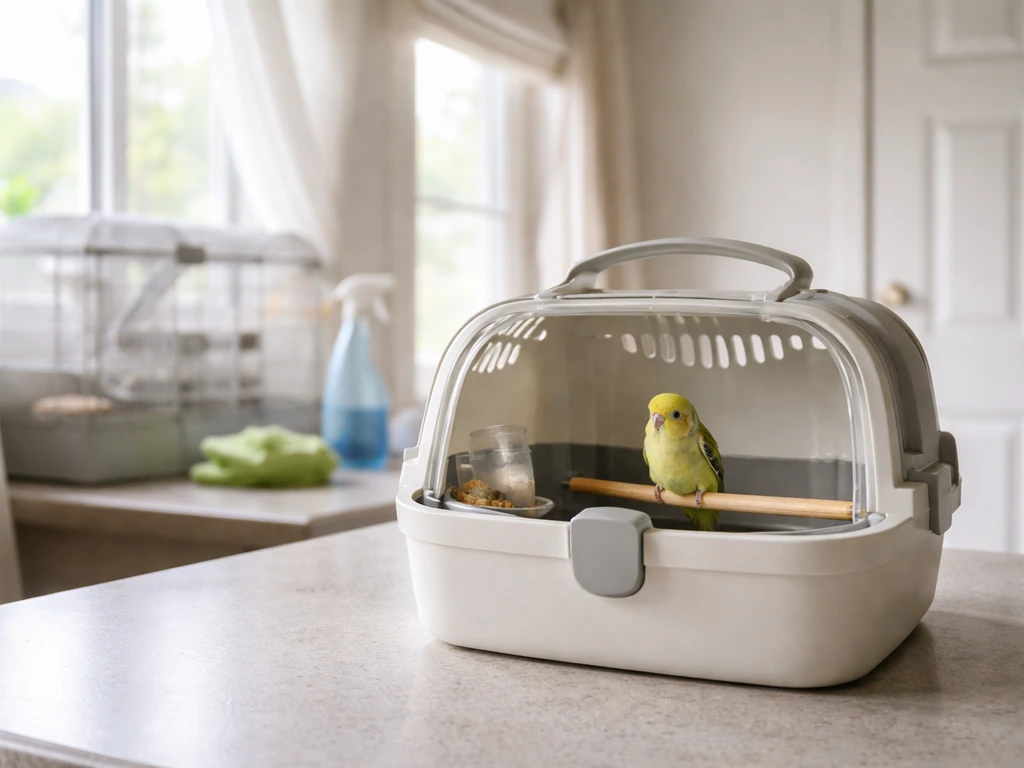
Birds have extremely sensitive respiratory systems. This isn't a minor caution: their air sac anatomy makes them far more vulnerable to airborne chemicals than mammals, and exposure to pesticide sprays, aerosols, scented products, or even strong fumes can cause serious harm or death quickly. If you need help with another common cage pest, learn how to get rid of ants in bird cage safely without harming your bird pesticide sprays. Before you start any cleaning or pest control steps, move your bird to a different room with good ventilation and keep them there until you're done and the cage area is fully aired out.
- Move the bird to a safe, well-ventilated room away from the work area
- Do not use any aerosol sprays, insecticidal foggers, fumigants, or pesticide strips near the cage or in the same room while your bird is present
- Avoid scented cleaning products: the fragrance compounds in sprays and air fresheners can also irritate bird respiratory tracts
- Do not use mothballs or cedar-scented repellent products anywhere near your bird's living area; naphthalene and paradichlorobenzene fumes are toxic to birds
- Even 'natural' sprays like essential oil-based insecticides should be treated with the same caution as chemical sprays and avoided in bird rooms
- After cleaning, ventilate the room thoroughly before returning your bird
Pyrethrins, which are derived from chrysanthemums and often marketed as 'natural,' still irritate birds' respiratory passages and can cause coughing and breathing difficulty when inhaled. Treat them the same way you'd treat any chemical spray: off-limits in an occupied bird room.
Clean Out the Cage: Spot Clean vs. Deep Clean
If you've found active larvae or webbing inside the cage itself (usually in the seed tray, corners, or around food cups), you need a full deep clean, not just a wipe-down. If the cage itself looks clean and the moths are clearly coming from stored food nearby, a thorough spot clean plus food source removal may be enough to start.
Spot Clean (when the cage is not heavily infested)
- Remove and discard all food from cups, seed trays, and hoppers
- Wipe down food cups, seed catchers, and the cage base tray with a damp cloth, then rinse well
- Check perches, toys, and cage corners for any webbing or larvae; remove and wash any affected items
- Let everything dry completely before reassembling
Deep Clean (when you find larvae, webbing, or a heavy infestation)
- Remove your bird and all cage contents including perches, toys, food dishes, and substrate
- Discard any substrate, paper lining, or bedding; bag it and take it outside immediately
- Scrub all cage bars, welds, corners, and the base tray with hot soapy water using a stiff brush; moth larvae and eggs like to hide in bar intersections and corners
- Rinse the cage thoroughly, then disinfect with a dilute bleach solution (around 1 part bleach to 30 parts water is a common guideline for cage sanitizing); let it sit briefly, then rinse extremely well with clean water
- Wash all perches, food dishes, and toys separately; wooden perches with webbing in cracks should be discarded and replaced
- Allow everything to dry fully in a ventilated space before the bird returns; bleach residue and fumes dissipate quickly once rinsed and dried, but do not rush this step
One common mistake: people clean the cage but miss the seed catcher skirt, which often traps old seed and husks at the bottom. That fabric or mesh skirt is a prime spot for Indian meal moth larvae. Remove it, shake it out outside, and wash it in hot water.
Remove Every Moth Food Source in the Area
Cleaning the cage without tackling the food sources is the biggest reason moth problems come back. To prevent roaches, remove their food and water sources near the cage and seal cracks and entry points so they cannot move in keep roaches out of bird cage. Adult Indian meal moths don't eat at all, but they lay eggs on or near dry foods. Those eggs hatch into larvae that spin webbing and contaminate everything around them. You have to find and remove every infested item.
Pull out all stored dry bird food and inspect it
Check every bag and container of birdseed, pellets, dried fruit, millet sprays, and treats. Once you remove their food sources and clean thoroughly, the remaining fruit flies should also be easier to control fruit flies in bird cage. Open them and look for silken webbing, clumped particles, or larvae. If you see any of those signs, bag the contents and throw them out. Do not just move the bag to another room because the larvae and eggs go with it.
Check the surrounding pantry and storage areas
If you find moths near a bird cage, also inspect every dry food item in nearby storage: cereal, pasta, crackers, nuts, spices, pet food, and dried herbs. Indian meal moths will infest any of these. The infestation often starts in one product and spreads. Any item with webbing gets bagged and tossed. Sealed glass or hard plastic containers are unaffected.
Deal with fabric items if clothes moths are involved
If you've identified clothes moths rather than pantry moths, focus on fabric items near the cage. Wool cage covers, natural-fiber rugs, or feather-filled items can harbor larvae for months. Wash fabric items in hot water if the label allows. The CDC also advises that when disinfectants like bleach, disinfectant wipes, or sprays are used, you should wipe or wash away the disinfectant before letting pets use the item again for added safety Remove it, shake it out outside, and wash it in hot water.. For items that can't be washed, freezing works well: seal the item in a plastic bag and put it in a freezer that reaches at least -4 degrees Fahrenheit (-20 degrees Celsius) for at least a week. This kills larvae and eggs at all life stages. After freezing, brush the item outside and vacuum thoroughly.
Bird-Safe Moth Controls That Actually Work
With your bird protected and the food sources removed, the remaining adults need to be dealt with. The approach here is entirely non-toxic: no sprays, no strips, no foggers. Pheromone sticky traps are your primary tool, and they work well.
Pheromone sticky traps for Indian meal moths
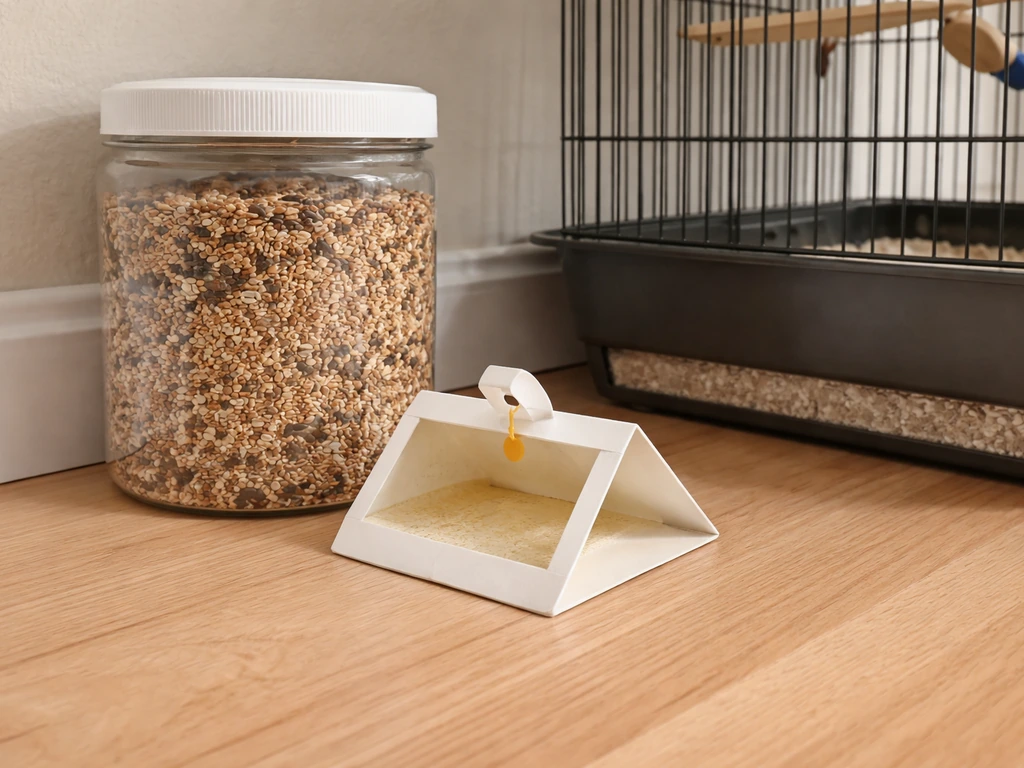
Pheromone traps use a synthetic female moth scent to attract and capture male moths on a sticky surface, breaking the breeding cycle. They come in triangular tent-style configurations and are completely non-toxic: no spray, no fumes, no risk to your bird. For snake-proofing a bird cage, you can use similar bird-safe, non-toxic barriers so the enclosure blocks snakes without exposing your bird to harmful chemicals. Place them near the cage and in pantry storage areas. Insects Limited also notes that pheromone traps are best used in areas where dried goods are stored, such as birdseed and dry pet food, and that trap use can help indicate where moths are coming from blank" rel="noopener noreferrer">pheromone sticky traps. Products like the BASF Allure stored product moth traps use a pheromone lure that lasts around 16 weeks, and the trap insert should be replaced when it gets covered in moths or loses stickiness from dust. These traps are also useful diagnostically: after you've removed the food source, residual adult moths will still be flying for days or weeks, and the traps catch them while you wait for the population to collapse. If you're still filling traps with moths after three to four weeks, that means there's still an active food source somewhere you haven't found yet.
Pheromone traps for clothes moths
Separate pheromone traps are available specifically for clothes moths. The mechanism is the same: sticky surface plus a sex pheromone lure. Place them near any fabric storage areas, closets, or items where you suspect activity. These are different products from pantry moth traps, so make sure you're buying the right one for your moth type.
What to avoid near your bird
| Product Type | Safe Near Birds? | Why to Avoid |
|---|---|---|
| Aerosol insecticide sprays | No | Fumes and particles cause respiratory damage; birds are highly sensitive to inhaled chemicals |
| Insecticidal foggers / bug bombs | No | Extremely dangerous; chemical residue settles on cage surfaces and food |
| Mothballs (naphthalene/paradichlorobenzene) | No | Toxic fumes; even trace exposure can harm birds |
| Cedar sprays or cedar oils | No | Strong volatile compounds irritate bird airways |
| Essential oil-based 'natural' sprays | No | Concentrated plant oils are still respiratory irritants for birds |
| Pyrethrin / pyrethroid sprays | No | Cause coughing and breathing difficulty in birds when inhaled |
| Pheromone sticky traps | Yes (with bird present) | Non-toxic, no fumes, no residue; safe to use in same room |
| Freezing method for infested items | Yes | Kills all life stages with no chemicals whatsoever |
Stop Moths From Coming Back
Once the infestation is cleared, prevention is mostly about storage habits and a regular cleaning schedule. The changes are simple but they make a huge difference.
Upgrade how you store bird food
- Store all birdseed, pellets, dried fruit, and treats in hard-sided airtight containers: glass jars, metal tins, or thick hard plastic with tight lids
- Never store open bags of seed for long periods; if you buy in bulk, transfer immediately to sealed containers
- Buy smaller quantities of seed more frequently rather than large bags that sit for weeks
- Keep seed storage away from warm, humid spots; moths develop faster in warmth
Build a cleaning schedule
- Change tray liners and remove leftover food from cups daily; old seed sitting in the tray is one of the top attractants
- Wash food and water dishes at least every other day
- Do a full wipe-down of the cage base, bars, and seed catcher weekly
- Deep clean the entire cage (remove and scrub all surfaces) at least once a month
- Inspect stored food containers every two to three weeks, especially in summer when moth activity peaks
Seasonal placement and monitoring
Indian meal moth activity tends to increase in warmer months because they develop faster in heat. In summer, pay extra attention to birdseed storage and inspect more frequently. If you keep a cage cover made of wool or natural fibers, launder it seasonally and store it in a sealed bag during months you're not using it. Keep one or two pheromone trap inserts fresh year-round in your seed storage area: they work as early-warning detectors, catching the first sign of a new infestation before it gets established. Replace the lure every 16 weeks or when the trap gets loaded up.
Cage placement also matters. Cages tucked into dark corners near pantry storage, fabric, or rarely-cleaned wall areas are more likely to develop pest problems. If possible, position the cage in a well-lit area away from food storage. Similar logic applies to other pest problems you might encounter around bird cages: good airflow, regular cleaning, and keeping food in sealed containers address a wide range of insects, not just moths. Soundproofing a bird cage helps reduce noise complaints while keeping your bird’s environment comfortable how to soundproof a bird cage.
When to Call a Professional
Most moth infestations near bird cages are fully manageable with the steps above. But there are situations where a pest control professional is the smarter call.
- You've removed all visible food sources, deep cleaned, and set pheromone traps, but you're still seeing large numbers of moths after four to six weeks: this usually means there's an infested food item you haven't located yet, possibly inside a wall void, in a rarely-accessed cabinet, or in structural gaps where larvae have pupated
- The infestation has spread to multiple rooms or to structural materials like carpeting or insulation (clothes moths can damage carpet fibers, particularly wool and wool-blend carpets)
- You're finding larvae in the cage itself repeatedly despite thorough cleaning, which can indicate eggs embedded in wooden components or in cage welds that are impossible to fully sanitize
- The scale of the problem is simply beyond what traps and manual removal can handle: hundreds of moths flying at once, multiple infested food sources throughout a kitchen, or signs of damage across an entire room of fabric items
When you do call a pest control company, be explicit with them that you have a pet bird in the home. A responsible pest control operator will choose treatment methods and schedules that allow your bird to be safely relocated during treatment and that minimize residual chemical exposure when your bird returns. Do not accept treatment with foggers or fumigants in a space where your bird will return the same day. Ask specifically what product will be used and how long you need to keep your bird out of the area after treatment.
Moth problems are frustrating but very solvable when you tackle the source. The trap-only approach without removing infested food is where most people stall out: you'll keep catching adults as long as larvae keep hatching, so the cleanup is what actually ends the infestation. Get the bird safe, find the source, clean everything, store food properly going forward, and you should be clear within a few weeks. You can also protect a bird cage from cats by using a secure cage stand and adding a cat-proof barrier around the cage area.
FAQ
How can I tell if the moths are coming from the bird cage or from food storage nearby?
Check for signs in and around the exact food containers. If you only see moths in the room but don’t find webbing or larvae inside the seed tray or around food cups, the source is likely a nearby pantry item or storage container. If you find silken webbing inside the cage’s seed catcher or husk buildup areas, treat it as an in-cage breeding site and deep clean those parts.
What should I do with infested birdseed or treats I find webbing in?
Bag the entire opened item immediately, do not sift it, and discard it right away. Even if only a small patch looks affected, Indian meal moth eggs can be scattered through the rest of the contents. After removal, wipe the container area and do not reuse the same bag or scoop without cleaning.
Can I keep using pheromone traps while I clean and remove the source?
Yes, and it’s actually helpful. Leave traps in place during cleanup to keep capturing incoming adults while you search for the remaining source. Also use trap catches as a diagnostic, if traps keep filling beyond about 3 to 4 weeks after you remove food sources, you likely missed an infested item.
Are vacuuming and washing enough, or do I need to throw away parts of the cage setup?
Vacuuming helps for adults and loose debris, but if you find larvae, sticky webbing, or clumped contamination on removable liners, skirts, or mesh pieces, washing alone may not fully eliminate eggs in fabric. Remove affected fabric components if possible, wash hot if the material allows, otherwise use the freezer method for non-washables and vacuum the area thoroughly after removal.
What if my pheromone traps attract moths but I never find webbing in the seed or surrounding storage?
Don’t assume you’ve got the wrong moth type, re-check other nearby dry items, including spices, dried herbs, crackers, and pet food, even if they seem unopened. Indian meal moths often start in one product and spread to others. If you still cannot locate the source, place traps closer to the suspected areas (counter, cabinet bottoms, behind the cage) and inspect with a flashlight during evening when adults are more active.
Can I use sticky liners or shelf liners instead of cleaning the seed catcher skirt?
Sticky liners can trap adults, but they do not remove eggs or larvae from hidden husk buildup. Replace or remove the seed catcher skirt and clean the underlying area, then dry thoroughly before reassembly. If you reuse any liner, clean it completely first and monitor with pheromone traps to ensure the infestation stops.
If I find clothes moths near the cage, does freezing always work for bird-safe removal?
Freezing is reliable for items that can’t be washed, but package the item tightly in a plastic bag to prevent re-infestation and to avoid spreading hairs and dust. Use at least -20°C (-4°F) for at least a week, then brush and vacuum outside the room so dislodged debris does not settle in the bird area.
Can I move the bird back immediately after cleaning or using traps?
You can typically return the bird as soon as cleaning is finished and any dust, debris, and odors from washing or vacuuming have settled. If you used hot water washing, make sure the cage area is fully dry and aired out before reintroducing the bird, since damp surfaces can keep odors and may create unwanted humidity.
What’s the best way to store birdseed so moths do not return?
Use sealed hard containers (glass or rigid plastic) for seed and pellets, and keep them off the floor and away from dark corners. Avoid storing dry foods in soft bags once opened, since those are easier for moths to access. Consider adding a fresh pheromone trap insert in the storage area as an early-warning detector.
How do I handle moths if I live in a very warm climate or during summer?
Inspect dry food and storage areas more frequently in warm months, since development accelerates in heat. Keep the closest possible distance between the cage and any food storage, use sealed containers, and replace pheromone trap inserts on schedule so you can catch a new infestation earlier.
When should I call a pest control professional instead of handling it myself?
Call a professional if you cannot identify and remove the breeding source after several rounds of inspection and deep cleaning, or if you see persistent moth activity beyond 3 to 4 weeks after source removal. Be explicit you have a pet bird, ask what exact product will be used, and confirm the bird will not be in the treatment area during application.
Next Articles
How to Protect a Bird Cage From Cats: Step by Step
Step-by-step ways to stop cats reaching or tipping bird cages with safe placement, reinforcements, and cat training.
How to Get Rid of Ants in a Bird Cage Fast and Prevent Them
Fast, safe step-by-step removal of ants from a bird cage, plus prevention tips to stop them returning.
How to Make an Acrylic Bird Cage: Complete Species‑Safe Guide
Step-by-step guide: how to make an acrylic bird cage with species-specific designs, safe materials, templates, and door/