Flying bugs around a bird cage almost always trace back to one of four attractants: spilled seed, fermenting fruit or food scraps, standing water, or moist soil from nearby plants. Remove those sources, deep-clean the cage and its surroundings, and most infestations clear up within one to two weeks without any sprays or chemicals near your bird. The key is acting quickly, keeping your bird safe during the process, and then building a few daily habits that stop the problem from coming back.
Flying Bugs Around Bird Cage: Identify, Remove, Prevent

Maya Bennett
19 Jul 2026
Who this guide is for and one safety note before you start
This guide is for anyone who has spotted tiny flies, gnats, moths or mosquitoes hovering around their bird's cage and wants a practical, bird-safe fix. It covers identification, hands-on cleaning steps, DIY traps, setup changes, and when you need a vet or professional exterminator. I've written it for indoor cages, but the principles apply to aviary setups too. The single most important thing to understand before you do anything: birds have extremely sensitive respiratory systems. A product that is perfectly safe for dogs, cats or even humans can kill a bird in minutes. That means no aerosol sprays, no bug bombs, no scented candles, no essential oils, and no insecticides anywhere near the cage or in the same room while your bird is present. Read every label. The label is a legal document, and products marked 'toxic to birds' are not safe to use nearby even with the windows open.
What you're actually dealing with: identifying common flying pests
Before you do anything else, figure out exactly which bug you have. The fix for fruit flies is different from the fix for drain flies, and misidentifying the pest wastes time and effort. Here are the five most common culprits I see around bird cages.
Fruit flies
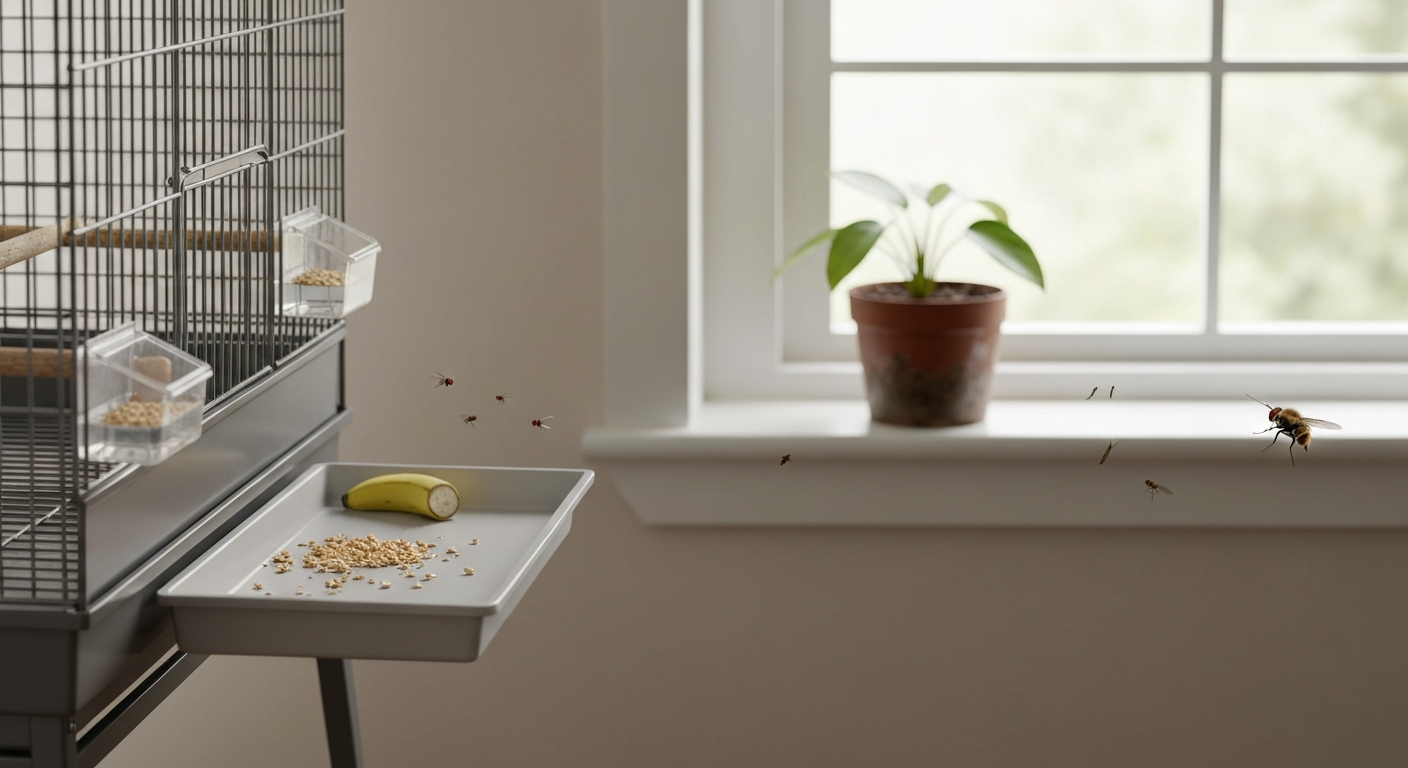
Fruit flies (Drosophila spp.) are tiny, roughly 2 to 4 mm, often with visible red eyes. They hover and dart in small clusters and are almost always found right next to the food dish, dropped fruit pieces, or the trash can. Their whole life cycle from egg to adult takes only 8 to 14 days at room temperature, so a small problem becomes a large one very fast. If you see them most densely around fruit, fresh vegetables, or sugary foods, fruit flies are your answer. For detailed, bird-safe removal steps, see how to get rid of fruit flies in bird cage.
Fungus gnats
Fungus gnats (Sciaridae/Bradysia spp.) are slender and mosquito-like, but smaller and weaker fliers. They tend to crawl or drift low rather than hovering at food height. The telltale clue: a nearby potted plant with damp soil. Fungus gnat larvae live in the top few millimetres of moist potting media, feeding on fungi and root hairs. If your cage sits near a houseplant you've been overwatering, gnats are a strong bet. They're not known to bite birds or transmit bird diseases, but they're a nuisance and a sign of a damp environment that other pests could exploit.
Drain flies (moth flies)
Drain flies (family Psychodidae) have fuzzy, moth-like wings they hold tent-style over their bodies when resting. You'll spot them sitting still on walls, windows, or tiled surfaces, especially near a bathroom or kitchen. They breed in the slimy organic film that builds up inside drains and wet traps, and their life cycle can complete in as little as 8 days in warm conditions. Spraying or swatting adults gives only temporary relief; you have to clean the drain itself to stop them.
House flies
House flies (Musca domestica) are noticeably larger than the others, around 5 to 8 mm, with four dark stripes on the thorax and sponging mouthparts. They're drawn to decaying organic matter, uncovered food, and bird droppings. House flies are a real health concern because they are documented mechanical carriers of Salmonella, E. coli, and other pathogens. If a house fly walks across your bird's food dish, it can deposit harmful bacteria. Heavy house fly presence near feeders and water dishes needs to be addressed urgently.
Moths and mosquitoes
Moths near a bird cage are usually either fabric moths or pantry moths. The damaging stage is the larva. Clothes moth larvae chew natural fibers including feathers, which makes bird supplies an attractive target. Carpet and dermestid beetle larvae also feed on natural materials like feathers and can be introduced on feathered items, while adults are small and often found near windows (see blank" rel="noopener noreferrer">Carpet Beetles / UC IPM). Pantry moth larvae infest stored seeds, grains, and pellets, so check your birdseed bag carefully for webbing, clumping, or tiny worms. Mosquitoes are a different kind of concern: they breed in standing water, even in a small saucer or a water dish left outside, and they can bite pet birds. Birds are amplifying hosts for some arboviruses including West Nile virus, so mosquitoes near an outdoor or porch cage are a genuine health risk, not just an annoyance. Eliminate any standing water within a few metres of the cage.
Don't overlook the crawling pests connected to flying bugs
Flying insects rarely show up alone. Spilled birdseed and food debris that attract fruit flies also attract ants and cockroaches, and a heavy crawling pest problem often precedes or accompanies a flying bug infestation. Cockroaches leave dark cylindrical droppings, shed skins, egg cases, and a musty smell; you'll also see them during daytime if the infestation is heavy. They contaminate food surfaces and worsen indoor allergens. Ants recruit aggressively to sugar-rich and oily seed resources, and an ant trail into the cage means ants are going directly into the food bowl. Ant moats, baffles, and consistent seed cleanup break that cycle. If you're dealing with both flying and crawling pests simultaneously, the root cause is almost certainly a food-hygiene or moisture issue around the cage setup. Detailed strategies for each are worth a separate look, since ant control and roach prevention have their own step-by-step approaches. For specific, bird-safe steps on roach prevention around cages, see how to keep roaches out of bird cage. If ants are part of your problem, see our guide on how to get rid of ants in a bird cage for focused, bird-safe ant-control steps.
Bird-safety checklist: what to never use near your bird
Before you grab any cleaner, trap, or repellent, run through this checklist. I keep a printed copy taped inside my cleaning cabinet. The consequences of getting this wrong range from respiratory irritation to death within minutes.
- No aerosol sprays of any kind in the room, including cooking spray, air fresheners, and hairspray.
- No essential oil diffusers or any scented products: tea tree, eucalyptus, peppermint, citrus oils, and others are toxic to birds.
- No pyrethrin or pyrethroid insecticides indoors near birds, even 'natural' pyrethrins derived from chrysanthemums.
- No neonicotinoids (imidacloprid and similar): documented acute and sublethal toxicity in birds including neurological effects and mortality.
- No organophosphate or carbamate insecticides: these cause cholinergic signs in birds (tremors, excess salivation, respiratory distress) and can be fatal with rapid onset.
- No bug bombs or foggers in the home while a bird is present, or within 24 to 48 hours without complete ventilation.
- No bleach solutions stronger than 1: 10 dilution (1 part bleach to 10 parts water) for cage cleaning, and rinse thoroughly before returning the bird.
- No scented candles, incense, or plug-in wax warmers in the same room.
- No sticky boards placed inside or directly on the cage where a bird could contact them.
- No mothballs or naphthalene products anywhere birds have access to.
- Species note: small birds such as finches, canaries, and budgies are more sensitive to airborne toxins than larger parrots, but all species are at risk. When in doubt, treat every product as potentially harmful and remove the bird before use.
What to do right now if there's an active swarm or your bird seems unwell
If you're looking at a serious infestation today, or if your bird is showing any signs of distress (fluffed feathers, labored breathing, sitting at the bottom of the cage, tremors, or not eating), act immediately in this order.
- Move your bird to a clean, separate room right now. Use a travel cage or a clean cardboard carrier if needed. Do not wait until you have everything set up.
- Open windows in the infested room to increase ventilation, but keep them closed in the room where your bird has been moved.
- Call your avian vet if the bird is showing any physical symptoms. Mention that there were flying insects present and describe any cleaners or products you used recently. Do not wait to see if the bird improves on its own.
- Identify and remove the attractant source immediately: pull out the food dish, collect any dropped fruit or seeds from the cage tray, and empty standing water. Bag the waste and take it outside.
- Do not spray anything in the infested room until your bird is confirmed safe and relocated. Ventilate first, identify second, treat third.
- If the infestation is severe enough that it is coming from a structural source (inside walls, drains, the building itself), call a professional exterminator and make sure they know you have pet birds on the premises so they can choose bird-safe treatment methods.
Step-by-step deep-clean routine for the cage, stand, and surrounding area
This is the core fix for most flying bug problems. Plan for about 60 to 90 minutes the first time you do it. Move your bird to a safe location before you start and keep it there until the cage is fully dry and aired out.
What you'll need before you begin
- Rubber or nitrile gloves
- Old toothbrush or stiff-bristled bottle brush
- Soft scrub brush for cage bars
- Unscented dish soap (e.g., plain Dawn Free and Clear or similar fragrance-free formula)
- White distilled vinegar in a spray bottle (for a natural degreaser/deodorizer; rinse thoroughly after)
- 1: 10 bleach solution in a second labelled spray bottle (for disinfecting; rinse very thoroughly)
- Paper towels or clean rags
- Trash bags
- Replacement cage liner or fresh paper
- Photo step 1 (Remove everything): Take out all dishes, toys, perches, and accessories. Place them in a sink or bucket of warm soapy water to soak. Remove the cage tray and dump all liner material, seed hulls, droppings, and debris directly into a trash bag. Tie and remove it from the house.
- Photo step 2 (Scrub the tray): Scrub the cage tray with the brush and unscented dish soap. Pay attention to corners and the lip where organic debris hides. Rinse thoroughly. If there's visible mold or heavy contamination, spray with the 1:10 bleach solution, let it sit for 2 minutes, then rinse again with clean water until you can't smell bleach.
- Photo step 3 (Clean the cage bars and frame): Wet the soft scrub brush and work from top to bottom on the cage bars, using dish soap. Use the old toothbrush on bar joints, welds, and tight corners. For sticky residue, spray white vinegar, let it sit for 1 to 2 minutes, then scrub and rinse. Avoid soaking any powder-coated or painted areas longer than necessary.
- Photo step 4 (Disinfect): Spray the entire cage interior, tray, and grate with the 1:10 bleach solution. Let it sit for 2 minutes maximum. Rinse very thoroughly with clean water, then rinse a second time. The cage must not smell of bleach before your bird returns.
- Photo step 5 (Clean accessories): Scrub food dishes, water bottles, perches, and toys with dish soap. Rinse well. Air-dry completely or towel-dry before replacing. Porous wooden perches that are heavily contaminated should be discarded and replaced.
- Photo step 6 (Clean the stand and surrounding floor): Wipe down the cage stand with soapy water, paying attention to legs and any horizontal surfaces where seed accumulates. Vacuum or sweep a one-metre radius around the cage. Mop hard floors with plain hot water or an unscented cleaner. Move the cage if needed to clean directly underneath it.
- Photo step 7 (Check nearby drains and plants): If you suspect drain flies, pour a cup of boiling water down nearby drains, then follow with a stiff drain brush and dish soap. Check any nearby potted plants; if soil is waterlogged, let it dry out completely and reduce watering frequency. Consider moving plants away from the cage entirely.
- Photo step 8 (Reassemble with fresh liner): Once everything is dry and the cage smells clean (no bleach, no soap, no vinegar odour), add a fresh cage liner, replace accessories, and refill dishes with fresh food and water. Your bird can return once you are satisfied there are no lingering chemical smells.
Daily and weekly habits that keep flying bugs away for good
The deep clean gets rid of the current problem. Consistent daily and weekly habits are what prevent it from returning. These aren't difficult, but they need to become routine.
Daily quick habits
- Remove uneaten fresh food (fruit, vegetables, cooked foods) within 2 hours of serving, especially in warm weather.
- Wipe the cage tray or replace the liner every day if your bird is a heavy dropper or eater.
- Rinse water dishes and refill with fresh water every day; bacteria and organic film in water dishes attract flies.
- Sweep or vacuum directly under the cage to collect fallen seed before it has time to ferment.
- Quickly check the area around the cage for any standing water, including saucers under nearby plants.
Weekly maintenance checklist
- Full scrub of food and water dishes with unscented dish soap.
- Wipe down cage bars and tray with soapy water.
- Replace all cage liner material.
- Check stored birdseed for any signs of pantry moths (webbing, clumping, larvae) and transfer seed to an airtight container if you haven't already.
- Clean nearby drains if drain flies have been present previously.
- Check windows and screens near the cage for gaps; repair or tape any tears in mesh screens during mosquito season.
- Let any potted plants near the cage dry out between waterings; consider using a top dressing of coarse sand over potting soil to deter fungus gnats.
- Place a fresh yellow sticky trap near (not on or inside) the cage to monitor for any new pest activity.
Cage setup and placement fixes that make a real difference
Cage placement matters more than most people realize. Cages near kitchen windows attract house flies that enter when doors open. Cages near porch doors invite mosquitoes during warmer months. If your cage is next to a window that stays open, consider adding a fine mesh insect screen (standard 18x16 mesh works for most flying insects) or moving the cage at least a metre away from any open window or door. If noise or drafts are also a concern, see a guide on how to soundproof a bird cage for tips on reducing sound and sealing airflow around the enclosure. Cages near overwatered houseplants will always fight a fungus gnat battle. Store birdseed in sealed airtight containers, not open bags, and buy seed in smaller quantities so it turns over quickly rather than sitting for months. A cage with a deep seed guard skirt catches fallen food before it hits the floor, which dramatically cuts the attractant load.
Tools and materials: what to buy, what it does, and whether it's safe for birds
| Item | What it does | Bird-safe? | Notes |
|---|---|---|---|
| Unscented dish soap (e.g., fragrance-free Dawn) | General cleaning of cage, dishes, perches | Yes, when rinsed thoroughly | Avoid antibacterial or scented formulas |
| 1:10 bleach solution (plain unscented bleach) | Disinfects cage, tray, and grate | Yes, if rinsed very thoroughly and dried | No scented or splash-less bleach formulas; ensure zero bleach smell before bird returns |
| White distilled vinegar spray | Degrease and deodorize cage surfaces | Yes, when rinsed thoroughly | Good for cutting seed residue; not a disinfectant on its own |
| Stiff bottle brush or old toothbrush | Scrubs bar joints, corners, and perch crevices | Yes | Keep a dedicated set for cage cleaning only |
| Yellow sticky traps (non-toxic, no pesticide) | Monitors and catches fruit flies, fungus gnats, and moths | Safe if placed outside the cage only | Never place inside or on the cage; birds can get stuck on them |
| Apple cider vinegar trap (DIY) | Attracts and drowns fruit flies | Safe if placed away from the cage | Fill small jar with ACV and a drop of dish soap; cover with plastic wrap and poke small holes; place 1 to 2 metres from cage |
| Sticky pheromone pantry moth traps | Species-specific monitoring and catching of pantry/fabric moths | Safe outside the cage | Use species-specific traps for accurate detection |
| Fine mesh insect screen (18x16 mesh or finer) | Blocks mosquitoes, moths, and house flies from entering through windows | Yes | Can be cut and fitted to window frames or temporarily attached with tape during warm months |
| Airtight food storage containers | Stores birdseed and pellets to block pantry moths and fruit flies | Yes | Glass or BPA-free hard plastic; label with date of purchase |
| BTI (Bacillus thuringiensis israelensis) granules | Biological larval control for fungus gnats in potted plant soil | Yes (applied to plant soil, not cage) | Available as mosquito dunks; crumble and mix into top layer of plant soil; not for use inside the cage |
| Nitrile or rubber gloves | Protects hands during cleaning | Yes | Wear during all cleaning steps |
| Unscented enzymatic cleaner (e.g., Poop-Off or similar bird-safe formulas) | Breaks down organic waste and biofilm on cage surfaces | Yes, when used as directed and rinsed | Check label confirms bird-safe; avoid formulas with added fragrance |
| Drain brush and enzymatic drain cleaner | Removes organic biofilm from drains that breed drain flies | Safe (for drain use only) | Physical scrubbing is more important than chemical treatments for drain flies |
When to call a vet and when to call an exterminator
Call your avian vet immediately if your bird is showing any of these signs: sitting on the cage floor, fluffed up and unresponsive, labored or open-mouthed breathing, tremors, weakness, unusual droppings, or loss of appetite after any pest control activity in the home. Organophosphate and carbamate poisoning in birds progresses rapidly, and early veterinary care is critical. Even if you haven't used any chemicals yourself, a neighbour's exterminator visit or a landlord's building treatment can affect your bird if fumes reach the room.
Call a professional exterminator when the infestation is structural or systemic: cockroaches in the walls or under flooring, a drain fly source you cannot physically access, or mosquitoes breeding in a water source you don't control (a shared building drainage system, for example). When you call, always tell the exterminator you have a pet bird on the premises. Ask specifically what active ingredients they plan to use, and ask them to confirm those compounds are not in the organophosphate, carbamate, or neonicotinoid chemical families. Field evidence shows neonicotinoids (e.g., imidacloprid) can cause avian mortality and sublethal effects after ingestion of treated seeds (Field evidence of bird poisonings by imidacloprid‑treated seeds: review of SAGIR reports / PMC) Field evidence of bird poisonings by imidacloprid‑treated seeds: review of SAGIR reports / PMC (peer‑reviewed). Get it in writing if possible. Plan to relocate your bird well before treatment and keep it away for the period the exterminator recommends, plus additional ventilation time.
Connecting the dots: how all these pest problems link together
Flying bugs, crawling bugs, and even larger predators like cats near the cage are all symptoms of the same underlying question: how well is the cage environment managed and protected? For advice on preventing snake access to cages, see our guide on how to make bird cage snake proof. For specific predator-proofing steps and tips on how to protect bird cage from cats, see the related guide for practical measures you can implement immediately. A cage that spills food, sits on a damp floor, stays near open windows, and stores seed in an open bag is an open invitation. Once you've cleaned up and tightened your daily habits, you'll find that the fruit fly, gnat, moth, ant, and roach problems all reduce together, because they share most of the same attractants. The related topics of ant control, roach prevention, moth management, and even physical cage security all tie back to the same foundation of clean food management, dry surroundings, and secure storage. Building that foundation once, and then maintaining it with a daily two-minute routine, is genuinely the most effective pest control you can do for a bird cage setup.
FAQ
What are the most common flying pests I might see around a bird cage and how can I quickly identify them?
Common pests and quick ID tips: fruit flies (Drosophila) — tiny (2–4 mm), often red eyes, hover near fermenting/overripe fruit or spilled wet food; fungus gnats — delicate mosquito‑like small flies that hover near potted soil and breeding substrate; drain/moth flies — fuzzy, moth‑like wings held roof‑wise, rest on walls/windows, cluster near drains or wet trays; house flies — larger (5–8 mm) with thoracic stripes, land on food and droppings; mosquitoes — slender, long legs, bite; pantry/pet‑food moths — adults mothlike, larvae (webbing/cases) in stored seed/food; ants and cockroaches — not flying all the time but often present near spilled seed (look for frass, egg cases, shed skins, trails). Use size, wing/wing‑hold shape, behavior (hovering vs. purposeful flight), and where you see them (food, soil, drains, standing water) to differentiate.
What immediate, bird‑safe steps should I take when I first notice flying bugs near my bird’s cage?
Immediate steps: 1) Remove any obvious attractants — clear spilled seed, stale/rotten fruit, dirty water, and food dishes. 2) Move the bird to a safe, well‑ventilated room while you clean if heavy insect activity increases stress. 3) Empty and dry any standing water containers and plant saucers. 4) Sweep/vacuum around the cage and mop surfaces with a mild bird‑safe cleaner (vinegar diluted with water is generally safer than chemical disinfectants). 5) Replace cage liners and thoroughly clean food and water bowls. 6) Set passive, non‑toxic traps (sticky traps placed away from the bird, vinegar trap in a covered jar outside the cage area) to reduce adult numbers.
Which cleaning routines and tools are most effective for removing breeding sources and preventing re‑infestations?
Effective cleaning routine and tools: Daily: remove uneaten fresh food, change water, wipe up spills, replace or shake out liners. Weekly: deep clean food/water dishes, perches, toys, seed pans; scrub with hot soapy water and rinse thoroughly. Monthly: move cage to clean under and behind, clean drains and nearby windowsills. Tools/materials: microfiber cloths, handheld vacuum, scrub brushes, bottle brushes for dishes, mild dish soap, white vinegar for surfaces, disposable liners, sticky traps (yellow), covered jars for vinegar traps, sealable food containers. Focus on eliminating organic residues and moisture — that removes breeding substrate for fruit flies, drain flies and gnats.
What DIY traps and non‑toxic repellents are safe to use around birds? Where should they be placed?
Safe DIY traps/repellents: 1) Vinegar trap for fruit flies — small jar with apple cider vinegar + a drop of dish soap covered with plastic wrap with pinholes; put outside the immediate cage area or in a closed jar so fumes don’t concentrate near the bird. 2) Sticky yellow cards — trap fungus gnats and flying insects; hang them at plant soil level and away from bird access. 3) Covered bait‑traps for pantry moths using pheromone lures (place away from bird, in pantry or sealed food area). 4) Eliminate standing water; use mosquito dunks (Bti) only in outdoor water features and never where birds can peck treated water. 5) Essential oils and aerosols: avoid — many are toxic to birds (highly volatile; can cause respiratory distress). Placement guidance: traps should be out of reach of birds, not directly on the cage, and positioned at the insect source (near plants or drains), not near the bird’s breathing zone.
How do I modify cage setup and placement to reduce insect attraction and keep my bird safe?
Cage setup fixes: - Position cage away from kitchen, open trash, and windowsills with standing water or fermenting waste. - Use tight‑weave covers or mesh screens at night to reduce moths and mosquitoes; ensure adequate ventilation when covered. - Use closed, sealable seed and treat food containers to prevent pantry moths and ants. - Keep seed trays and drip trays clean and dry; use removable, washable pans. - Put a shallow gravel or oil moated stand under outdoor cages to deter ants. - Avoid placing cages next to fruiting plants, compost heaps, or overwatered potted plants. - Install window screens and repair gaps to reduce insect entry. Ensure any materials used (paints, adhesives, treated wood) are labeled bird‑safe and non‑toxic.
What predator‑proofing and pest‑proofing measures should I use to keep cats, snakes and other predators away, while also limiting insect problems?
Predator and pest‑proofing: - Keep cages elevated and at a safe distance from cover that cats can access; use lockable cage stands and heavy anchors if outdoors. - Add a welded‑wire predator guard (hardware cloth) around the base and underside openings to block snakes — bury apron of mesh 12–18 in (30–45 cm) into the ground outdoors. - Use secure lids and try netting or fine mesh to keep aerial predators and larger insects out; ensure ventilation. - For cats, use double barriers such as a screened enclosure or cat‑proof fencing; clear vegetation that provides ambush points. - Avoid rodent and pest food sources near cage — keep seed sealed and sweep spills to reduce ant/roach attraction. - Check materials for bird safety: avoid treated timbers or insecticidal paints in contact with cage or perches.
Next Articles
How to Make Bird Cage Snake Proof: Step-by-Step Fixes
Step-by-step fixes to block snake entry points into bird cages, test security, and prevent gaps without harming ventilat
How to Get Rid of Moths in a Bird Cage Safely
Step-by-step, bird-safe moth removal for cages: clean-out, find source, use safe traps, and prevent repeats.
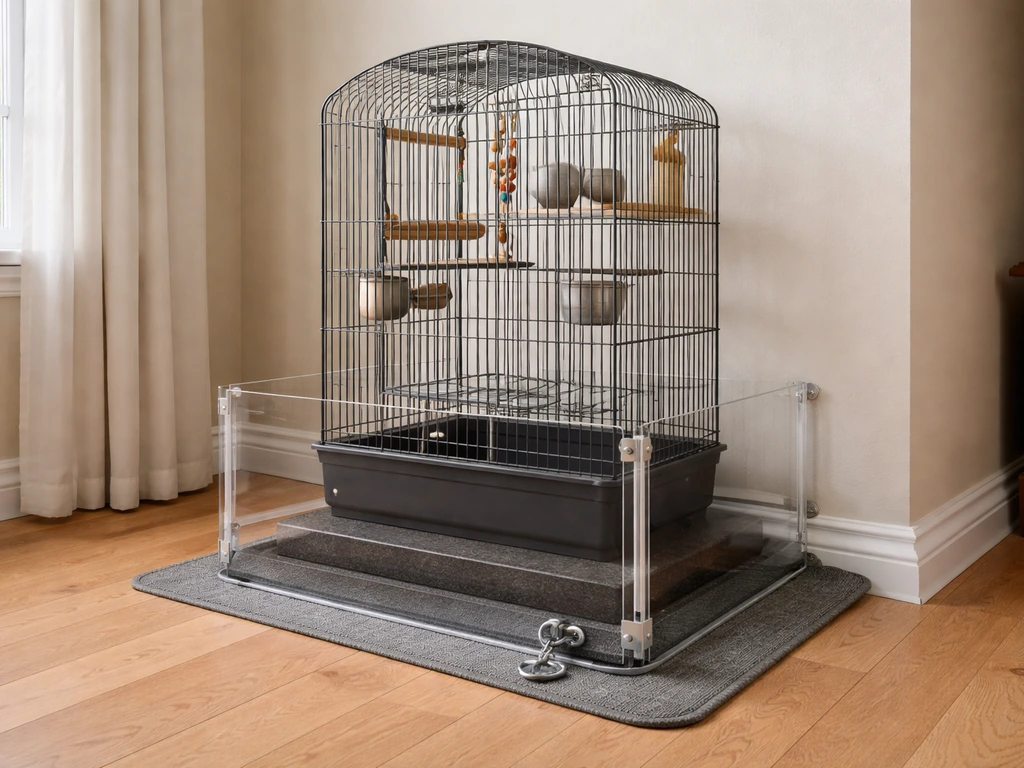
How to Protect a Bird Cage From Cats: Step by Step
Step-by-step ways to stop cats reaching or tipping bird cages with safe placement, reinforcements, and cat training.