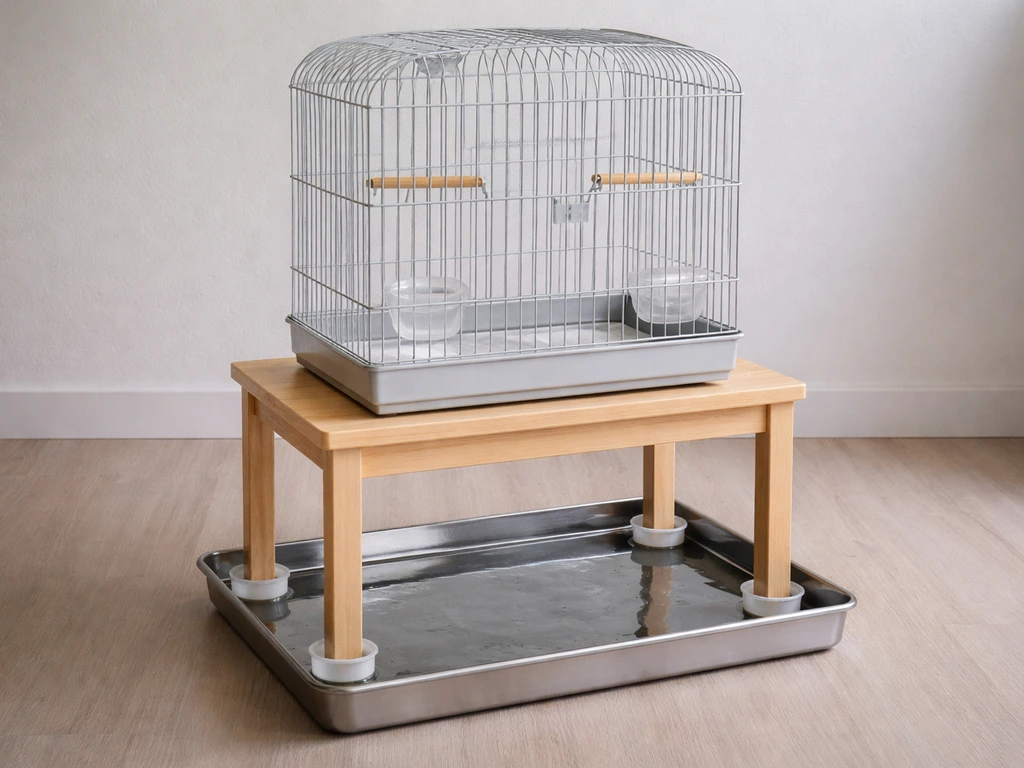
Move the cage today, reinforce the latches, and add a physical barrier around the base. If you also need to keep snakes out, use additional barrier materials and sealing steps designed for reptiles around the same cage area how to make bird cage snake proof. Those three steps alone will stop most cats from reaching or tipping your bird's home. Beyond that, you can layer in cat training, safe deterrents, and enrichment to reduce your cat's obsession with the cage over time. Here's exactly how to do all of it, from the quick wins you can knock out in an hour to the longer-term upgrades that make cohabitation genuinely safe.
How to Protect a Bird Cage From Cats: Step by Step

Maya Bennett
2 May 2026
How cats actually get to bird cages
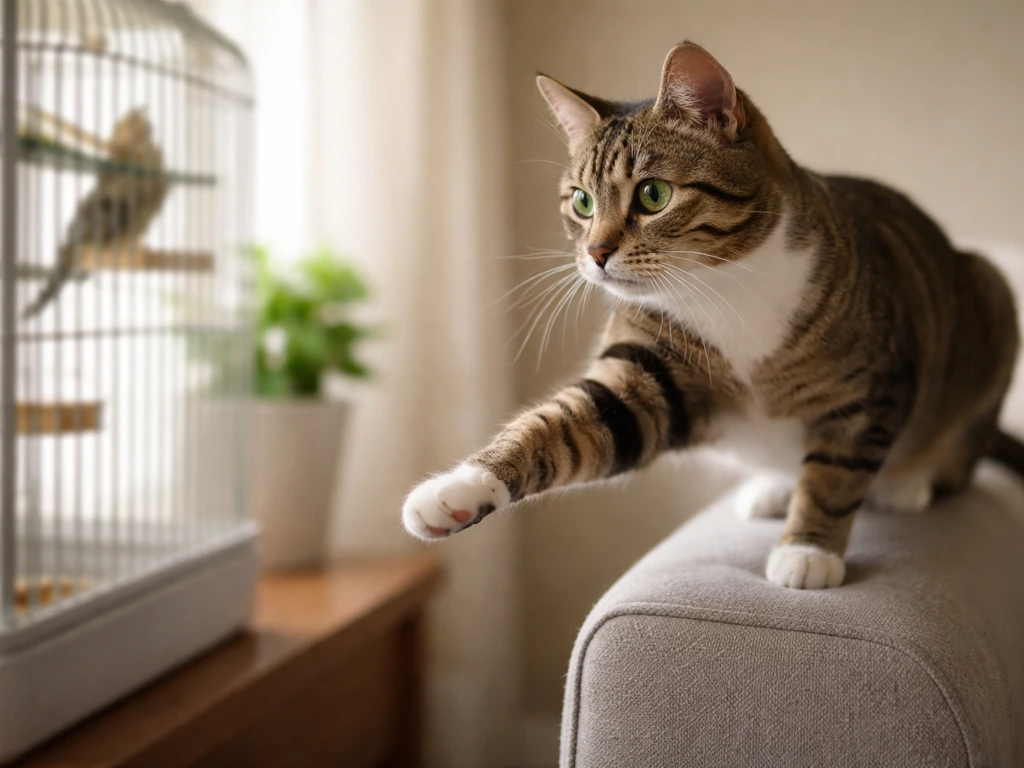
Before you start reinforcing anything, it helps to understand what you're actually defending against. Cats use a handful of consistent tactics, and each one needs a different fix.
- Climbing nearby furniture: A bookshelf, windowsill, or sofa arm within jumping distance gives a cat a launchpad to reach cage height or even land on top of the cage.
- Pawing through the bars: Even if a cat can't get inside, a paw sliding through the bars can injure a bird or cause enough terror to trigger fatal stress. Bar spacing of more than half an inch is enough for most cat paws.
- Tipping or knocking: Cats will push, bump, and rock freestanding cages, especially lightweight ones on narrow stands. A falling cage can kill a bird outright.
- Reaching via cage doors: A determined cat can learn to bat at slide-style or clip latches. Spring-loaded or dual-action locks are the only ones that reliably hold.
- Climbing the stand or cage itself: Wire cage exteriors with large grid openings are essentially a ladder for a motivated cat.
- Night-time access: Most incidents happen unsupervised at night, when the cat has hours to work on the cage without interruption.
If you're dealing with snakes or other reptile predators as a separate concern, that's a different set of reinforcement needs entirely. For the cat problem specifically, the solutions below cover every one of the attack routes above.
Safe cage setup and placement
Placement is your first and biggest line of defense. A well-placed cage removes most of the problem before you spend a dollar on hardware.
Choose the right room
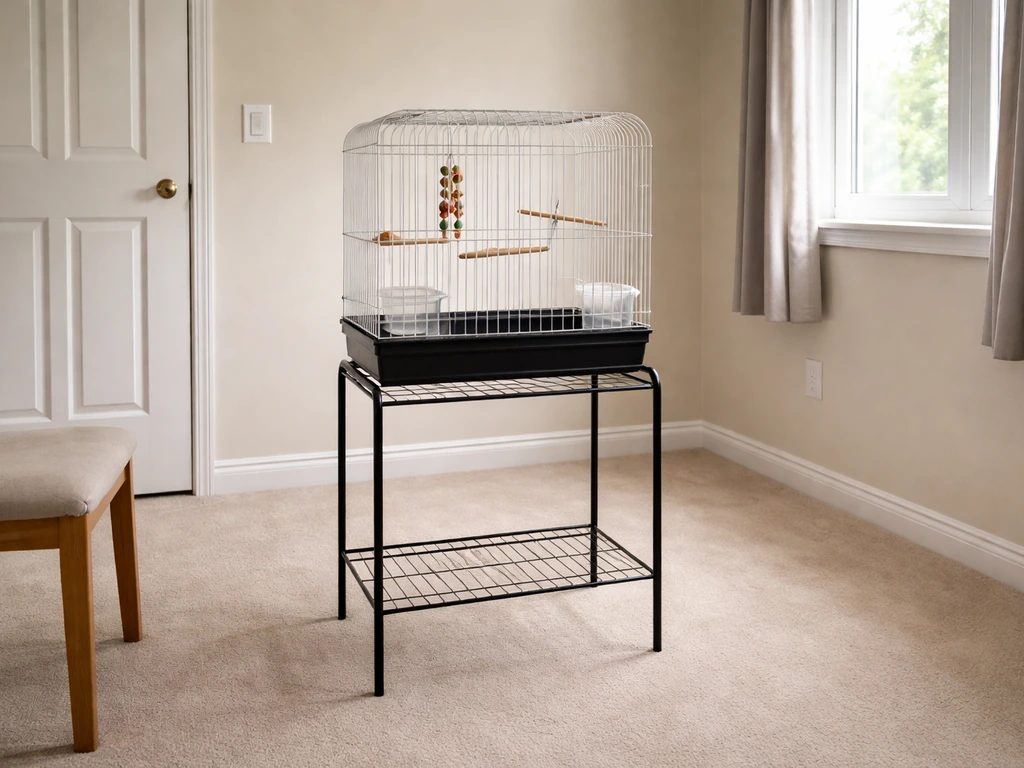
Ideally, the bird lives in a room the cat cannot access unsupervised. A spare bedroom, home office, or dedicated bird room with a door you can close is the gold standard. If that's not possible, pick the room where you spend the most time so you can monitor interactions. Avoid the kitchen (fumes, heat fluctuation) and hallways near front or back doors where drafts are common.
Pick the right spot in the room
A corner placement is your best friend. Push the cage into a corner so the cat can only approach from one or two directions rather than all sides. Keep at least three feet of clear floor space in front of the cage, with no furniture the cat can use as a step-up. Avoid placing the cage directly in front of a window. Besides the heat risk from sunlight acting like a magnifier, a window gives the cat a nearby perch at the same height as the cage. If the cage must be near a window, use blinds or a curtain to block the ledge and position the cage at least two feet away from the glass.
Anchor the cage stand
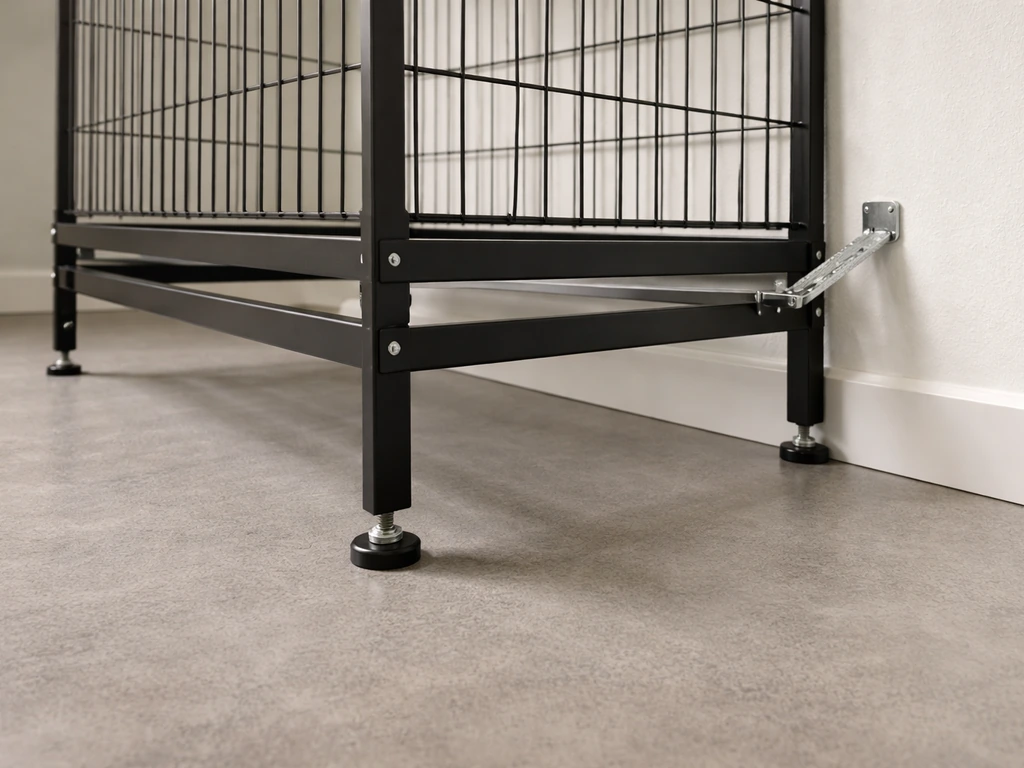
A cage on a wobbly stand is an accident waiting to happen. If your stand has adjustable feet, level them on the floor. Better still, use L-brackets or furniture anchoring straps (the same type used to secure bookshelves in earthquake zones) to attach the stand to the wall. This takes about fifteen minutes and costs under ten dollars. For heavy cages, place non-slip rubber matting under the stand feet to add grip against sliding.
Height and ventilation
Counter-intuitively, putting a cage very high does not automatically make it safer. A cat can still reach a cage on top of a bookshelf, and a tall fall is more dangerous for the bird. A stable stand at mid-chest height (roughly 4 to 5 feet to the cage floor) with a clear zone around it is safer than a high but unstable position. Whatever height you choose, make sure ventilation is adequate. Avoid placing the cage directly under an air-conditioning vent or in a draft path. The bird needs fresh air circulation without cold blasts or fumes from nearby cleaning products, air fresheners, or aerosols.
Physical barriers and cage reinforcements
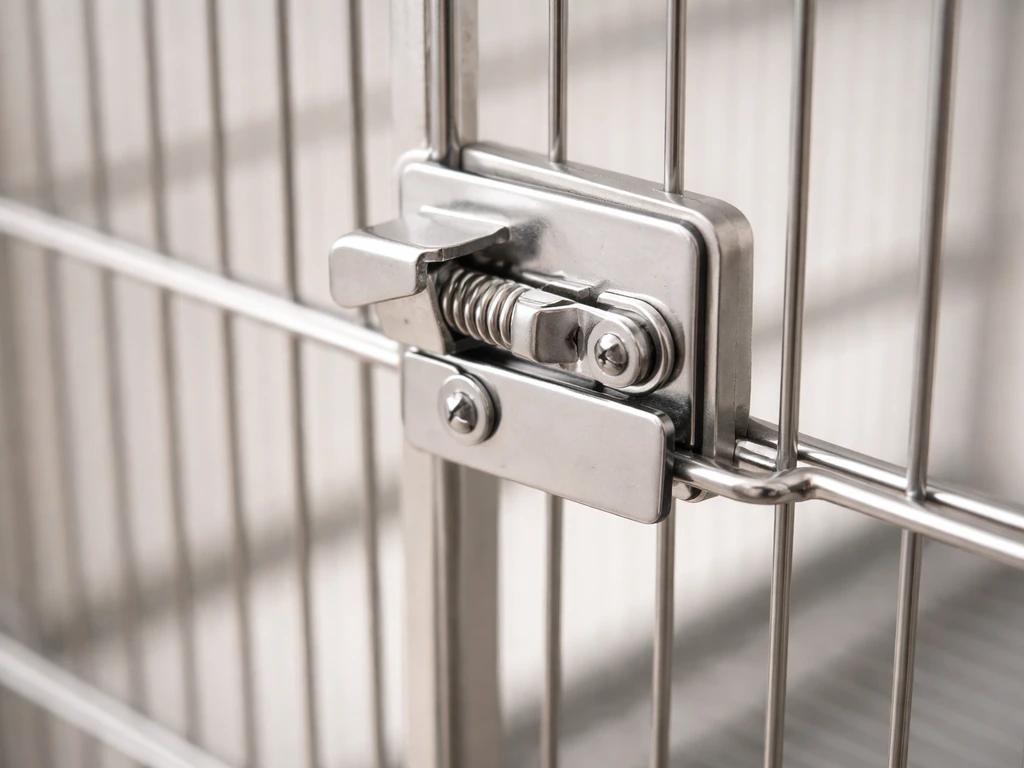
Once the cage is in the right spot, it's time to harden it against direct physical access. Think of this as adding layers: secure the cage itself, then create a perimeter around it.
Upgrade the latches
Replace any slide-clip or simple latch door with a spring-loaded carabiner clip or a two-step latch that requires simultaneous pull-and-lift to open. Add these to every door on the cage, including seed guards and access panels. Small carabiner clips from a hardware store cost about a dollar each and are the single most impactful ten-minute upgrade you can make. Check that the clip sits flush against the door so there's no gap a paw can hook into.
Reduce bar gap exposure
If your cage has bar spacing wider than half an inch, a cat paw can slide through far enough to grab or scratch a bird perched near the edge. You have two good options: add a second layer of hardware cloth (also called welded wire mesh) with quarter-inch spacing zip-tied to the outside of the cage bars, or train your bird to avoid perching near cage walls (move perches to the center and interior of the cage). The hardware cloth approach is more reliable. Use stainless steel or powder-coated options without sharp cut edges; file or bend any protruding wire ends so they don't become a hazard to curious beaks or fingers.
Block the base and stand from climbing
If your stand has legs, wrap the lower section in a smooth material a cat can't grip, like PVC pipe sections slid over each leg, or apply double-sided tape (the wide, carpet-grip type) temporarily. A more permanent fix is to add a solid skirt panel around the base of the stand, essentially creating a smooth-sided box the cat can't scale. Cut this from thin plywood or acrylic sheet and attach it with small bolts or zip ties so it's removable for cleaning.
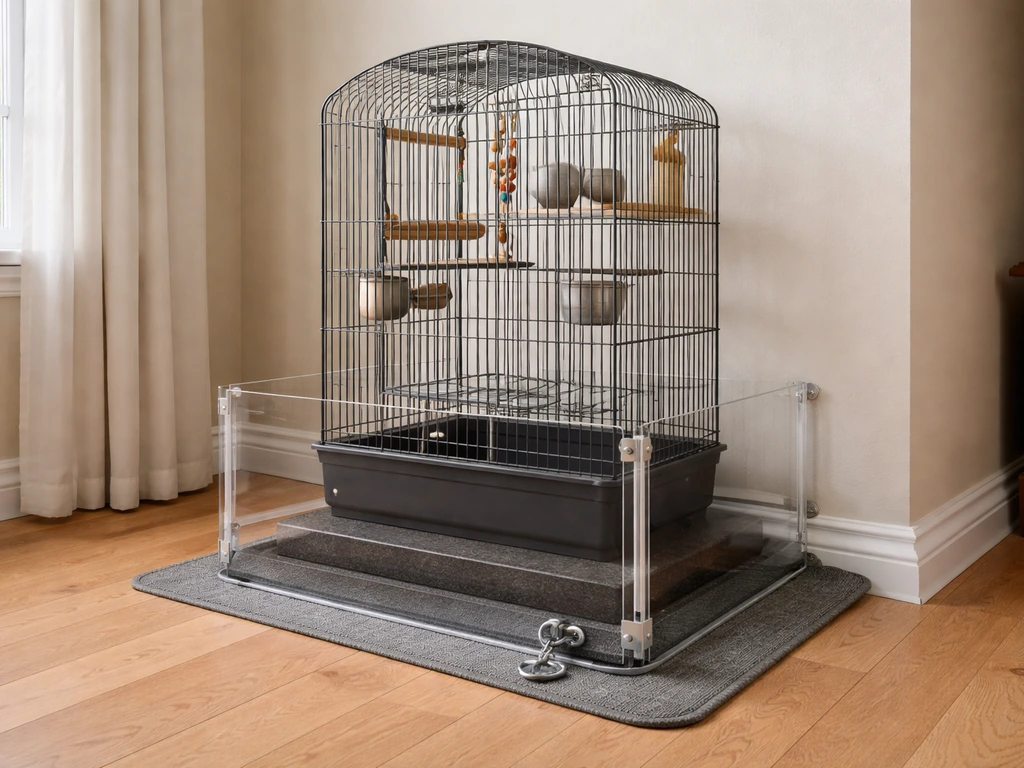
Create a physical exclusion zone
For persistent cats, a freestanding pet gate or exercise pen placed around the cage creates a second perimeter. Look for metal pet gates at least 30 inches tall with vertical bars (not horizontal, which cats climb easily). A small dog exercise pen forms a complete ring around the cage and stand, preventing a cat from getting within pawing distance entirely. This is one of the most reliable solutions available and works even with very determined cats.
Cage cover safety at night
A cage cover provides darkness and helps the bird sleep, but it also adds a small layer of access control at night. If you want to soundproof a bird cage too, focus on a breathable, padded cover and avoid blocking airflow cage cover provides darkness. The key is that a cover should never reduce ventilation or create a surface a cat can grab and pull.
Use a cover with ventilation panels or holes, make sure it hangs well clear of the bars on all sides (a cat can press the cover against the bars and reach through), and clip the bottom edges down so they can't be pulled up. Never seal the cover at the bottom. The bird always needs airflow.
Training and managing the cat for safer co-existence
Physical reinforcement stops immediate access, but it doesn't change your cat's interest in the bird. Cat management and positive reinforcement training reduce that interest over time and make supervised cohabitation genuinely workable.
Supervised introduction and habituation
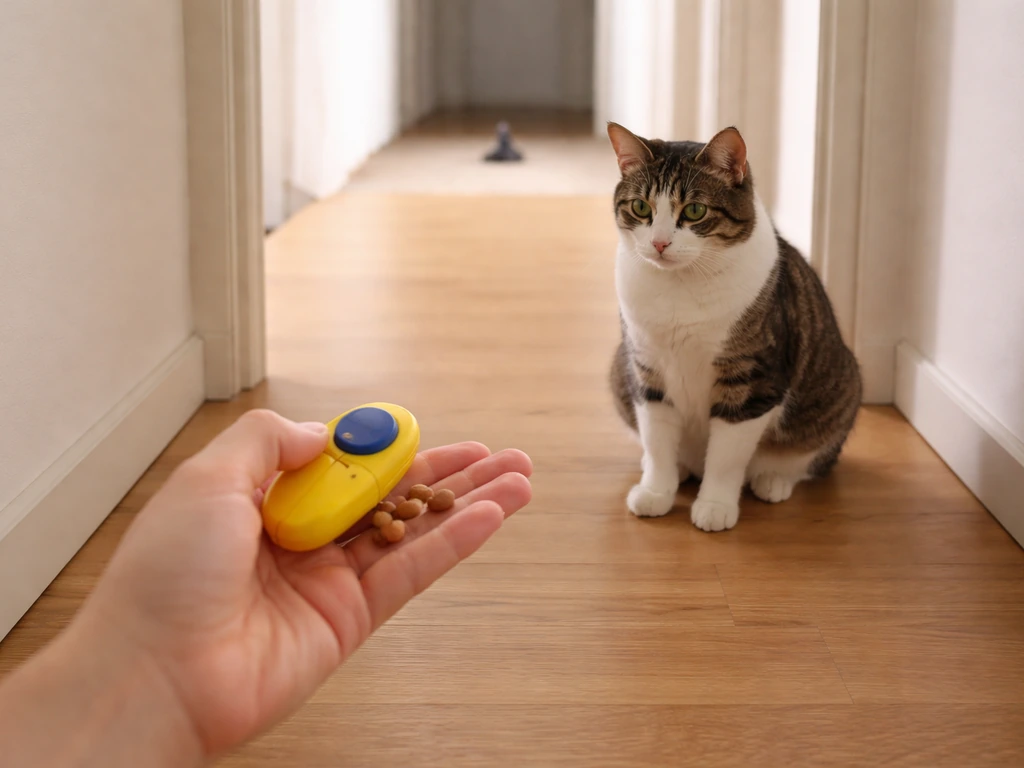
Start with brief, fully supervised sessions where the cat can see the cage from a distance. Keep these calm and low-key. If the cat ignores the cage or walks away, immediately reward that behavior with a treat or play. The goal is to build a neutral or positive association with the bird being present but uninteresting. Do this in short five-minute sessions daily rather than one long exposure. An important note: habituation to one situation doesn't automatically carry over. A cat that is calm around the cage during the day may still become agitated at night or when the bird makes sudden movements, so never rely on past calm behavior as a guarantee.
Clicker training basics for cats
Clicker training works well for cats and doesn't require previous experience. Charge the clicker first by clicking and immediately giving a small treat ten to twenty times until the cat clearly anticipates the treat at the sound. Then use the clicker to mark and reward any calm behavior near the bird room: sitting quietly, lying down, or turning away from the cage. Over days and weeks, you're building a habit of calm around the bird. Keep sessions under five minutes and always end on a positive note.
What not to do
Punishment, spraying with water, or yelling at a cat near the cage doesn't reduce the cat's interest in the bird. It increases anxiety and can make the cat associate the bird's presence with negative outcomes, which sometimes escalates predatory behavior rather than reducing it. Stick to redirection and rewards.
Separation when you can't supervise
Until you're confident in your setup and your cat's behavior, keep them physically separated whenever you're not in the room. Use a door, a baby gate the cat can't jump, or keep the bird in a dedicated room. Most incidents happen at night or when the owner is away. This single rule prevents the majority of serious injuries.
Deterrents and repellents that won't harm your bird
There are genuinely effective deterrents you can use around a bird cage, but the list of safe ones is short. If you also need to manage fruit flies in a bird cage, focus on removing their food sources and using bird-safe cleaning methods without chemical sprays. blank" rel="noopener noreferrer">Birds are extremely sensitive to airborne chemicals. blank" rel="noopener noreferrer">Aerosol sprays, spray disinfectants, chemical air fresheners, bleach-based products, and insect killers are all hazardous when used in the same room as a bird. Don't use them, even temporarily, and never as deterrents near the cage. To stop roaches too, focus on cleaning around the cage and sealing entry gaps so insects cannot reach the bird area keep roaches out of bird cage.
Safe physical deterrents
- Double-sided tape on the cage stand legs and nearby furniture edges: cats dislike the sticky sensation on their paws. Replace it every few weeks as it loses tack.
- Textured plastic floor mat (spike side up) placed around the base of the stand: uncomfortable to walk on but not harmful.
- Motion-activated air sprayer (compressed air, no chemicals): position it to face away from the cage so the puff of air surprises the cat without sending any product toward the bird.
- Aluminum foil laid flat on surfaces the cat uses to approach the cage: the sound and feel typically deters most cats within a few days.
- Pet-safe indoor citrus sprays applied to surfaces around the cage stand, never to the cage itself or anywhere near the bird: citrus is an effective cat repellent but keep it strictly on furniture legs or baseboards, not in the air.
If you're also dealing with insect pests around the cage, the same rule applies: no aerosol sprays or chemical treatments in the bird room. If you are seeing ants around the bird cage area, use safe, non-chemical traps and keep them away from the cage and any bird-accessible surfaces how to get rid of ants in bird cage. Physical barriers and non-chemical traps are the safe route.
Enrichment and stress reduction for both pets
A bored cat is a persistent cat. Giving your cat appropriate outlets dramatically reduces fixation on the bird. A cat that has been played with and mentally stimulated before it encounters the bird room is far less likely to stalk the cage.
Cat enrichment that reduces cage fixation
- Cat tree or tower placed away from the bird room, ideally near a different window: vertical space lets cats watch outdoor activity and satisfies their need for elevated vantage points without bringing them near the cage.
- Scratching posts positioned near areas the cat already uses: redirect scratching behavior before it becomes a problem near the cage stand.
- Two scheduled interactive play sessions per day (ten to fifteen minutes each) using a wand or laser toy: tire the cat out before the bird's most active periods, usually morning and early evening.
- Puzzle feeders and food-dispensing toys during the times you can't supervise: a cat working on a food puzzle has something better to do than harass the bird.
- Rotate toys every few days to maintain novelty: a cat that has access to the same toys constantly stops responding to them.
Reducing stress for the bird
Even if the cat never physically reaches the bird, constant exposure to a predator staring at the cage causes real stress. Signs of a stressed bird include increased respiratory rate, open-mouth breathing, feather fluffing, excessive screaming, or a bird sitting motionless at the bottom of the cage. If you're seeing any of these signs, the bird's cage placement or the cat's access to the cage area needs to change immediately. Provide the bird with hiding spots inside the cage (a small sleep hut or dense leafy toys), maintain a consistent daily routine, and keep the cage in an area where the cat is rarely seen approaching. A predictable, calm environment is as important to bird health as the physical reinforcements.
Daily checks and troubleshooting
Your setup needs regular inspection. Cats work on problems persistently, and hardware loosens over time. Build a quick check into your morning feeding routine. If you’re also dealing with moths around the bird cage, keep the area clean and remove any fabric or food sources they can feed on quick check.
Daily checks (under two minutes)
- Test every latch and door on the cage by pushing and pulling firmly. Any door that opens without the intended two-step action needs a new clip today.
- Run your hand along the cage bars and look for bent or bowed sections. A paw-width gap in the bars means a cat has been working on that spot overnight.
- Check the stand anchor points. Give the stand a gentle push from the side. If it rocks, tighten the wall bracket screws or add a second anchor point.
- Look for scratch marks on the cage stand, the floor around it, or the pet gate. Fresh scratch marks tell you exactly where the cat is focusing its attempts.
- Check the cage cover clips if you use one. Make sure the cover is secure, not bunched against the bars, and that air is flowing freely inside.
Weekly checks
- Inspect all hardware cloth or secondary mesh panels for loose zip ties or pulled edges. Replace any zip ties that have cracked or loosened.
- Check double-sided tape and sticky mat deterrents and replace them if they've lost tack.
- Look under and behind the cage stand for debris, fur accumulation, or anything that could attract insects (a separate problem that can bring other pest issues into the bird room).
- Observe the bird's behavior and posture for at least five minutes. A bird that consistently looks fearful, stays at the bottom of the cage, or has changed its eating habits may be experiencing ongoing stress from cat proximity.
Common failure points and fixes
| Problem | Likely cause | Fix |
|---|---|---|
| Cage door opens on its own | Worn or incorrect latch type | Replace with spring-loaded carabiner clip immediately |
| Bent cage bars near the bottom | Cat pawing repeatedly overnight | Add hardware cloth to exterior; move bird away from that wall section |
| Cage rocking or sliding | Insufficient stand anchor | Add wall bracket and non-slip mat under stand feet |
| Bird showing stress signs during the day | Cat visible near cage too often | Rearrange room to block cat's sightline; add a barrier or exercise pen perimeter |
| Cat bypassing pet gate | Gate height too low or horizontal bars used as a ladder | Switch to a taller gate with vertical-only bars; add a top panel if needed |
| Cover pulled partway off at night | Cat grabbing cover fabric | Use cover clips or binder clips at all corners; choose a shorter cover that doesn't hang within reach |
What to do right now
If you've read this far and haven't acted yet, here's the shortest possible to-do list for today: move the cage into a corner away from furniture the cat can use as a launchpad, add carabiner clips to every door, and put the cat in a separate room tonight. Those three steps take under an hour and will prevent the most common and most serious incidents.
Build out the physical perimeter, training, and enrichment from there over the next week or two. Flying bugs around bird cage can also become a stressor and nuisance, so keep the area clean and choose safe controls that do not involve aerosols or chemicals near the birds. You don't have to solve everything at once, but the basics need to happen before the next unsupervised night.
FAQ
What should I do if my cat can still reach the cage when it is in the corner?
Recheck the clear floor zone and remove any “step-up” surfaces within three feet (ottomans, crates, low shelves). Then add a second perimeter like a freestanding pet gate or exercise pen so the cat cannot approach within pawing distance, even if it finds a new route around the corner.
My bird keeps perching near the cage edges, even after I adjust the perches. Is hardware cloth still the best option?
Hardware cloth is usually more reliable if your bird gravitates to the walls. Zip-tie or secure quarter-inch mesh to the outside of the bars, then file any protrusions so there are no sharp wire ends that could injure beaks or fingers during normal climbing.
How tight should carabiner clips be, and what’s the most common installation mistake?
The clip should sit flush with no gap that a paw can hook. The most common mistake is leaving the door slightly misaligned so the clip catches loosely, which can still allow prying. Test by lightly pushing the door to confirm it cannot shift or open without a deliberate two-step motion.
Is it safe to use tape or tape-like products on the stand to stop cats from gripping it?
Temporary double-sided carpet-grip tape can work, but only until you can install a removable skirt panel or PVC leg covers. Avoid leaving sticky materials where bird feet, wings, or droppings could contact them, and remove residue during cleaning.
Can I place the cage on the floor to prevent falls, or does that make the cat problem worse?
Floor placement reduces fall height, but it increases the cat’s ability to reach and paw at the bird. If you go lower, you must compensate with a full barrier, like an exercise pen ring or skirted stand plus a clear, unobstructed floor zone around the cage.
Should I cover the cage at night if my cat is most active after dark?
You can use a cover, but it must never reduce ventilation or create a grab point. Choose a breathable design with ventilation openings, clip the bottom edges down, and keep the cover clear of the bars so a cat cannot press it and reach through.
What if my cat is calm during the day but suddenly becomes aggressive at night?
Treat night behavior as separate, because habituation may not carry over. Keep the bird and cat separated when you cannot actively supervise, and do short daytime training sessions that end before the cat is overexcited. Reassess placement if the bird startles easily at night.
Do I need to train the cat if I already built physical barriers?
Training isn’t strictly required for every situation, but it adds safety margin and reduces stress from constant staring. Even with barriers, reward any calm interaction with the bird room, because the goal is to prevent barrier tests and reduce fixation over time.
Are motion deterrents like sprays or loud alarms safe in the same room as a bird?
In general, avoid sprays, aerosol deterrents, and chemical treatments in bird rooms. For noise-based deterrents, even if they are non-chemical, sudden loud sounds can stress birds, so physical separation and training are safer defaults.
What are the signs that my bird is too stressed even if the cat never touches the cage?
Look for respiratory changes (faster breathing), open-mouth breathing, unusual feather fluffing, excessive screaming, or the bird repeatedly freezing at the bottom. If you see these, reduce cat access further, improve hiding options inside the cage, and change cage placement so the cat’s approach is less frequent.
How often should I inspect the cage and barriers, and what specific failures should I look for?
Do a quick check daily, ideally during feeding. Focus on loosened clips, shifted hardware cloth edges, stand movement, and any latch that now has a new gap. Cats often find new “weak points” as parts loosen.
My cat tries to play with the cage bars instead of approaching the bird. What’s the best response?
Redirect immediately by rewarding the cat for turning away or lying down, and reinforce that calm behavior with treats during supervised sessions. If playing escalates, increase the perimeter (exercise pen or higher barrier) so the cat can’t reach bars at all.
Next Article
How to Get Rid of Ants in a Bird Cage Fast and Prevent Them
Fast, safe step-by-step removal of ants from a bird cage, plus prevention tips to stop them returning.