Fruit flies in a bird cage come down to one thing: fermenting organic matter. Remove the food source, trap the adults, and deep-clean the cage, and you can clear an infestation in a few days without touching a single chemical that could harm your bird. The step-by-step plan below covers identification, immediate removal, DIY traps, cleaning routines, and when to escalate to a vet or pest professional.
How to Get Rid of Fruit Flies in Bird Cage, Safe DIY Traps & Prevention

Maya Bennett
27 Jul 2026
Safety first: what to protect before you do anything else
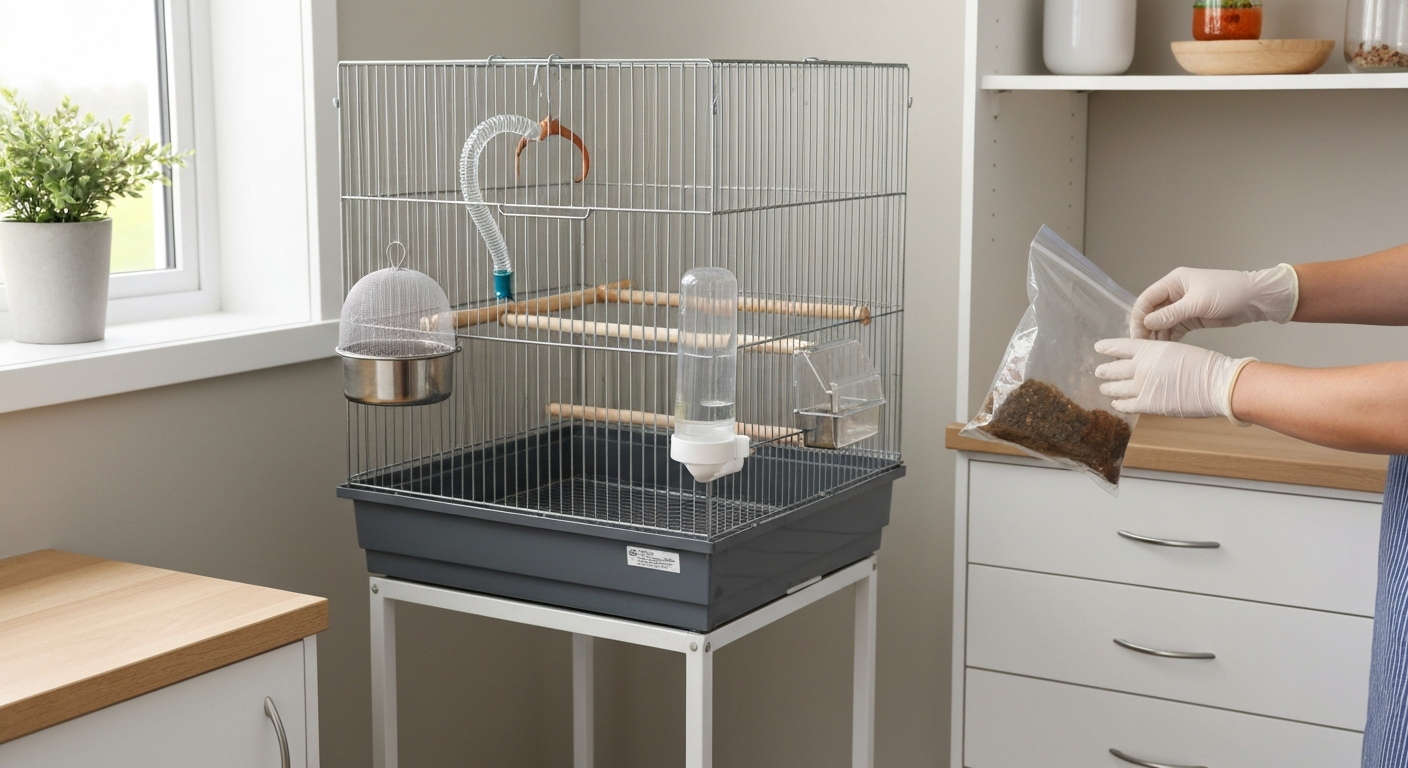
Birds have extremely sensitive respiratory systems. A product that barely registers as a smell to you can cause real harm to a parrot, finch, or canary. Before you start any fruit fly treatment, run through this checklist every single time.
- Move your bird to a clean, separate cage or carrier in a different room before cleaning, applying any bait, or using any spray.
- Never use aerosol insecticides, plug-in insect killers, essential oil diffusers, or scented candles near the cage area. Even 'natural' products like eucalyptus, tea tree, or citrus oils are toxic to birds.
- Do not use sticky flypaper inside or immediately next to the cage. Birds investigate everything and can get feet, feathers, or beaks stuck.
- Ventilate the room before returning your bird. Open a window for at least 20 minutes after cleaning.
- Use only unscented dish soap (one drop maximum in traps) and white vinegar or apple cider vinegar diluted in water for cleaning. Rinse all cage surfaces thoroughly before your bird goes back in.
- Pause all handling and cleaning if your bird shows labored breathing, fluffed feathers, lethargy, or loss of appetite. Call your avian vet before continuing.
The rule I follow: if I would not feel comfortable breathing it in a small, poorly ventilated closet for an hour, it does not go near the cage room. That standard keeps my birds safe and rules out most of the problem products right away.
How to tell if you actually have fruit flies
Before you treat anything, confirm what you are dealing with. Fruit flies (Drosophila spp.) are tiny, 1 to 4 mm long, with tan-to-brown bodies and distinctively red or dark eyes. Most common species run about 2 to 3 mm, so they look like a slow-moving speck with wings. They fly lazily and hover near food sources rather than darting fast. You will typically see them clustering around the food dish, water bowl, or the bottom tray where wet seed or dropped fruit sits.
Evidence to look for: adult flies hovering just above the food or water; tiny white larvae (less than 1 mm) wriggling in waterlogged seed hulls or soft fruit pieces; a faint sour or fermented smell from the food area. If you tip out the water dish and see tiny pale worms, those are larvae and you have an active breeding site right there in the cage.
Common lookalikes: ants, moths, roaches, and other flying bugs
Getting the ID right matters because the fix for fruit flies is different from the fix for fungus gnats, drain flies, or phorid flies. Here is a quick comparison of the insects bird owners most commonly confuse.
| Pest | Size | Key visual/behavior clue | Breeding site |
|---|---|---|---|
| Fruit fly (Drosophila spp.) | 1–4 mm | Red or dark eyes, hovers near food, slow lazy flight | Fermenting fruit, wet seed, soiled food bowls |
| Drain fly / moth fly (Psychodidae) | 1.5–5 mm | Fuzzy, moth-like wings held roof-shaped over body, rests on walls near drains | Drain biofilm, slimy organic matter |
| Phorid / scuttle fly | 2–5 mm | Runs in fast short bursts on surfaces instead of flying | Decaying animal/organic matter, wall voids |
| Fungus gnat | 1–3 mm | Weak flier, found near potted plants, larvae in damp soil | Moist potting media, overwatered plant soil |
| Ant | 1.5–13 mm (varies) | Six legs, elbowed antennae, no wings on workers, follows scent trails | Nest outside cage, foraging for food/water |
If you are seeing something that runs fast on the cage bars rather than flying, you are probably dealing with phorid flies or possibly ants rather than Drosophila. Flying bugs around the cage that are larger and dusty-winged are more likely drain flies or moths. For moth-specific removal and prevention steps, see how to get rid of moths in bird cage. For more on identifying and managing flying bugs around bird cages, see our detailed guide on common invaders and safe responses. Ants and roaches follow a completely different treatment path. If you instead see roaches, follow guidance on how to keep roaches out of bird cage to address crawling infestations that require different, roach-specific measures. The methods in this article are specific to fruit flies, so confirming the ID first saves you a lot of wasted effort. If ants are the problem, see our guide on how to get rid of ants in bird cage for species-specific, bird-safe solutions.
Immediate actions: stop the infestation today
Fruit flies have a fast life cycle. At typical indoor temperatures around 25°C, they go from egg to adult in roughly 8 to 12 days, and blank" rel="noopener noreferrer">a single female can lay around 400 eggs over her lifetime. That means a small problem becomes a large one very quickly. Do these steps the same day you notice them.
- Move your bird out of the cage and into a clean temporary carrier or spare cage. Keep the bird in a different room while you work.
- Remove all food and water dishes immediately. Tip out any standing water, soggy seed, or soft fruit scraps. Do not leave even a few pieces of overripe fruit in the cage.
- Bag all soiled cage liner, old seed hulls, and droppings in a sealed plastic bag and take it straight to an outdoor bin. Do not leave it in an indoor trash can.
- Wipe down all perches, cage bars, and the bottom tray with a cloth dampened with a 1:1 dilution of white vinegar and water. Rinse with plain water and allow to air dry completely.
- Set out a vinegar trap (recipe in the next section) in the room but outside the cage and out of bird reach to start catching adults.
- Check the surrounding area: nearby fruit bowls, compost bins, potted plants, recycling bins, and kitchen drains. Fruit flies in a cage almost always have a secondary source nearby. Seal or remove it.
Killing adult flies without removing the breeding source gives you only a day or two of relief. The sanitation step is the one that actually ends the infestation. Every extension entomologist says the same thing: sanitation first, traps second.
DIY fruit fly traps that are safe to use around birds
These traps use apple cider vinegar (ACV) as a bait, which is mildly acidic but not acutely toxic when used in small open amounts. The key rules are: keep traps outside the cage, out of direct bird reach, refresh the bait every 2 to 5 days before it starts producing new larvae, and use no more than one drop of unscented dish soap per trap.
Classic ACV jar trap
You need: a small glass jar or food-grade plastic container, apple cider vinegar, one drop of unscented dish soap, plastic wrap or a lid, and a toothpick or small drill bit.
- Pour about 1 to 2 inches of ACV into the jar.
- Add one drop of unscented dish soap and swirl gently. The soap breaks the surface tension so flies cannot walk on the liquid and escape.
- Cover the top with plastic wrap pulled taut, then poke 5 to 8 small holes with a toothpick, or drill a 3/16-inch hole in a screw-top lid.
- Place the jar on a high shelf in the room, at least 3 feet from the cage and completely inaccessible to your bird.
- Refresh bait every 2 to 5 days. Pour the contents down a drain, rinse the jar, and refill. Do not let the liquid sit long enough to become a breeding site.
Wine and ACV funnel trap (catches more species)
Research comparing trap baits found that wine-and-ACV combinations often catch more flies than ACV alone, especially for the spotted-wing Drosophila (D. suzukii) which can lay eggs into fresh fruit. This version is worth making if your standard ACV trap is not filling up. Published trials show commercial SWD lures and yeast–sugar ferment baits often outperform ACV alone, though ACV±wine±yeast recipe traps remain effective and inexpensive (Efficacy and species specificity of baits and lures for D. suzukii – PubMed abstract).
- Mix equal parts red wine (or apple cider) and ACV in a jar, filling to about 1.5 inches deep.
- Add one drop of unscented dish soap.
- Cut the top quarter off a plastic bottle. Invert it into the jar to form a funnel, or roll a piece of paper into a cone and tape it in place. Flies enter easily but struggle to find the exit.
- Place outside the bird room or on a high, inaccessible shelf.
- Refresh every 2 to 3 days since wine ferments faster than ACV alone.
Yeast-sugar ferment trap
Dissolve 1 teaspoon of sugar and a pinch of active dry yeast in about 1 cup of warm water. Let it sit for 30 minutes until slightly bubbly, then pour into a jar and add the plastic wrap or funnel cover as above. This bait produces carbon dioxide as it ferments, which is a strong attractant. Refresh every 3 days. Use the same placement rules: outside the bird room, fully inaccessible to the bird.
Physical barriers and non-toxic trap designs for the cage itself
Traps handle the adults, but physical barriers reduce the chance of fruit flies getting into food in the first place. For guidance on adding larger physical protections and preventing predator access, see our guide on how to protect bird cage from cats. These are the modifications worth building into your cage setup permanently.
Mesh food covers
Cut circles of stainless steel mesh (1/16-inch or finer) to fit loosely over food dishes. Bend the edges down slightly so the cover sits like a dome over the bowl. Flies cannot reach the food, and your bird can still feed through the mesh gaps or you can remove the cover for supervised feeding sessions. Stainless steel is the safest material here: it is easy to rinse, does not harbor bacteria, and will not shed coatings that a bird could ingest. Galvanized mesh is not appropriate because of zinc content.
Elevated water and food stations
Fruit flies are attracted to standing water and wet seed more than dry seed. Switching from open water dishes to a small tube-style water bottle eliminates the open water surface entirely. For seed dishes, use a hooded feeder cup with a small opening that limits spill. Less wet material at the bottom of the cage means fewer breeding sites, which is a more durable fix than any trap.
Non-toxic sticky-free trap container (for outside the cage)
If you want a trap that poses zero risk of bird contact, build an enclosed bait station from a small cardboard box or plastic food container. Cut 1/4-inch diameter entry holes on two opposite sides (high enough that no liquid can spill out). Place your ACV jar trap inside the box and close the lid. Flies enter through the holes, reach the bait, and cannot escape. The outer container makes it impossible for a curious bird to access the liquid or get near the trap, and it also prevents accidental spills. This is my preferred setup when I need to leave traps running overnight.
Cleaning and sanitation checklist: daily, weekly, and deep-clean
Consistent cleaning is the only long-term prevention strategy. Fruit flies breed fast enough that even a 3-day skip on food removal can restart an infestation. Here is the schedule I use, with tools and materials listed so you can set up a dedicated cleaning kit.
Tools and materials to have ready
- Spray bottle filled with 1: 1 white vinegar and water solution
- Separate spray bottle with plain water for rinsing
- Unscented paper towels or dedicated bird-cage cloths (washed separately from household laundry)
- Small stiff-bristle brush or old toothbrush for perch scrubbing
- Stainless steel or ceramic food/water dishes (avoid plastic that scratches and harbors bacteria)
- Sealed container or bag for soiled liner disposal
- Replacement cage liner (unscented paper, not cedar or pine shavings)
| Frequency | Task | Tool/Material |
|---|---|---|
| Daily | Remove uneaten fresh food within 2 hours of serving | Tongs or gloved hand, sealed bag |
| Daily | Rinse and refill water dish or bottle | Plain water, clean cloth |
| Daily | Remove and replace soiled cage liner | Fresh unscented paper, sealed bag for old liner |
| Daily | Wipe visible droppings from bars and perches | Vinegar-water spray, paper towel |
| Weekly | Scrub all food and water dishes with mild unscented soap | Dish brush, unscented soap, hot water, thorough rinse |
| Weekly | Scrub perches with stiff brush, rinse and dry fully before replacing | Brush, vinegar-water, water rinse |
| Weekly | Wipe down all cage bars, tray, and door hinges | Vinegar-water spray, cloth, water rinse |
| Weekly | Check for wet seed buildup in cage corners and tray grooves | Toothbrush, vinegar-water |
| Deep-clean (monthly or when infestation present) | Full disassembly and soak of all removable parts | See walkthrough below |
| Deep-clean | Inspect and clean surrounding floor and surfaces for dropped food | Unscented cleaner safe for floors, mop or cloth |
Photo tip: before your weekly clean, take a quick photo of the tray and food area. After two or three weeks you will start to see patterns in where mess accumulates most, which tells you where to focus your daily wipes. It takes about 30 seconds and makes the routine much more efficient.
Full cage disassembly and deep-clean walkthrough
A deep-clean is non-negotiable when you have an active fruit fly infestation because eggs and larvae can survive in grooves, tray seams, and the threads of screw-together cage sections. This walkthrough eliminates those hidden breeding sites.
- Move your bird to a safe temporary cage in a separate room before you start. Do not return the bird until the cage is fully dry.
- Take the cage outside or to a bathtub/large sink for washing. Remove all perches, dishes, toys, and the bottom tray.
- Bag and dispose of all cage liner, seed hulls, and droppings. Seal the bag and take it outside immediately.
- Soak all removable parts (dishes, perches, tray, grates) in a solution of 1 part white vinegar to 9 parts hot water for 10 to 15 minutes. This kills larvae and loosens dried organic material.
- Scrub every piece with a stiff brush, paying attention to end caps on perches, tray grooves, and dish rims where organic matter hides.
- Rinse every part thoroughly with plain hot water at least twice. No vinegar smell should remain.
- For the cage frame itself: spray all bars, welds, and corner joints with the vinegar-water solution, scrub with a brush, then rinse with plain water. For a large cage, a handheld showerhead works well.
- Inspect all joints and welds for pitting or rust where organic material can accumulate. Sand and touch up with bird-safe paint (100% stainless or powder-coat that has fully cured for 30 days) if needed.
- Allow all parts to air dry completely, ideally in direct sunlight if weather permits. Sunlight provides some additional disinfection and accelerates drying. Do not reassemble with any damp surfaces.
- Reassemble the cage. Add fresh unscented paper liner. Return perches, freshly washed dishes with clean water and food, and only clean, dry toys.
- Return your bird only after the cage is fully dry and you can no longer detect any vinegar odor. Give it 20 to 30 minutes in a ventilated room before your bird goes back in.
Products to avoid entirely during this process: bleach sprays, scented all-purpose cleaners, ammonia-based products, any disinfectant labeled 'pine' or containing phenol, and any aerosol. All of these can leave residues or fumes that harm birds even after rinsing. Diluted white vinegar and unscented dish soap are the safest effective options.
Preventing fruit flies from coming back
After you clear an infestation, a few permanent setup changes will keep fruit flies from returning. Most of them take less than 15 minutes to implement.
- Serve fresh fruit and vegetables in small portions only, and remove anything uneaten within 2 hours. Overripe fruit is the single biggest attractant.
- Store all bird fruit and produce in the refrigerator rather than on a counter. A fruit bowl sitting next to a cage is an open invitation.
- Switch to a tube-style water bottle to eliminate the open water surface that flies land and breed in.
- Use a sealed food hopper or covered dish for pellets and seed to limit spill and moisture contact.
- Place the cage away from windows that open directly into areas with fruit trees or gardens, particularly in late summer when Drosophila populations peak outdoors.
- Keep a running ACV trap in the bird room year-round, refreshed weekly, positioned on a high shelf. It catches stragglers before they can find the cage.
- Check nearby houseplants. Overwatered soil is a breeding site for fungus gnats that can be mistaken for fruit flies, and the same damp conditions attract Drosophila.
- Clean kitchen drains monthly with boiling water to eliminate the biofilm that can harbor both fruit flies and drain flies.
Seasonal considerations and cage placement
Fruit fly populations spike in warm months, typically late spring through early fall, when outdoor populations are high and they hitchhike in on produce. During this window, run your ACV trap continuously and increase fresh food checks to every hour rather than two hours. In winter, infestations are more likely to trace back to a single produce item brought in from the grocery store rather than an outdoor population. Check your fruit bowl and recycling bin first.
If your cage sits near a door that opens to the outside, consider a temporary fine-mesh screen cover over the cage opening during summer months. For guidance on protecting your cage from larger intruders, see how to make bird cage snake proof. A 1/16-inch stainless mesh panel hung loosely over the front of the cage lets air circulate but blocks most insects. This kind of modification, combined with proper food management, is significantly more effective than any trap alone. For tips on reducing noise as well as drafts, see our guide on how to soundproof a bird cage.
What not to use: the do-not-use list
This is just as important as what you should use. The following products should never be used around birds for pest control, regardless of how they are marketed.
- Any aerosol insecticide (pyrethrin, permethrin, DEET-based, or synthetic pyrethroids). Pyrethrin-based products are acutely toxic to birds.
- Sticky flypaper or sticky traps anywhere near or inside the cage. Birds can get feet or feathers caught.
- Essential oil diffusers or sprays (tea tree, eucalyptus, citrus, peppermint, lavender). Many are toxic to birds even in small amounts.
- Plug-in insect zappers or UV light traps with electrical grids near the cage. The sound and smell can stress birds and the ozone output is harmful.
- Bleach-based sprays or phenolic cleaners for cage surfaces. Even a well-rinsed surface can retain residue in welds and joints.
- Cedar or pine shavings as cage liner. The aromatic oils are respiratory irritants for birds.
- Mothballs or naphthalene-based products anywhere in the bird room. Highly toxic to birds.
- Any commercial drain cleaner used in a drain near the cage while the bird is in the room.
When to call a vet or pest professional
Most fruit fly infestations resolve within one to two weeks of consistent sanitation and trapping. However, there are situations where you need outside help.
Call your avian vet if:
- Your bird shows any signs of illness during or after an infestation: labored breathing, lethargy, loss of appetite, discharge from nostrils or eyes, or unusual droppings.
- You suspect your bird ingested any pest control product, even one labeled 'natural.'
- The infestation has been present for more than two weeks and your bird has been exposed to larvae in food or water. Larvae ingestion is uncommon but worth a precautionary checkup.
Call a pest professional if:
- You have been doing sanitation and trapping for two weeks with no reduction in fly numbers. This usually means there is a hidden breeding site you have not located (inside a wall void, under the cage stand, in a drain you cannot reach).
- You are not confident in the pest ID. If the flies are running rather than flying, or are larger and moth-like, you may be dealing with phorid flies or drain flies that need different treatment.
- The infestation extends through multiple rooms and is clearly not sourced from the bird cage food area alone.
- You need a pest-free treatment that is certified safe around birds. Ask any pest professional specifically about bird-safe protocols before they enter your home, and remove your bird and all cage equipment to a separate room before any treatment occurs.
Quick decision checklist
Use this as a reference when you first spot flies, and again at the 7-day and 14-day mark to assess progress.
| Check | Yes | Next step |
|---|---|---|
| Confirmed as fruit flies (not ants, drain flies, or gnats)? | Yes | Proceed with this guide |
| Bird moved to temporary cage? | Yes | Continue cleaning |
| All fresh food and wet organic material removed from cage? | Yes | Run ACV trap |
| Full cage wipe-down done with vinegar-water and rinsed? | Yes | Daily maintenance begins |
| Secondary source (fruit bowl, recycling, drain) identified and removed? | Yes | Prevention setup |
| ACV trap placed outside cage and out of bird reach? | Yes | Monitor and refresh every 2–5 days |
| Still seeing flies after 7 days of sanitation? | Yes | Deep-clean and hunt for hidden breeding site |
| Still seeing flies after 14 days? | Yes | Consider pest professional; re-check bird health with vet |
FAQ
How do I confirm the tiny flies in my bird's cage are fruit (vinegar) flies and not another pest?
Visual ID: adult vinegar/fruit flies are about 1–4 mm, tan-to-brown with red or dark eyes and a quick, erratic flight. Drain/moth flies look fuzzy with roofed wings and rest on surfaces; phorid (scuttle) flies run in short bursts on surfaces; fungus gnats are slender and often hang near potting soil. Check likely breeding sources (overripe fruit, soaked seed, fermenting water, dirty drains, compost, wet rags). If flies are clustered at soiled food, decaying fruit, or standing fermenting liquid, they are likely fruit/ vinegar flies. If you’re unsure, collect a specimen in a sealed clear container and compare to photos or ask an avian vet/pest professional.
What immediate, bird‑safe steps should I take the moment I spot fruit flies in the cage?
1) Remove birds to a safe, quiet room while you clean. 2) Remove and discard all perishable food, fruit, soaked seed, and obvious larvae or moldy material into a sealed bag. 3) Empty and remove water dishes, seed pans, and cage liners. 4) Place birds somewhere with good ventilation and no cleaning aerosol/strong fumes. 5) Put a simple ACV+soap trap outside the bird area (see trap recipe) to reduce adults. 6) Begin a full sanitation and cage deep‑clean (step‑by‑step provided in other FAQs). Do not spray insecticides or use sticky traps inside the cage.
What bird‑safe DIY traps reliably capture fruit flies? (step‑by‑step recipes)
ACV drowning jar (simple and effective): 1) Use a clean glass jar or food‑grade plastic container. 2) Pour 1–2 inches of apple‑cider vinegar (ACV) or a mix ACV:wine (1:1). 3) Add one drop of unscented dish soap to break surface tension. 4) Create entry: invert a paper cone or a plastic funnel into the jar, or drill a few 3–5 mm holes in the lid—holes should be large enough for flies but keep birds away from liquid. 5) Place trap outside the cage, out of bird reach (high shelf or outside the bird room). Refresh every 2–5 days and empty contents into sealed trash—do not leave fermenting bait near birds. Yeast fermentation trap (more attractive for some species): mix 1 tsp baker’s yeast + 1 tsp sugar in 1 cup warm water, ferment 12–24 hours, then use similarly with a funnel and out of bird reach.
How do I deep‑clean a bird cage to remove breeding sites and eggs? (photo‑friendly checklist)
Preparation: remove birds to a safe location. Tools: gloves, scrub brushes, cage‑safe disinfectant (avian‑safe), white vinegar, hot water, clean cloths, tray liners, garbage bags, small brush for drain cleaning. Steps: 1) Remove perches, toys, bowls, and liners—discard disposable liners. 2) Scrape and dispose of seed hulls, old food and droppings into sealed bags. 3) Soak removable items in hot soapy water; scrub until residue is gone. 4) Clean cage bars, tray and underside with hot water and a bird‑safe disinfectant or 10% vinegar solution; focus on crevices where organic film accumulates. 5) Clean sink/drain and surrounding counters—drain biofilms can breed moth/drain flies. 6) Rinse all items thoroughly and air dry completely before reassembly. 7) Replace liners with washable ones or disposable paper, and reintroduce birds only after fumes are fully cleared and items are dry. Frequency: repeat deep clean weekly until infestation controlled.
What precautions should I take when using ACV/soap traps around birds?
Keep traps out of the birds’ reach and sight to prevent ingestion or curious tipping. Use only one drop of unscented dish soap per jar to minimize surfactant exposure. Place traps in a secondary container or covered holder so birds cannot sample the liquid. Refresh traps every 2–5 days and promptly discard contents into sealed trash. Avoid heavy cleaning aerosols or fumes while birds are present; ventilate the room and wait until fumes clear before returning birds.
Which household products and pesticides must never be used inside or near a bird cage?
Do not use aerosol insect foggers, fogging insecticides, permethrin sprays, pyrethroid concentrates, bait stations that birds can access, mothballs, or any pesticide not explicitly labeled safe for use around birds. Avoid strong volatile cleaners (bleach fumes, ammonia, phenolic disinfectants) in occupied bird rooms. Do not place sticky glue boards inside cages where birds can touch them. If using any product, consult an avian veterinarian or label safety guidance first.