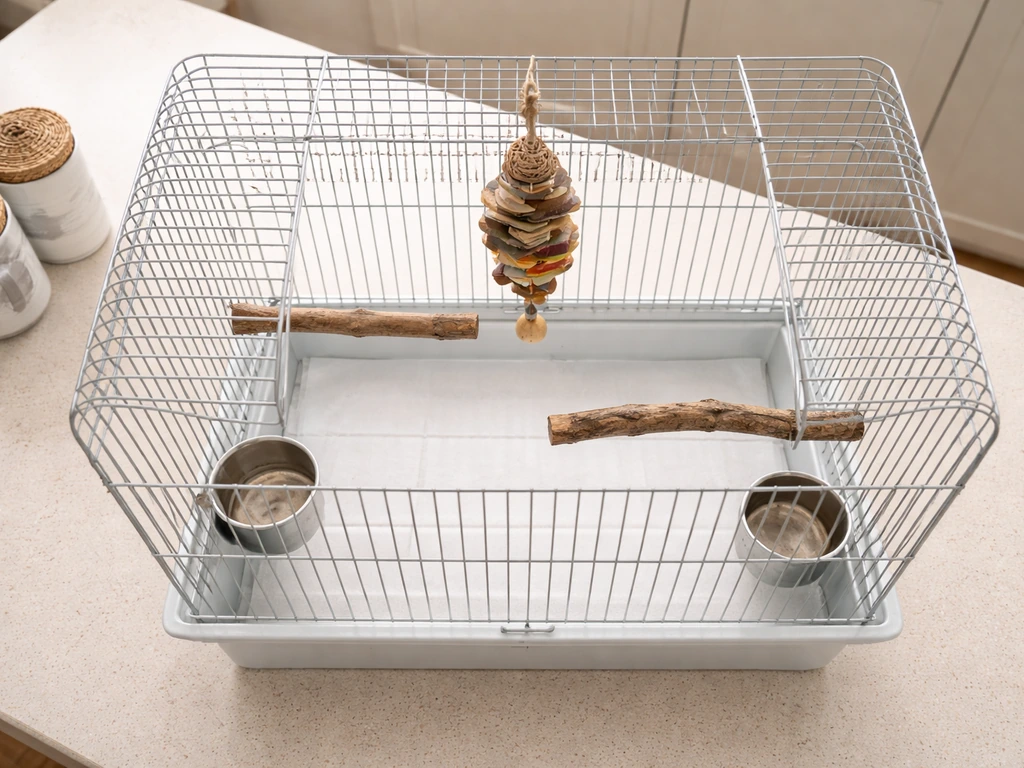
Yes, you can put plants in a bird cage, but you need to be selective. Succulents can work nicely in a bird cage too, as long as you confirm they are bird-safe and manage soil and chewing risk carefully how to plant succulents in a bird cage. Some real plants are genuinely safe for birds, while a long list of common houseplants are toxic and should never go anywhere near a cage.
What Plants Can I Put in My Bird Cage Safely

Maya Bennett
3 Jun 2026
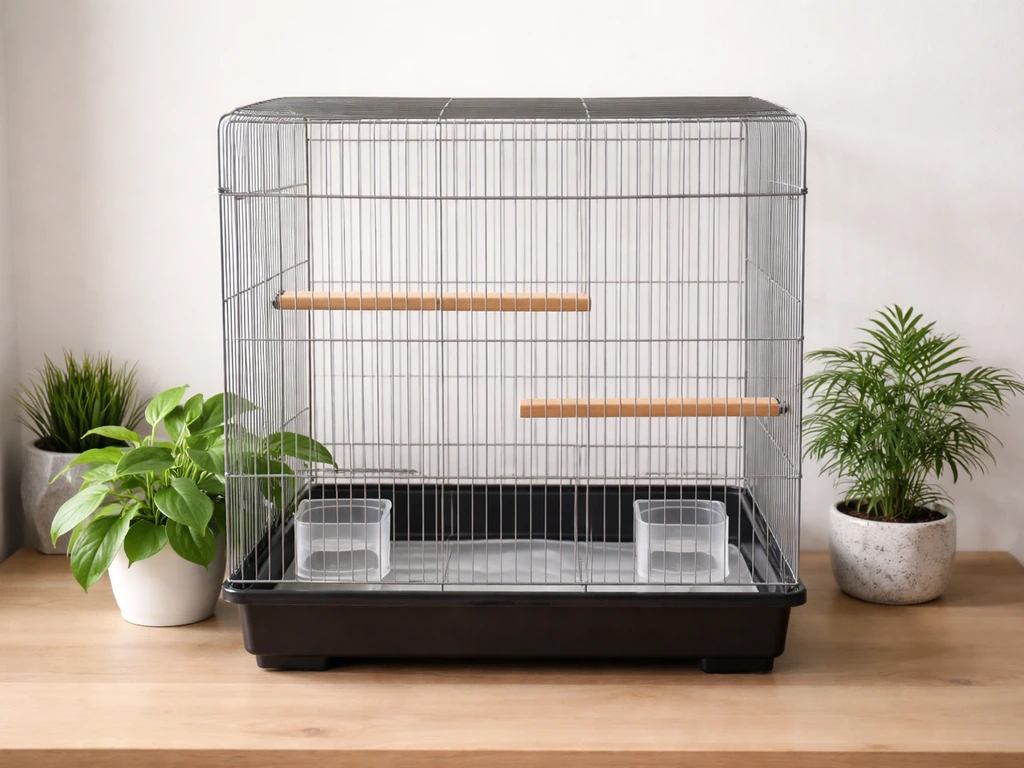
Fake plants are also an option, with some important caveats about materials and coatings. The good news is that with a short checklist and a careful setup, live or artificial plants can make a cage look great and give your bird a more stimulating environment without putting them at risk. When you set up your cage, also choose a safe liner and what to put on the bottom so your bird stays comfortable and protected what to put at the bottom of a bird cage.
Quick yes or no: can plants go in a bird cage?
Yes, with conditions. Real plants can go inside a cage as long as they are confirmed bird-safe, grown without pesticides or synthetic fertilizers, and installed so your bird cannot access toxic soil, mulch, or drainage water. Fake plants can also go in, but only if they are made from bird-safe materials with no wire stems, flaking coatings, or dye that could be chewed off. A plant that is safe for cats or dogs is not automatically safe for birds, so do not rely on general pet-safe lists when making your choices.
Real plants: what to choose and what to avoid
The safest approach is to pick from a short list of plants that have a strong track record with birds, rather than trying to clear a random houseplant you already own. Because very few formal studies exist on plant toxicity in pet birds, both VCA Animal Hospitals and LafeberVet take a conservative stance: if a plant contains known toxic compounds, it stays off the safe list entirely, even if definitive bird-specific research is limited. That is the right mindset to bring to this decision.
Plants that are generally considered safe
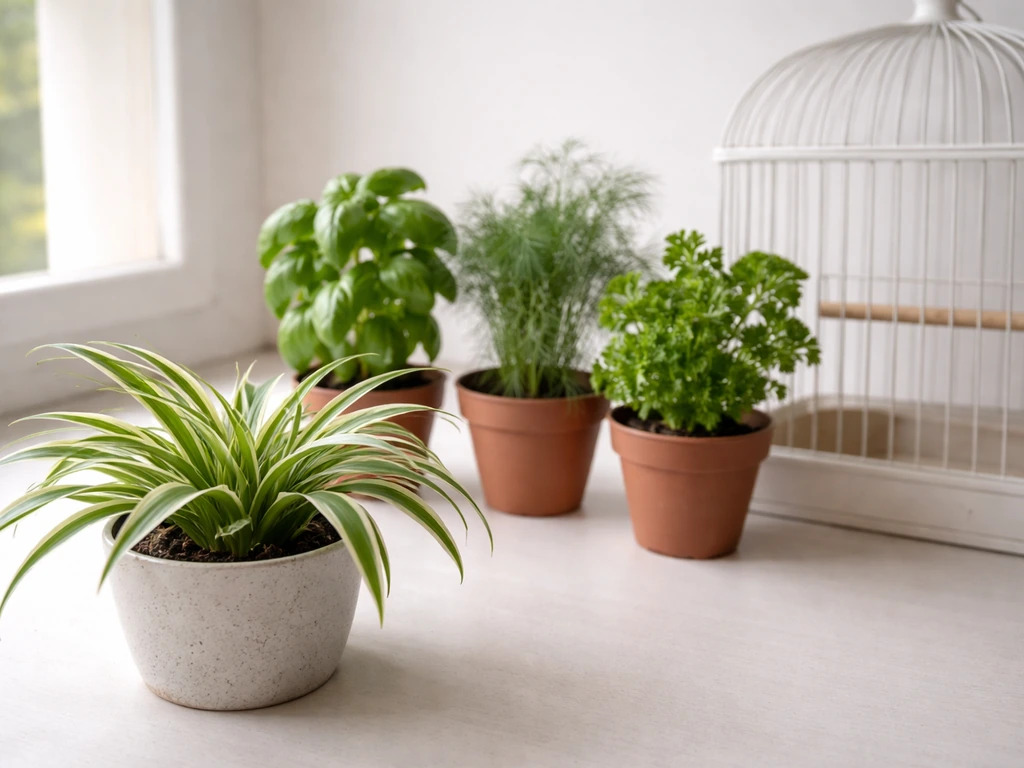
- Spider plant (Chlorophytum comosum): hardy, non-toxic, and nearly impossible to kill indoors
- Herbs: basil, cilantro, dill, fennel, and parsley are all widely used with pet birds and are edible too
- African violet (Saintpaulia): compact, low-maintenance, and considered safe for birds
- Nasturtium: flowers and leaves are edible for birds and add real visual interest
- Ferns: Boston fern and maidenhair fern are on most bird-safe lists
- Bamboo (non-treated, pesticide-free): good structural interest and safe to chew
- Impatiens: non-toxic and widely available at garden centers
Plants to keep far away from your bird
- Pothos (Devil's ivy): extremely common houseplant, highly toxic to birds
- Aloe vera: toxic despite its wellness reputation
- Peace lily: all parts are toxic, including the water in the pot
- English ivy: causes drooling, vomiting, tremors, and abnormal heart rate
- Oleander and azalea: both can be lethal in small amounts
- Rhododendron: same family as azalea, same risk
- Dieffenbachia (dumb cane): causes severe irritation and can impair swallowing
- Kalanchoe and cyclamen: both toxic, cyclamen especially so at the root
- Any lily species: err on the side of keeping all lilies out of the bird room entirely
If you have a plant that is not on either list, do not guess. Call an avian veterinarian or an animal poison control line before putting it anywhere near your bird. The gap in formal research means that uncertainty is real, not just overly cautious advice.
How to install live plants safely
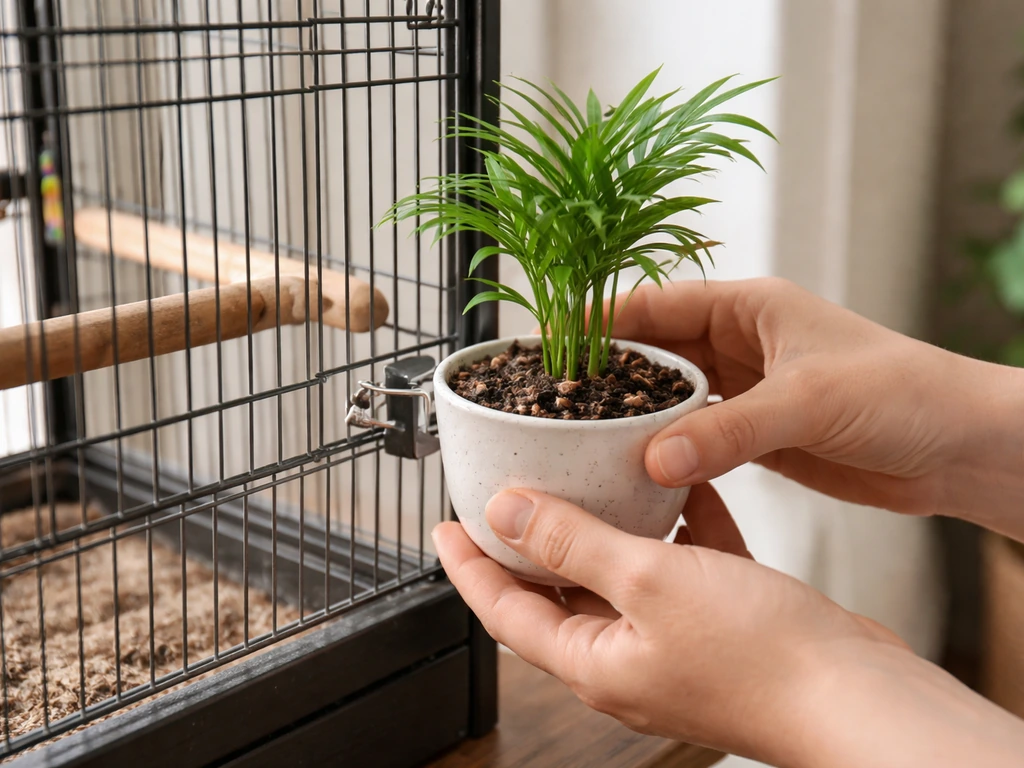
Choosing the right plant is only half the job. How you install it matters just as much, because even a safe plant can create hazards through contaminated soil, chemical residue, or standing water.
- Source organically: buy plants grown without pesticides or synthetic fertilizers. Most plants at big-box garden centers have been treated. Look for organic herb starts at farmers markets, or grow from seed yourself.
- Repot before installation: remove the plant from its nursery soil entirely and repot it in plain organic potting mix with no added fertilizer pellets or moisture-control crystals. These additives can be toxic if ingested.
- Cover the soil: once repotted, cover the soil surface with large, smooth river stones that are too big to swallow. This stops your bird from digging in the soil and prevents mold from being disturbed.
- Block drainage water: use a drip tray that your bird cannot access, or place the pot outside the cage with just the foliage coming through the bars. Standing drainage water is a contamination risk.
- Wash the plant thoroughly: rinse all leaves and stems with plain water before introducing the plant. This removes any surface dust, residue, or contact pesticides from transport or display.
- Secure the pot: use a cage clip, a hanging bracket, or a heavy ceramic pot that cannot tip. A falling pot is an injury risk and a mess guaranteed.
- Quarantine for one week before placing in the cage: set the repotted, washed plant near the cage first. Watch for mold, pest insects, or wilting that signals a problem plant before your bird touches it.
Fake plants: are they safe and what to look for
Fake plants are a practical choice, especially if you do not want to manage live plant care inside a cage. They add color, texture, and enrichment without watering schedules or soil risk. But not every artificial plant is safe to put within reach of a bird's beak.
The main risks with fake plants are wire stems, flaking or painted coatings, and plastic that becomes sharp when chewed. Birds will absolutely chew on fake plants, so assume every part of it will end up in your bird's mouth at some point.
What to look for when buying fake plants for a cage
- No wire stems or wire armature inside fabric stems: wire can cause internal injury if chewed through and ingested
- Non-toxic, color-stable fabric or silk: avoid anything with flaking paint, glitter, or metallic coating
- No small detachable parts: berries, beads, or decorative stones that pop off are choking hazards
- Avoid heavily scented or treated artificial plants: some are treated with flame retardants or anti-dust sprays that can irritate a bird's respiratory system
- Wash before use: rinse fabric or silk plants in plain water and let them dry fully before placing in the cage
If a fake plant feels tacky, has a strong chemical smell, or has any part that looks like it would chip or peel, skip it. There are plenty of plain silk or woven fabric options at craft stores that pass all of these checks.
Placement, airflow, and mess control
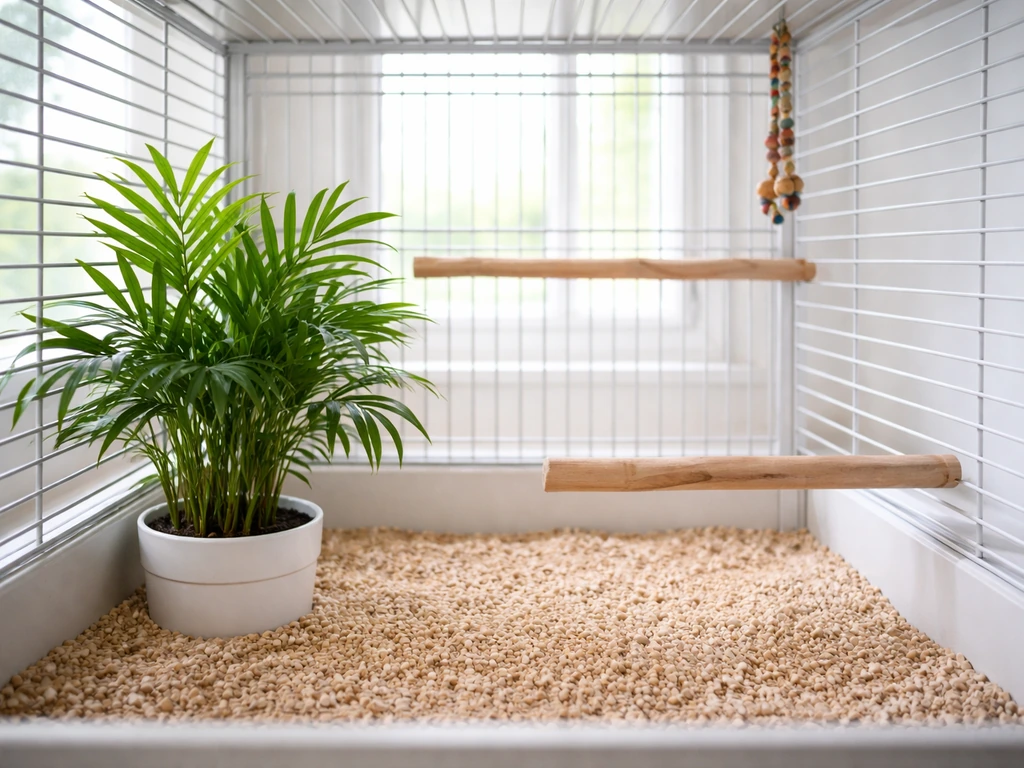
Even a perfectly safe plant causes problems if it is placed badly. The most common mistakes are blocking ventilation, crowding perches, or creating a damp corner that breeds mold.
- Place plants at the cage perimeter, not in the center: your bird needs clear flight lines and open perch access through the middle of the cage
- Never block the top or sides of the cage with dense foliage: birds need airflow and visual escape routes, and stagnant air around a moist plant is a mold risk
- Hang trailing plants on the outside of the cage with leaves coming through the bars: this gives enrichment without soil or pot access
- Line the area under any live plant with an extra layer of cage liner: leaves drop, soil disturbs, and water drips — your cage bottom needs to handle that easily
- Keep plants away from food and water bowls: debris falling into food or water is both a hygiene and contamination problem
- Leave at least one wall of the cage visually open: a bird that feels trapped by overgrown vegetation becomes stressed
If you are already thinking about what goes at the base of the cage to manage plant mess and droppings together, that overlaps with decisions about cage bottom lining, which is a separate but related topic worth planning at the same time. A key part of keeping things safe is choosing the right bird cage floor setup, such as liners and cleaning routines what to put on bird cage floor. A good next step is deciding what to line the bottom of the bird cage with so droppings and plant mess stay contained safely what to line bird cage with. Choosing what to put at the bottom of a bird cage helps control mess, makes cleanup easier, and reduces the chance that droppings contaminate the rest of the setup.
Care, cleaning, and replacing plants over time
Live plants inside or alongside a cage need more frequent attention than they would on a windowsill. Bird dander, droppings, and feather dust settle on leaves, and a bird that chews foliage can defoliate a plant quickly. Here is a realistic maintenance routine.
| Task | Frequency | How to do it |
|---|---|---|
| Wipe leaves clean | Weekly | Use a damp cloth with plain water, no soap or detergent near the cage |
| Check for mold on soil or pot | Weekly | Remove any white or fuzzy growth immediately; replace soil if mold returns |
| Trim dead or chewed foliage | As needed | Cut with clean scissors; remove clippings from the cage right away |
| Full plant wash | Monthly | Take the plant out, rinse under plain water, dry before returning |
| Replace heavily chewed plants | Every 4–8 weeks | Rotate in a fresh plant; discard anything stripped down to stems |
| Clean cage area around plant | Every cage cleaning | Follow your normal cage disinfection routine; remove the plant first so it is not exposed to cleaner spray |
When you clean the cage, always remove the plant first and let any cleaning spray or disinfectant fully dry and air out before putting the plant back. Chemical residue on bars or surfaces near a plant is exactly the kind of indirect exposure that causes problems. VCA recommends a thorough rinsing approach to cage hygiene specifically to prevent residue buildup, and the same logic applies around plants.
Fake plants are easier: pull them out every two to four weeks, soak in warm water with a tiny drop of mild dish soap, rinse well, and let them air dry completely before putting them back. Replace any fake plant that has visible fraying, chewed fabric with exposed wire, or parts that have been torn off.
Troubleshooting bird reactions and safety red flags
Even with a safe plant, watch your bird closely for the first few days. Some birds have individual sensitivities, and you want to catch any problem fast. Here are the warning signs to take seriously.
- Drooling or beak wiping on the cage bars repeatedly: this is a sign of oral irritation and warrants removing the plant immediately and calling a vet
- Regurgitation that is not the normal social regurgitation behavior: if it is paired with lethargy, treat it as a poisoning emergency
- Tremors, loss of balance, or seizure activity: get to an avian vet immediately; do not wait
- Labored breathing or tail bobbing: respiratory irritation can come from mold spores, chemical residue on fake plants, or a toxic reaction
- Foot chewing or skin irritation around the feet after perching near a plant: the plant surface or soil may be the cause
- Sudden avoidance of one area of the cage: birds often know something is wrong before owners notice; take it seriously and investigate
- Rapid or abnormal heart rate noted by a vet during a check-up: plant toxin exposure can affect heart rhythm, as seen with English ivy and similar species
If you see any of these signs, remove the plant from the cage immediately, write down what the plant is and how long it has been in the cage, and call your avian vet or an animal poison control line. Bring the plant with you to the vet appointment if possible so it can be identified. Do not wait to see if the bird improves on its own when you suspect plant toxicity.
Your quick-start plan for plants in a bird cage
If you just want to get started today without overthinking it, here is the shortest version of the whole guide. Pick one plant from the safe list (spider plant or a fresh herb like basil is the easiest starting point), source it organically, repot it in plain potting mix, cover the soil with river stones, rinse the whole plant, and place it on the outside of the cage with leaves coming through the bars.
Observe your bird for three to five days before giving any more access. That one plant, done right, is better than five plants done carelessly. From there, you can add more plants, experiment with fake plant clusters for decoration, and build a cage environment that looks great and keeps your bird safe. If you are also figuring out the basics of setup, review what you need for a bird cage before adding any plants.
If you are aiming for decoration, choose bird-safe plants or fake plants that add color and texture without creating chewing, residue, or sharp-parts hazards fake plant clusters for decoration.
FAQ
Can I use a plant that’s listed as safe for cats or dogs in my bird cage?
Use “bird-safe” as your rule, not “pet-safe.” Many plants considered safe for cats or dogs can still be risky for birds due to different sensitivity and typical chewing. If you cannot confirm bird safety for the exact species and variety, treat it as unsafe and verify with an avian vet or poison control before placing it in the cage.
What if I already have houseplants at home, can I just put the pot inside the cage?
If the plant is stored in a nursery pot, your bird may reach the soil through gaps or chew the container. For added safety, place live plants outside the cage with leaves passing through the bars, or use a secure, cage-mounted holder that blocks access to potting mix, mulch, and drainage water.
How do I stop my bird from digging in the potting soil?
Cover the soil completely. A common approach is adding a thick layer of river stones or a similar barrier that prevents access to potting mix, then remove any fallen leaves or debris quickly. Don’t rely on decorative topdressing alone if your bird can still dig or reach the edges.
Are organic plants automatically safe if I don’t use pesticides?
Be careful with fertilizers and amendments. Avoid synthetic fertilizer and pesticides, and do not use water-soluble plant food during cage use. Also, rinse the plant thoroughly before the first day in the cage to remove residues that came from the growing environment.
How do I prevent mold or water contamination from live plants?
Water is a major hidden hazard. Avoid setups where excess water drips onto bars, creates a damp corner, or allows standing water under leaves. If you use a planter outside the cage, ensure no overflow can reach the cage bottom and dry any wet areas during cleanup.
Can I put artificial flowers or silk plants inside the cage?
Yes, but only if the base is designed for chewing safety. Avoid fake plants with wire stems, exposed internal frames, flaking paint or coatings, and any piece that becomes sharp when bitten. If the plant has a strong chemical smell or feels tacky, it’s a skip.
How often should I replace or inspect fake plants?
Assume the bird will chew everything accessible. Inspect weekly for loose parts, fraying, torn fabric, and any exposed wire or hard backing. Replace immediately if you see damage, because small fragments can be swallowed or cause mouth or throat irritation.
What should I watch for in the first days after adding a plant?
If your bird can reach the plant, test access. Start with a single plant for a short window (like a few days), then remove it if you see chewing focused on leaves or stems, drooling, vomiting, lethargy, or changes in droppings. When in doubt, remove the plant right away and contact an avian vet or poison control.
Is it safe to spray disinfectant near the plant while the bird is in the cage?
Do not use regular household cleaners or disinfectants directly on or near the plant while it is accessible. Remove the plant before cleaning, let sprays and disinfectants fully dry, and air out the area before reintroducing it to prevent residue exposure.
What should I do if I suspect my bird ate a plant that might be toxic?
If a plant is not clearly identified and bird-safe, do not guess. Take a photo of the plant and the label or pot, note how long it was in the cage, and contact an avian veterinarian or animal poison control. Bring the plant if possible so it can be identified accurately.
What’s the simplest first plant to try if I want the lowest effort and lowest risk?
Quickest low-risk starting options include spider plant and fresh herbs like basil, chosen from a bird-safe-confirmed source. Keep it simple for the first try, then only add more plants after monitoring your bird for a few days with the initial plant.
Does what I put on the cage bottom matter when I add live plants?
You generally need to plan the bottom separately from the plant itself. Use a cage liner system and cleanup routine that catches droppings and plant mess before it spreads, and keep water and debris away from any damp zones. A good floor setup reduces contamination even when plants are positioned correctly.
Next Article
What to Put in a Bird Cage for Decoration Safely
Safe decor for bird cages: chew-safe toys, natural perches, and liners under the cage to manage mess.