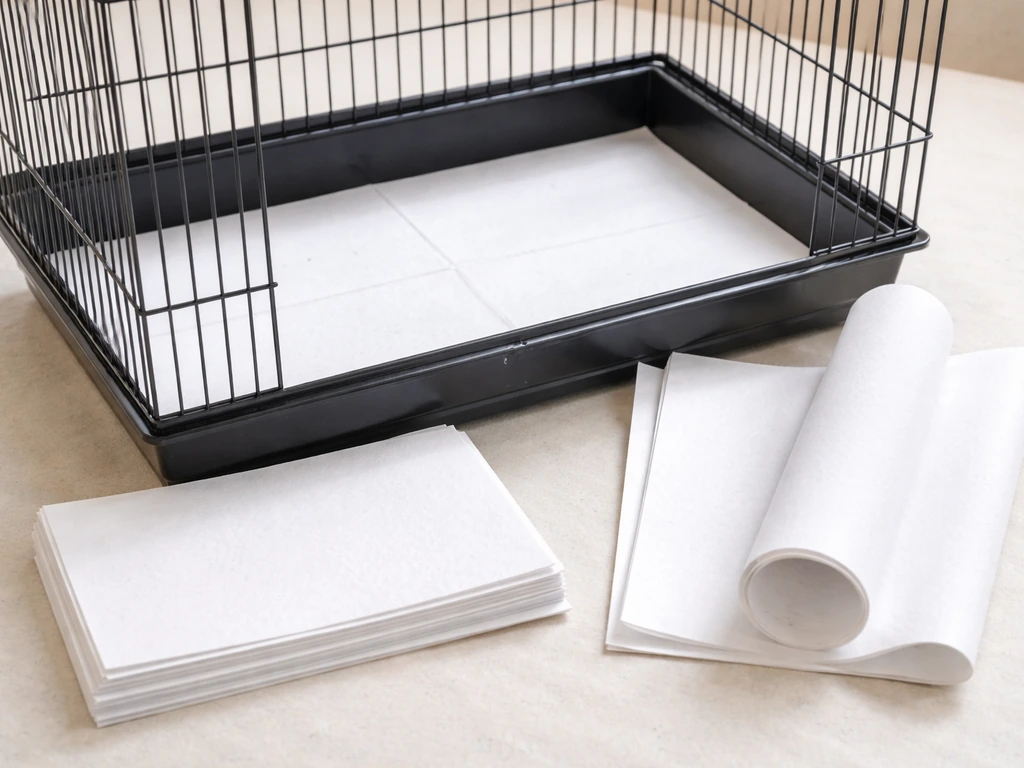
You can decorate a bird cage with natural wood perches, bird-safe rope toys, foraging stations, live or artificial non-toxic plants, and colorful shreddable toys, as long as every item is non-toxic, free of zinc and lead hardware, and mounted so it doesn't block flight paths or trap feet. Under the cage, a pull-out tray lined with plain black-and-white newspaper or paper towels, changed daily, handles mess cleanly and keeps pests away. That's the whole framework. Everything below shows you exactly how to do it.
What to Put in a Bird Cage for Decoration Safely

Maya Bennett
28 Apr 2026
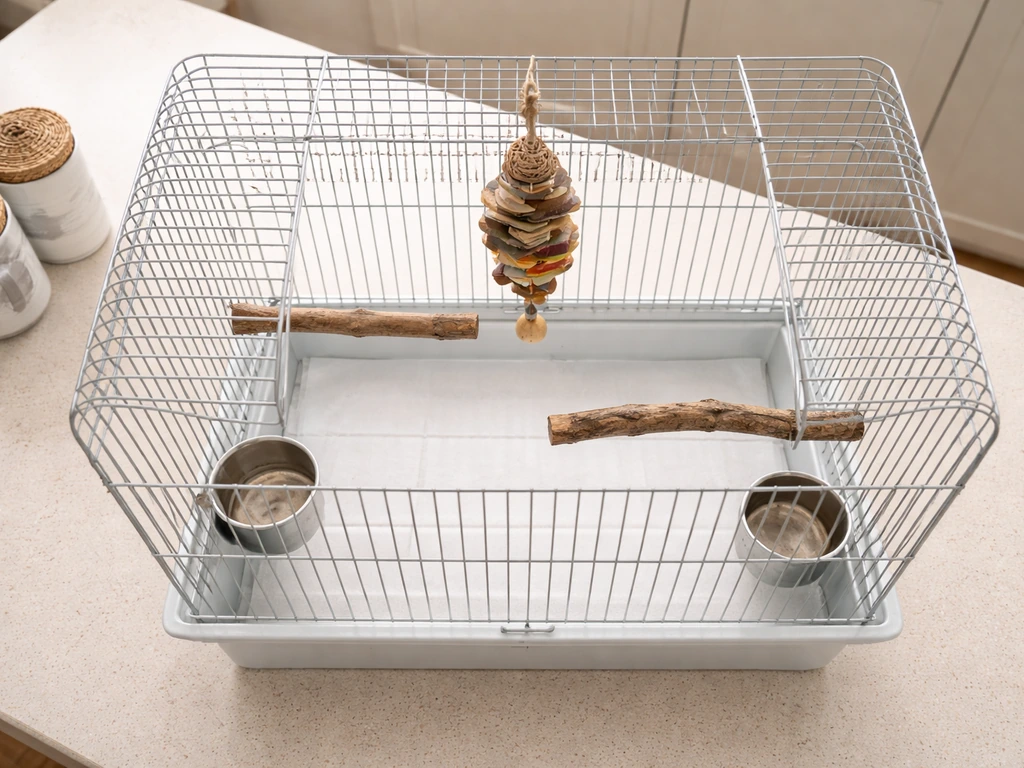
Safe decoration essentials: what to use and what to avoid
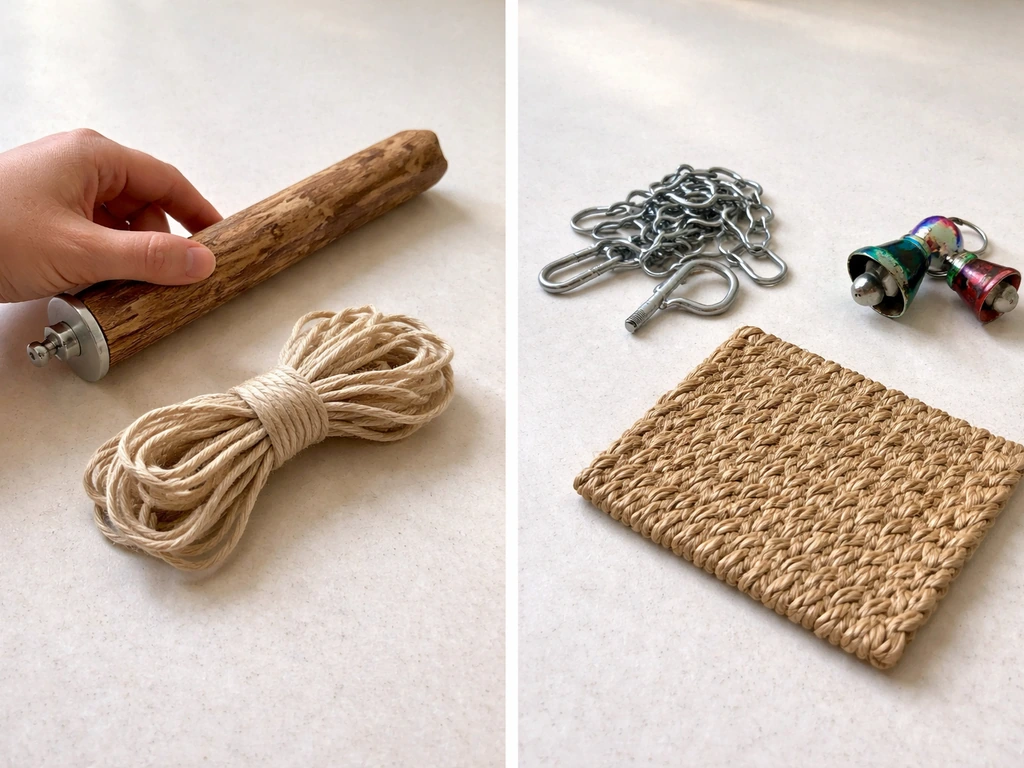
Before you buy a single decoration, you need a short mental checklist on materials, because the wrong item can cause zinc or lead poisoning, entanglement injuries, or respiratory problems. Stainless steel and properly powder-coated wire are the safest cage materials. Never use galvanized metal hardware, if the coating chips, it exposes zinc, which is toxic even in small amounts. That warning extends to decorative hooks, clips, and hanging hardware: no galvanized wire, no zinc-plated paperclips, nothing with a dull grey metallic finish you can't confirm is bird-safe. Older cages painted with lead-based paint are also out.
For wood perches and DIY wood decor, only use species confirmed safe for birds, blank" rel="noopener noreferrer">apple, willow, manzanita, and eucalyptus are commonly listed as safe. Any found wood from outside is a hard no unless you can verify the exact species, that it was never sprayed with pesticides, and that it is untreated. Pesticide residue alone makes even a safe wood toxic, so when in doubt, skip it and buy from a reputable bird-supply source instead.
For fabrics and rope, stick to natural fibers: sisal, jute, and cotton. Synthetic fibers can fray into long strands that entangle toes, wings, and necks, which is a genuine strangulation risk for larger birds. Inspect rope toys regularly and retire them the moment they start unraveling. Avoid anything with sharp edges, small loose parts, or long dangling chains.
| Item type | Safe choices | Avoid |
|---|---|---|
| Cage frame/hardware | Stainless steel, powder-coated wire | Galvanized metal, zinc-plated clips, lead paint |
| Wood perches/decor | Manzanita, apple, willow, eucalyptus (unsprayed) | Unknown found wood, treated/painted wood, cedar |
| Rope and fabric toys | Natural sisal, jute, cotton | Synthetic fiber, long loose strands, frayed rope |
| Plants (live) | Verified non-toxic species only (see plant section) | Any plant with pesticide residue, toxic ornamentals |
| Cage liner | Plain black-and-white newspaper, paper towels, liner paper | Cedar shavings, sandpaper liners, colored ink paper, loose sand |
| Mounting hardware | Stainless steel quick-links, bird-safe clips | Galvanized hooks, standard paperclips, thin wire |
The best items to put inside a bird cage
Decoration and enrichment overlap almost completely inside a cage, which is actually good news: things that look attractive also tend to keep your bird mentally stimulated. Here are the items worth prioritizing.
Perches in different textures and diameters
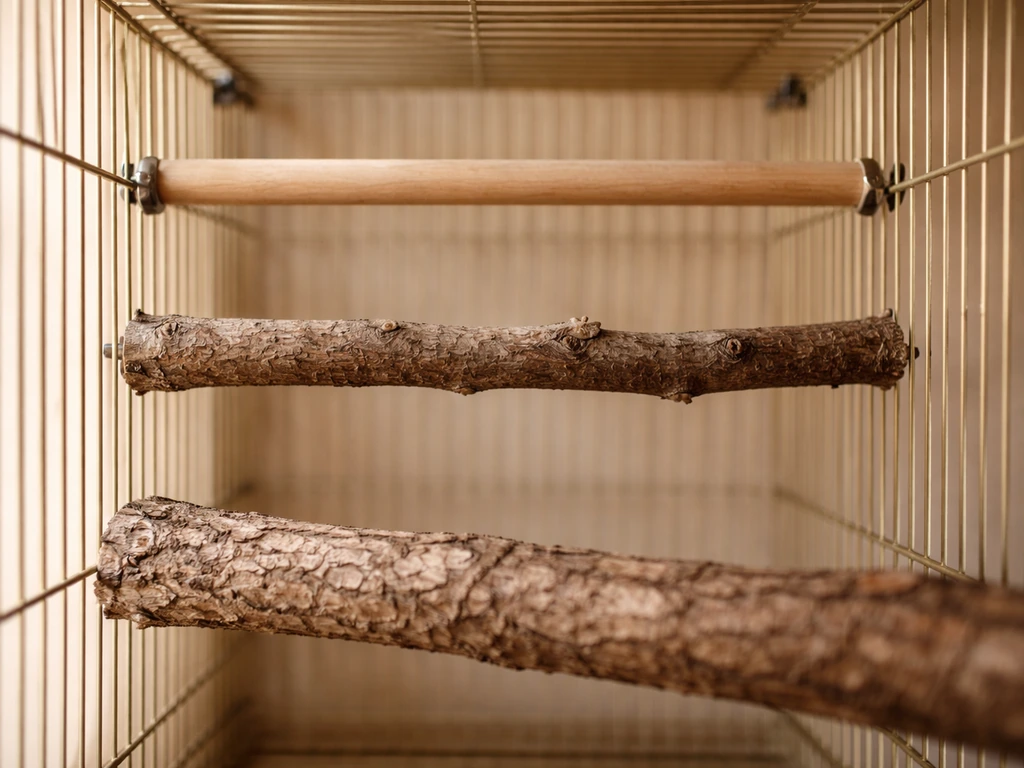
Perches are the structural backbone of any cage setup and they're also the easiest way to add a natural, visually appealing look. Use at least two or three different diameters so your bird's feet get varied exercise. A good fit means the bird's front and back toes don't fully overlap, they should wrap about half to three-quarters of the way around the perch. Manzanita branches with their reddish twisted grain look great and last for years. Natural-shape grapevine perches add a wild, irregular look that birds love for climbing. Limit cement or sandpaper perches to one in the cage, placed somewhere the bird doesn't spend long stretches, they help with nail wear but are rough on feet over time.
Shreddable and foraging toys
Shreddable toys are some of the most visually interesting items in a cage, colorful palm fronds, woven seagrass mats, bundles of brown paper strips strung on bird-safe rope, or stacked balsa wood pieces. They add texture and color, and your bird will dismantle them (which is the point). Rotate toys weekly rather than loading the cage with everything at once. Overcrowding restricts flight and increases injury risk, and birds often engage more with one or two fresh items than a cage stuffed with ten.
Natural decor: plants and botanicals
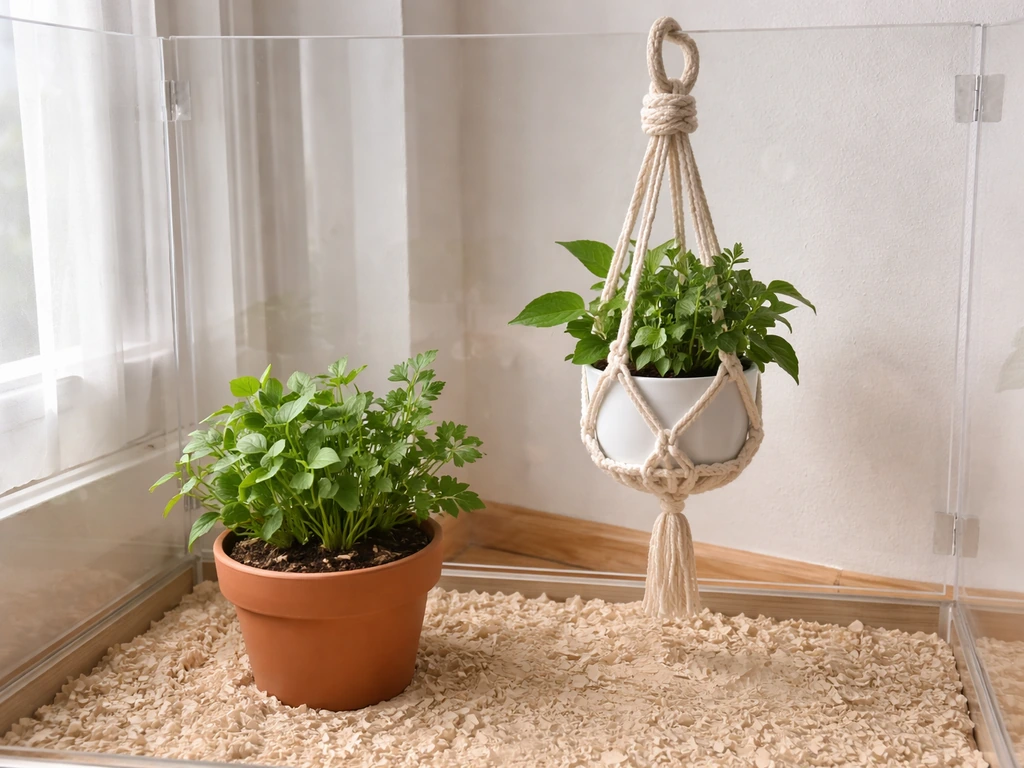
Live plants are the most visually striking addition you can make, but they require real caution. Some vets recommend skipping live plants entirely because they're hard to keep clean and the list of toxic species is very long.
If you do add a plant, verify the exact species against a trusted bird-safe plant list (VCA and the Long Island Parrot Society both publish detailed references), and make absolutely sure it was grown without pesticides, nursery plants almost always have pesticide residue, so grow your own from seed or buy from a bird-specific supplier.
VCA also provides a dedicated list of plants it considers safe for birds, and it recommends consulting an avian veterinarian or poison resources if a plant isn’t on the list verify the exact species against a trusted bird-safe plant list. For the best results, follow a bird-safe approach to how to plant flowers in a bird cage, using only non-toxic plants and secure mounts verify the exact species.
This same bird-safe method also works for succulents, as long as you use non-toxic plants and secure them so they cannot be knocked over how to plant flowers in a bird cage. Safe options that come up frequently include spider plants, pothos (controversial with some sources, so double-check), and certain herbs like basil and cilantro. If you want the look without the risk, high-quality artificial plants made from bird-safe materials are a practical alternative.
Check that no artificial plant has wire stems your bird could chew through and ingest.
Swings and climbing structures
A wooden or rope swing adds visual movement and gives birds a resting spot they genuinely enjoy. Ladder-style climbing toys made from untreated wood and natural cotton rope look great strung along the side of a cage and encourage exercise. Keep the swing positioned so it doesn't collide with perches or food bowls during movement.
How to set up décor safely
Placement matters as much as what you choose. A cage that looks beautiful but is cluttered or poorly arranged is a hazard. Here's how to set it up right.
- Place the highest perch near the top of the cage but leave several inches of clearance from the roof so your bird's tail doesn't press against the bars.
- Position food and water bowls on a mid-level perch so the bird can access them comfortably. Keep decor items away from directly above the bowls — droppings will contaminate food and water fast.
- Leave a clear flight path. Even in a smaller cage, there should be an unobstructed horizontal stretch a bird can move across. Toys and perches hanging in the center of that path block movement and can cause collisions.
- Mount all hanging toys with stainless steel quick-links or bird-safe clips — not standard hooks that can open under pressure and drop the toy, and not thin wire that can wrap around a toe.
- Check bar spacing on any cage section where you hang decor: the bird's head should not be able to fit through the bars anywhere along the cage.
- After adding any new item, watch your bird interact with it for the first 15 to 20 minutes. Look for tangling, foot catching, or signs of stress.
- Wipe down new decor items with a damp cloth and let them dry fully before introducing them. Some store-bought toys have dyes or coatings that benefit from an initial rinse.
What to put under the bird cage
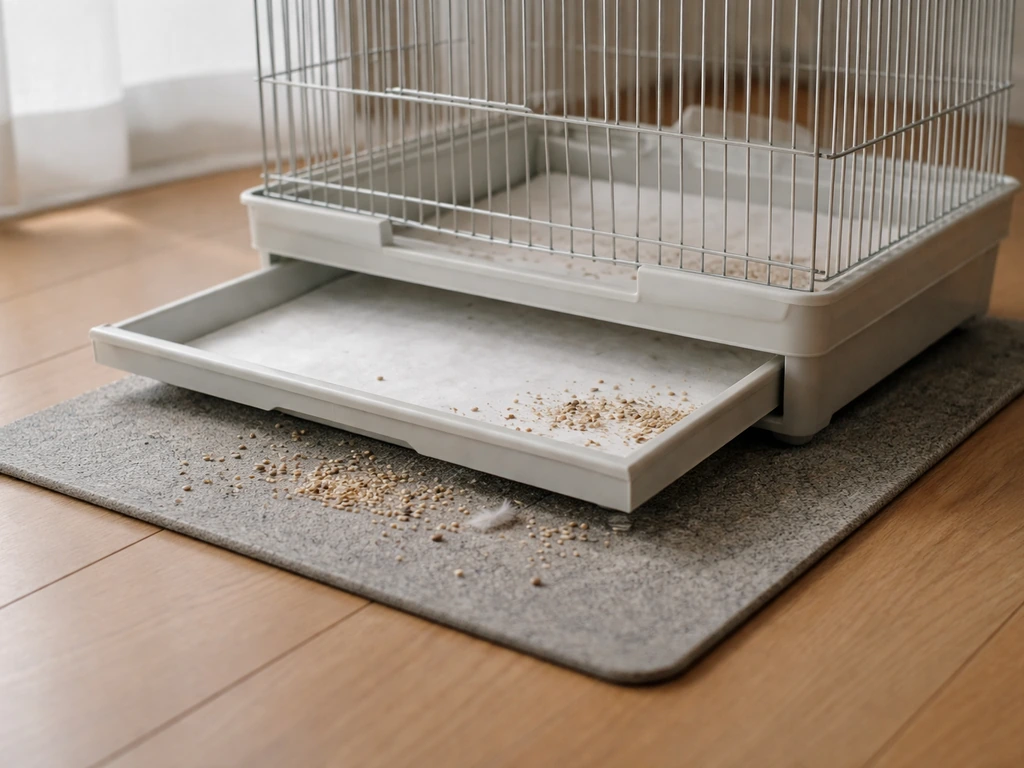
Managing mess under the cage is just as important as what's inside it. Most cages come with a pull-out tray at the bottom, that tray is your primary mess-control tool. Line it daily with plain black-and-white newspaper, paper towels, or commercially made cage liner paper. Change it every single day. Fresh liner lets you spot health problems early (changes in droppings are one of the first signs something is wrong) and stops mold and bacteria from building up. Avoid cedar shavings, colored ink paper, sandpaper-style liners, and loose sand, these are either toxic, abrasive, or create dust that irritates airways.
Under the cage itself, a hard-surface mat or tray on the floor catches seeds, feathers, and debris that escapes the tray. A simple plastic boot tray, a piece of vinyl flooring cut to size, or a purpose-made cage skirt all work well. These are easy to wipe down and don't trap moisture the way rugs and fabric mats do.
If your cage is on a stand, consider a stand with casters so you can roll it out to clean the floor underneath regularly, seed hulls and feather dust collect fast and attract pests if left alone. Some related guidance on lining the cage floor itself is worth reading separately, since the bottom of the cage interior has its own considerations beyond the pull-out tray. p21s4 bottom of the cage interior has its own considerations beyond the pull-out tray.
Decorating ideas that also improve enrichment
The best bird cage decor does double duty: it looks good and gives your bird something to do. Here's how to think about DIY versus store-bought options.
DIY ideas that work well
- Brown paper strips: cut a roll of plain brown packing paper into strips, thread them onto a short piece of bird-safe sisal rope, and hang in the cage. It looks like a natural hanging decoration and birds shred it enthusiastically.
- Herb bundles: tie small bundles of fresh, pesticide-free basil, cilantro, or dill with a cotton string and hang them from the top bars. They look lush, smell great, and birds forage through them.
- Grapevine branches: source these from a bird-supply vendor (not your backyard unless you can guarantee no sprays) and arrange them diagonally across the cage for a natural treehouse look.
- Seagrass mats: weave or buy a small seagrass mat and attach it to one cage wall. Birds climb it, chew it, and it photographs beautifully.
- Foraging cups: attach small stainless steel cups at different cage heights and fill them with foraging materials (crinkled paper, hidden treats, dried safe botanicals). Functional and visually interesting.
Store-bought options worth the investment
- Manzanita perches: durable, naturally beautiful, easy to clean, and the branch shape varies enough to add visual interest.
- Acrylic or stainless toy parts: colorful acrylic beads and rings on bird-safe chain look bright and clean and are easy to wipe down.
- Commercial shreddable toys: palm leaf rolls, corn husk knots, and woven seagrass balls from reputable bird-supply brands are made with verified safe materials.
- Naturalistic cage panels: some brands sell decorative back panels with printed jungle or tropical motifs sized for standard cage backs — purely visual but a simple way to make a cage look striking without adding anything inside.
Whether you go DIY or store-bought, the enrichment principle is the same: rotate items on a schedule. Introducing one or two fresh items each week keeps your bird engaged and prevents boredom better than a permanently packed cage.
Seasonal and maintenance tips for decorated cages
Decorated cages need more active maintenance than bare ones because more surfaces means more places for bacteria, mold, and pests to hide. Build these habits into your routine and your setup will stay safe and sharp-looking year-round.
Daily and weekly tasks
- Replace liner paper daily — every single day, no exceptions. Let the tray dry before relining if it was damp.
- Wash food and water dishes daily in hot soapy water, rinse until no soap residue remains, and dry before refilling.
- Do a quick visual check of all toys and perches every time you open the cage. Remove anything with frayed rope, cracked wood with sharp edges, or loose small parts immediately.
- Wipe down plastic and acrylic toys weekly with a damp cloth. Don't let seed paste or droppings accumulate in crevices.
Monthly deep clean
At least once or twice a month, do a full cage scrub. Remove your bird to a safe temporary space, take everything out of the cage, and scrub the bars, tray, perches, and any wipeable decor with hot water and a non-toxic bird-safe disinfectant. Rinse thoroughly, chemical residue is genuinely dangerous, and let everything dry completely before reassembling. This is also a good time to retire worn toys, reposition perches, and rotate in new enrichment items.
Seasonal considerations
In summer and humid months, mold becomes a bigger risk. Check wooden decor and natural fiber toys more frequently, soft spots, discoloration, or a musty smell mean the item needs to come out. Damp seed or pellets that fall onto the liner can mold within hours in warm weather, so daily liner changes become even more critical. In winter, heated indoor air is dry, which reduces mold risk but can make natural wood perches crack over time. Inspect them for splinters every few weeks. If you have live plants in or around the cage, adjust their watering schedule seasonally and remove any leaves that drop into the cage immediately, decaying plant material attracts pests.
Pest prevention
Seed hulls and feather debris under the cage are the main attractant for mites, grain beetles, and mice. Sweep or vacuum the area under and around the cage at least twice a week. Avoid fabric skirts or covers that touch the floor directly, they trap moisture and debris and are hard to clean. Natural fiber toys that have gotten wet should be dried immediately or replaced; moist sisal and cotton are a fast route to mold and mite problems. If you spot any signs of mites (a fine dusty debris on the cage floor, excessive scratching), strip the cage completely, deep clean everything, and consult your vet before reintroducing any decor.
Your quick implementation checklist
If you want to get this done today, here's the order to work through it: If you're starting from scratch, this guide on what do you need for a bird cage can help you build a safe setup from the ground up. Choosing the right liner matters because it affects hygiene, pest risk, and how easy it is to spot health issues early what to line a bird cage with.
- Audit everything already in the cage: remove any galvanized hardware, frayed rope toys, found wood of unknown origin, or items with peeling coating.
- Line the pull-out tray with plain black-and-white newspaper or paper towels. Set a daily reminder to change it.
- Add or reposition perches in at least two different diameters, verifying the wood species is confirmed safe.
- Choose one or two new enrichment items (a shreddable toy, a foraging cup, or a natural branch) and mount them with stainless steel quick-links away from food bowls and the main flight path.
- If you want live plants, research the exact species first and source pesticide-free stock only. If you're not ready to do that, a quality artificial plant is a safer immediate option.
- Put a hard-surface mat or boot tray under the cage to catch floor debris.
- Schedule a monthly full cage scrub on your calendar now, before you forget.
FAQ
How often should I inspect decorations for safety, and when is it time to throw them away?
Remove or replace anything that can chip, flake, or fray, even if it looks “mostly natural.” For wood, check for splinters and any dark, sticky, or powdery areas, and wash with hot water first (no harsh soaps), then fully dry. For rope and woven items, retire them at the first sign of unraveling so no long strands remain.
Can I use craft-store materials like paper, cardboard, or ribbon to decorate the cage?
Yes, but only if you can control the material and prevent chew access to wires. Avoid anything with dyed or treated fibers, and make sure there are no metal closures, bead-like parts, or loose tags. If you use paper strips or cardboard, keep them on a bird-safe rope or clip system and remove them before they become damp or moldy.
Are soft fabric cushions or plush toys safe for bird cage decoration?
Generally no, because most cushions, plush toys, and tufted fabric are hard to disinfect thoroughly and tend to hold moisture and debris. If you want a soft spot, choose a washable, removable perch cover made for birds and replace it when it frays. For any fabric you add, use only natural, undyed materials and remove it immediately if it gets wet or soiled.
Can I use dried flowers or foraged natural materials for decoration?
If a decorative item was outdoors, dried plants can carry pesticide residue, molds, and spores. Use only items you can verify were grown untreated, then dry and store them properly. For natural botanicals, start by placing a small piece for short periods while you watch for dustiness, mold smell, or refusal to interact, then remove at the first sign of contamination.
Where should I hang or mount swings and hanging toys so they do not create collision or entanglement risks?
Avoid hanging anything above or directly in the bird’s preferred perch space. Even if the item is “bird-safe,” it can swing into the bird’s feet or block access to bowls. Place swings and climbing toys so they travel without contacting perches, and keep shredded or rope items low enough that the bird can interact comfortably without climbing into a collision zone.
What should I do if a decoration gets wet or picks up droppings and ends up on the liner?
If something gets into the pull-out tray, it is usually safer to remove the source than to rely on repeated wiping. Quickly swap the liner, check for damp plant bits or wet seeds, and inspect the affected toy or plant mount for mold or soft spots. For live plants, remove fallen leaves immediately because decomposing plant matter is a pest attractant.
How can I tell the difference between normal mess and an early health or pest problem?
For daily liner checks, look for changes in droppings consistency, unusual odor, or blood-like discoloration. Under-cage debris matters too, if you see fine dusty debris or a sudden increase in scratching, mites are possible, and the correct move is stripping the cage and deep cleaning, not just swapping the liner.
What should I check to make sure artificial plants are actually safe for birds?
Artificial plants can work for the look, but only if they are fully bird-safe for chewing and cleaning. Check that there are no wire stems, loose parts, or hard plastic edges. Also position them so they do not block airflow under the cage and so you can wipe them during monthly scrubs.
How do I rotate decorations weekly without overcrowding or overwhelming my bird?
Rotate to freshness, not quantity. A practical approach is to keep the cage “light” and introduce one or two new items weekly, then remove the oldest item on the same schedule. If your bird spends little time with a decoration, try repositioning it rather than adding more, since overcrowding increases injury risk and reduces meaningful flight space.
Is it safe to use a rug, mat, or cage skirt to catch mess around the bottom of the cage?
Hard floor mats can trap moisture if they are not sealed or if they are hard to dry quickly. Use a wipeable, non-absorbent mat or tray, and remove it regularly for cleaning. Avoid rugs or fabric covers that touch the floor, because they hold seed hulls and debris and are difficult to sanitize.
Next Article
What to Put at the Bottom of a Bird Cage Safely
Safe cage-bottom liners and substrates to control mess and odor, fit your cage style, and clean routines.