You can absolutely plant flowers in a bird cage, but the project splits into two very different paths depending on whether a live bird is using the cage. Avian toxicoses: a review, PubMed Central (peer‑reviewed review article) notes that Peer‑reviewed reviews of avian toxicoses note that dose, plant part (bulbs vs. leaves), species differences, and chewing behavior determine clinical risk, meaning many common houseplants pose low risk unless heavily ingested or the bird is particularly predisposed Avian toxicoses: a review — PubMed Central (peer‑reviewed review article). If the cage is purely decorative, you have wide creative freedom. If a bird lives in it, every plant, pot, soil, and fixing method needs to pass a safety check first, because birds chew everything, soil harbors fungal spores, and even a 'harmless' flower can cause serious harm if the wrong species ingests enough of it. Done right, though, a planted cage looks stunning and gives birds genuine environmental enrichment.
How to Plant Flowers in a Bird Cage: Safe DIY Guide, Placement & Care

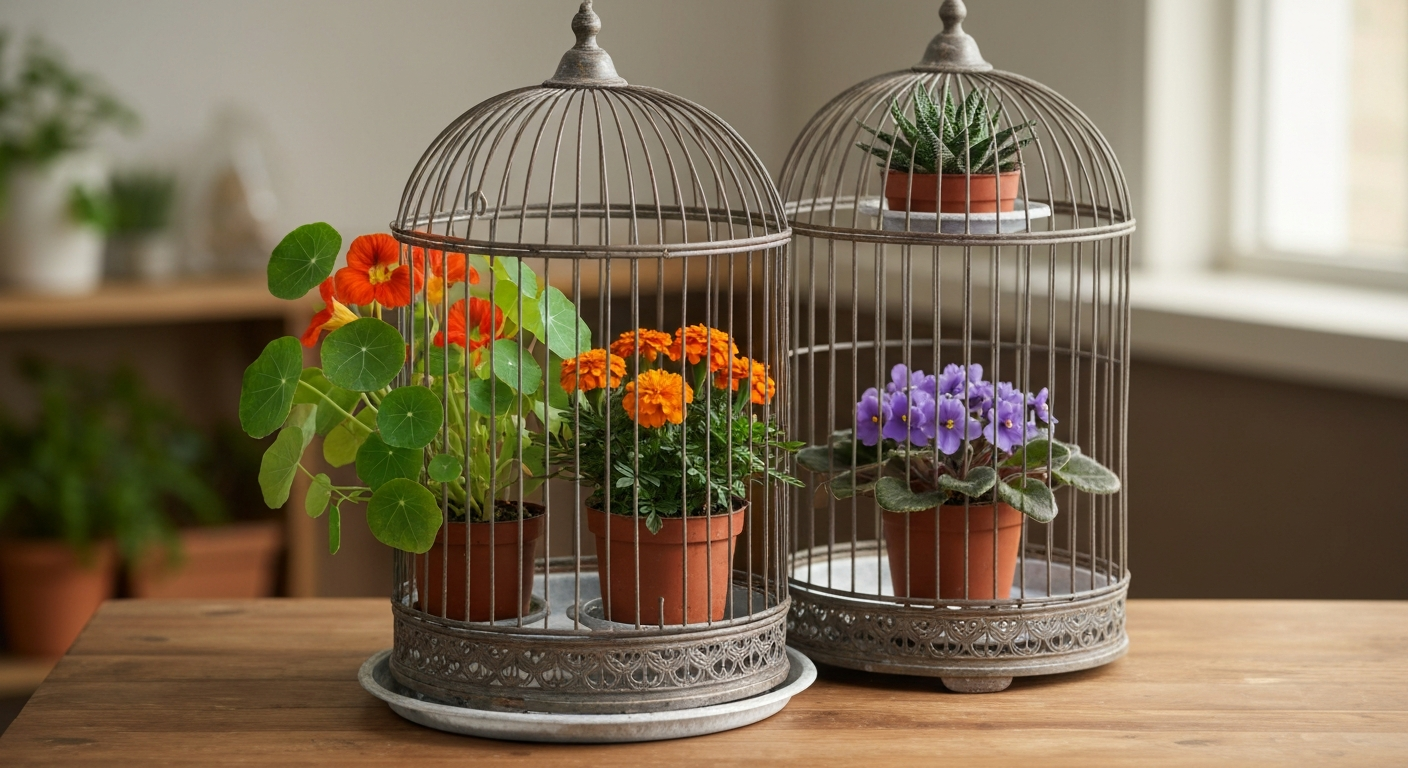
Why plant flowers in a bird cage (and when not to)
The appeal is obvious: a cage full of flowering plants is visually striking and, for species like finches and budgies that naturally forage through vegetation, it genuinely mimics a more stimulating environment. Planted cages also photograph beautifully, which is why you see them in florist displays, wedding decor, and garden photography setups. But the timing and context matter a lot. I'd only add live flowering plants to an occupied cage after confirming safety for that specific bird species, after setting up drainage so the floor stays dry, and never during a bird's breeding or molting season when immune resistance tends to drop and the birds are more likely to chew compulsively. For a purely decorative cage with no bird inside, you can plant whatever suits your aesthetic.
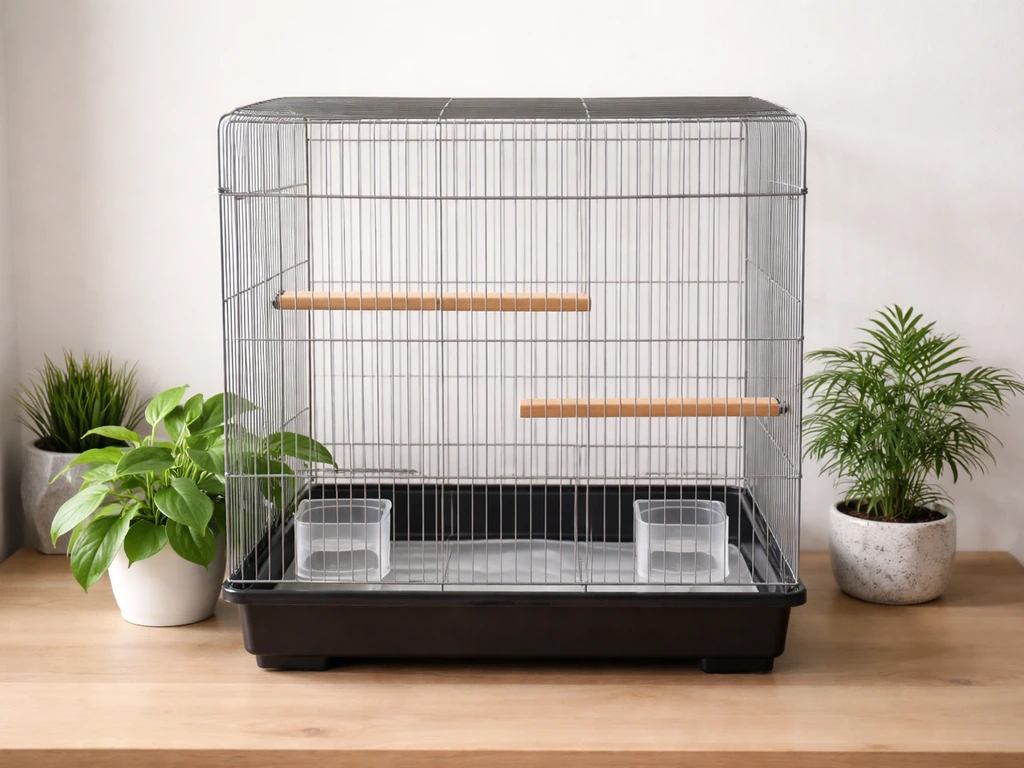
The most common reason people come to this project is decoration, either a vintage cage as a garden centerpiece or a wall-mounted display piece indoors. The second reason is enrichment: adding real foliage and safe blooms inside a large aviary or flight cage. The step-by-step instructions below cover both, with scale options from a small potted insert you can drop into any cage floor to a full integrated base planter for a large enclosure.
Before you touch a single plant: quick safety checklist
Run through this list before you buy anything. It takes about ten minutes and has saved me from at least two expensive vet visits.
- Identify every plant by its full scientific name, not just its common name. Common names overlap constantly (a 'daisy' could be several different genera with very different toxicity profiles).
- Cross-check that scientific name against the ASPCA Toxic and Non-Toxic Plants database and the VCA bird-specific toxic plant list before purchase.
- Check your cage wire. Galvanized or zinc-coated wire is a documented source of zinc toxicosis in birds. If your cage uses galvanized hardware, moisture from planting can accelerate leaching. Switch to stainless steel fixings or use outside-the-cage planters only.
- Confirm the plant was grown without systemic pesticides. Nursery plants are frequently treated with neonicotinoids or pyrethroids. Ask the grower, or buy from a certified organic source and wash thoroughly.
- Plan your drainage before you plant. Wet, stagnant substrate is the primary environment for Aspergillus spp., the fungal pathogen most commonly responsible for aspergillosis in pet birds.
- Call your avian vet if you are uncertain about any plant or have a bird with a known health condition. The Pet Poison Helpline also operates a 24/7 hotline for suspected ingestions.
Species-appropriate safety checks: toxicity, chewing risk, and vet consultation
Not all birds interact with plants the same way, and that changes the risk level considerably. Parrots, from large macaws down to small conures, are relentless chewers. They will strip bark, shred leaves, excavate soil, and bite through pot edges. For parrots, I treat every plant as potentially ingested in large quantities, which means only confirmed-safe species ever enter the cage interior, and even then I watch for changes in droppings or behavior. Budgies and cockatiels nibble rather than destroy, but they still sample most things they encounter. Finches and canaries are generally lighter foragers, but they do pick at plant material, especially nesting material and seeds. The clinical guidance from peer-reviewed avian toxicology reviews is clear: risk depends on dose, plant part (bulbs are almost always more toxic than leaves), individual bird susceptibility, and chewing intensity. The Association of Avian Veterinarians publishes position statements and clinical guidance documents relevant to companion bird husbandry, biosecurity, and environmental safety (Position Statements, Association of Avian Veterinarians (AAV)) Position Statements — Association of Avian Veterinarians (AAV). A large parrot that systematically strips and swallows foliage faces a very different risk profile than a finch that occasionally pecks a petal.
My practical rule: if the cage will be occupied by a parrot or cockatiel, I only use plants I have positively confirmed safe, I keep planters outside the bars where possible, and I schedule a vet check-in whenever I add something new. For finch aviaries and canary cages, the same confirmation step applies, but the risk of large-dose ingestion is lower. Whatever your species, if you ever see your bird eating a plant aggressively or notice loose droppings, lethargy, or changes in appetite after introducing a plant, remove it immediately and contact an avian vet.
Plant safety at a glance: flowering plants and succulents
This table covers the plants most commonly used in cage planting projects. 'Safe' means confirmed non-toxic to birds in available veterinary databases; 'Caution' means some sources flag potential irritant or mild toxic effects, or the plant has not been comprehensively assessed for avian species specifically; 'Toxic' means confirmed harmful and should not be placed in or immediately adjacent to any occupied cage. Always verify by scientific name, as common names vary by region.
| Plant (Common Name) | Scientific Name | Safety for Birds | Notes |
|---|---|---|---|
| African violet | Saintpaulia ionantha | Safe | Confirmed non-toxic; low chew risk for most species |
| Marigold (pot/calendula) | Calendula officinalis | Safe | Petals edible; avoid chemical-treated nursery stock |
| Nasturtium | Tropaeolum majus | Safe | Flowers and leaves edible; popular enrichment plant |
| Petunia | Petunia × atkinsiana | Safe | Non-toxic; vigorous grower, may need trimming |
| Roses (thornless varieties) | Rosa spp. | Safe | Petals and hips non-toxic; remove thorns before use |
| Impatiens | Impatiens walleriana | Safe | Non-toxic to birds; keep substrate well drained |
| Snapdragon | Antirrhinum majus | Safe | Non-toxic per ASPCA; mild interest from foraging birds |
| Hen and chicks | Sempervivum spp. | Safe | Popular succulent; confirmed non-toxic for birds |
| Echeveria | Echeveria spp. | Safe | Non-toxic; low water needs reduce mold risk |
| Haworthia | Haworthia spp. | Safe | Non-toxic, low-maintenance, ideal inside-cage insert |
| Spider plant | Chlorophytum comosum | Caution | Mildly hallucinogenic in cats; bird-specific data limited, observe closely |
| Aloe vera | Aloe barbadensis miller | Caution | Gel generally low toxicity, but latex in skin is irritant; keep outside bars |
| Lavender | Lavandula spp. | Caution | Essential oil concentration in fresh plant is low; most sources rate minor risk, but avoid if bird actively chews it |
| Chrysanthemum | Chrysanthemum spp. | Caution | Pyrethrin-containing; rated toxic to some pets by ASPCA, avoid in occupied cages |
| Lily (all types) | Lilium spp. / Hemerocallis spp. | Toxic | Highly toxic; no lilies anywhere near birds |
| Daffodil / Narcissus | Narcissus spp. | Toxic | Alkaloids in all parts; bulbs especially dangerous |
| Tulip | Tulipa spp. | Toxic | Bulbs and flowers toxic; common in spring arrangements |
| Hydrangea | Hydrangea spp. | Toxic | Cyanogenic glycosides present; keep away from all birds |
| Dieffenbachia | Dieffenbachia spp. | Toxic | Insoluble calcium oxalate crystals cause immediate oral pain and swelling |
| Philodendron / Monstera | Philodendron / Monstera spp. | Toxic | Same calcium oxalate mechanism; very common houseplant, frequently overlooked |
| Oleander | Nerium oleander | Toxic | Cardiac glycosides; all parts highly toxic, even dried |
| Avocado (Guatemalan var.) | Persea americana | Toxic | Persin causes cardiac and respiratory failure in birds; all parts toxic |
Safe flowering plants and succulents for common pet birds
For parrots (including cockatiels, conures, and budgies), my go-to flowering plants are nasturtiums, marigolds (calendula), and roses with thorns removed. For a broader, species-specific list and planting tips, see what plants can I put in my bird cage. All three are confirmed non-toxic, all three produce flowers that birds actually enjoy interacting with, and they're widely available. Nasturtiums in particular are excellent because the flowers and leaves are both edible and nutritious, they grow fast enough to replace chewed sections, and they don't need much depth of soil, which helps with drainage inside a cage insert. African violets are another reliable choice: they're compact, they survive lower light, and they're consistently rated non-toxic in the ASPCA database.
For succulents, Haworthia is my first recommendation for any occupied cage because it's genuinely non-toxic, handles low-light indoor conditions better than most succulents, and doesn't need frequent watering, which keeps the substrate drier and reduces fungal risk. Echeveria and Sempervivum (hen and chicks) are also safe, though they need more light than Haworthia and grow better in cage-top or outside planters where they get natural light. The key advantage of succulents for this project is the substrate: a high-inorganic mix of pumice, perlite, and coarse grit stays dry between waterings, which directly reduces the Aspergillus risk that comes with consistently moist soil.
Finches and canaries can also benefit from having small clumps of spray millet or non-toxic grasses planted at the base of an aviary, which doubles as foraging enrichment. These don't flower, but they add texture and movement to the environment. For a flowering option in finch aviaries, impatiens and petunias work well as perimeter plants outside the wire, giving color without any access risk.
When live plants aren't the right call: alternatives that still look great
Live plants inside an occupied cage aren't always practical. If your bird is a destructive chewer, if you travel frequently, or if your cage ventilation isn't good enough to keep substrate dry, the safer and more sustainable option is to skip live plants in the interior entirely. High-quality silk plants have come a long way, and for photographic purposes or decorative cages they're indistinguishable at normal viewing distance. For an occupied cage, check that any silk or fabric plant uses non-toxic dyes and has no small wire stems that could be chewed and ingested. Rinse new silk plants thoroughly before introducing them, since manufacturing residues can be an irritant.
Another practical approach is to place live flowering plants immediately outside the cage bars rather than inside. A small pot of nasturtiums or marigolds sitting against the outside of a large flight cage gives the visual effect, lets the bird investigate and occasionally peck at leaves that poke through the bars, but limits the volume the bird can access. This works especially well for larger parrot cages where a planter can sit on the cage base shelf or on a stand right next to the cage. Herbs like basil, cilantro, and parsley are also safe for most birds and can sit outside the cage as a 'herb garden' feature, with small sprigs offered as treats.
For decoration ideas beyond plants, bird-safe wooden perches, woven seagrass panels, and natural cork bark all add texture and visual interest without any toxicity risk. If you're thinking about the overall cage aesthetic, the related guide on decoration ideas for bird cages covers these options in more detail.
Everything you need: tools and materials checklist
The exact list depends on which planting method you're using, but this covers all the bases. See the companion guide 'what do you need for a bird cage' for a complete checklist of cage essentials. I've grouped items by phase so you can pull what you need without buying things you won't use.
Preparation and safety
- Avian vet contact number and ASPCA toxic plant database (bookmarked on your phone)
- Disposable gloves (soil handling near birds)
- Mild dish soap and clean cloths for cage cleaning before planting
- Avian-safe disinfectant (veterinary quaternary ammonium formulations such as F10SC at labelled dilutions, fully rinsed and dried before birds return)
Plants and substrate
- Confirmed-safe flowering plants or succulents (see plant-safety table above)
- Peat-free, low-dust potting mix for flowering plants, OR a high-inorganic gritty mix (pumice/perlite/coarse grit, roughly 50:50 with compost) for succulents
- No garden soil: it compacts, stays wet, and carries a far higher fungal and pathogen load than commercial sterile mixes
Containers and drainage
- Plastic or ceramic plant pots sized to fit inside cage bars (measure bar spacing before buying)
- Waterproof drip trays or saucers for each pot
- Shallow waterproof liner tray for cage floor if using a base planter (food-grade plastic, no painted finishes)
- Drainage material for pot base: coarse gravel or broken terracotta shards
- Cage-safe pot hangers or S-hooks in stainless steel (not galvanized) for hanging baskets or elevated pots
Tools
- Small trowel or large spoon for filling pots without spillage
- Watering can with a narrow spout (reduces splash and soil disturbance)
- Spray bottle with plain water (for succulents and light misting)
- Scissors or small pruning snips for shaping and removing dead material
- Soft brush for cleaning spilled soil off cage floor
- Cable ties or stainless steel wire for securing pots to cage bars if needed
Mess control and cage-floor materials
- Cage floor liner or tray liner under the planter (paper liners, cage liner sheets, or waterproof mats)
- Extra paper liner sheets for quick daily changes under planted areas
- Sticky yellow insect traps (placed outside the cage, not inside) for early pest detection
Step-by-step planting guide (with photo checklist)
I'll walk through four scales of project, from the simplest drop-in pot to a full cage-top planter. Each scale builds on the same preparation steps. Read all the steps before starting, and have your bird in a separate safe space before you begin any planting work inside the cage.
Step 1: Clean and prep the cage
Remove your bird to a safe secondary cage. Clean the target cage with warm water and mild detergent, rinse fully, then if you want to disinfect (recommended for any cage that had a previous bird or has visible staining), use an avian-safe disinfectant at the manufacturer's dilution, rinse again thoroughly with clean water, and allow to dry completely before bringing any plants in. This is the same preparation protocol used in clinical aviary settings. Wet surfaces under soil create the ideal conditions for fungal growth, so the cage must be fully dry before you add any substrate.
Step 2: Choose your planter placement
Decide whether your planter goes inside the bars, outside pressed against the bars, on the cage floor as a base planter, or on top of the cage as a cage-top display. For occupied cages, outside-the-bars is the lowest-risk option. Inside-the-bars floor placement works well for robust, confirmed-safe plants in large flight cages. Hanging baskets clipped to the interior top bars work beautifully for trailing nasturtiums or petunias in decorative cages. Cage-top planters are purely decorative and great for succulents that need more light than the interior provides.
Step 3: Prepare the pot and substrate
Add a 2 to 3 cm layer of coarse gravel or broken terracotta to the bottom of each pot for drainage. Fill with your chosen substrate to about 3 cm below the pot rim. For flowering plants, use a peat-free, low-dust potting mix. For succulents, use a gritty mix with at least 50% inorganic material (pumice, perlite, or horticultural grit). Never use garden soil or any substrate that has been outdoors: the pathogen load is too high for a bird environment. Set the plant in, firm it in gently, and top off with substrate to just below the rim.
Step 4: Set up drainage and cage-floor protection
Place a drip tray under every pot. If you're using a base planter, line the cage floor with a waterproof tray or liner first, then set the pot on top of that. This layered approach means any overflow stays contained and you can lift out a wet liner without disturbing the whole setup. Check the related guide on what to put at the bottom of a bird cage for more detail on liner options, because the floor material choice really does affect how easy cleanup is day to day.
Step 5: Secure the pot
For inside-the-cage pots, make sure the pot cannot tip or be pushed over. In a large cage with a flat floor, a heavy ceramic pot often sits stably by itself. For smaller or lighter pots, loop a length of stainless steel wire or a stainless S-hook through the bars at the pot rim to hold it in place. For hanging baskets, use stainless steel hooks clipped to the top bars; avoid galvanized hooks because moisture from plants accelerates zinc release. For cage-top planters, a shallow tray with a rim set on top of a flat-topped cage is usually stable without any additional fixing.
Step 6: Water in and settle
Water the plant once after planting, using a narrow-spout watering can to direct water to the substrate and avoid splashing cage bars or floor. For succulents, the 'soak and dry' method works best: water thoroughly until it drains from the bottom, then let the substrate dry completely before watering again. For flowering plants, water when the top 2 to 3 cm of soil feels dry. Consistently wet substrate is the single biggest mistake in cage planting, it creates conditions for mold and Aspergillus growth, and it makes the cage floor damp, which causes foot problems and respiratory issues in birds.
Step 7: Return the bird and observe
Only return your bird once the cage is fully set up, all substrate is settled, and you've checked that nothing has shifted or fallen. Watch the bird's interaction with the new plant for the first 30 to 60 minutes. Mild curiosity and occasional pecking is normal. Aggressive chewing or immediate consumption of large amounts is a sign to remove the plant and reassess placement or species choice. Check droppings the next morning: any change in consistency, color, or volume that wasn't there before is a reason to call your vet.
Photo checklist: capturing your planted cage
If you want to document the project, here are the shots that work best and what to look for in each one.
- Before shot: clean, empty cage with natural light source identified (window or softbox to one side, not behind the cage)
- Substrate prep shot: open pot with gravel drainage layer visible, substrate bag in frame for reference
- Planting shot: hands in frame pressing plant into pot, close enough to show the potting detail
- Drainage setup shot: drip tray positioned under pot on cage floor, showing the waterproof liner underneath
- Security shot: fixing detail close-up (stainless hook, wire loop, or pot edge against bar) to show stability
- Wide finished shot: full cage from front, soft diffused light, bird perch and water visible for context
- Detail flower shot: shallow depth of field on bloom through the bars, natural light, bird optionally in background
- Interaction shot: if safe, the bird investigating or perching near the plant (patience required, shoot in burst mode)
Placement options compared
| Placement | Best for | Safety level | Mess risk | Maintenance level |
|---|---|---|---|---|
| Inside bars, floor pot | Large flight cages, finch aviaries | Medium (bird has full access) | Medium | Daily check needed |
| Inside bars, hanging basket | Decorative cages, trailing plants | Medium (height limits access) | Low to medium | Moderate |
| Outside bars, pressed against cage | Parrots, active chewers, caution plants | High (limits ingestion volume) | Low | Low |
| Cage-top planter | Succulents, decorative display, no bird access | High (no bird access) | Very low | Low |
| Integrated base planter (tray in base) | Large aviaries, DIY builds | Variable (depends on plant choice) | High (floor-level access) | High |
Keeping it clean: maintenance schedule
A planted cage needs a slightly more attentive maintenance routine than an unplanted one, but if the drainage is set up well, it's not significantly more work.
| Frequency | Task |
|---|---|
| Daily | Check drip trays for standing water and empty if present; swap out any soiled cage-floor liner around pots |
| Every 2 to 3 days | Check soil moisture; water only if top layer is dry; remove any dropped leaves or petals from cage floor |
| Weekly | Inspect plant for pest signs (sticky residue, tiny flies, discoloration); check pot fixings are still secure; trim dead flowers or leaves |
| Monthly | Remove pot from cage, check drainage layer is not blocked, top up substrate if compacted, inspect roots if plant seems unhealthy |
| Seasonally | Replace or rotate plants as needed; check cage bars near pots for any corrosion or residue; do a full cage clean |
Troubleshooting common problems
Bird is eating the plant aggressively
First: remove the plant immediately, then confirm it's on the confirmed-safe list before returning it. If it is safe and the bird just won't stop eating it, that's not necessarily a problem unless the volume is large enough to cause nutrient imbalance or digestive upset. Offer the plant in small supervised amounts as a treat rather than leaving it in the cage permanently. If the plant is on the 'caution' list, do not return it.
Mold on the soil surface
Surface mold almost always means you're overwatering or the cage ventilation is poor. Let the substrate dry out fully, scrape off the mold surface layer and dispose of it away from the bird, then improve airflow around the cage. If the mold is extensive or you see any sign of the bird showing respiratory symptoms (tail bobbing, open-mouth breathing, nasal discharge), contact your avian vet. The link between moldy substrate and aspergillosis in birds is well established, and it's not worth waiting to see if symptoms resolve.
Fungus gnats or other soil pests
Fungus gnats breed in consistently moist substrate. The solution is the same as for mold: let the soil dry more between waterings. Place yellow sticky traps outside the cage (never inside) to monitor population. For persistent infestations, remove the affected pot from the cage entirely and treat the soil with a biological control such as Steinernema feltiae nematodes, which are non-toxic to birds and mammals. Do not use chemical insecticides, pyrethrins, or broad-spectrum sprays anywhere near a bird's living space.
Drainage overflowing onto cage floor
Check that your drip tray is large enough for the pot size. If you're consistently overflowing, you're either using a tray that's too small, watering too much at once, or your drainage layer inside the pot is blocked. Water in smaller amounts more slowly, and check the gravel layer at the base of the pot for compaction or root blockage. A wet cage floor is genuinely bad for your bird's feet and respiratory system, so this is worth solving properly rather than just mopping up after each watering.
Plant wilting or dying quickly
Indoors, the most common cause is insufficient light. Cages placed away from windows rarely provide enough natural light for flowering plants. A full-spectrum grow light on a timer (12 to 14 hours for flowering plants) placed outside the cage solves this without creating a heat risk. For succulents, wilting is usually overwatering rather than underwatering: check the roots for rot and if present, let the plant dry, trim rotted roots, and repot in fresh gritty substrate.
Species-specific recommendations at a glance
| Species | Recommended plants | Placement | Key precaution |
|---|---|---|---|
| Large parrots (macaws, amazons, African greys) | Nasturtiums, roses (thornless), calendula | Outside bars or cage-top only | High chew drive: never place inside bars unsupervised |
| Small parrots and cockatiels | African violet, Haworthia, nasturtiums | Outside bars; brief supervised inside access | Confirm every plant by scientific name; observe closely for first week |
| Budgies | African violet, impatiens, Haworthia, Sempervivum | Small pots inside cage floor, or outside bars | Stick to confirmed-safe only; budgies nibble frequently |
| Finches and canaries | Impatiens (outside), petunia (outside), nasturtium (supervised) | Outside bars; perimeter planting for aviaries | Lower chew risk but still check toxicity; prioritize dry substrate |
| Canaries | Calendula, African violet | Outside bars, cage-top | Sensitive to strong scents; avoid lavender and aromatic herbs inside cage |
A few final practical notes
The biggest mistake I see with planted cages is skipping the drainage setup to save time and then dealing with a permanently damp floor and a sick bird weeks later. Spend the extra ten minutes on the drip tray and liner layer. It makes every subsequent watering and cleanup faster and safer. The second most common mistake is trusting a plant's common name instead of checking its scientific name. 'Daisy,' 'jasmine,' and 'lily' all cover multiple species with wildly different toxicity profiles. Always look up the scientific name and check it against a veterinary toxicology database before the plant goes anywhere near your bird.
If you're building out a full cage setup alongside this project, the guides on what to line a bird cage with and what to put on a bird cage floor are worth reading alongside this one, since the liner and floor material choices interact directly with how you'll manage planter drainage. For more on suitable cage liners and floor materials, see the guide on what to line bird cage with. And if succulents specifically are your focus, the dedicated guide on how to plant succulents in a bird cage goes deeper on soil mixes, pot sizing, and light requirements for that category.
FAQ
What are the top safety checks before planting flowers or succulents in/near a bird cage?
Quick safety checklist: 1) Verify plant species against reliable toxicity resources (ASPCA, Pet Poison Helpline, AAV). 2) Assess chewing risk and whether the bird is likely to shred or ingest leaves, flowers, bark or soil. 3) Avoid plants treated with pesticides, systemic fertilizers, or fungicides unless product is bird‑safe and fully cured/washed off. 4) Use non‑toxic, zinc‑free hardware and stainless steel fastenings (no galvanized metal). 5) Choose well‑draining, low‑dust substrates (no garden soil); avoid compost with unknown additives. 6) Provide secure attachment and placement so birds cannot tip or swallow pot components. 7) Plan for hygiene: trays/liners, accessible drainage control, and a cleaning/disinfection routine that follows avian‑safe products and rinsing.
Which flowering plants and succulents are generally considered safe for pet birds?
Safe choices (commonly recommended; always cross‑check specific species and cultivar): Flowers: African violet (Saintpaulia), nasturtium (Tropaeolum majus), marigold (Calendula/Tagetes), impatiens (some lists flag with caution—verify cultivar), pansy/viola. Herbs/edibles: basil, thyme, parsley, oregano, mint (use sparingly; some species can irritate). Succulents: many Echeveria, Sedum, Haworthia, Sempervivum (rosette succulents) and some small Aloe species used topically are low risk—avoid toxic aloes and agave varieties. Always verify the exact botanical name against ASPCA/Pet Poison Helpline and local extension resources because common names and cultivars vary.
Which common plants are unsafe and should be avoided around birds?
High‑risk plants to avoid (representative—verify botanical names): Philodendron, Dieffenbachia, Monstera (Araceae family with calcium oxalate crystals), oleander, azalea/rhododendron, lilies (species‑dependent; can be severely toxic in some birds), ivy (Hedera helix), kalanchoe, cycad sago palm, daffodils and narcissus bulbs, tomato plant foliage, some begonias, and many bulb plants. Also avoid plants treated with unknown chemicals. Consult ASPCA and Pet Poison Helpline for species‑level confirmation.
How should I place planters—inside the cage, outside the cage, or both?
Placement guidance: Outside placement (attached to cage exterior) is safest for preventing ingestion of soil and pot parts and simplifies mess control. Inside placement can be done only with very secure, bird‑safe, chew‑resistant housings and with non‑toxic, highly bird‑tolerant plant choices (edible herbs, sturdy succulents). If inside, use small, heavy pots or built‑in planters with internal barriers, and supervise birds when near new plantings. For parrot species that chew, prefer external planters or non‑edible decorative greenery placed well out of reach.
What planter types and attachment methods are recommended for safety and security?
Planter options and secure attachment: 1) Simple potted insert: small ceramic or terracotta pot set in a stainless steel or heavy plastic tray that clips outside the bars. 2) Hanging basket: exterior hanging basket using stainless steel S‑hooks or bird‑safe clips; ensure it cannot swing into the cage. 3) Integrated base planter: a waterproof pan that replaces or sits under the cage’s base tray (outside) with trays for plants. 4) Cage‑top planter: a shallow box attached to top exterior, secured with stainless bolts and locking nuts, with drainage routed to an exterior pan. Use stainless steel wire, cable ties rated for UV and outdoor use, or enclosure‑specific mounting brackets; avoid zinc or cheap metal clips. Double‑check connections daily until confident.
What soil and drainage practices reduce mold, root rot and dust exposure?
Soil and drainage best practices: 1) Use container mixes appropriate for the plant: high inorganic content (pumice/perlite/grit) for succulents; fast‑draining potting mix for ornamentals. 2) Do not use garden soil. 3) Use a shallow layer of clean gravel or a purpose‑made drainage tray and line pot bottoms with horticultural fleece to reduce dust and soil escape. 4) Ensure drainage flows to an exterior waterproof pan or the cage’s removable tray—never allow stagnant water to pool where birds access it. 5) Let substrate dry between waterings for succulents (soak and dry) and avoid persistent moisture that promotes Aspergillus and other fungi.
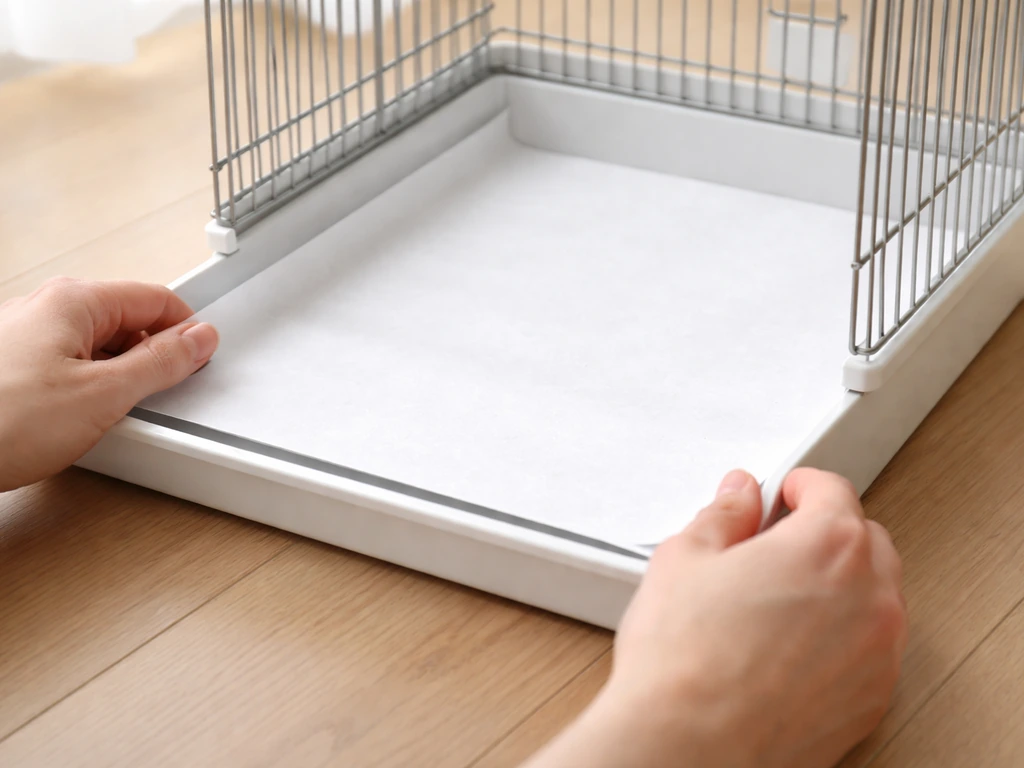
Safe bird cage floor liners, what to avoid, step-by-step setup, cleaning schedule, and fixes for odor and mess.
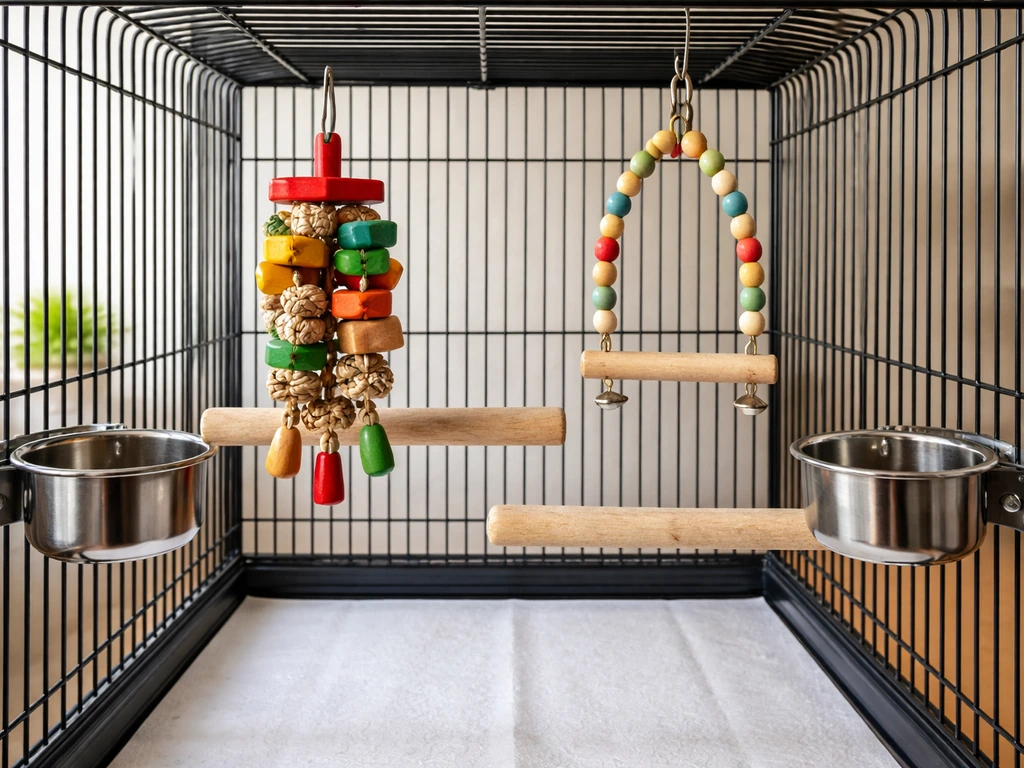
Bird cage checklist: must-haves perches, food and water, toys, safe bedding, and setup tips for year-round placement.
Bird-safe plants and fake options, plus setup, placement, and cleaning tips to avoid toxic, mold, and chewing hazards.