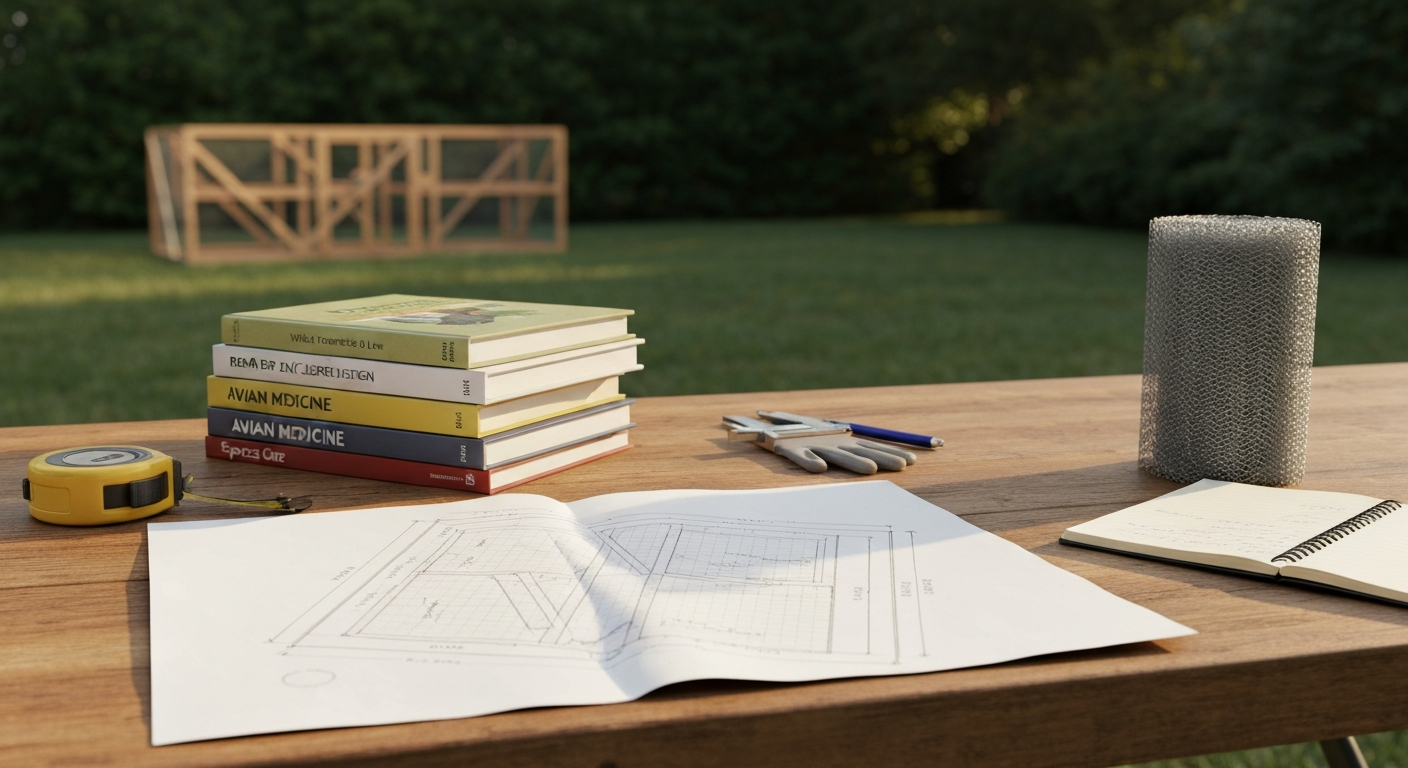
You need at least 3 core books before you build or modify any cage or aviary for a wild-origin bird, and realistically 5 to 7 references total once you add species-specific and legal guides. Think of it this way: one book covers health and toxicology, one covers enclosure design, and one covers the legal and rehabilitation standards that decide whether you can keep the bird at all. Everything beyond that three-book floor is supplemental but genuinely useful, especially for DIY builds, behavior troubleshooting and pest control. Read the legal references first. Everything else follows from whether you are legally allowed to house the bird in the first place.
To Cage a Wild Bird: How Many Books to Read Before Building

Maya Bennett
20 Jul 2026
Who this guide is for
This article is written for three overlapping audiences, and the honest answer is that their needs diverge pretty quickly. Licensed wildlife rehabilitators already working under a USFWS Migratory Bird Rehabilitation Permit (form 3-200-10b) need enclosure specs that meet IWRC/NWRA minimum housing standards and release-readiness criteria. Prospective owners trying to convert a rehabilitated wild bird to long-term lawful possession need to understand that federal law severely restricts this path and that a Special Purpose Possession permit (form 3-200-10c) for education requires a minimum of 12 programs or 400 public-contact hours per year. DIY hobbyists building aviaries for already-legal captive-bred birds are the most straightforward case, but they still need the safety and material guidance that the other two groups use. Whoever you are: please do not attempt to trap, capture or keep any wild migratory bird without a federal permit. I will not advise on illegal trapping here, and no book can make that legal.
The legal check you must do before anything else
In the US, the Migratory Bird Treaty Act makes it a federal offense to possess most wild birds without a permit, including songbirds, raptors, waterfowl and shorebirds. The USFWS Migratory Bird Permits office publishes permit type descriptions and application forms online. If you are a rehabilitator, your permit defines exactly what housing you must provide and when a bird must be released or transferred. If you found an injured bird, your job is to transport it to a licensed rehabilitator, not to cage it yourself. Reading the USFWS permit pages before you read any building book is not optional. It is the filter through which every other decision runs.
Essential book categories and what each must teach you
Not all bird books are created equal, and most popular pet-bird titles skip exactly the information you need for wild-origin birds. Here is how I break down the categories and what I look for in each one before I trust it.
Species care
A species-care book needs to go beyond diet lists. It should cover the natural range, thermoregulation needs, social structure and activity budget of the specific bird you are housing. For raptors, resources from The Raptor Center at the University of Minnesota fill this role well, covering flight-pen sizing, perch placement and conditioning protocols. For parrots, peer-reviewed work like the 2024 Delphi consensus paper in Animal Welfare identifies housing, social opportunity and owner knowledge as the top welfare priorities. If your book does not address the species you are actually keeping, keep looking.
Cage and aviary design
The IWRC/NWRA Minimum Standards for Wildlife Rehabilitation (4th edition) is the standard reference here for rehabilitators. It provides minimum housing dimensions by taxon, including waterbirds, raptors and passerines, plus staging and flight-conditioning notes. For private aviary builds, AZA Accreditation Standards offer an authoritative benchmark for species-appropriate space and enrichment design, though they are written for institutional use. Scale the principles, not necessarily the exact square footage requirements. What matters most in any design guide is that it addresses bar spacing, height, floor substrate, perch variety and entry/exit safety.
Avian health and toxicology
Avian Medicine: Principles and Application by Ritchie, Harrison and Harrison is the most comprehensive single-volume veterinary reference I have encountered. It covers husbandry, toxicology, infectious disease, emergency care and enclosure-related materials safety. The Merck Veterinary Manual fills critical gaps, particularly its dedicated sections on avian toxicoses, zinc toxicosis from galvanized hardware, and infectious diseases like chlamydiosis. A 2025 review in Frontiers in Veterinary Science confirms that PTFE (Teflon) coatings release lethal gases to birds at temperatures above roughly 280 degrees Celsius, meaning any non-stick cookware or appliance used near your bird is a genuine hazard. These are not scare stories. They are documented, peer-reviewed fatalities.
Behavior and welfare
Van Zeeland et al.'s review of feather-damaging behavior in parrots, published in Applied Animal Behaviour Science, is the go-to academic source for understanding how housing deficits, social deprivation and enrichment gaps express themselves as abnormal behavior. If you see a bird over-preening, plucking or screaming repetitively, a behavior reference will help you troubleshoot whether the enclosure is the cause. That is directly useful during a build or a post-build welfare check.
DIY construction and safety
Most general carpentry or metalworking books do not address bird-specific hazards, so you need to cross-reference construction guidance with the toxicology sources above. Look for guides that specify material grades. For welded wire mesh, Type 304 stainless steel at 18-gauge in a 1/2-inch mesh opening is a proven, corrosion-resistant choice documented in government procurement specifications. Avoid guides that recommend galvanized hardware without explicitly telling you to wash and cure it first, and even then I would use stainless steel wherever the bird can chew or contact the metal.
Pest and mess control
CDC guidance for backyard flock owners covers biosecurity basics, EPA-approved disinfectants effective against Influenza A viruses, and PPE/quarantine steps that apply equally to any bird enclosure. USDA APHIS publishes detailed cleaning and disinfecting protocols for Newcastle disease and avian influenza outbreaks, including disinfectant contact times and fallowing guidance. These are free, authoritative, and more up-to-date than most published pest-control books. Bookmark them and treat them as living references.
Recommended core book count and how to prioritize your reading
After working through dozens of titles, I land on a core stack of 3 to 4 books plus 3 to 4 supplemental references. Here is the honest breakdown.
| Priority | Reference | Category | Why it comes first |
|---|---|---|---|
| Core 1 | USFWS Migratory Bird Permit pages (3-200-10b, 3-200-10c) | Legal | Decides if you can house the bird at all |
| Core 2 | IWRC/NWRA Minimum Standards for Wildlife Rehabilitation (4th ed.) | Rehab standards / enclosure design | Minimum housing dimensions and release criteria by species group |
| Core 3 | Avian Medicine: Principles and Application (Ritchie, Harrison & Harrison) | Avian health and toxicology | Materials safety, quarantine, disease management, emergency care |
| Core 4 | Species-specific care guide (matched to your bird) | Species care | Diet, thermoregulation, behavior and space needs for your exact species |
| Supplemental 1 | Merck Veterinary Manual (avian toxicoses and zinc sections) | Toxicology reference | Galvanized hardware hazards, PTFE/Teflon risk, disinfection |
| Supplemental 2 | Van Zeeland et al., Applied Animal Behaviour Science (feather-damaging behavior review) | Behavior / welfare | Welfare troubleshooting during and after setup |
| Supplemental 3 | CDC / USDA APHIS cleaning and disinfection guidance | Biosecurity / pest control | Sanitation protocols, EPA-approved products, quarantine steps |
| Supplemental 4 | AZA Accreditation Standards (relevant enclosure sections) | Design benchmarks | Enrichment and space standards for complex aviaries |
Read in the order above. The legal references take an afternoon but save you from building an enclosure you cannot legally use. The IWRC/NWRA standards give you the structural requirements. The health and toxicology books run in parallel with your material shopping. The behavior and biosecurity references become most useful once you are doing daily welfare checks and dealing with mess or illness. Do not buy every book at once. Most of the supplemental references are free online.
Step-by-step cage and aviary build checklist
This checklist works for a flight cage, a raptor mews, or a large garden aviary. Adjust dimensions to your species guide, but the sequence stays the same. Every step here has a corresponding photo opportunity if you are documenting the build.
Step 1: Site selection
- Choose a location sheltered from prevailing winds and direct afternoon sun
- Confirm at least 3 feet of clearance from fencing or structures on all sides for ventilation
- Check local zoning and any HOA rules before breaking ground
- Assess drainage: the floor should never pool water after rain
- Photo callout: take a wide shot of the site before clearing to document orientation relative to sun and wind
Step 2: Sizing and planning
- Use IWRC/NWRA taxon tables for minimum dimensions if this is a rehabilitation enclosure
- For flight conditioning, minimum length should allow 3 to 5 full wingbeat cycles; this is roughly 20 feet for most medium raptors
- Plan a double-door entry (safety porch) so the bird cannot escape during entry/exit
- Height should exceed the bird's maximum perch-to-flight ceiling by at least 2 feet to prevent impact injury
- Sketch the layout with perch positions, feeding stations and water points marked before ordering materials
Step 3: Framing
- Use pressure-treated lumber only for ground-contact posts; keep all other interior framing untreated or sealed with bird-safe sealant
- Set corner posts at least 24 inches into concrete footings for a structure taller than 6 feet
- Frame the double-entry porch as a separate bay with its own door hardware
- Photo callout: photograph each post-in-concrete pour with a date stamp for your maintenance log
Step 4: Mesh installation
- Attach mesh to the outside of framing members, not the inside, so the bird contacts the frame, not cut wire ends
- Use Type 304 stainless steel welded wire, 18-gauge, 1/2-inch mesh opening as your default
- Overlap mesh sections by at least 2 inches and secure every 4 inches along seams
- Bury or apron the bottom edge at least 12 inches outward underground to deter burrowing predators
- Check every cut wire end with a gloved hand before the bird enters; file or tape any sharp points
Step 5: Finishes and final checks
- Any painted surfaces must be fully cured, non-toxic and lead-free before bird access
- Install perches at varied heights and diameters matched to your species' foot size
- Run a full walk-through with a checklist: no sharp edges, no zinc hardware accessible to the bird, all latches working, drainage clear
- Photograph the finished interior from every corner for your maintenance baseline
- Have a licensed avian vet or experienced rehabilitator do a pre-occupancy inspection if possible
Materials vs. hazards: what to use and what to avoid
| Material | Common use | Risk level | Safe alternative or action |
|---|---|---|---|
| Galvanized wire mesh | Cage walls, panels | High: zinc toxicosis | Use Type 304 stainless steel welded wire |
| Galvanized clips/fasteners | Attaching mesh | High: zinc toxicosis from chewing | Stainless steel J-clips or screws |
| PTFE/Teflon-coated cookware | Household use near birds | Critical: lethal fumes above ~280°C | Remove from any space where birds are kept; use stainless or cast iron cookware |
| Pressure-treated lumber (CCA) | Interior framing | High: arsenic and chromium leaching | Use heat-treated or untreated kiln-dried lumber for interiors |
| Lead-based paint | Any surface | Critical: lead poisoning | Strip completely; use zero-VOC, lead-free paint, fully cured before bird entry |
| Cedar or aromatic woods | Perches, substrate | Moderate: respiratory irritant | Use natural hardwoods (manzanita, java wood) or food-safe soft woods |
| Pine shavings (aromatic) | Floor bedding | Moderate: phenol off-gassing | Use paper-based bedding or dried non-aromatic straw |
| Standard galvanized chain-link | Outdoor enclosure | Moderate to high: zinc contact | Powder-coated or PVC-coated chain-link if stainless is cost-prohibitive; inspect regularly for chips |
| Chlorine bleach (undiluted) | Disinfection | Moderate: respiratory if not rinsed | Dilute per CDC/USDA APHIS guidance; rinse thoroughly and allow to air dry before bird entry |
| Plastic bird netting | Top cover in DIY builds | Low to moderate: entanglement risk | Use rigid mesh panels; if netting is used, choose fine-knotted with no large loops |
The zinc and PTFE entries in that table are not theoretical. The Merck Veterinary Manual documents regenerative hemolytic anemia and multi-organ injury from zinc ingestion, and case reports in Veterinary Record describe birds dying after a single oven cycle with non-stick cookware in an adjacent room. Neither hazard requires prolonged exposure. Build with stainless steel from the start and you eliminate both the zinc risk and the long-term cost of replacing corroded galvanized hardware.
Safe decorative and enrichment ideas that never compromise welfare
Enrichment is not decoration. It is a functional requirement. Research on feather-damaging behavior in parrots consistently links housing deficits and enrichment gaps to abnormal repetitive behaviors, and the 2024 Animal Welfare Delphi consensus study lists enrichment as a top welfare priority for captive parrots. The rule I use is simple: if an item cannot survive a chew-and-tug test or if it contains zinc, lead, treated wood or synthetic dyes, it does not go in the cage.
- Natural branch perches at 2 to 3 diameters (one should be slightly larger than a comfortable grip to exercise foot muscles)
- Untreated wicker or palm-leaf foraging toys that shred safely when chewed
- Stainless steel food-puzzle cups attached at mid-height, not at floor level where fecal contamination is likely
- Dried non-toxic leaves, pine cones (without sap) or corn husks as temporary substrate enrichment that you replace weekly
- A shallow stainless steel or ceramic water dish sized for bathing, placed on an elevated grate to reduce splashed bedding
- Visual screening on one or two sides using natural reed matting or burlap secured on the outside of the mesh, not inside where the bird can chew fasteners
- For raptors: natural wood stumps as low perches, with rough-barked surfaces for foot conditioning
Placement rules matter as much as item choice. Keep foraging items at mid-height and feeding stations away from perch spots directly above them to reduce fecal contamination of food. Rotate enrichment items every 3 to 5 days so the bird cannot habituate to them. Photo callout: photograph the cage interior from the bird's eye level before and after each enrichment rotation so you can track use patterns and identify ignored items.
Placement, microclimate and seasonal protection
Where you place a cage or aviary determines its thermal comfort, disease risk and predator pressure far more than most decorating decisions. I think of it as the three-variable problem: sun, wind and drainage. Get all three right and you reduce maintenance labor by half.
Ventilation and sun
- Orient the longest axis of the enclosure on an east-west line so the bird gets morning sun and afternoon shade
- Never place an enclosure in a dead-air corner between two walls; cross-ventilation is not optional
- A solid roof over at least 50 percent of the enclosure area prevents both rain soaking and direct overhead sun stress
- In indoor rooms, use a ceiling fan on low for air circulation, keeping it at least 4 feet above any perch height to prevent impact
Cold-weather adjustments
- Add a wind-break panel on the prevailing-wind side using plexiglass or polycarbonate sheeting bolted to the outside of the frame
- Provide a sheltered nest box or hide with insulating material appropriate to the species (straw for ground birds, a wooden box for cavity nesters)
- Monitor overnight temperatures with a min/max thermometer placed at perch height, not at floor level
- For indoor cages, keep room temperature above 65°F (18°C) for most passerines; tropical species need 70°F (21°C) or above
Heat and summer adjustments
- Add shade cloth rated at 40 to 60 percent blockage on the south and west faces during peak summer months
- Always provide a bathing station during hot weather; birds use evaporative cooling through wet feathers
- Never leave a glass-sided indoor cage in direct window sun; temperatures inside can spike to dangerous levels within minutes
- Mist the enclosure lightly in the morning but ensure it is fully dry before evening to prevent fungal growth on bedding
Pest and mess troubleshooting
Rodents are drawn to spilled seed and can carry Salmonella, leptospirosis and avian influenza. The CDC and USDA APHIS both recommend removing uneaten food within two hours, using rodent-proof feeders and cleaning the floor substrate at least twice weekly. For disinfection, follow USDA APHIS contact-time guidelines for EPA-approved disinfectants. A common error is rinsing too soon: most disinfectants need 10 minutes of wet contact time to be effective. Rinse thoroughly and let surfaces air dry before the bird re-enters.
- Rodents: use hardware cloth with no larger than 1/4-inch openings at the base; remove seed trays nightly
- Mites: inspect perches and crevices weekly; treat with avian-safe pyrethrin spray as a first line, then consult your avian vet
- Mold under substrate: switch to a grated floor over a pull-out tray, or deep-clean and replace substrate every 5 to 7 days
- Feather mess: place a skirt of hardware cloth or plastic trim on the outside of cage bars to contain loose feathers without blocking airflow
- Tray overflow: line seed catchers with paper liners you replace daily rather than scrubbing trays every time
Legal, ethical and humane final checks
Before any bird enters a cage you have built, run through this final check. It applies whether you are a rehabilitator, a prospective educational possessor or a DIY hobbyist with a captive-bred bird.
- Confirm you hold the correct USFWS permit for the species you are housing, or that the bird is legally captive-bred (documented with breeder paperwork)
- Verify the enclosure meets IWRC/NWRA minimum housing standards for the taxon if this is a rehabilitation situation
- Complete a materials audit using the hazards table above and remove all zinc-containing hardware and any PTFE-coated items from the bird's environment
- Have an avian-experienced veterinarian perform or review a pre-placement health check on the bird and an enclosure inspection
- Document the bird's identification (band number, species, origin, permit number) and keep it with the enclosure maintenance log
- Set a 30-day welfare review date: photograph the bird, note weight, plumage condition, and activity level against your baseline
If you found a wild bird and are wondering whether you can simply cage it: the honest answer is almost certainly no without a federal permit, and in many cases not at all. The most humane action is to contact a licensed rehabilitator immediately. Organizations like the IWRC and NWRA maintain directories of permitted rehabilitators by state. A well-built cage is only ethical when the bird inside it is there lawfully, with species-appropriate care backed by the reference library you have built.
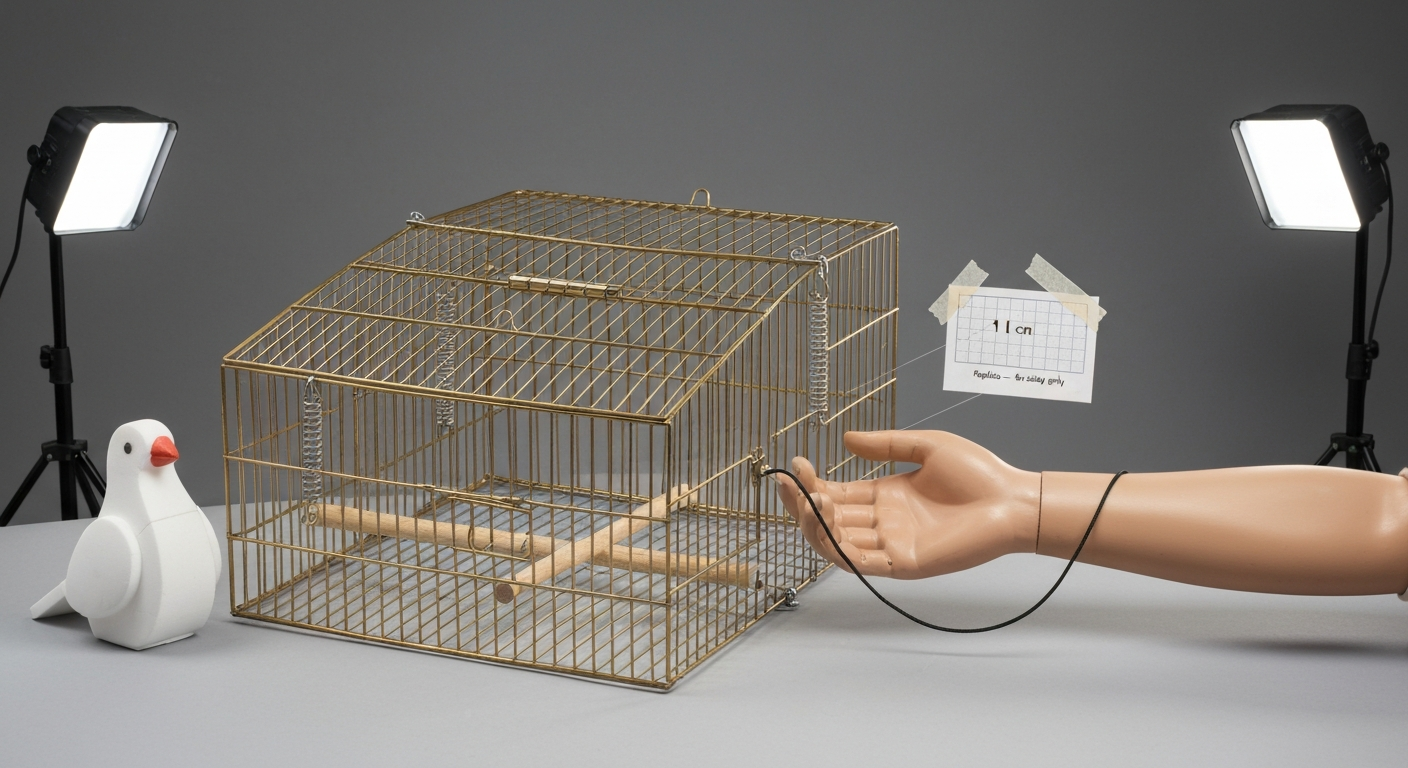
One last note: if you searched for 'vanishing bird cage' and landed here, you may be thinking about the magic prop rather than real enclosures. That is a completely different topic involving collapsible illusion frames rather than bird welfare, and the physics behind those tricks is genuinely interesting in its own right. For a clear demonstration of the illusion mechanics, watch a vanishing bird cage slow motion clip that breaks down the collapsing frame and timing. For a clear explanation of the illusion and its collapsible frame mechanics, see vanishing bird cage explained. For a deeper explanation of the mechanics behind collapsible illusion frames, see bird cage problem physics for a clear, physics-based breakdown of how these tricks work.
FAQ
How many books and core references do I need to plan, build and maintain a species‑appropriate cage or aviary safely?
For a practical, safety‑first build plan: 3–5 core books plus 4–8 supplemental references. Core books: (1) a species‑specific care/behavior book (or species group monograph), (2) an avian medicine/textbook (e.g., Avian Medicine: Principles & Application), and (3) a cage/aviary design or poultry/aviary husbandry manual (scalable to small private aviaries). Supplemental: welfare/release standards (Standards for Wildlife Rehabilitation), a biosecurity/disinfection reference (CDC/USDA guidance), a construction/DIY handbook for outdoor structures, a pest and sanitation guide, and one or two legal/permit references (USFWS/permits, local wildlife agency). This mix gives veterinary, behavioral, structural and legal coverage without needless duplication.
Which book categories are essential and what must each teach?
Essential categories and required content: 1) Species Care/Behavior — natural history, diet, social needs, normal behaviors, enrichment needs, indicators for release vs retention. 2) Avian Health/Medicine — common diseases, toxicoses (zinc, PTFE), quarantine and emergency first aid, vet referral criteria. 3) Cage/Aviary Design & Husbandry — minimum dimensions, flight conditioning, perch variety, substrate and drainage, ventilation, materials safety. 4) Wildlife Rehabilitation/Release Standards — minimum housing by taxon, staging, release criteria, recordkeeping. 5) DIY Construction & Safety — structural engineering basics, weatherproofing, predator proofing, corrosion‑resistant hardware specs. 6) Pest, Mess & Biosecurity Control — cleaning/disinfection protocols, EPA/EPA‑approved disinfectants, pest prevention and waste management. Each book should give clear, evidence‑based, species‑scalable numbers and checklists.
What are recommended single‑title examples to include on my reading shelf?
High‑value picks: Avian Medicine: Principles & Application (veterinary reference); Standards for Wildlife Rehabilitation (IWRC/NWRA) (rehabilitator standards); a reputable species or family care book (parrot, raptor or passerine monograph depending on species); a practical aviary/cage design handbook or agriculture/aviary husbandry manual; and a trusted DIY construction manual that covers outdoor wood/metalwork and weatherproofing. Complement with CDC/USDA guidance for cleaning and USFWS permit pages for legal context.
How should I prioritize reading if I only have time for a few chapters before building?
Prioritize: 1) quarantine and biosecurity (infection control), 2) species care and behavioral needs that determine space/enrichment, 3) materials toxicity and hardware specs (avoid galvanized zinc; use stainless steel), 4) structural safety and predator proofing, 5) legal/permit constraints. Put veterinary and rehab standards at the top—these determine whether you should proceed at all or pursue release/legal pathways.
What is a concise, actionable cage/aviary setup checklist I can follow?
Checklist (step order): 1) Confirm legal status & permits for species. 2) Select species‑appropriate minimum dimensions and perch/flight requirements. 3) Choose materials: stainless steel mesh, food‑grade fasteners, non‑toxic wood/finishes. 4) Design for ventilation, drainage and shelter from sun/wind/rain. 5) Add varied perches, safe feeding/water stations, enrichment mounting points and a secure lock. 6) Plan quarantine area for new arrivals. 7) Establish cleaning/disinfection protocol and waste disposal. 8) Set a monitoring schedule (daily visual, weekly deeper checks, monthly hardware inspection). 9) Document maintenance and any vet interactions.
What tools and materials should I stock before starting construction?
Tools: cordless drill/impact driver, circular saw or miter saw, level, tape measure, stud finder, wire cutters, crimping tool, torque wrench, caulking gun, safety gear (gloves, eye/respiratory protection). Materials: Type 304 stainless steel welded wire mesh (appropriate gauge & mesh size for species), stainless steel fasteners/hinges/eye bolts, marine‑grade plywood or rot‑resistant lumber, hardware cloth (stainless), bird‑safe paints/sealants labeled non‑toxic, lockable latches, sheltered roofing, concrete footings or raised skids, drip trays and removable waste pans. Avoid galvanized or cheaply plated hardware and any PTFE/Teflon‑coated materials.
Next Article
Vanishing Bird Cage Slow Motion: History, Mechanics & Safe DIY
Vanishing bird cage slow motion: safe, frame-by-frame physics, filming checklist, DIY replica plans and bird-welfare指南