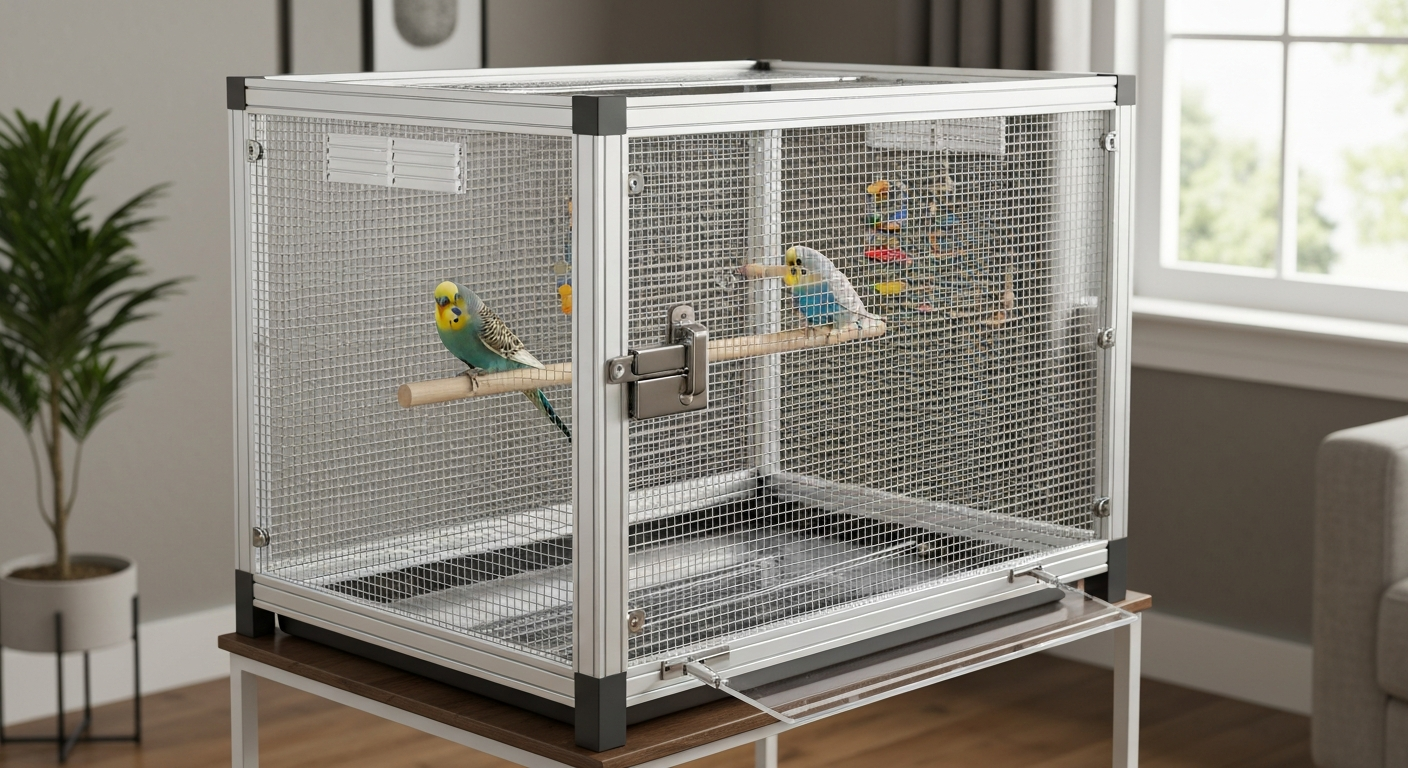
Yes, you can put your bird cage outside, but only under the right conditions and with the right setup. If you are pregnant and wondering about routine cleaning, plan for the safest approach and ventilation while you disinfect the cage clean your bird cage while pregnant. If you are specifically asking about using a bird cage outdoors for rats, you will want a rat-safe setup with proper ventilation, bedding, and escape-proofing use a bird cage.
Can I Put My Bird Cage Outside? Safe Guide by Weather

Maya Bennett
20 Apr 2026
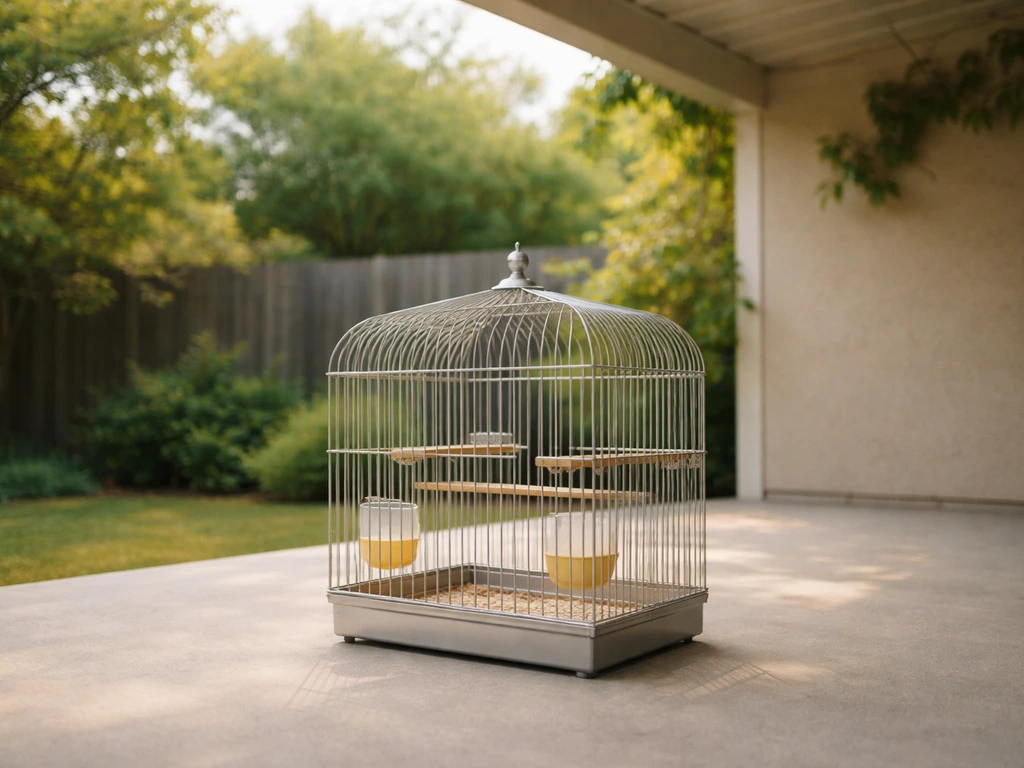
A bare cage dropped on a patio without any protection is a bad idea for almost every pet bird species. However, a properly sheltered, shaded, secured outdoor cage can give your bird fresh air, natural light, and real enrichment. The difference is in the details: temperature range, predator barriers, rain cover, and knowing exactly when to bring your bird back inside.
Quick safety answer: when outdoor cage keeping is actually okay
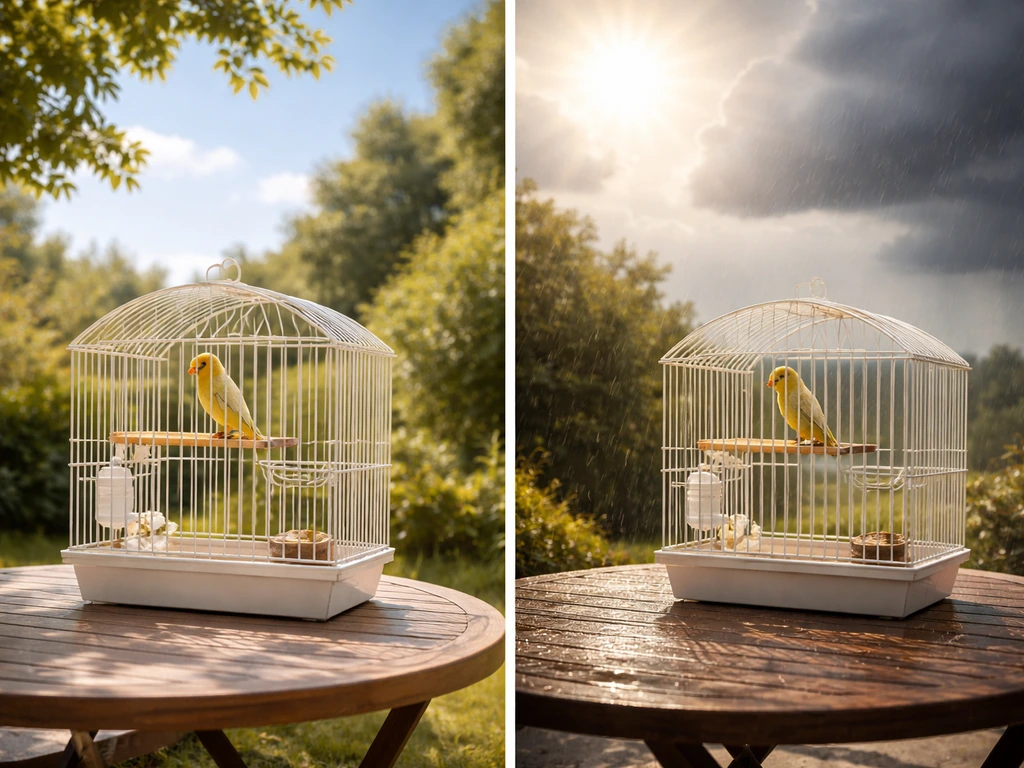
Outdoor cage time is safe when temperatures stay consistently between 65°F and 85°F (18°C to 29°C), humidity is moderate (not swampy or bone-dry), wind is calm, there is no direct precipitation hitting the cage, and you can supervise or monitor the bird regularly. The USDA animal welfare guidelines are clear that outdoor bird housing must be protected from direct sunlight, wind, and precipitation so those elements cannot adversely affect the bird's health and comfort. That is the baseline. If you cannot guarantee those conditions, the cage stays inside.
Short outdoor sessions (a few hours on a mild, calm day) are much lower risk than permanent outdoor housing. If you are asking about leaving the cage outside full-time or overnight, the safety bar is higher and requires a much more complete setup, which the rest of this guide walks through.
Your bird's species and climate tolerance matter more than anything
Before you move the cage a single inch toward the door, check what your specific bird can actually handle. Pet bird species vary enormously in their temperature tolerances, and ignoring that is the fastest way to cause heat stress or hypothermia. The Merck Veterinary Manual emphasizes that pet birds must be managed as individuals with environmental conditions taken seriously as part of basic husbandry. That means general advice only gets you so far; your species matters.
| Species | Safe Temp Range (°F) | Humidity Tolerance | Key Outdoor Risk |
|---|---|---|---|
| Budgerigar (parakeet) | 65–85°F | Moderate (40–60%) | Drafts, overheating above 90°F |
| Cockatiel | 65–80°F | Low–moderate | Cold snaps below 60°F, drafts |
| African Grey Parrot | 65–80°F | Moderate–high (50–70%) | Temperature swings, stress from noise |
| Amazon Parrot | 70–90°F | Moderate–high | Cold below 60°F, direct sun |
| Lovebird | 65–80°F | Moderate | Predator stress, cold nights |
| Canary / Finch | 60–80°F | Low–moderate | Drafts, sudden temperature drops |
| Conure | 65–85°F | Moderate | Overheating, predator proximity |
Tropical and subtropical species like Amazon parrots and conures handle heat better but are hit hard by cold and damp. Cockatiels and budgies are surprisingly cold-sensitive despite their Australian origins. If your area swings more than 15°F between day and night temperatures, plan to bring the cage inside every evening. High humidity above 70% paired with heat is dangerous for most species and can cause respiratory problems quickly.
Picking the right outdoor spot
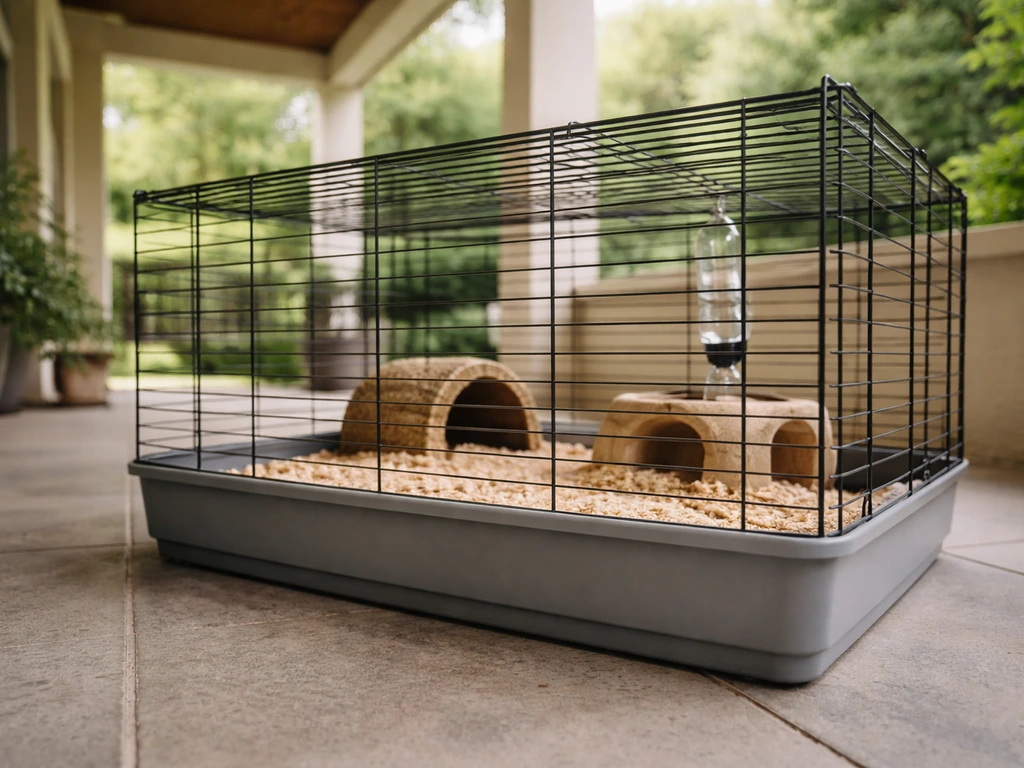
Location does most of the heavy lifting when it comes to outdoor cage safety. A bad spot can make even a good setup dangerous, and a great spot can make a basic setup work well.
Shelter and overhead cover
Place the cage under a covered porch, pergola, or deep roof overhang. The overhead cover does three things: blocks direct rain, cuts intense midday sun, and reduces the wind load on the cage. If you do not have a covered structure, you will need to build or buy one before the cage goes out. A temporary solution is a heavy-duty patio umbrella clamped to the cage stand, but it is not reliable in wind and should only be used on calm days when you are present.
Sun, shade, and airflow
Birds need access to natural unfiltered light (UV exposure supports vitamin D synthesis), but direct, unbroken sun is dangerous. The ideal position gets morning sun from the east and is shaded by midmorning. A spot that sits in direct sun from 10 a.m. onward is too hot for most species, especially in summer. Airflow should be gentle and indirect. A slight breeze is fine. A spot in a wind corridor, like between two buildings or at the corner of a house, is too exposed. Back the cage against a solid wall on at least one side to break direct drafts.
Noise, activity, and stress
Birds are prey animals and stress easily. Purdue University advises that a lack of sleep or rest can negatively affect birds’ health and weaken their immune system, which is why maintaining appropriate day/night conditions and minimizing routine stressors matters for caged birds. Avoid placing the cage near high-traffic areas, barking dogs, loud HVAC units, or areas where unfamiliar people approach frequently. A quiet corner of a backyard or a screened porch is far better than near a front door or driveway. Chronic stress suppresses immune function and can cause feather-destructive behaviors, so do not underestimate this.
Setting up outdoor protection for the cage
Even a well-chosen spot needs physical protection added to the cage itself. Think of this as layering: overhead cover handles rain and sun, side barriers handle drafts and blowing rain, and thermal management handles heat and cold.
Rain and wind protection
Attach a waterproof cage cover to three sides of the cage, leaving the front open for ventilation and your viewing. Use covers made from breathable, waterproof materials like treated canvas or heavy-duty polyester. Avoid plastic sheeting that traps heat and blocks airflow. On days with driving rain or gusty winds, add the front panel and bring the bird inside as soon as practical. Never leave a fully sealed plastic cover on a cage in any temperature above 70°F.
Managing heat
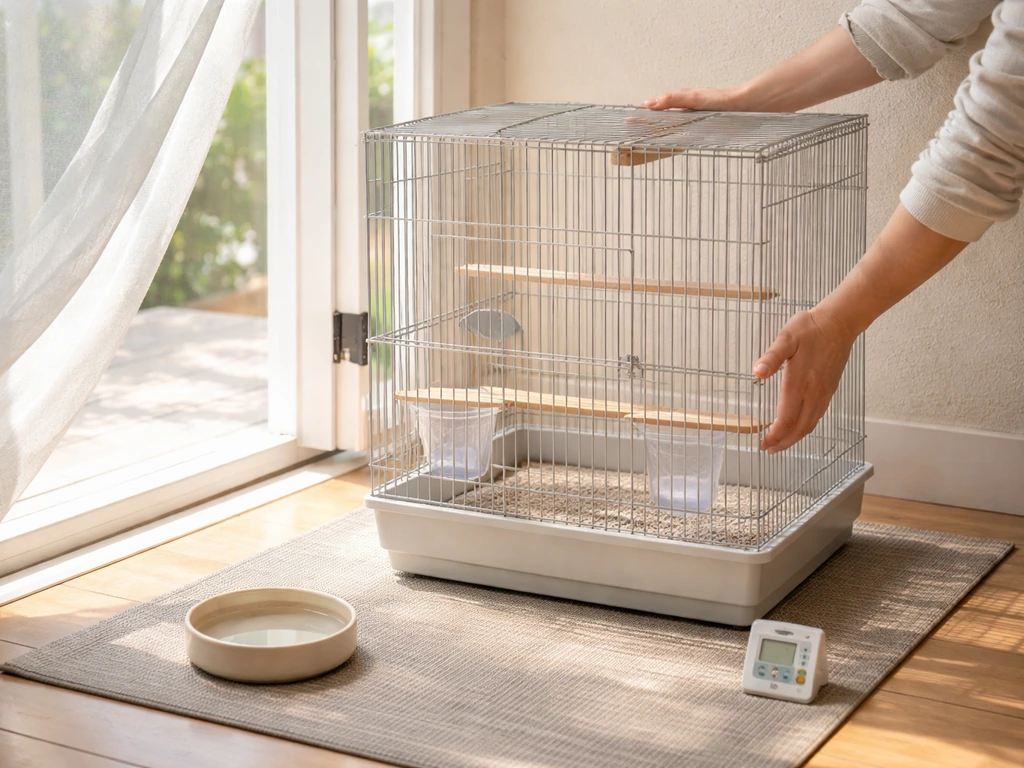
If temperatures approach 90°F (32°C), move the cage inside immediately. Signs of heat stress include panting with the beak open, wings held away from the body, and lethargy. Before that point, use a clip-on fan aimed at the wall behind the cage (not directly at the bird) to increase airflow, and hang a damp cloth near (not on) the cage to cool the surrounding air. Misting the bird lightly with clean water is also effective for many species. Never leave a heat-stressed bird unattended.
Cold weather barriers
For cool mornings or mild cold weather (not below 55°F for most species), wrap the back and sides of the cage with a fleece blanket and secure it with binder clips. Fleece is breathable, retains warmth, and dries quickly. Do not use wool or any material with loose fibers that the bird can pull through the bars and ingest. If nighttime temperatures drop below 60°F, bring the cage inside. No cover solution replaces indoor shelter for cold nights.
Security: predators, escapes, and outdoor hazards
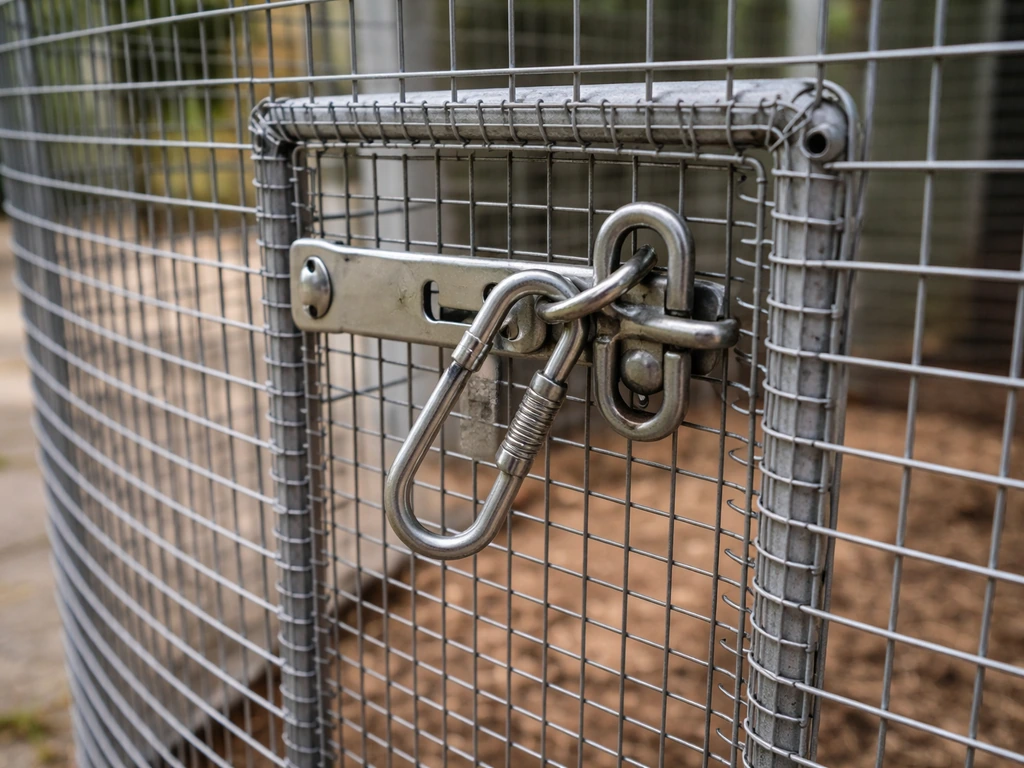
Outdoors introduces threats that simply do not exist inside. Taking these seriously is non-negotiable.
Predator proofing
Hawks, cats, raccoons, and even squirrels will approach or attack a caged bird. Even if the predator cannot get inside the cage, a bird that sees a hawk diving at it can die from acute stress (cardiac arrest in small birds is documented from fright alone). Keep the cage off the ground, on a sturdy stand at least 3 feet high. Use a cage with bar spacing appropriate for your species so paws and beaks cannot reach through. Place the cage in a corner or against a wall so predators cannot approach from all sides. A layer of hardware cloth (welded wire mesh with 0.5-inch openings) around the outside of the cage adds a physical barrier while still allowing ventilation.
Escape prevention
Outdoor conditions create escape risks that indoor placement does not. Clips or carabiner locks on every door are essential. Lever-style latches that birds can work open indoors are much easier to manipulate when you are not watching. Check that all cage seams, door hinges, and bottom trays are secure before every outdoor session. A bird that escapes outdoors is extremely difficult to recover.
Fumes, chemicals, and toxic plants
Birds have extremely sensitive respiratory systems. Do not place a cage near a BBQ grill, fire pit, running engine, lawnmower exhaust, or any area where pesticides or herbicides have recently been applied. Wait at least 72 hours after any chemical lawn treatment before putting the cage in that area, and even then make sure runoff cannot reach the cage. Check the surrounding plants: avocado, oleander, yew, and many common garden plants are toxic to birds. If a bird chews on a bar or toy and then contacts plant material through the bars, it matters.
Dealing with pests and mess outdoors
Outdoor cages attract insects, rodents, and other pests far more quickly than indoor ones. The combination of bird droppings, food scraps, and water creates an ideal feeding station. Staying ahead of this is an ongoing task, not a one-time setup.
Mites and insects
Red mites, ants, and mosquitoes are the three most common problems. Red mites hide in cage seams during the day and attack birds at night, so if you are leaving the cage outside overnight, inspect every seam and joint weekly. Remove the bird, disassemble the cage as much as possible, and spray seams with a bird-safe mite spray, then allow it to fully dry before returning the bird.
For ants, place cage feet in small dishes of water (essentially a moat) so ants cannot climb up. For mosquitoes, avoid leaving the cage out at dusk and dawn when mosquitoes are most active, as West Nile virus is a real risk for some bird species. CDC’s Emerging Infectious Diseases describes surveillance during transmission season that includes testing dead birds and mosquito pools for West Nile virus [West Nile virus is a real risk for some bird species. ](https://wwwnc.
cdc. gov/eid/article/7/4/01-7415_article).
Droppings and mess control
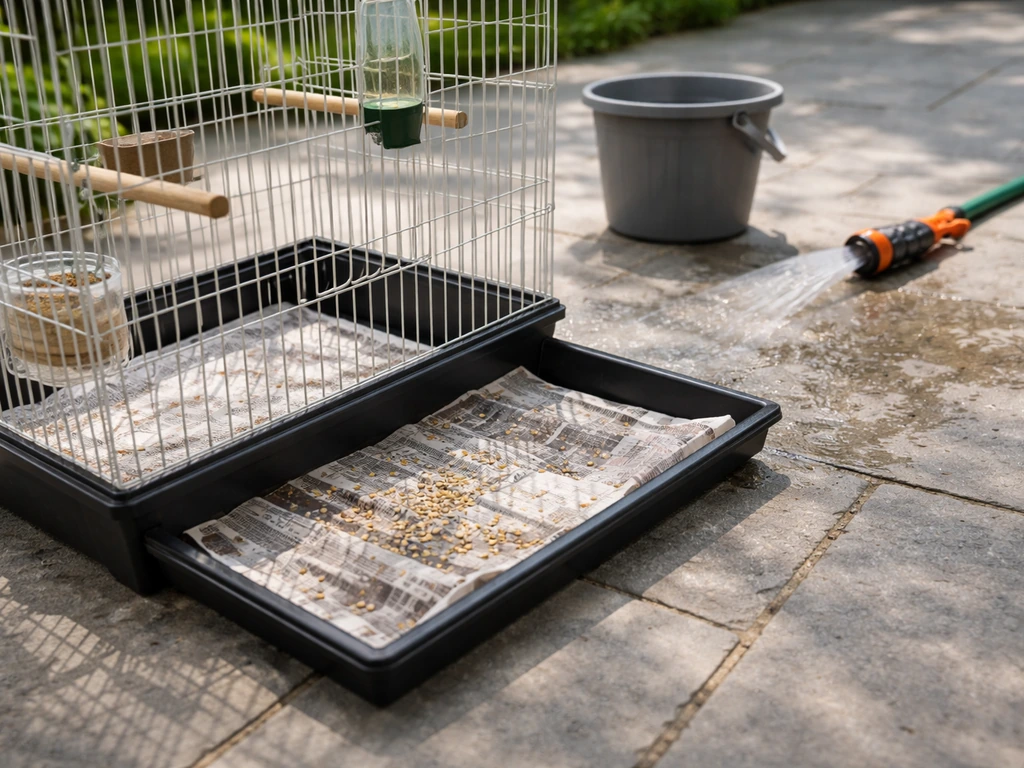
Outdoor droppings attract flies and wasps quickly. Use a solid catch tray under the cage and line it with cage paper or newspaper. Change it daily when the cage is outside. Hose down the area under the cage every few days to keep buildup from accumulating on the patio surface. Place the cage on a surface that drains and cleans easily, like concrete or composite decking, rather than wood (which absorbs and holds droppings) or grass (which turns into a muddy, insect-heavy mess).
Outdoor cleaning routine
- Daily: remove and replace the cage tray liner, remove uneaten food, rinse and refill water dishes
- Every 3 days: wipe down cage bars with a damp cloth and mild bird-safe soap, rinse well, check for pest activity
- Weekly: full cage disassembly and wash with a diluted white vinegar solution or bird-safe disinfectant, inspect all seams and joints for mites or corrosion, check bar coatings for chips or rust
- Monthly: check cage hardware for rust or weakness, inspect the stand and any added hardware cloth for deterioration
A realistic seasonal plan and what to watch every day
Outdoor cage keeping is not a set-it-and-forget-it situation. Conditions change by the hour in many climates, and your bird cannot tell you when it is uncomfortable until the problem is serious. Build a daily monitoring habit and a seasonal decision framework so you are never caught off-guard.
Daily monitoring checklist
- Check the forecast before the cage goes out, not just current conditions
- Monitor temperature at cage level (not the ambient air temperature) with a small thermometer clipped inside the cage
- Watch the bird's body language: fluffed feathers mean cold, open-beak panting means heat, hiding in a corner means stress
- Check for any pest activity, especially ant trails or flying insects near food
- Confirm all doors and latches are secure before stepping away
- Note wind changes, as conditions can shift quickly and a covered cage can overheat in still air
Season-by-season guidance
| Season | General Conditions | Safe Outdoor Time | Key Action |
|---|---|---|---|
| Spring | Mild temps, variable wind and rain | Mid-morning to early afternoon on calm days | Watch for cold snaps; bring in if temps drop below 60°F |
| Summer | Heat risk; high humidity in many regions | Early morning (before 10 a.m.) or late afternoon (after 4 p.m.) only | Shade is critical; never leave out during peak sun hours |
| Fall | Cooling temps; shorter days | Late morning on warm days only | Begin transitioning bird back to indoor schedule; watch for sudden cold fronts |
| Winter | Too cold for outdoor housing in most climates | Very limited or none depending on climate | Cage stays inside; consider full-spectrum indoor lighting for UV needs |
In mild climates like coastal Southern California, southern Florida, or Hawaii, year-round outdoor time is more feasible but still requires shade management in summer and nighttime temperature checks in winter. Even in these climates, overnight outdoor housing needs a well-insulated, predator-proof enclosure rather than a standard indoor cage.
When to bring the cage inside immediately
- Temperature at cage level exceeds 88°F or drops below 60°F
- Rain is falling or the forecast shows rain within 2 hours
- Wind is strong enough to move the cage cover or wobble the stand
- A predator (cat, hawk, raccoon) has been spotted in the area
- The bird is showing any signs of stress: fluffing, panting, screaming, or freezing in place
- Any smoke, fumes, or chemical smell is detectable in the outdoor area
Your next steps today
If you want to start safely, here is exactly what to do right now. First, check today's forecast and confirm temperatures will stay between 65°F and 85°F and wind will be calm. Second, identify a shaded, sheltered spot in your yard or on your porch that is backed against a solid wall. Third, add carabiner clips to every cage door if you have not already. Fourth, grab a small thermometer and clip it inside the cage at perch height. Then take the cage out for a two-hour supervised trial this week, stay present the whole time, and watch your bird's body language carefully.
For gear, you need at minimum: a breathable waterproof side cover, a clip-on thermometer, carabiner door locks, and a solid-base cage stand if your cage does not already have one. If you plan to make the outdoor setup more permanent, add hardware cloth around the outside and a fixed roof structure before you extend the hours. The cage material itself matters too: powder-coated steel holds up outdoors far better than painted wrought iron or zinc-coated wire, and if you are ever thinking about repainting or refreshing the cage for outdoor use, choosing the right coating is worth looking into separately. The cage material matters too: powder-coated steel holds up outdoors far better than painted wrought iron or zinc-coated wire, and if you are ever thinking about repainting or refreshing the cage for outdoor use, choosing the right coating is worth looking into separately, including what paint to use for bird cage as a related option.
The indoor placement of the cage when the bird is back inside also matters more than most people think. If you are trying to decide where to put the bird cage in the house when it is back inside, pick a consistent, low-stress spot away from drafts and fumes where to put the bird cage in house. Keeping the bird in a consistent, low-stress indoor spot helps it tolerate the transition between indoor and outdoor environments. If you are still figuring out where in the house the cage should live the rest of the time, that is worth sorting out alongside this outdoor plan.
Start small, stay present, and build up gradually. Birds adapt well to outdoor time when it is introduced carefully and the conditions are genuinely safe. Rush the process or skip the protection steps, and the risks outweigh the benefits quickly. Do it right and your bird gets fresh air, natural light, and enrichment that is genuinely hard to replicate inside.
FAQ
Can I put my bird cage outside if the temperature is within 65°F to 85°F?
Yes, but only if the cage is sheltered from direct sun and precipitation, wind is calm, and humidity is not high. Also check that the surface under the cage is not heating up, since hot patio or deck surfaces can warm the cage bottom and stress the bird even when the air temperature seems safe.
Is it safe to leave the cage outside overnight?
It is much harder to make safe overnight. You need a predator-proof setup, a fully weather-managed enclosure, and a plan for sudden temperature drops. If you cannot confirm nighttime conditions and predator protection, bring the cage inside at dusk.
What if it starts raining after I put the cage outside?
Have a “rain trigger” plan. If rain is hitting the cage, you should add the front panel only if it still allows airflow, otherwise bring the cage inside as soon as practical. Avoid prolonged exposure to dampness, especially for tropical species that can struggle with cold and wet conditions together.
Can I use a clear plastic tarp or sheet to cover the cage?
Avoid plastic sheeting because it can trap heat and reduce airflow. If you only have a tarp, use it only as an overhead rain block with breathable, side coverage and keep the front open for ventilation. Never fully seal the cage in warm weather.
How do I know if my bird is getting too hot while outside?
Watch for panting with the beak open, wings held away from the body, drooping posture, and sudden quiet or lethargy. If you see these signs, move indoors immediately. Even before obvious signs, use indirect airflow and cooling around the cage, not direct blowing onto the bird.
My backyard gets gusty winds sometimes, is that still okay?
Gentle, indirect airflow is fine, but gusts raise the risk of rain intrusion, uneven temperature swings, and added stress. If winds pick up or the cage rattles, bring the bird inside or relocate under a sturdier overhang before continuing outdoor time.
Can I let my bird outside in a screened porch?
Often yes, because screens can reduce flying insect exposure and help buffer drafts. Still, ensure the cage is not in direct sun after midmorning, keep it away from chimneys or grills, and verify the screen area is not accessible from predators like cats.
What bar spacing matters, and how do I choose for outdoor safety?
Use bar spacing appropriate for your bird species so paws, beaks, and toys cannot reach through. Also account for your bird’s ability to manipulate latches, since birds can often exploit loose seams, bottom trays, or latch gaps during outdoor sessions.
Is it safe to put the cage near plants in my yard?
Be cautious. Avoid toxic ornamentals and fruiting plants, and do not let leaves touch or be reachable through the bars. Even if the bird does not chew much, contact and partial chewing plus contaminated plant material can be dangerous.
How should I handle outdoor droppings, especially if I’m not staying outside all day?
Use a solid catch tray with cage paper or newspaper and change it daily when outdoors. Plan for easy cleanup, and hose down or disinfect the area periodically to reduce flies and wasps. If you cannot maintain daily cleanup, outdoor time should be shorter.
What’s the safest way to prevent escape if I need to go inside briefly?
Lock every door with carabiner-style locks, then physically inspect hinges, seams, and the bottom tray before you step away. If you cannot supervise constantly, skip outdoor time or shorten it, because even a quick door opening can lead to an escape you cannot quickly reverse.
Can I start outdoor time with just a few minutes instead of a two-hour trial?
Yes, but scale up gradually based on your bird’s reaction. Do a short supervised introduction first, then increase duration once you see calm behavior and normal breathing and posture. If your bird shows stress signs early, stay with shorter sessions or keep the cage indoors.
What indoor location should I use when bringing the cage back in after being outside?
Choose a consistent, low-fume, draft-free spot and avoid placing the cage near open windows, cooking areas, or strong-smelling cleaning products. Keeping the indoor environment stable helps your bird recover from outdoor temperature and stress fluctuations.
Next Article
How to Make an Acrylic Bird Cage: Complete Species‑Safe Guide
Step-by-step guide: how to make an acrylic bird cage with species-specific designs, safe materials, templates, and door/