Put your bird in a secure travel carrier or a separate play stand in a different room before you touch the cage with any cleaner. That is the single most important step. Birds have extremely sensitive respiratory systems, and fumes from even mild disinfectants can cause real harm. Getting the bird physically separated from the cleaning area before you open any bottles is non-negotiable.
Where to Put Bird When Cleaning Cage: Safe Steps

Maya Bennett
30 Jun 2026
Safe temporary housing options during cage cleaning
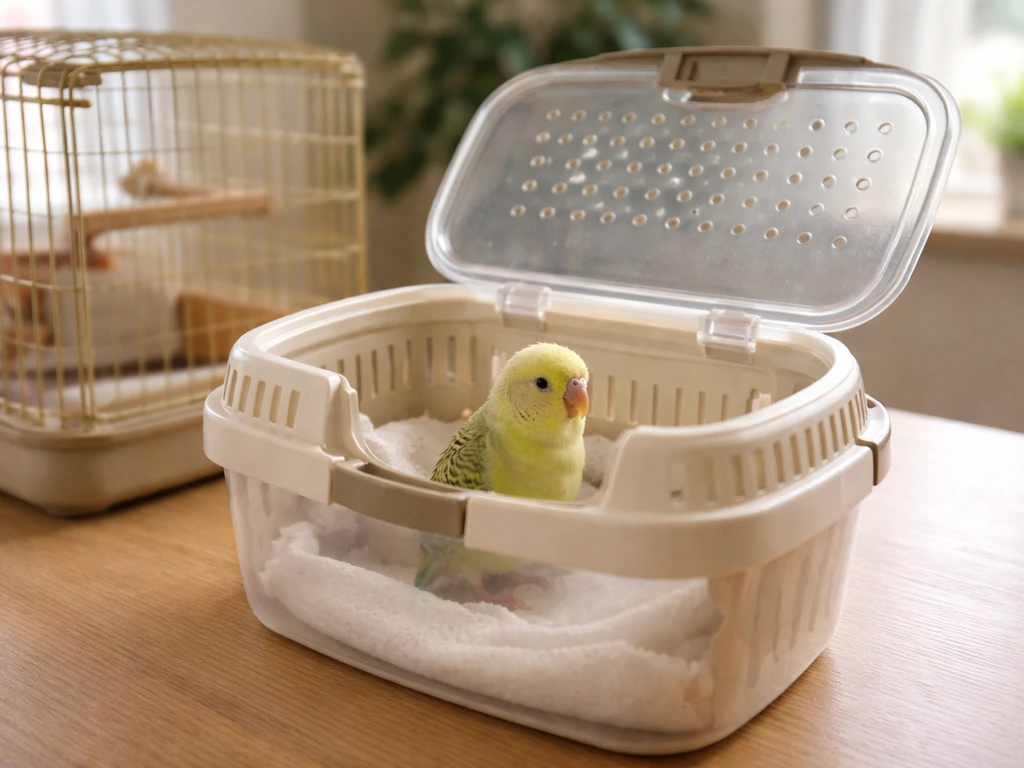
You have a few solid options depending on how long you need and how hands-on your bird tends to be. The goal is somewhere secure, comfortable, and completely away from cleaning fumes.
Travel carrier or spare cage
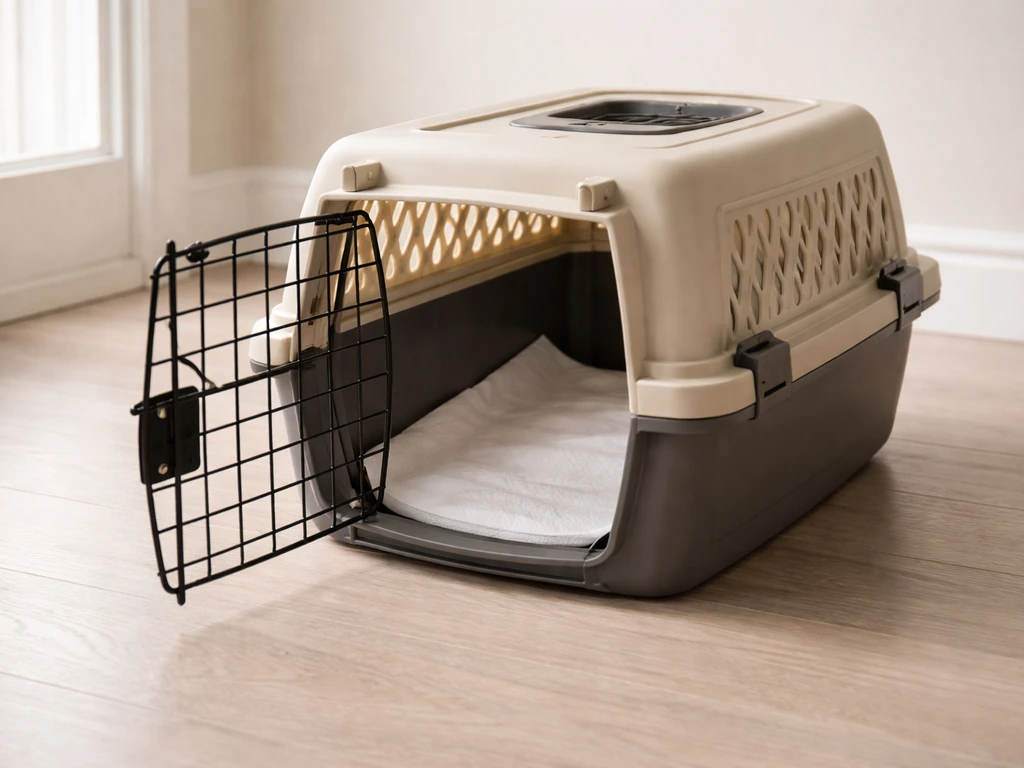
A travel carrier is the best choice for a full deep clean because it fully contains the bird, especially important for flighted birds or escape artists. Line it with a paper towel, drop in a familiar perch and a small water dish, and you are set. If you have a spare cage, even better. Place it in a room with the door closed so cleaning fumes cannot drift in.
Play stand or tabletop perch
For a calm, well-trained bird during a quick spot clean, a play stand in a separate room works fine. Keep the door to the cleaning area closed and supervise the bird continuously. This is not a good choice if you have cats, dogs, or other birds that could interact with it unsafely, or if your bird tends to fly toward noise and activity.
A bird-safe zone in another room
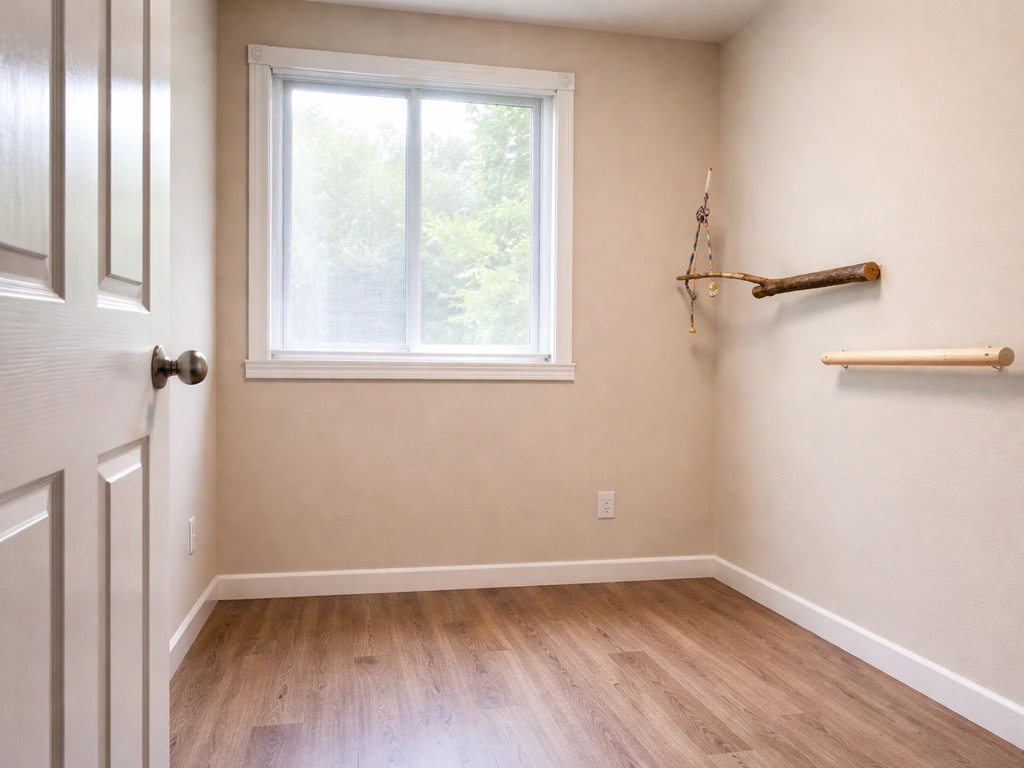
If you have a dedicated bird room or a space you have already bird-proofed, closing your bird in there with supervision is a reasonable option. Just make sure there are no open windows, ceiling fans running, or hazardous items within reach. The key word here is 'another room.' Keeping the bird in the same room while you spray and scrub is what you want to avoid entirely.
Matching the option to your bird and cleaning type
| Situation | Best temporary housing |
|---|---|
| Quick daily spot clean (liner swap, wipe down) | Play stand in another room or travel carrier |
| Full weekly or monthly deep clean with disinfectant | Travel carrier or spare cage in a separate closed room |
| Flighted bird or bird that escapes easily | Closed travel carrier, always |
| Nervous or stress-prone bird | Travel carrier in a quiet room away from dogs, loud noises |
| Multiple birds, cleaning one cage | Separate carrier for each, or a secure spare cage |
Step-by-step move process to minimize stress
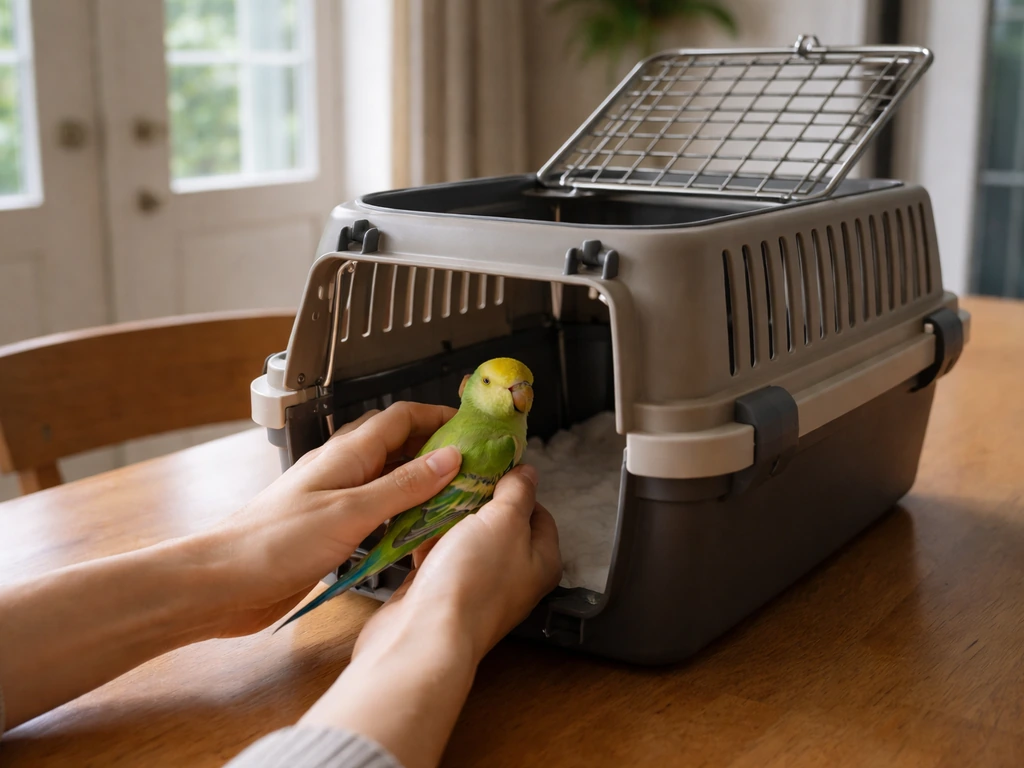
How you move your bird matters as much as where you put it. A rushed, clumsy transfer will stress the bird before cleaning even starts, and a stressed bird is harder to work around safely.
- Close all doors and windows in the room before you do anything else. This prevents a flight response from turning into a real escape.
- Set up the carrier or play stand before approaching the bird. Have it open, lined, and ready so the transfer is smooth.
- Approach calmly and use a familiar step-up command or your hand. Do not rush or chase the bird around the cage.
- Place the bird in the carrier or onto the stand and secure the carrier door immediately. Double-check the latch.
- Move the bird to the other room and close that door. Now you can clean without worry.
- Put a light cover over the carrier if your bird is anxious. Darkness tends to calm birds down during short waits.
- Give the bird a small foraging toy or treat to occupy it while you work.
Merck's veterinary guidance backs this up: a quiet location away from excessive activity, including barking dogs or household commotion, meaningfully reduces stress in pet birds during handling. That quiet separate room is doing real work, not just keeping fumes away.
How to clean without exposing the bird to fumes or dust
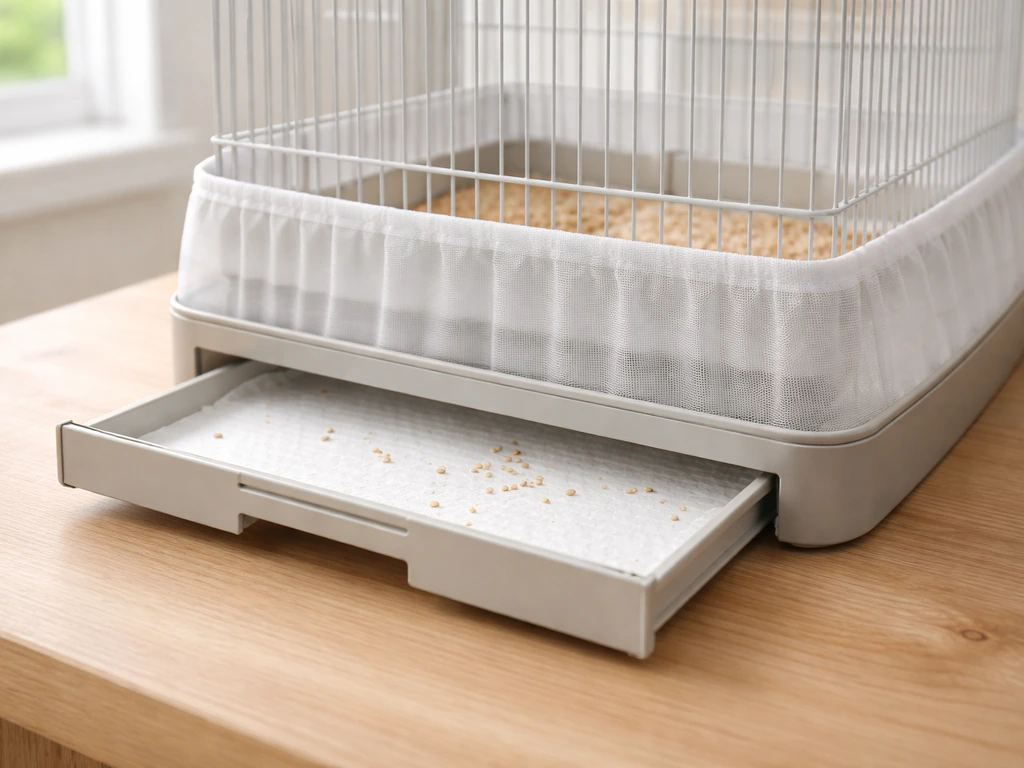
Once the bird is safely out of the room, you can clean properly. To prevent mess while you clean, plan for droppings and residue right away so the cage stays easier to manage how to keep bird cage from making mess. The order of operations matters here because disinfectants only work well on surfaces that have already had organic material (droppings, food residue, feather dust) physically removed first. Spraying a dirty cage with cleaner and calling it done is not effective and leaves more residue behind.
The right cleaning sequence
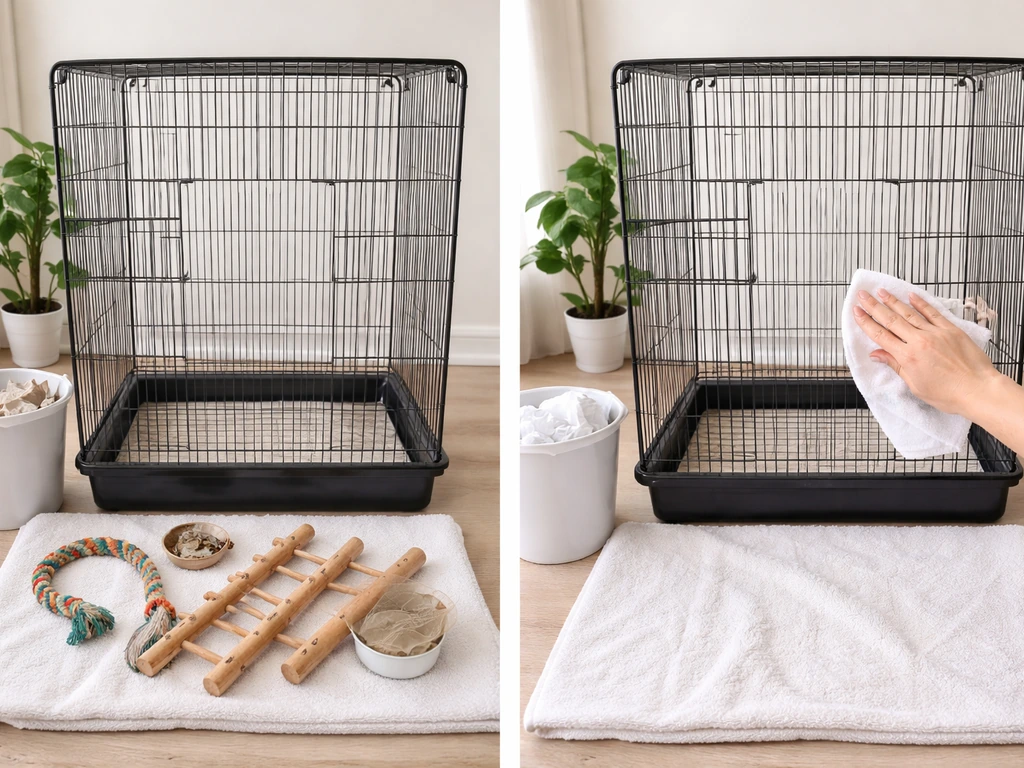
- Remove all accessories, toys, perches, and food dishes and set them aside to clean separately.
- Dispose of the cage liner and any loose debris without shaking it vigorously (which kicks up dust and dander).
- Scrub all surfaces with hot water and a stiff brush to remove all organic material before applying any disinfectant. This step is not optional.
- Apply a diluted, bird-safe disinfectant such as a properly diluted bleach solution. Never mix bleach with ammonia or other cleaners because doing so creates toxic gas.
- Let the disinfectant sit according to the product directions, then rinse every surface thoroughly with fresh plain water. Multiple rinses are better than one.
- Wash perches, dishes, and toys the same way: scrub, disinfect, rinse completely.
- Allow everything to air dry fully in a well-ventilated space before reassembling the cage.
What to avoid while cleaning
Even with the bird in another room, avoid aerosolizing sprays near any air vents that connect to the bird's space. blank" rel="noopener noreferrer">Birds are sensitive to inhalants and typically need longer periods away from treated areas than other pets. Keep the cleaning area ventilated (open a window if possible), and do not use air fresheners, essential oil diffusers, scented candles, or aerosol sprays of any kind during or right after cleaning. Those are precisely the kinds of airborne exposures that can cause respiratory harm. Feather dust and bedding dust can also irritate a bird's airways, so change liners without shaking them out vigorously and consider wearing a dust mask yourself during the cleanup. As a rule of thumb, you should change bird cage liner regularly, especially when it gets soiled or after any wet mess how often to change bird cage liner.
Where the bird should stay afterward (before going back in)
Returning the bird too soon is one of the most common mistakes. The cage needs to pass a few simple checks before your bird goes back in.
- All surfaces must be visibly dry, not just damp. Wet surfaces can harbor bacteria and also mean the rinse was not long enough ago.
- No smell. If you can still detect any chemical odor when you put your nose close to the cage bars, the cage needs more airing out. A properly diluted and thoroughly rinsed cage should have no detectable chemical smell.
- Fresh liner is in place, clean food and water dishes are back in position, and perches are fully dry.
- The room itself should be aired out. Open a window for at least 15 to 30 minutes after cleaning, especially if you used any spray disinfectant.
- Temperature check: make sure the reassembled cage is not positioned directly under or beside a heating or ventilation duct that could blow residual fumes or create uncomfortable drafts.
If your bird got wet during handling or bathing as part of the process, Purdue's veterinary guidance recommends allowing birds to dry in a warm, sunny room or using a hairdryer held at least 10 inches away on a low, warm setting. Do not return a damp bird to a cage that is also still damp.
The ASPCA confirms that using a properly diluted bleach solution followed by thorough rinsing and airing out is not expected to cause harm, so the standard is clear: dilute it, rinse it, air it out, confirm no smell, then the bird can go back in. To help keep bird feathers in good condition between cleanings, be sure the cage is fully dry and free of strong odors before you return your bird.
Common mistakes and quick troubleshooting
Mistakes that can put your bird at risk
- Leaving the bird loose in the same room while you clean. Even 'mild' cleaners like vinegar can release fumes that irritate a bird's respiratory tract. The bird needs to be in another room with the door closed.
- Returning the bird before surfaces are dry and smell-free. Residual disinfectant on wet surfaces can be ingested if the bird chews on bars or perches.
- Using undiluted bleach or mixing bleach with other cleaning products. Undiluted bleach can cause injury to the mouth and esophagus, and mixing bleach with ammonia-based cleaners produces toxic gases.
- Cleaning near open doors or windows with the bird on a play stand. One startle response and the bird is out the door or trapped behind furniture with tools lying around.
- Skipping the scrub step and going straight to disinfectant. Disinfectants cannot do their job properly over organic debris. You have to scrub first.
- Using aerosol sprays, air fresheners, or scented candles right after cleaning, thinking they will 'help.' They add more airborne irritants on top of any residual cleaning fumes.
Quick troubleshooting
| Problem | Fix |
|---|---|
| Bird is frantic in the carrier during cleaning | Cover the carrier with a light cloth to reduce visual stimulation. Check that the room is quiet and away from other pets. |
| Cage still smells like cleaner after drying | Rinse again with plain water, dry fully, and air the room out for another 30 minutes before reassembling. |
| Bird refuses to step up for the transfer | Try a familiar treat or toy to lure rather than grabbing. If the bird is particularly resistant, slow down and approach from the side rather than head-on. |
| You used too strong a bleach solution by accident | Re-rinse every surface multiple times with fresh water. Let the cage air dry in a well-ventilated space for at least an hour. Contact your vet if you are unsure. |
| Bird seems lethargic or is breathing differently after returning to the cage | Remove the bird immediately and contact your avian vet. Respiratory symptoms in birds are a medical urgency. |
Cage cleaning is closely tied to a few other ongoing husbandry habits worth keeping in mind. How often you change your cage liner, how you manage seed scatter and mess, and how you keep odors under control all affect how intensive each cleaning session needs to be. To make sure the mess stays manageable, learn how to keep bird seed in the cage so it does not spill or sprout on the floor how to keep bird seed in cage. A cage that gets regular daily attention takes far less effort to deep clean, and your bird spends less time waiting in the carrier.
Once you have the process down it becomes quick and routine. Secure the bird, scrub the cage, blank" rel="noopener noreferrer">disinfect and rinse thoroughly, air it out until there is no trace of chemical smell, and then return your bird to a fully dry and reassembled home. If you are also trying to block food or seed from escaping, use a seed guard setup designed for your cage and keep it safely mounted how to make a bird cage seed guard. That sequence protects your bird every single time.
FAQ
Should I remove my bird before I start mixing or opening cleaning products, or after I begin scrubbing?
Put the bird in another room before you open any cleaners, not just after you start scrubbing. Even the first moments of handling bottles and lids can release fumes, so wait to bring the carrier out until the cleaning products are already closed and placed.
What can I use if I do not have a travel carrier or another cage for cleaning?
If you do not have a carrier or spare cage, use a locked, well-ventilated enclosure that has familiar items (a perch or travel stand) and keeps the bird fully separate from the cleaning area. Avoid DIY options that allow the bird access to spray bottles, rags, or dripping liquid.
Do I clean the cage with water first, or should I disinfect right away?
Use the carrier or stand as a “dry base,” then remove droppings and residue from the cage surfaces first. If you wipe with water only, let the cage surface fully dry before disinfecting, because diluted cleaner and wet residue can make disinfecting less effective and increases lingering odor.
Is it okay to shake out the cage liner or bedding to reduce mess during cleaning?
Do not shake liners over the trash or near your bird’s space. Instead, bag soiled liner directly, then wipe the area with a damp cloth to trap dust, and keep your bird in the separate room until you have finished wiping and ventilation is clear.
How long should I wait before putting my bird back, and what are the quick checks?
A good “go back” signal is no visible wet spots, no tacky feel, and no detectable cleaner smell in the air where the bird will be. If you still smell disinfectant strongly after rinsing, give it more time with airflow before returning the bird.
How can I keep my bird calm in the carrier or play stand during cleaning?
If your bird is prone to fright, keep the carrier covered partially (a light towel over the top and sides, leaving airflow) to reduce visual triggers. Still maintain ventilation and never cover so completely that the bird can’t breathe comfortably.
What should I avoid beyond disinfectants, like air fresheners or essential oil diffusers?
Birds can be more sensitive than other pets, so for disinfectant cleanup avoid aerosolizing anything near vents connected to the bird’s room. Also stop using any scented products (candles, diffusers, room sprays) until the cleaning area is fully aired out.
How do I prevent leftover cleaner on my hands, clothes, or cleaning tools from reaching the bird?
If you used bleach or strong cleaners, do not use paper towels or cloths that you later bring back to the bird area until they are fully rinsed and dried. Wash your hands after touching the cleaning products and change into cleaner clothes if you splashed or got residue on sleeves.
If it is just a quick spot clean, does my bird still need to go to another room?
For a very brief spot clean, still separate the bird if you are using any chemical product or spray. If you are only removing a small amount of droppings with plain paper and no cleaner, you may be able to keep the bird nearby, but keep airflow away from the cage opening and avoid agitation.
What if my bird accidentally gets wet during cage cleaning or cleanup?
If your bird gets wet while you are cleaning, ensure it is fully dry and warm before returning, especially around the chest and wing areas. Plan for extra drying time if the room is cool, because dampness can increase stress and irritate skin or airways.
Next Article
How to Keep Bird Cage From Making a Mess: Easy Fixes
Quick fixes to stop seed hulls, droppings, splashing, and odor with safe liners, tray setup, and simple clean routines.