The fastest changes you can make today are: switch to flat paper liners and replace them daily, reposition feeders and waterers so they are not directly under perches, add a seed guard or skirt around the cage base, and establish a five-minute daily spot-clean. Those four moves alone will cut the visible mess and smell by more than half for most setups. Everything else in this guide builds on that foundation.
How to Keep Bird Cage From Making a Mess: Easy Fixes

Maya Bennett
3 May 2026
Quick diagnosis: where is the mess actually coming from?
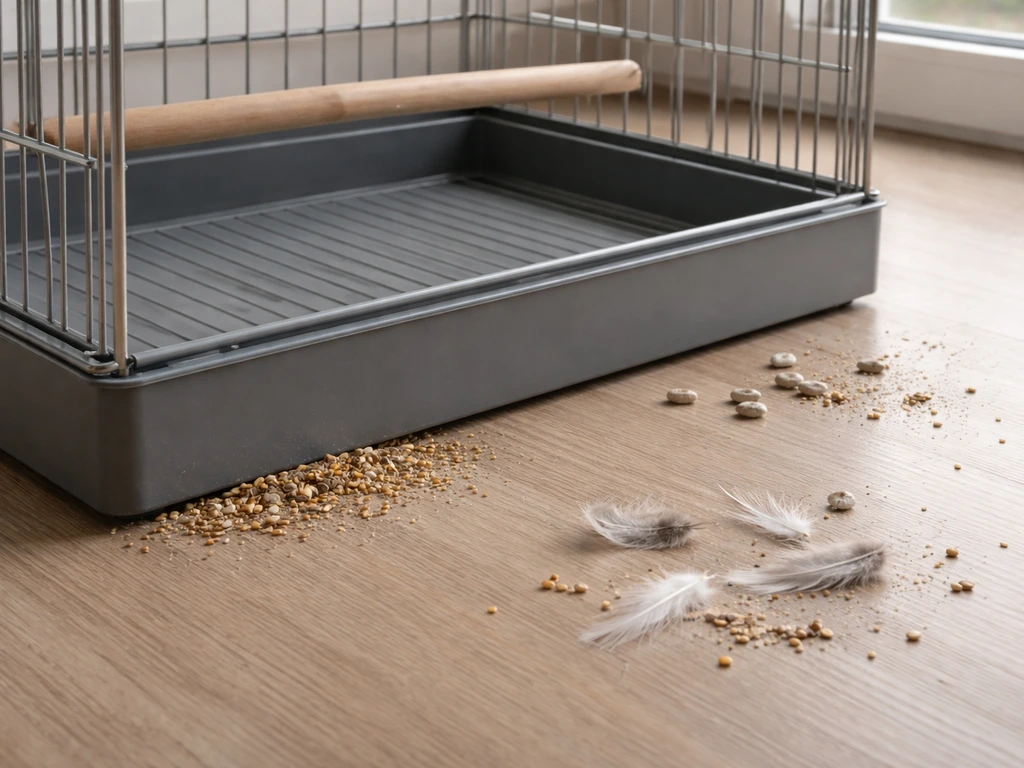
Before you buy anything or rearrange the whole cage, spend two minutes figuring out which type of mess is your main problem. They each have different fixes, and throwing a seed guard at a water-splash problem is just wasted money.
- Seed hulls and shell debris on the floor and surrounding surfaces: your bird is flinging hulls out of the feeder while foraging.
- Droppings on the cage floor, walls, or outside the bars: perch placement is sending waste in the wrong direction, or the liner is not being changed often enough.
- Water mess and bowl contamination: the waterer is too close to a perch, or your bird is bathing in the drinking bowl.
- Food slinging from wet foods or soft foods: the feeder position is wrong, or the dish is too deep/shallow for how your bird eats.
- Odor without visible buildup: substrate is holding moisture, or the water bowl is not being cleaned daily.
- Debris attracting insects or rodents: food waste is sitting on the floor of the cage for more than 24 hours.
Pick your top one or two from that list before reading on. You will know exactly which sections to prioritize.
Set up the cage so daily cleanup takes under five minutes
Liners and pull-out trays
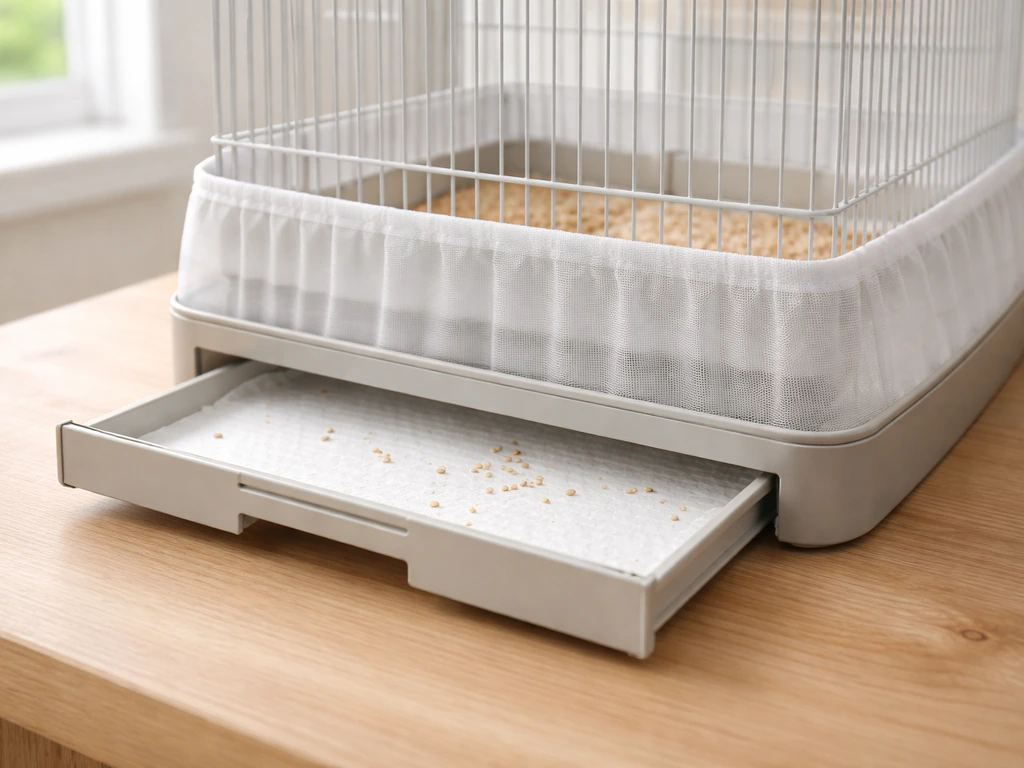
The single most effective cage-hygiene upgrade is also the cheapest: blank" rel="noopener noreferrer">flat paper on the bottom tray, changed every single day. Plain newspaper, unprinted newsprint, or paper towels all work well. The goal is not to absorb odor (no substrate does that reliably), it is to let you lift out all the droppings, seed hulls, and debris in one motion without scrubbing the tray each time. If your cage has a pull-out tray, make sure the paper fits flush to the edges so waste does not slide underneath the liner and sit on the tray itself.
One important safety note: avoid puppy training pads, even the unscented ones. They contain chemicals that are documented as toxic to birds. Stick with plain paper. Pre-cut a week's worth of liners in advance so there is no excuse to skip a day. PangoVet also recommends using paper liners and doing quick daily sweeping around the cage and tray/liner.
Cage placement and what it does to your cleanup workload
Where the cage sits in the room determines how far the mess spreads. Pushing the cage into a corner limits scatter to two open sides instead of four. Placing it on a hard floor (tile, vinyl, laminate) rather than carpet makes sweeping the floor area around the base trivial. A low-pile cage mat or a splash mat cut from a vinyl tablecloth runner under and around the cage catches seed hulls and droppings that exit through the bars, and it shakes clean in seconds. If your bird tends to fling food to one specific side, orient the cage so that side faces a wall or a surface you can wipe easily.
Bedding and substrate: what actually works (and what to skip)
The bedding question trips up a lot of new bird owners because the pet store aisle is full of options that look helpful but are not. Here is a straight comparison of what you will commonly see:
| Substrate | Mess control | Odor control | Safety | Recommended? |
|---|---|---|---|---|
| Flat paper / newspaper / paper towels | Excellent (easy daily swap) | Good (stops moisture sitting) | Safe | Yes — best choice |
| Wood shavings / chips | Poor (scatter increases with movement) | Moderate (masks but holds moisture) | Risky (dust, aromatic oils in cedar/pine) | No |
| Corncob bedding | Moderate | Poor (grows mold and bacteria quickly when wet) | Risky | No |
| Clay or cat litter | Moderate | Moderate | Dangerous (dust, ingestion risk) | No |
| Shredded/recycled paper | Poor (birds redistribute it constantly) | Poor | Generally safe but impractical | No |
| Paper cage liners (pre-cut rolls) | Excellent | Good | Safe | Yes — convenient alternative to loose paper |
The recommendation from avian veterinarians lines up with what you will see from experienced bird keepers: flat paper is the default substrate for a reason. It lets you actually see the droppings, which also doubles as a daily health check. If you cannot see the droppings because they are hidden in shavings or corncob, you miss early signs of illness. Changing the liner daily stops odor before it starts, which relates directly to the smelling problem covered in a separate guide on keeping cages from smelling.
Perches, toys, feeders, and waterers that cut down on scatter
Perch placement
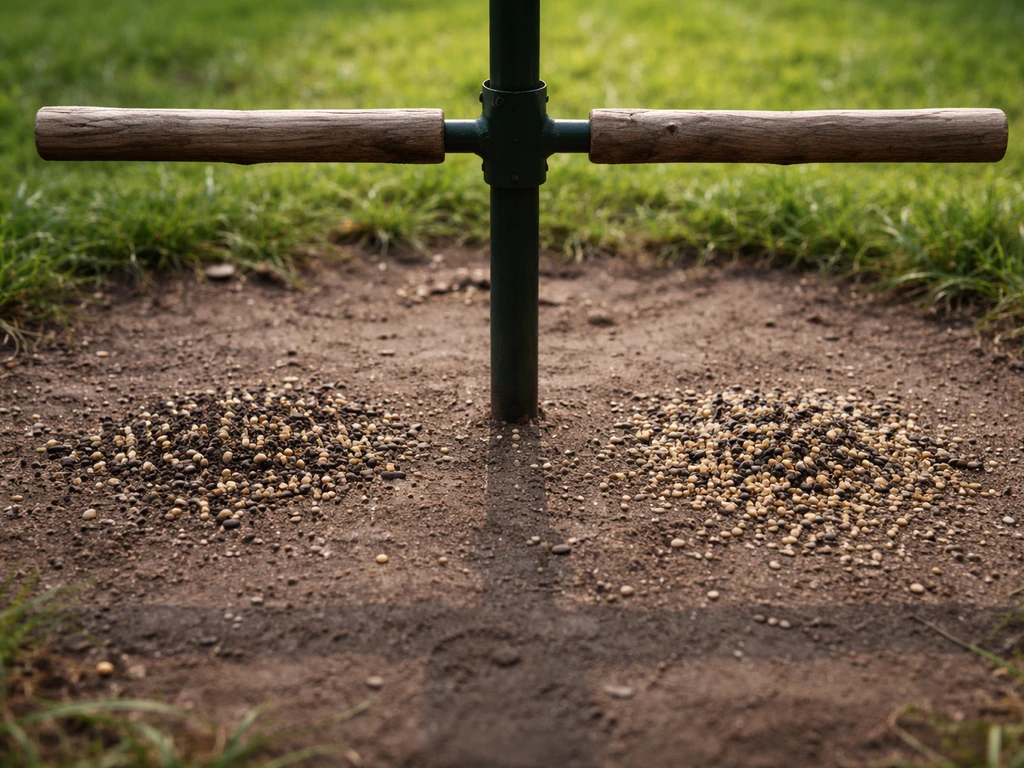
This is where a lot of people lose the battle with mess without realizing it. Birds defecate directly downward from wherever they perch. If a perch is positioned directly above a food or water dish, every dropping goes into the bowl. Move perches so they sit to the side of feeders, never directly over them. For the highest perch in the cage (the one your bird uses most), make sure it is over the liner or a covered area, not over the water station. This one repositioning step stops the most common source of contaminated food and water.
Feeder setup
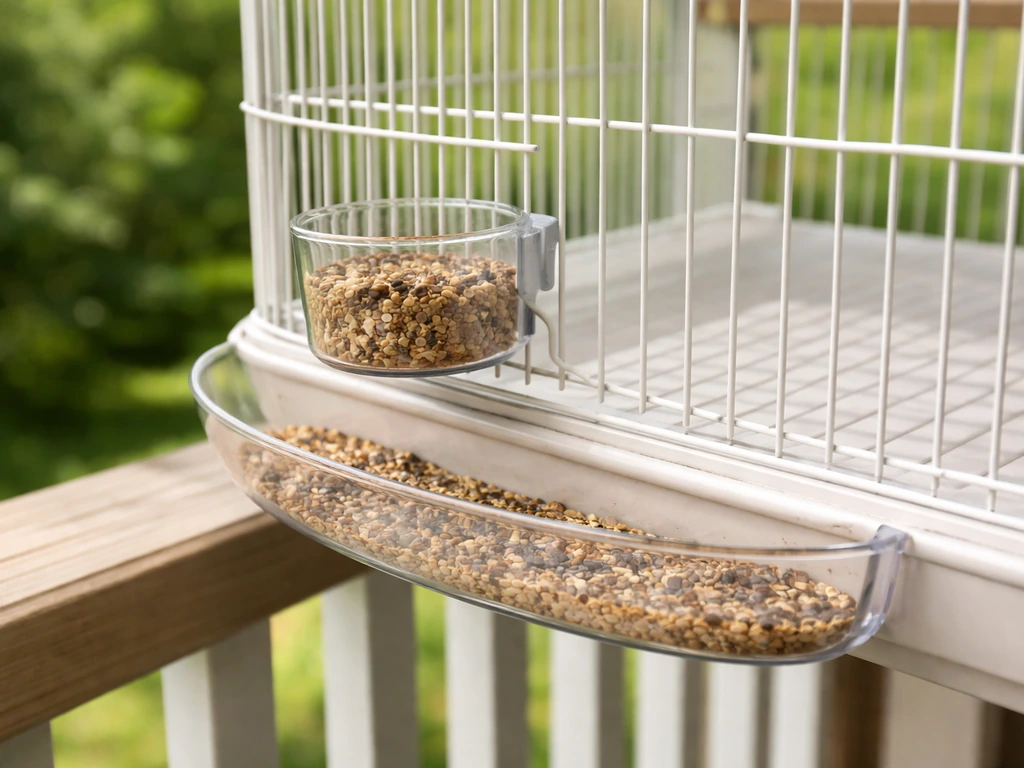
Deep, narrow seed cups throw less seed than wide, shallow ones because there is less surface area for the bird to toss debris from. Hooded or covered feeders (often sold as anti-scatter feeders) have a lip or dome that catches flung hulls before they leave the cup. If you use a standard open cup, clip a feeder guard or protector above it: these small plastic shields attach to the cage bar above the dish and block droppings from falling in while also partially containing scatter. Position feeders at mid-cage height, not at the very bottom where bedding debris mixes in, and not at the very top where droppings from upper perches rain down onto them.
Waterer setup
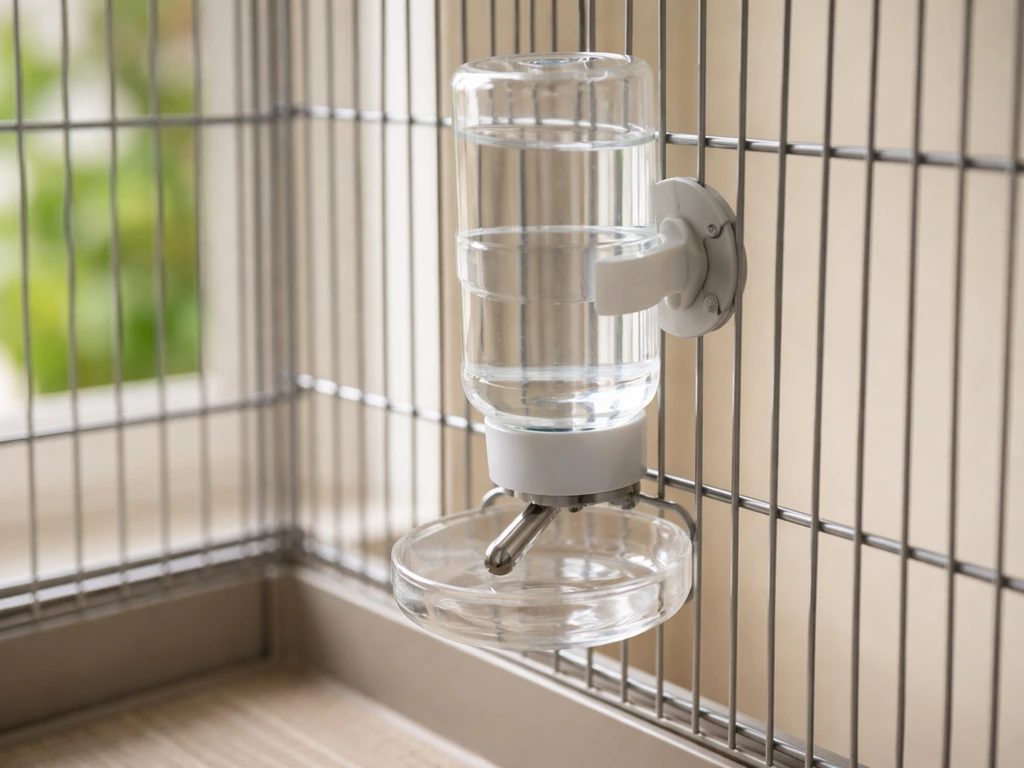
Open water bowls are the biggest odor and contamination source in most cages. Birds step in them, drop food in them, and defecate directly into them when the perch is positioned overhead. The two-part fix is: first, move any perch that sits over the bowl, and second, consider switching to a water bottle mounted at roughly the bird's head height above a perch. Bottles eliminate bath-in-the-drinking-water behavior, keep the water clean far longer, and are much easier to check at a glance. Whether you use a bowl or bottle, wash it with hot water and soap every single day. If you use a bowl and your bird tends to foul it within an hour, change it multiple times per day until you solve the perch placement issue.
Toy choices
Shredding toys (palm fronds, soft wood blocks, paper-based toys) generate debris by design. That is fine and good for enrichment, but if debris is already your main problem, limit shredding toys to one at a time and place them over the liner area rather than over food or water. Foraging toys that hold food inside a container cut down on scatter dramatically compared to open-platform feeders. Avoid toys with small loose beads or glitter that add to the floor debris without any benefit to the bird.
Feeding routine tweaks that make a real difference
How and when you feed matters almost as much as what equipment you use. A few simple routine changes can cut daily mess significantly without any new purchases.
- Feed measured portions rather than keeping the bowl constantly full. A full, overflowing seed cup invites more tossing behavior. Fill to about two-thirds capacity.
- Remove uneaten fresh or soft foods within two to four hours. Wet food sitting in a warm cage is the fastest route to odor, bacterial growth, and flies.
- Blow away seed hulls before refilling. Birds will not eat hulls, and a bowl full of empty shells looks full but offers nothing. Remove hulls first, then top up with fresh seed.
- Feed messy treats (fruit, soft foods, egg food) in a separate small dish placed directly on the liner at the bottom of the cage rather than on a perch-level feeder. When the treat session is done, remove the dish and the surrounding liner area together.
- Set a consistent feeding schedule. Birds that know food comes at predictable times tend to eat more calmly and with less frantic foraging scatter than birds feeding from a constantly full bowl with no routine.
The cleaning routine that actually keeps up with the mess
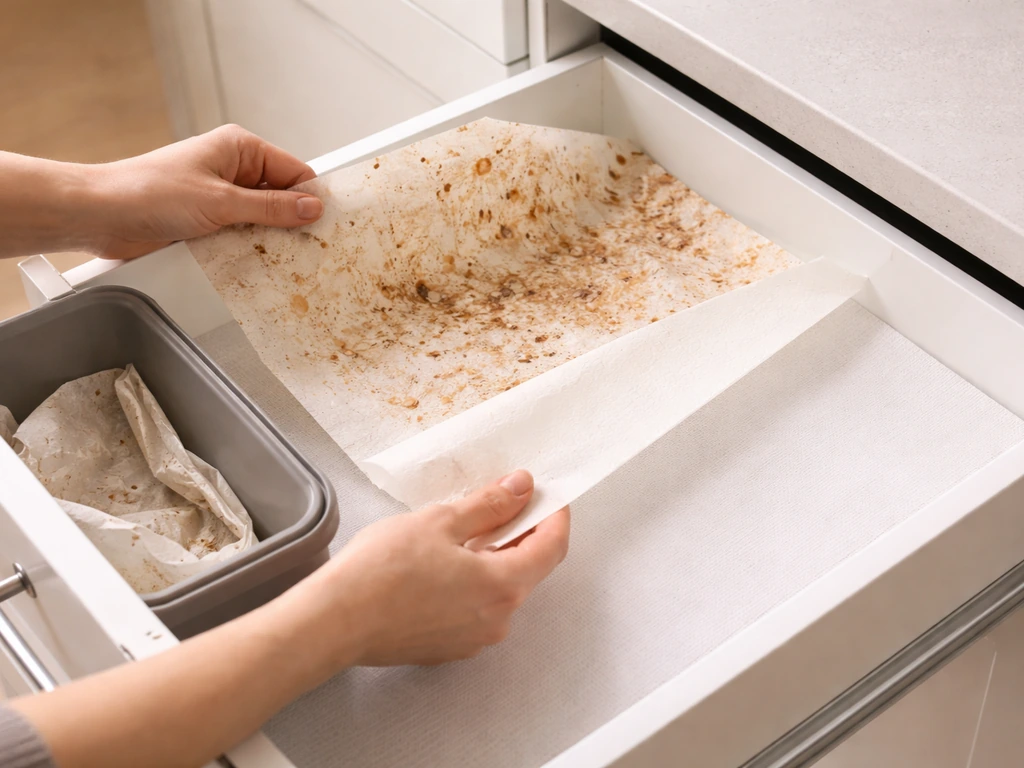
Daily (5 to 10 minutes)
- Swap the liner: lift out the old paper with all debris on it, drop it in the bin, lay down a fresh sheet.
- Wash food and water dishes with hot water and dish soap, rinse thoroughly, refill with fresh food and water.
- Wipe down the bars around the feeder and waterer with a damp cloth to remove splashes and droppings before they dry and harden.
- Sweep or vacuum the floor area around the cage base.
- Quick visual check of droppings on the liner for any changes in color or consistency (this is your early health alert).
Weekly (20 to 30 minutes)
- Remove all perches, toys, and accessories. Scrub them with hot soapy water, rinse well, and let them air dry completely before returning them.
- Wash the pull-out tray with hot soapy water, scrubbing off any stuck droppings.
- Wipe down all interior cage surfaces and bars with a damp cloth and mild soap solution.
- Check the cage bottom grate (if present) for buildup and scrub it clean.
- Inspect perches for heavy soiling or damage and replace any that cannot be thoroughly cleaned.
Monthly deep clean (45 to 60 minutes)
Move the bird to a safe temporary space in another room. When you move your bird to clean the cage, use a separate safe holding area so the mess stays contained where to put bird when cleaning cage. Disassemble the cage as much as possible. Wash all parts with hot soapy water first, because no disinfectant works properly over organic material. If you choose to disinfect, a bird-safe product like F10SC at a 1:500 dilution is a practical option: apply it, allow a 10-minute contact time, then rinse thoroughly and allow everything to dry completely before the bird returns. Avoid routine use of bleach or vinegar solutions: both can release fumes that are harmful to birds and require very careful ventilation if used at all. Do not use pine-based cleaners, scented sprays, or aerosols anywhere near the cage or the room the bird occupies.
Accessories that physically catch mess before it spreads
Hardware and accessories do a lot of the heavy lifting here. These are the items worth investing in if you have not already:
- Seed guard / cage skirt: a fabric or plastic shield that wraps around the lower half of the cage and catches seed hulls, feathers, and debris before they hit the floor. Most clip directly onto cage bars and are machine washable. This is the highest-impact single purchase for seed scatter.
- Pull-out tray liners (pre-cut rolls): sized to your exact tray, these make the daily liner swap a 10-second job instead of a two-minute one.
- Feeder guards / drip protectors: small plastic hoods or shields that clip above food and water dishes to block droppings from falling in.
- Splash mat or cage mat: a vinyl or rubber mat placed under and around the base of the cage catches what the seed guard misses on the floor.
- Spill-proof water bottles or locking waterers: eliminate open-bowl splashing entirely for many species.
- Cage cover: a cloth cage cover used at night reduces the area of the room exposed to any overnight droppings or debris that shift when the bird stirs. It also helps with sleep, which is a welfare bonus.
A note on seed guards specifically: if you want to make your own rather than buy one, a DIY version using a strip of clear acrylic or a sewn fabric skirt is a very doable project and is covered in detail in the guide on how to make a bird cage seed guard.
Troubleshooting the mess that keeps coming back
Wet or liquid droppings that splash and stain
If the droppings are consistently watery rather than the normal solid-with-white-urate appearance, the first check is diet: a bird eating a lot of fruit, vegetables, or other high-moisture foods will have wetter droppings. That is normal. If the diet has not changed and the droppings suddenly became very liquid, that is a health issue and warrants a vet call. For the mess itself, increase liner changes to twice daily and make sure the liner extends fully to the cage walls so splashing does not reach the tray itself.
Seed shells that pile up faster than you can keep up
If seed hulls are your primary problem, the combination of a hooded feeder cup plus a seed guard around the cage base handles most of it. You can also learn specific ways to keep bird seed from spilling and piling up in the cage seed hulls. If hulls are still spreading wide, check whether your bird is foraging by scooping seed sideways out of the cup: a deeper cup or a foraging feeder that requires the bird to reach in will slow that behavior significantly. You can also transition partially to pellets, which produce no hulls at all and keep the seed guard much cleaner. The guide on how to keep bird seed in cage goes deeper on feeder-management strategies if this is your biggest challenge.
Persistent odor even after cleaning
Lingering smell after cleaning usually means one of three things: the water bowl is not being washed with soap daily (rinsing alone does not remove the biofilm that causes the sour smell), organic matter is trapped in a seam or corner of the tray that the daily wipe is not reaching, or the substrate is being changed every few days instead of every day. Go back to daily liner swaps and daily dish washing with soap before reaching for air fresheners or deodorizing sprays: both are unsafe near birds and mask rather than solve the problem. Keeping cage smells under control is its own topic and connects to how you manage moisture, which is covered in more depth in the guide on how to keep bird cage from smelling. Keeping cage smells under control is its own topic, and it connects to how you manage moisture how to keep bird cage from smelling.
Mess that is attracting pests (ants, flies, mice)
Pests mean food or waste is sitting long enough to attract them, which almost always points to infrequent liner changes and uneaten fresh food left in the cage. Tighten the daily routine first: no fresh food sitting longer than two to four hours, liner changed every day without exception. For ants specifically, place the cage legs in small dishes of water (or use leg cups designed for this purpose) to create a moat barrier. For flies, the fix is almost entirely removing wet food quickly and keeping the liner clean. Do not use ant traps, pesticide strips, or fly sprays anywhere near the cage: the fumes are dangerous to birds.
Mess is clean but feathers are still everywhere
If feather scatter specifically is the problem, that is mostly a molting issue rather than a cage-setup issue. A good air purifier with a HEPA filter near (not directly blowing on) the cage catches airborne feather dust and dander, which also helps with the powder-down species like cockatoos and African greys. Keeping the area around the cage consistently wiped down during molt periods reduces buildup significantly. For more on managing feathers specifically, the guide on how to keep bird feathers in cage covers this in detail.
FAQ
What should I do if my bird keeps pulling the paper liner out of place?
Use liners that are pre-cut to the tray shape and press the edges flush to the cage wall so there is nowhere for the bird to grab. If your tray has a slight slope, cut the liner with a small “lip” to match the angle so it lies tight. Also check whether a perch base or cage grate is rubbing the liner, reposition it so nothing directly contacts the paper.
Is it okay to use scented paper products or “odor-control” liners to reduce smell?
Avoid scented or odor-control products, they can release additives that are irritating to birds. Stick to plain, unprinted paper, then solve odor at the source by keeping the daily liner change and washing food and water items with hot water and soap every day.
How often do I really need to deep clean, not just spot-clean?
Plan for a full disassembly and wash on a schedule that matches your bird’s mess level, for most households about once every 1 to 2 weeks. The daily routine still matters, but deep cleaning is when you scrub seams, tray corners, and feeder guards where biofilm and seed dust collect, then let everything dry completely before the bird returns.
Can I use vinegar or bleach if I rinse really well?
Do not rely on bleach or vinegar as routine cleaners. Even with rinsing, fumes can linger and can irritate birds, and they can react with residue in hard-to-reach corners. If you disinfect, use a bird-safe product, follow the exact contact time, rinse thoroughly, and fully dry before reintroducing the bird.
My bird splashes water constantly, is a water bottle always the better option?
A bottle helps most birds because they do not step into it and defecate into it as easily, but it is not the only solution. First, confirm perch placement is not directly over the bowl. If you switch to a bottle, mount it at head height above a perch and check flow daily, some bottles need adjustment to prevent under-drinking.
What if watery droppings are new, but my diet did not change?
Treat sudden watery droppings as a health issue, not just a mess problem. Even if you increase liner changes to twice daily, contact an avian vet promptly, because rapid shifts in droppings can signal illness that setup changes cannot fix.
How can I keep seed hulls from collecting under the cage base?
Make sure the seed guard or skirt actually extends down and out to catch hulls before they hit the floor. Place the cage on a wipeable splash mat or a cut vinyl runner that overlaps the guard area, then shake and wipe it during your daily five-minute spot-clean so hulls do not accumulate and re-enter the cage area.
Should I move my feeders to the side, or can I keep them under perches?
Keep them to the side, never directly under any perch the bird uses. If only one perch location is unavoidable, reposition so the highest, most-used perch sits over the liner or a covered area rather than over food or the water station, this stops the biggest source of contaminated dishes.
What’s the safest way to handle the cage while cleaning if my bird gets stressed?
Use a separate, safe holding spot in another room, with familiar items and safe perches. Avoid letting the bird roam near open cleaners or damp surfaces, and keep the holding area consistent so your bird does not associate cage cleaning with unsafe changes.
Do certain toys create more mess than others, and how do I choose?
Yes. Shredding toys usually create visible debris, so place them over the liner area and rotate them, one at a time if debris is your main complaint. For foraging, prefer enclosed or food-holding toys over open platforms, and avoid toys with loose beads or glitter that add floor debris without enrichment value.
How do I tell if “lingering smell” is from the cage or the room?
If odor persists after a thorough daily liner swap and daily dish washing with soap, the cause is often trapped residue in tray seams or corners that wipes miss. Check those hard-to-reach areas and confirm liners truly extend fully to the tray walls. Only after solving those points should you consider air filtration, since sprays and air fresheners are risky around birds.
Next Article
How to Keep Bird Seed in the Cage Without Spills
Step by step ways to keep bird seed and cage food from spilling with safer feeder types, mounting tips, and fixes