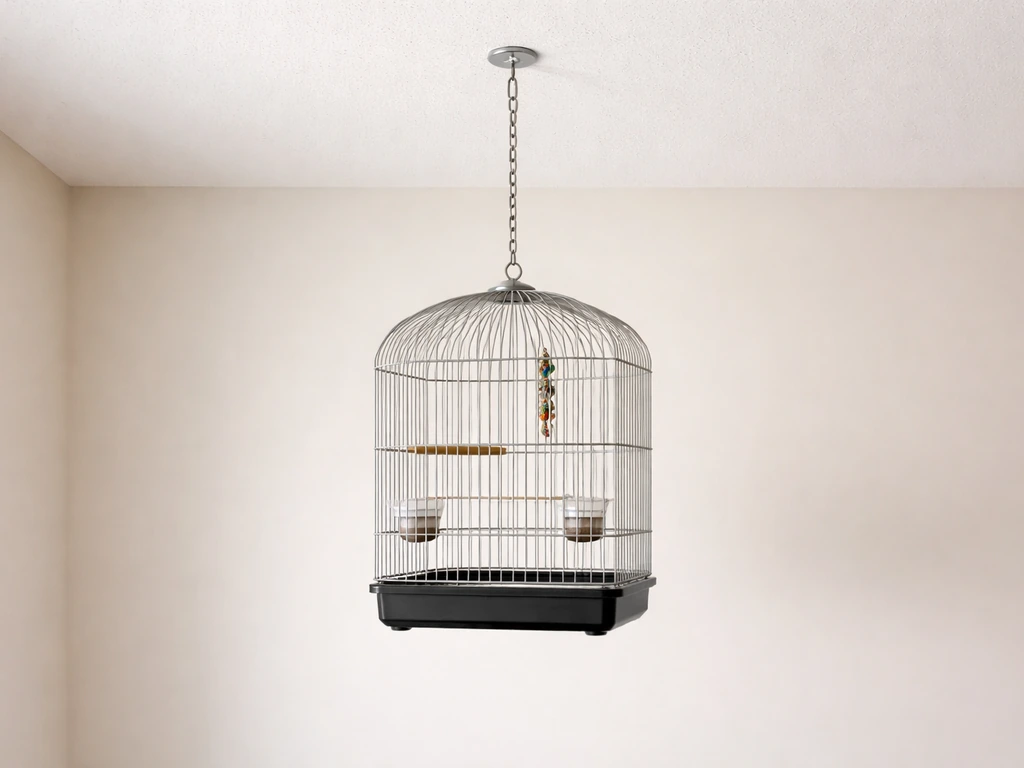
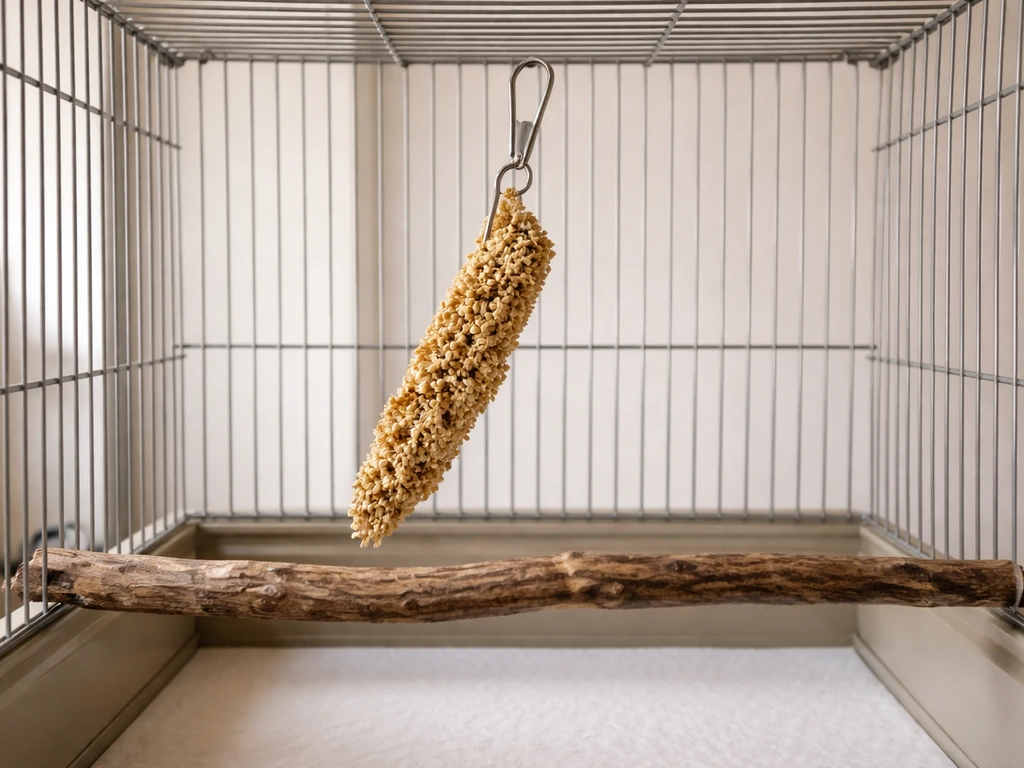
The easiest way to hang spray millet in a bird cage is to slide it into a dedicated millet holder (like the JW Pet Insight Millet Spray Holder) and hook that onto the cage bars near a perch your bird already uses. If you're wondering how to put a bird feeder in the cage, the same placement principles apply so your bird can reach it safely without contamination. No holder? A simple binder clip or a small cage-safe hook threaded through the millet stem works just as well. The key rules: keep it off the cage floor, position it close enough to a perch that your bird can reach it without straining, and treat it as a snack rather than a meal.
How to Hang Spray Millet in a Bird Cage Safely

Maya Bennett
7 May 2026
Choose the right spray millet and prep it before hanging
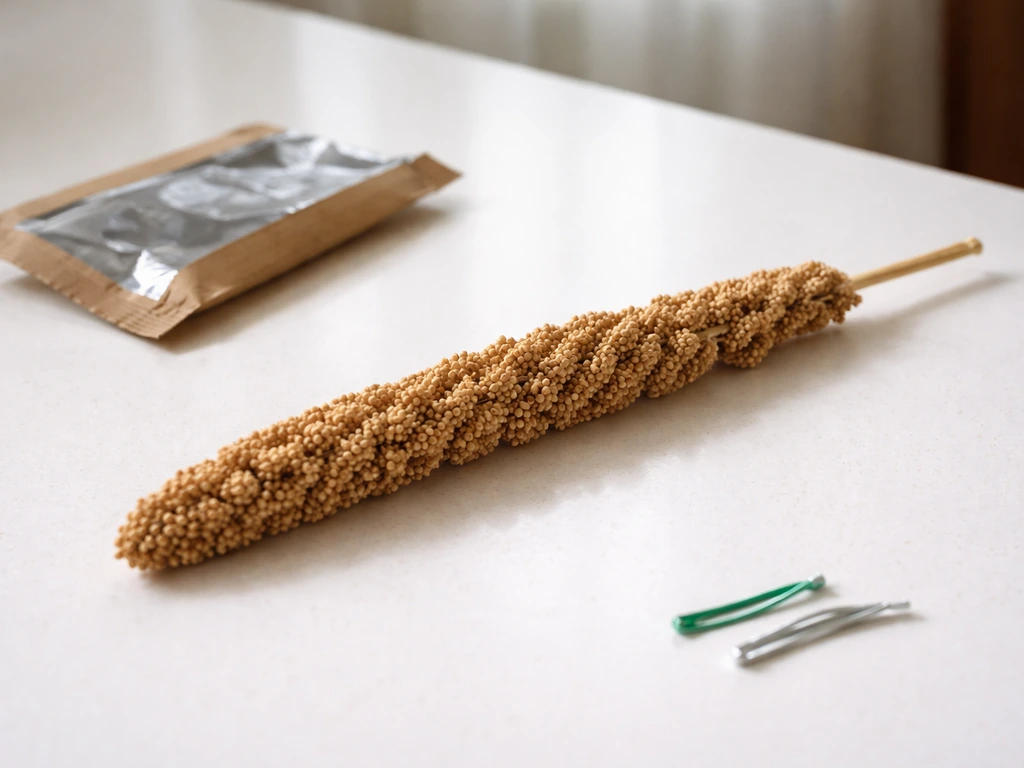
Not all spray millet is the same, so check what you're buying. Brands like Kaytee, Higgins, and Vitakraft/Sunseed all sell millet sprays specifically packaged as avian treats. Look for a product that's just millet, with no added flavorings, sulfites, or oils. When you open the bag, inspect the spray for any visible mold, dark spots, or a musty smell. Moldy millet goes in the trash, not the cage.
Before hanging, pull off all packaging, twist ties, and any plastic tags. Trim the bottom of the stem with scissors if it's ragged or too long to fit your holder or clip neatly. A clean cut also makes it easier to insert into a holder slot. You don't need to wash the spray before use, but if you're reusing a holder or clip from a previous millet spray, rinse and dry it thoroughly first.
Gather your mounting materials before you open the cage. Here's what you'll likely reach for:
- A dedicated plastic millet spray holder (JW Pet Insight is the most common and widely available option)
- Small binder clips or stainless steel spring clips (confirm no zinc or lead-based coatings)
- Small stainless steel or nickel-plated cage hooks or S-hooks
- Natural fiber twine or raffia (untreated) if you prefer a tie method
- Scissors for trimming the millet stem
Avoid anything galvanized, zinc-coated, or made from unknown alloys, since birds will chew on whatever holds their food. Stainless steel is the safest metal choice. Skip adhesive hooks, suction cups, and command strips entirely because they are not designed to bear the movement and chewing that happens inside a bird cage.
Where to place spray millet in the cage
The single most important placement rule is this: never put spray millet on the cage floor. Millet that lands near droppings or wet cage liner gets contaminated fast, and a bird eating from the floor is essentially eating from a petri dish. Kaytee specifically flags this as a contamination risk, and they're right.
The ideal spot is on the middle or upper portion of the cage wall, near a perch your bird already likes. Think about where your bird spends most of its time during the day and hang the millet within easy reach of that perch. The goal is that your bird can stand naturally on the perch and lean over or step slightly to reach the millet without having to stretch, grip awkwardly, or balance on the cage bars to get to it.
Avoid placing millet directly above food dishes or water bowls. Seed hulls and droppings will fall straight in and contaminate the water quickly. Also leave enough clearance above the millet so the bird has room to approach from above if it wants to, and don't block a flight path between perches. For small cages, one millet placement at a time is plenty.
Step-by-step hanging options
There are four reliable methods for hanging spray millet, depending on what you have available and what your cage setup looks like. All four work, and you can combine them if needed.
Method 1: Dedicated millet holder (easiest and most secure)
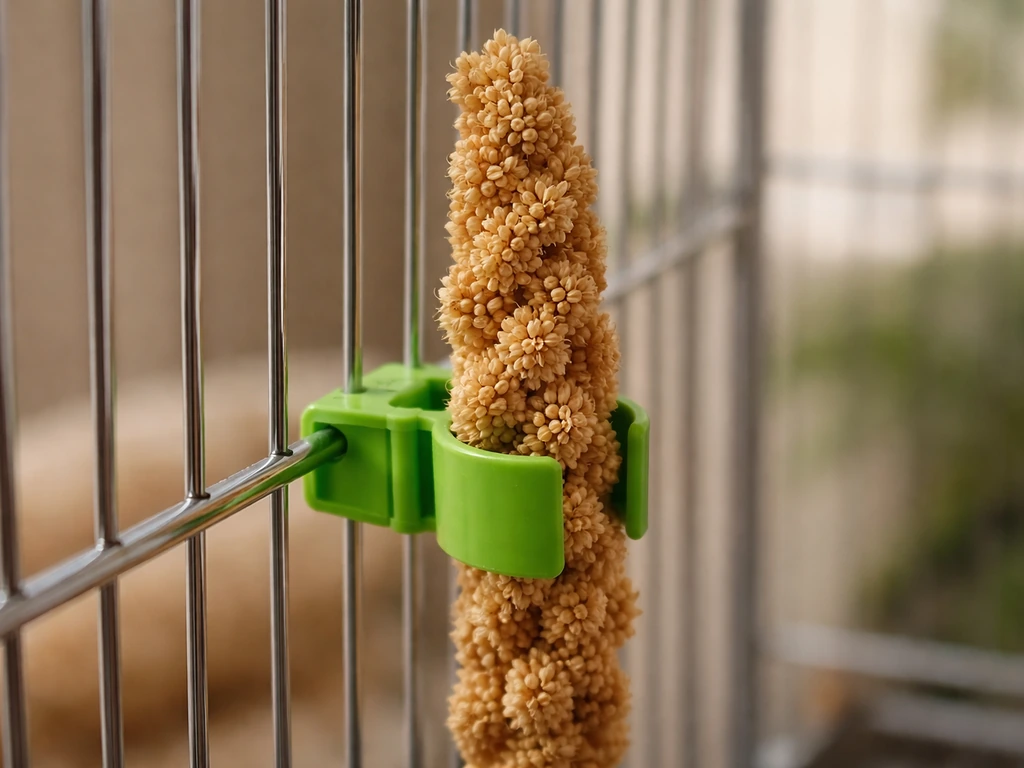
- Slide the millet stem into the holder slot until it fits snugly. Most holders like the JW Insight are designed to grip the stem so the spray doesn't wobble.
- Hook the holder's attachment bracket directly onto a horizontal or vertical cage bar at your chosen height.
- Give the holder a gentle tug to confirm it's locked onto the bar and won't pop off when the bird climbs on it.
- Position the spray so the millet head faces slightly outward or downward, making it easy for the bird to nibble from a perch.
Method 2: Binder clip or spring clip
- Clip the millet stem firmly with a stainless steel spring clip or a standard binder clip, about 1 to 2 inches from the top of the stem.
- Hook or clip the other end onto a cage bar. Binder clips work best when you fold one of the wire arms back through a cage bar intersection for stability.
- Check that the millet isn't swinging freely. If it moves more than an inch when nudged, reposition the clip higher on the stem or use two clips for more control.
Method 3: Small hook or S-hook
- Bend a small stainless steel S-hook so one end loops through the cage bar and the other end cradles the millet stem.
- Wrap the stem end of the S-hook with a small length of natural twine if the stem is too thin to grip the hook securely.
- Pinch the hook ends slightly closed with pliers so the millet can't slide out when the bird tugs at it.
- Confirm no sharp wire ends are exposed after pinching. Run your finger along the hook to feel for sharp points.
Method 4: Tie method with natural twine or raffia
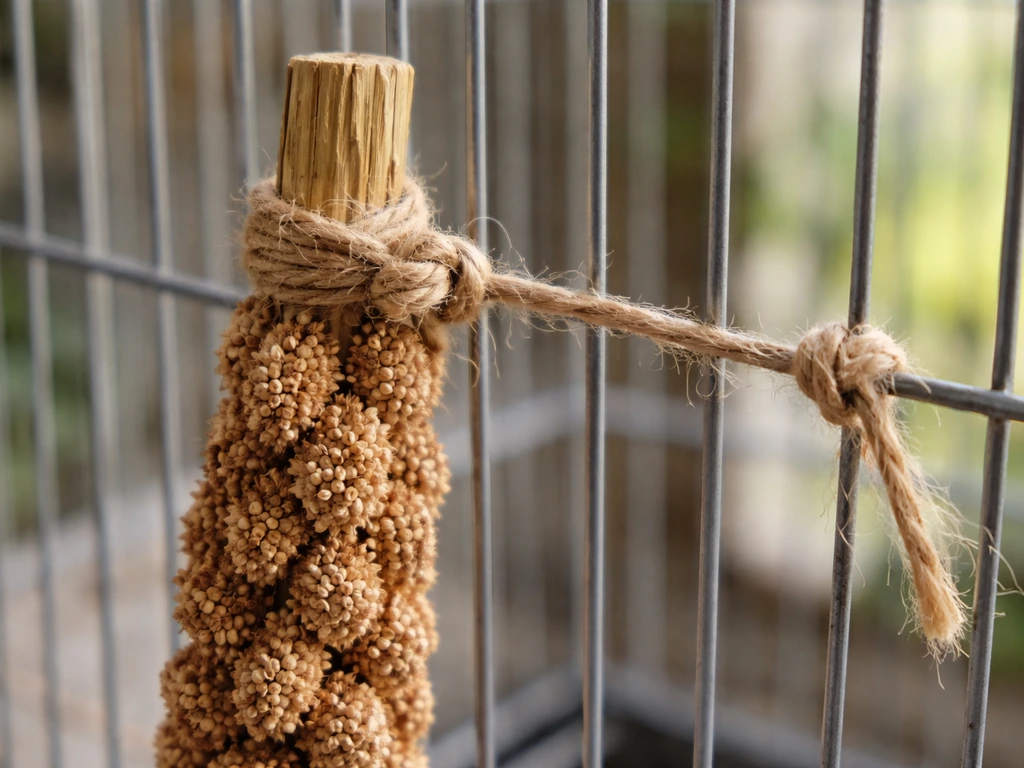
- Cut a 6- to 8-inch length of untreated natural twine or raffia.
- Tie it around the top of the millet stem with a simple knot, leaving enough tail to tie onto a cage bar.
- Tie the other end to the bar using a second knot. Keep the loop short so the spray hangs with minimal swing.
- Trim any long string tails to under 1 inch so the bird can't get tangled in them.
Height, angle, and access so your bird can feed safely
Hang the millet so the feeding end of the spray sits at roughly the same height as your bird's favorite perch, or just slightly above it. If you hang it much higher, smaller birds like budgies and finches have to climb the bars to reach it, which increases the chance of awkward gripping and foot strain. If it's lower, the bird may have to hang or lean uncomfortably. At perch height, the bird can stand and eat naturally.
Angle matters too. A millet spray hanging perfectly vertical is fine, but tilting the head of the spray slightly toward the perch gives the bird easier access without having to lean over the stem itself. Think of it like angling a snack toward someone instead of making them reach around it. You can achieve this by adjusting where you attach the clip on the stem or by positioning the hook attachment point slightly behind the spray's center.
Make sure the bird has a clear approach to the millet. It should be able to fly or step onto the nearby perch and move to the millet without needing to navigate around toys, water dishes, or another bird's territory. Watch your bird's first attempts to reach the millet after you hang it and adjust the height or position if you see it struggling.
How much to offer and how often
Spray millet is a treat, full stop. It's high in carbohydrates and low in the protein and micronutrients birds need for a balanced diet, so it should never substitute for a proper seed mix, pellets, or fresh foods. Kaytee also recommends offering spray millet occasionally and not as the only food for your bird blank" rel="noopener noreferrer">spray millet should not be the only food. For budgies and finches, VCA recommends offering millet spray only once or twice a month. VCA Animal Hospitals also notes that millet is deficient in many nutrients and should be offered to budgies only in small quantities no more than once or twice a month blank" rel="noopener noreferrer">VCA recommends offering millet spray only once or twice a month.. For cockatiels, a few short sessions per week is a reasonable ceiling, and even then, you're talking about a small portion of the spray rather than leaving a full branch in the cage all day.
A practical approach that works well for most small birds: offer about one-third of a spray at a time, remove it after the bird has eaten from it for 20 to 30 minutes, and refrigerate the rest. This limits how much your bird can overindulge in one sitting and keeps the millet fresher for the next session. Once a spray has been in the cage for more than a few hours or has droppings on it, toss it.
| Bird Species | Recommended Frequency | Portion Guidance |
|---|---|---|
| Budgies (parakeets) | Once or twice a month (VCA) | A small section of spray or a few nibbles |
| Finches | Once or twice a month (VCA) | A short length of spray per session |
| Cockatiels | A few times per week at most | 1 to 2 teaspoons loose equivalent; limit to partial spray |
| Canaries | Occasional treat, similar to budgies | Small section, a few times monthly |
Controlling mess and keeping things pest-free
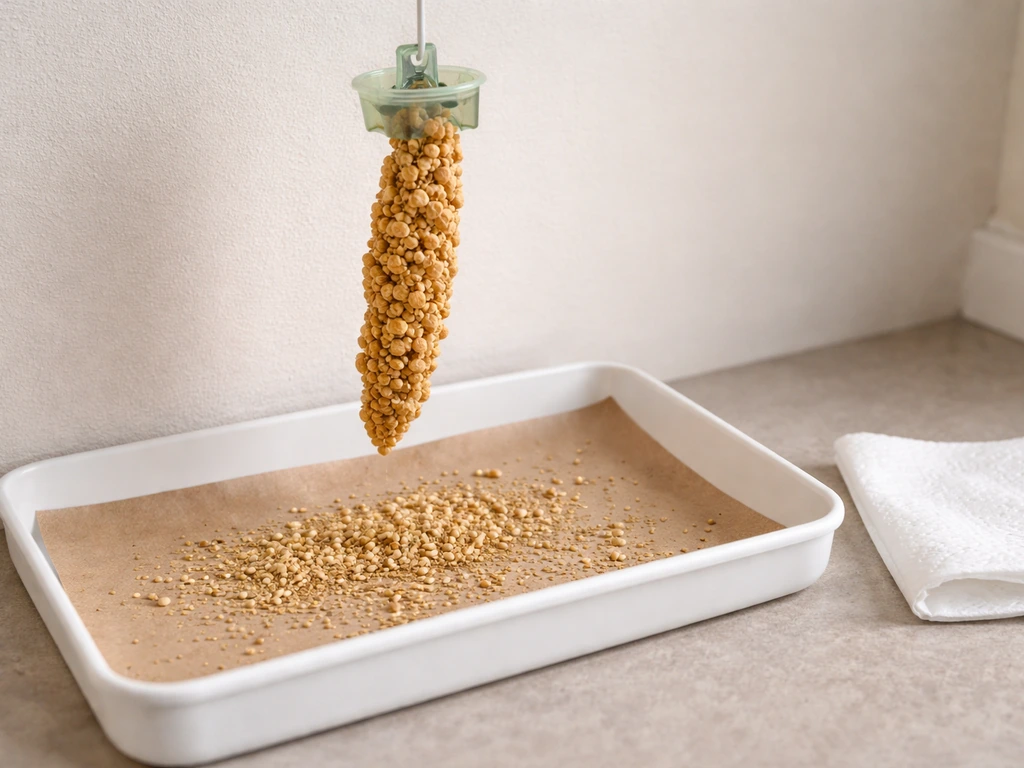
Millet is inherently messy. Your bird will knock seed heads off the spray, drop half-eaten bits, and leave hulls on every surface below the mounting point. The simplest fix is to lay a fresh paper liner directly under the millet spot before you hang it, and swap it out when you remove the millet. Paper liners are recommended for cage floors specifically because they make droppings and debris easy to spot and remove. Don't use cloth liners or corn cob bedding under the millet area because they hold moisture and harbor mold and bacteria much faster.
Clean the holder or clip after every use. Millet oils and seed debris build up on plastic holders quickly, and that residue attracts insects. A quick rinse with hot water and a dish brush takes about 30 seconds. Let the holder dry completely before reattaching it to the cage.
If you're storing spare millet sprays, keep them in a sealed container or zip bag in a cool, dry place. Room-temperature storage is fine for a few weeks, but humidity is the enemy. High humidity leads to mold growth on the stem and seed heads before you've even opened the package. If you buy millet in bulk, the refrigerator (not freezer) is a good long-term storage spot.
Pest prevention comes down to two things: don't leave millet in the cage after feeding sessions, and don't let fallen seeds sit on the cage floor. Grain mites and small beetles are attracted to stale millet, and once they're in your bird room, they're difficult to get rid of. Inspect any new bag of millet before bringing it inside, especially if you buy from a feed store where bulk product sits in open containers.
Safety checks and what to watch for
Before you close the cage door, run through a quick physical check on the mounting setup:
- No sharp stem ends pointing into the cage space where the bird could land on them
- No exposed wire points or pinch gaps on hooks or clips that could catch a toe or beak
- String or twine tails trimmed to less than 1 inch so the bird can't tangle a foot or neck
- The holder or clip doesn't rock or swing more than half an inch under pressure
- No zinc-coated, galvanized, or painted hardware the bird could chew
- The millet isn't blocking access to water, food dishes, or any perch the bird needs to reach regularly
Watch your bird for the first few minutes after hanging the millet. A curious bird that immediately starts chewing the clip or hook instead of the millet is telling you the hardware is in a bad spot. Reposition it so the mounting hardware is behind the cage bar rather than directly accessible from the perch. If a bird is ignoring the millet entirely, it may not be able to reach it comfortably; try lowering it by one bar height and see if that changes things.
Behavioral changes worth noting: if a bird becomes territorial around the millet, guarding it aggressively from cage mates, reduce how often you offer it and don't leave it in the cage unattended for long periods. Millet can be a significant resource in multi-bird cages, and competition over it can lead to stress and injury. In that case, offer millet outside the cage as a hand-feeding treat instead.
If the millet keeps falling out of your holder or clip, the stem is likely too thin or too dry. Try positioning the clip higher on the stem where it's thicker, or double up with two clips spaced a couple of inches apart. If the millet spray itself looks damp, has dark patches, or smells sour after being in the cage for even a short time, remove it immediately and check your cage for excess humidity. Mold develops fast on organic material in warm, humid environments, and a moldy millet spray is genuinely hazardous to a bird's respiratory system.
Setting up spray millet is one of the simpler cage additions you'll do, similar in concept to adding a treat stick or positioning a cuttlebone, but it's worth doing right so the millet stays secure, your bird can reach it without risk, and you're not dealing with a pest problem a week later. If you’re also figuring out where to place a bird bath in a cage, focus on stability and safe access so your bird can use it without slipping or getting soaked in the rest of the habitat put a bird bath in a cage. Get the placement right the first time, and it becomes a two-minute routine every time you offer it. Once your setup is ready, you can follow the same approach to learn how to put your bird in the cage safely and comfortably how to put bird in cage. If you're also moving your bird to a new cage, introduce the new setup gradually so they can explore safely and feel comfortable right away.
FAQ
Can I hang spray millet with a zip tie or plastic twist tie instead of a metal hook or clip?
It’s better to avoid any plastic that can be chewed. If you must use a tie, position it fully behind cage bars, use stainless hardware where possible, and check it daily for fraying or bite marks. Replace immediately if your bird shows chewing behavior.
How do I tell if my millet spray is safe after it’s been in the cage for a few hours?
Do a quick smell and look check. If you notice sour odor, dampness, dark patches, fuzzy growth, or the stem feels sticky or unusually soft, remove it right away and clean the area underneath. When in doubt, discard it.
What’s the best way to keep millet from falling so often?
Make sure the stem is trimmed so it fits the holder slot or clip grip without forcing. Attach the clip on the thicker portion of the stem, and consider two clips spaced a few inches apart for smaller, lighter birds. Also hang it near a perch the bird already uses so it reaches naturally rather than yanking.
Should I hang millet for multiple birds at once, or rotate it between them?
If there are multiple birds, start with a single millet placement at a time and limit duration (for example 20 to 30 minutes). If one bird guards it, reduce frequency and consider hand-feeding millet outside the cage to prevent stress and chasing.
Can I hang millet directly beside a chew toy or swing?
It’s usually okay, but keep the approach line clear. If the bird must navigate around toys to reach the millet, it may cling awkwardly or end up dropping the spray into debris. Reposition the mount so the bird can step or lean from the perch without squeezing between objects.
Is it safe to use a paper liner under the millet spot every time?
Yes, paper liner is one of the better options because it absorbs little moisture and makes cleanup easier. Swap the liner after each millet session, and avoid cloth or porous bedding under the millet because it can hold moisture and speed up mold growth.
What if I accidentally mounted millet too low, near the cage floor?
Remove it immediately, clean any droppings or wet liner in the area, and rehang at perch height or slightly above. Even a short time on the floor increases contamination risk, and it becomes harder to clean thoroughly once seeds and hulls spread.
Can I leave spray millet in the cage overnight?
Don’t. Treat millet as a timed snack. Leaving it in the cage increases contamination from droppings, wet liner, and humidity, and it raises the chance of pests. Offer for a short window, then refrigerate remaining millet and remove the rest.
How should I store opened millet sprays that I refrigerate between feedings?
Keep the remaining portion sealed in a zip bag or airtight container to limit moisture and odors. Refrigerate for short-term freshness, then bring it to room temperature before offering to reduce condensation risk inside the stem.
Will hanging millet near the water dishes still be okay if I use a liner?
Avoid it. Liners reduce mess but do not stop seed hulls and droppings from falling into or near the water source. Place millet on the middle or upper side of the cage wall, with clear space above and to the side of bowls.
What’s the safest routine for cleaning the holder after millet?
Rinse with hot water, scrub with a dish brush to remove residue, then fully dry before reattaching. If you see discoloration or persistent sticky buildup, replace the holder, because leftover millet oils can attract insects.
Next Article
How to Hang a Bird Cage: Ceiling and Wall Setup
Step-by-step guide to hang a bird cage safely on ceiling or wall with hardware, placement, leveling, and wobble fixes.