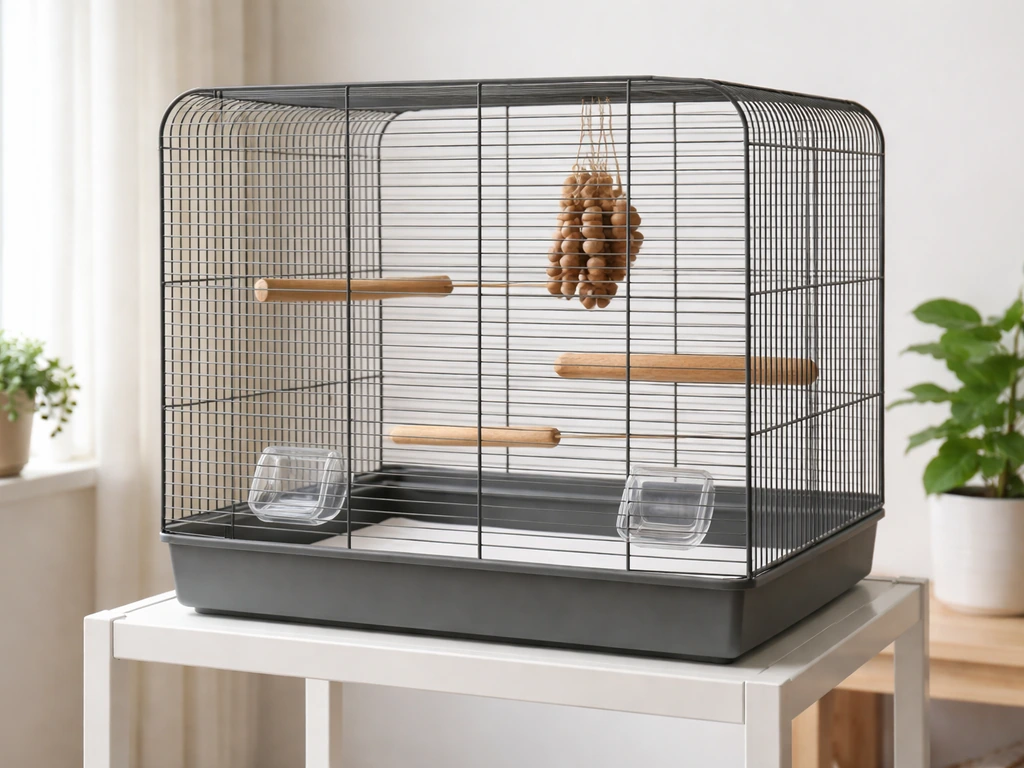
You can decorate a bird cage for a wedding beautifully and safely by keeping all décor on the outside of the bars, using only bird-safe materials (think natural dried flowers, untreated wood accents, and fabric tied well out of reach), and planning every element around your bird's feeding schedule, door access, and airflow. When you’re deciding what to add, focus on how to use the bird cage for decoration while keeping every material bird-safe how to use bird cage for decoration. The result can be genuinely stunning for photos without putting your bird at any risk.
How to Decorate a Bird Cage for a Wedding Safely

Maya Bennett
10 Jul 2026
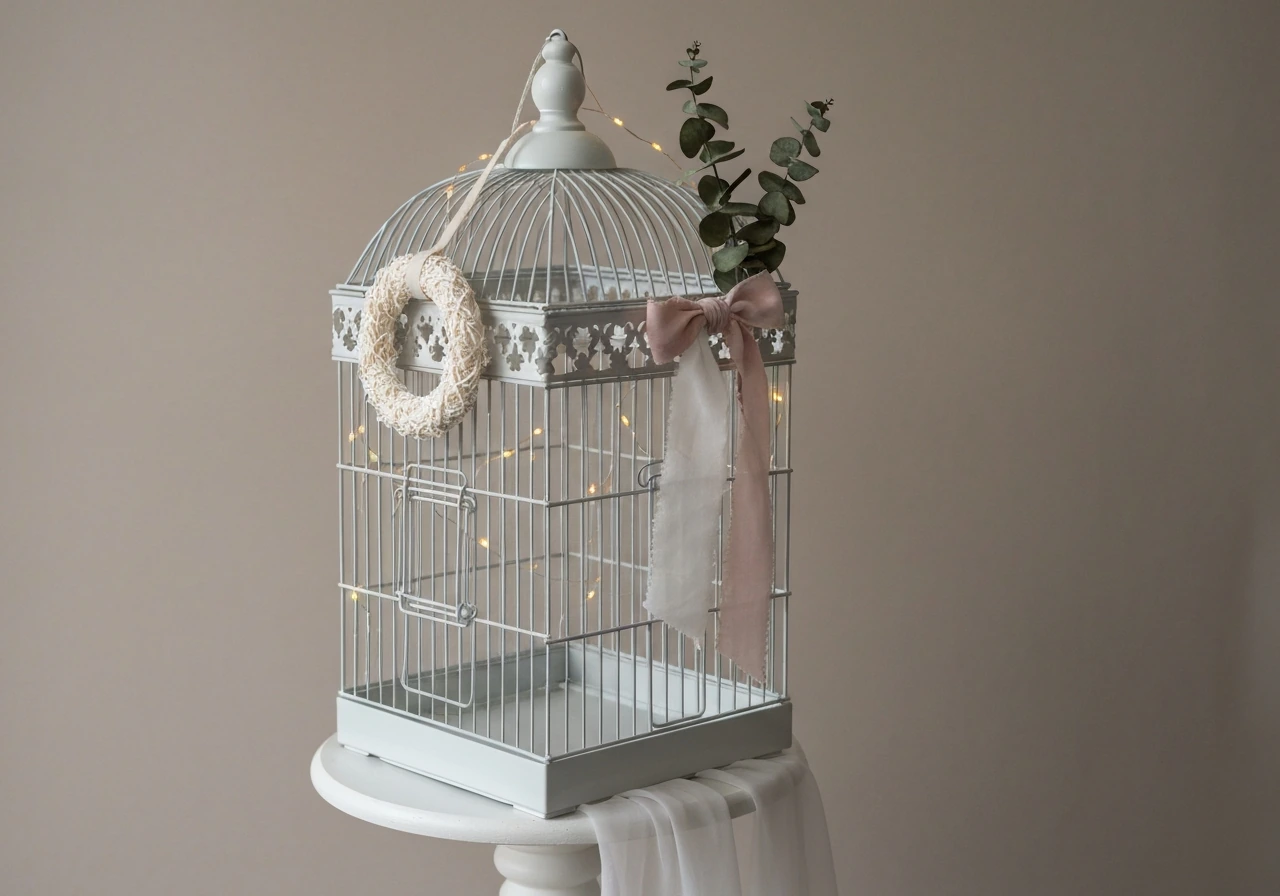
Pick a wedding style that actually fits around a live bird
Before you buy a single ribbon, decide how involved the cage will be on the wedding day. After you’ve planned the safe styling, follow a dedicated guide on how to make a bird cage cake for a matching dessert centerpiece.
There are really three tiers: the bird is present and visible throughout the event, the cage is used only for a short photo session and then the bird is moved somewhere quiet, or the cage is empty and used purely as a decorative prop. Each tier has different safety and logistics demands.
If your bird is staying in the cage during the event, every single decoration choice has to be bird-safe, every scent has to be eliminated, and you need a quiet corner with limited foot traffic. If it's just a photo session, you have a bit more flexibility on the cage's outer styling, but you still can't use anything toxic or fume-producing anywhere nearby.
Wedding styles that work especially well with a live bird cage setup include garden/botanical, rustic woodland, boho, and soft vintage. These lean on natural materials like dried pampas grass, eucalyptus, burlap, cotton muslin, and unfinished wood, which are far easier to make bird-safe than the glitter-heavy, heavily lacquered, or synthetic-flower styles. Minimalist modern and whimsical fairy-tale themes also work if you keep the palette clean and stick to paper or natural fiber accents. Heavily perfumed or essential-oil-themed decor setups (think lavender sprigs drenched in oils, or scented candles) are a hard no near any bird.
Safe vs unsafe decorations: what to use and what to skip entirely
This is the most important section in the whole guide. Birds are exceptionally sensitive to airborne toxins, far more so than cats or dogs, because of how their respiratory systems work. That means something that seems harmless from across the room, like a scented candle or an essential oil diffuser, can genuinely sicken a bird. ASPCApro also advises not to use an essential oil diffuser in the house if birds are present due to birds' respiratory vulnerability. Anything that goes on or near the cage needs to pass both a toxicity check and an entanglement/ingestion check.
Materials you can use safely
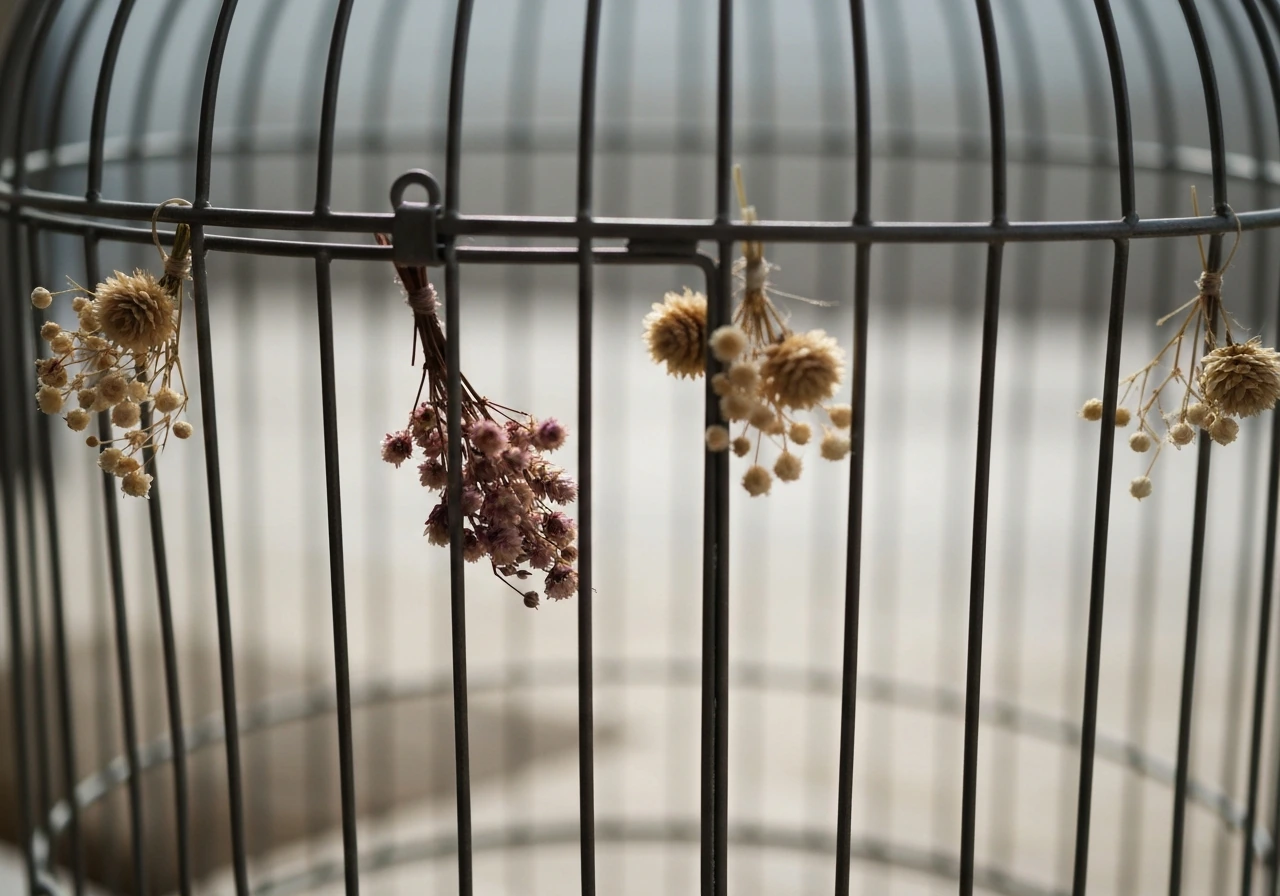
- Dried or silk flowers made from natural, uncoated fabric (check that silk flowers have no wire stems exposed near bar gaps)
- Fresh non-toxic flowers like roses (confirm pesticide-free), sunflowers, or marigolds attached to the outside of the cage only
- Unfinished, untreated natural wood slices or small branches wired to the outside of the frame
- Cotton muslin or burlap fabric bunting tied in secure knots well away from the bars with no loose loops or dangling ends
- Paper flowers, paper bunting, or kraft paper tags (no ink-soaked or heavily dyed pieces near bar openings)
- Natural raffia tied in bows on the outside cage frame with all ends trimmed short and tucked flat
- Small chalkboard signs or wooden name cards attached with a cable tie or binder clip to exterior bars
Materials to avoid completely
- Ribbon, yarn, twine, or string of any kind near bar openings: these can wrap around a bird's leg or neck and cut off circulation, which can be fatal
- Plastic wrap, cellophane, or metallic Mylar: shiny metallic materials attract birds and can cause serious GI problems if ingested
- Glitter, sequins, or loose sparkly confetti: birds will eat these and they can cause internal obstruction or toxicity
- Essential oil diffusers, scented candles, or aerosol sprays anywhere in the room: birds' respiratory systems are highly vulnerable and even passive diffusers can cause serious respiratory irritation
- Toxic plants including sago palm, lilies (all species), kalanchoe, and any unverified greenery: always cross-check the exact botanical name against the ASPCA toxic plants database before use
- Hot glue or any wet adhesive applied to surfaces the bird can reach: glue should only be used on exterior structural points and must be fully cured before the bird returns
- Fake snow, netting, or loose gauze-style fabric: these function like a net and entanglement injuries may not be immediately obvious
- Heavily lacquered, painted, or varnished decorations with chemical odors: fumes from paints, lacquers, and air fresheners can cause respiratory problems
A quick rule of thumb: if you wouldn't let your bird chew on it unsupervised for an hour, it shouldn't be within reach of the bars. And if it has a scent, it stays out of the room entirely.
Prepare the cage: clean it properly before you start decorating
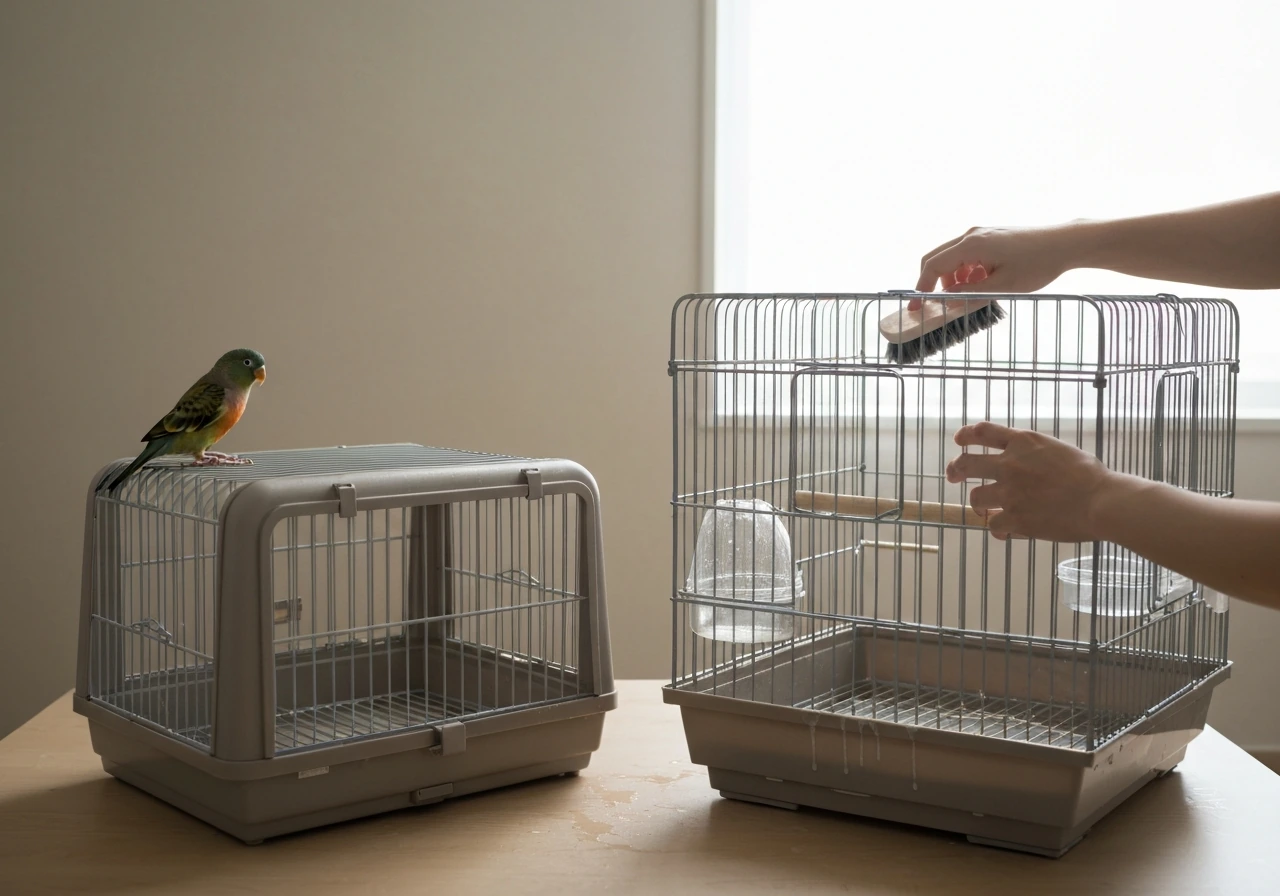
Decorating a dirty cage is both unhygienic and a missed opportunity, because you'll have to work around buildup and you won't be able to see if there are structural issues hiding under grime. Do a full clean at least 48 hours before the wedding so the cage is completely dry and free of any blank" rel="noopener noreferrer">cleaning residue before the bird goes back in.
- Remove the bird and place them in a safe, familiar travel cage in a separate room with good ventilation
- Remove all perches, food dishes, water bottles, and toys and wash them separately with a bird-safe soap, then rinse thoroughly with fresh water (soap residue left on surfaces can affect birds)
- Wet down the cage bars and tray with water before scrubbing to avoid spreading dried droppings as dust (this is a CDC-recommended step for reducing psittacosis exposure risk)
- Clean the bars and tray with a bird-safe diluted disinfectant; if you use bleach or vinegar-based products, ensure the area is very well ventilated and wipe the cage dry before the bird returns since these products can release toxic fumes
- Rinse the entire cage with fresh water at least twice, then dry it completely with a clean cloth or let it air dry for several hours
- Inspect every bar for sharp edges, bent sections, rust spots, or loose welds that could snag décor or injure a bird; fix or file any sharp points before proceeding
- Check all locks and door hinges to make sure they open and close freely, because decorations must never block emergency cage access
- Look at the cage layout: note where the perches sit, where the food and water dishes are, and map out the clear zones where you can attach décor without blocking feeding or airflow
Once it's clean and dry, do a quick layout sketch (even just a phone photo with notes) showing where the door is, where perches sit, and where air can flow through the bars. This becomes your planning guide for where decorations can go.
How to attach décor securely without blocking access or harming the bird
The golden rule here is: attach everything to the outside of the cage frame, never to interior bars where the bird can reach it, and never in a way that blocks the door, food dishes, water, or natural airflow paths. Here's how to do it right.
Best attachment methods
- Binder clips or small foldback clips: clamp fabric bunting, paper garlands, or small signs to exterior bars without any adhesive; easy to remove in seconds
- Zip ties (cable ties) in a neutral color: thread through bar gaps on the outside only, clip the tail end flush so there's nothing protruding inward; use for heavier wooden or fabric accents
- Floral wire wrapped tightly around exterior bars: good for attaching dried flower bunches or eucalyptus stems; twist ends flat and point them away from bar gaps
- Removable adhesive hooks (like 3M Command strips) on the outside of a wood-frame cage or cage stand: good for hanging lightweight signage or fabric swags from the cage structure itself
- Slipping fabric swags or tulle (if you must use it) through the top cage frame bars from the outside and knotting it on the outer surface with ends trimmed short
Placement rules to follow every time
- Keep a clear 6-inch zone around every door: nothing attached within that radius so the door can swing fully open for feeding, cleaning, and emergency access
- Do not cover more than 25-30% of any single cage face with décor: birds need airflow through the bars and shouldn't feel boxed in
- Keep all décor at least 2 inches away from any bar gap that the bird can reach from inside: if a beak can reach it, assume it will be chewed
- Attach greenery and flowers to the top and upper sides of the cage, away from the floor tray and feeding level
- Never let any fabric, ribbon, or plant material drape inside the cage or hang through the bars into the interior
Photo-ready styling ideas from minimal to full wedding setup
Once safety is sorted, the fun part starts. Here are practical styling tiers you can build up depending on how involved you want the look to be. If you want more ideas for how to make a bird cage look nice, focus on bird-safe styling tiers that stay outside the bars and photograph well. These work for a single feature cage or for a row of matching cages used as table centerpieces or a decorative display.
Minimal (one hour of work, low materials)
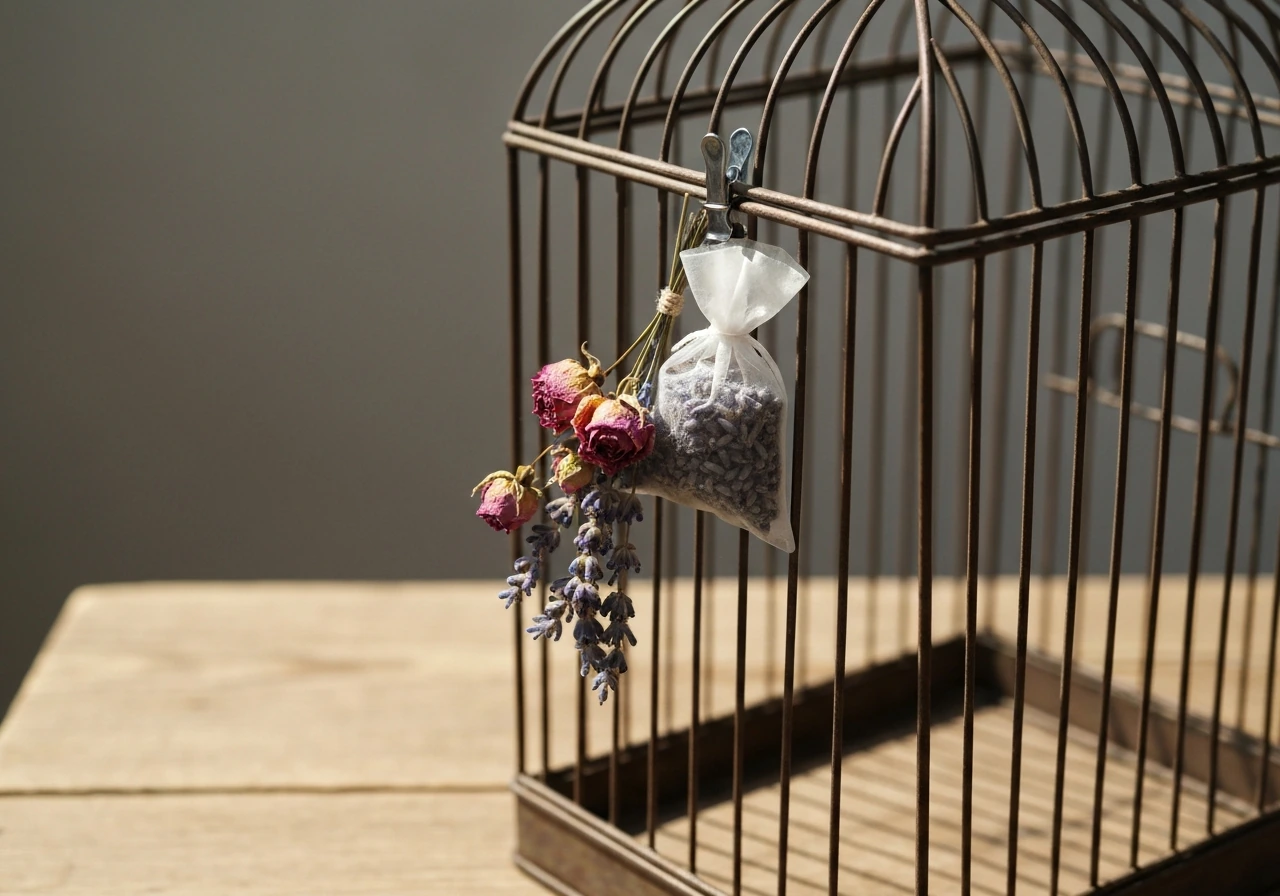
Clip a small bunch of dried flowers (dried roses, dried lavender in a sealed sachet so the scent is contained, or dried chamomile) to the upper back corner of the cage exterior. Tie a small kraft paper tag with the wedding date or the bird's name using a very short piece of cotton string knotted around an exterior bar with no loose loops. Add a sprig of safe fresh greenery like a pesticide-free rose leaf cluster. This look photographs well against a light wall and takes almost no time to remove.
Mid-level (a few hours of prep, moderate materials)
Wrap the top cage frame with a garland of dried eucalyptus or dried cotton stems, secured with floral wire at 6-inch intervals. Clip a fabric bunting banner (cotton muslin triangles on a cord) across the front upper face of the cage, with the cord attached at both ends via binder clips and no cord hanging loose near bar gaps. Add a small chalkboard or wooden sign clipped to one side. If you want florals, attach a cluster of dried or silk flowers to one top corner using zip ties through the exterior bars.
Full wedding-photo setup (multiple decorative layers)
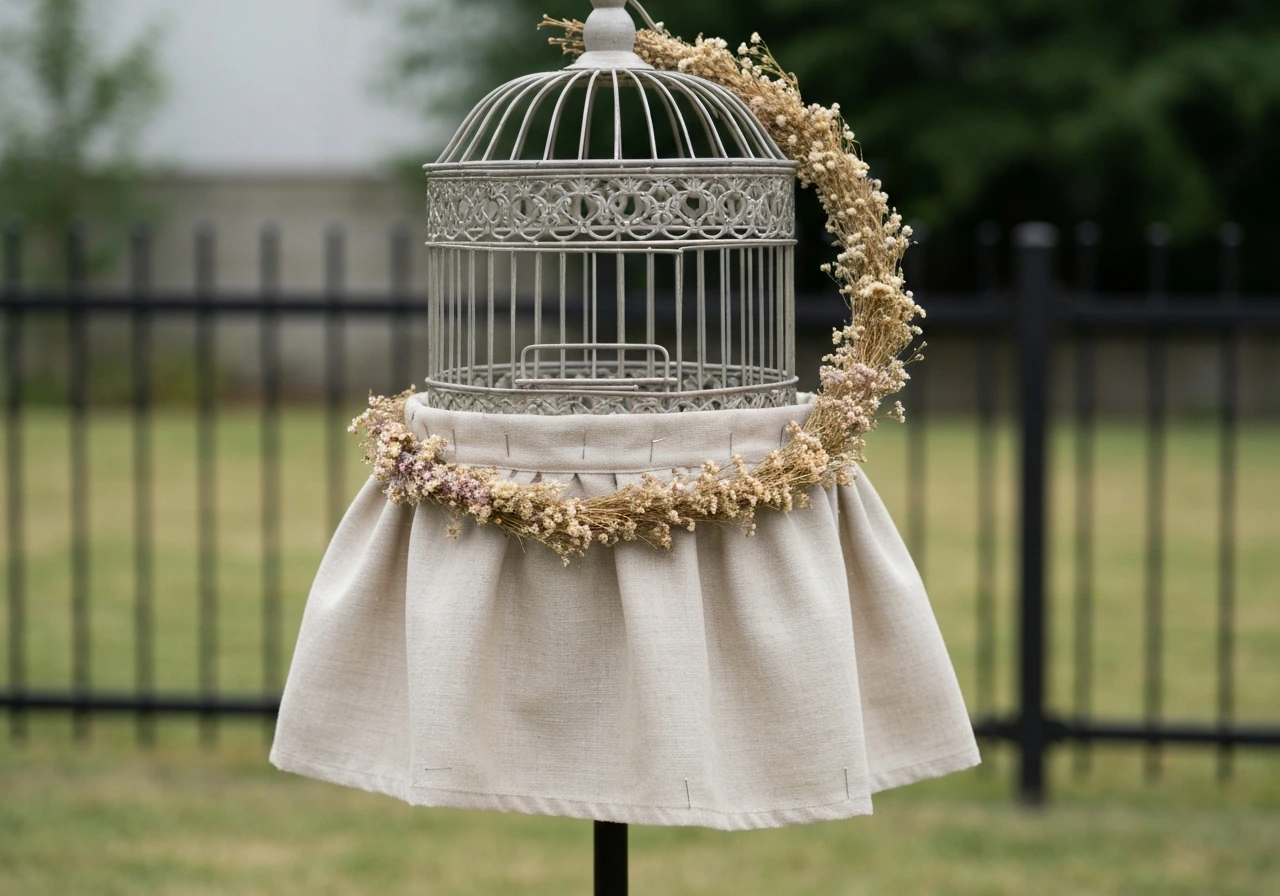
Start with a cage stand draped in a fabric skirt (muslin or burlap pinned flat to the stand legs, not the cage itself). Build up from the stand with a wreath of dried flowers and safe greenery around the cage base. Attach a full garland around the top frame and down both upper side bars. Clip paper flower clusters or silk flower clusters at the four upper corners.
Add a personalized sign to the front and a small framed photo or date display on the stand surface next to the cage. Use the cage's interior as a display backdrop by placing a clean decorative perch in a contrasting color. For outdoor settings, add a sheer canopy above the cage stand (attached to a separate frame, not the cage) to provide shade and reduce wind exposure.
| Styling Level | Time to Set Up | Time to Remove | Bird Stress Risk | Best For |
|---|---|---|---|---|
| Minimal | 30-60 min | 5 min | Very low | Bird present all day |
| Mid-level | 2-3 hours | 15-20 min | Low to moderate | Bird present for ceremony/photos only |
| Full wedding setup | Half day | 30-45 min | Moderate (move bird before guests arrive) | Photos only or empty cage display |
If you're interested in taking decorating further beyond a single event, the principles here overlap well with general large cage decorating and making a cage look beautiful year-round, which are worth exploring as follow-on projects. If you are working on large bird cage decorating beyond a wedding, the same safety rules for airflow, attachment points, and bird-safe materials still apply.
Timing, stress management, and temporary vs permanent setups
Wedding-day chaos is hard on birds. Loud music, crowds, camera flashes, unusual scents from flowers and catering, and disrupted schedules all add up quickly. Planning the timeline carefully is just as important as the décor itself.
Timing your setup
- Deep clean the cage 48 hours before the event so it's completely dry and residue-free before the bird returns
- Attach all exterior decorations at least 24 hours before the event with the bird absent, then let the bird back in to get used to the visual changes in a calm environment before the day arrives
- On the wedding day, move the bird to a quiet holding cage in a separate room at least one hour before guests arrive if the event will be loud or crowded
- Plan a specific person to be responsible for checking on the bird every 60-90 minutes throughout the event
- Remove all décor within 30 minutes of the event ending and do a quick check of the cage before returning the bird
Temporary vs semi-permanent décor
For a single-day event, everything should be designed for fast removal: binder clips, zip ties, and floral wire all come off in minutes. Avoid any adhesive-based attachment that needs soaking or scraping to remove. If you want to keep some decorative elements on the cage after the wedding as a keepsake (a dried flower cluster, for example), reassess each piece individually for long-term safety: anything that degrades, sheds, or gets chewed over time needs to come off.
Weather and outdoor setups
If the wedding is outdoors, check the forecast 48 hours out. Birds should not be in direct sun without shade, and they should not be exposed to temperatures below about 65°F or above 85°F for extended periods depending on the species. Wind is also a stress factor. Position the cage against a solid backdrop (a wall, a hedge, or a fabric panel on a frame) to reduce drafts. Wet flowers and greenery can develop mold quickly in heat, so plan to replace or remove fresh botanical décor if it will sit in warm conditions for more than 4-5 hours.
Troubleshooting: chewing, pests, mess, and stress signs
Decorations getting chewed
If your bird is chewing on exterior decorations through the bars, your attachment points are too close to the cage interior. Move every affected piece at least 2 inches further from the bar surface and re-secure. For persistent chewers, switch to a minimal décor approach and focus decoration on the cage stand and surrounding area rather than the cage frame itself. Paper flowers and kraft paper tags are low-risk if small pieces are ingested, but you still want to discourage the habit.
Pests attracted by floral décor
Fresh flowers and greenery attract insects, especially outdoors. Check all fresh botanical elements before attaching them to the cage and inspect them again every 2 hours during the event. Remove any wilting or wet plant material promptly. After the event, do a thorough cage inspection and check the interior, perches, and tray for any insects that may have entered. If you're in a humid or warm environment, dried botanicals are a much safer choice than fresh ones for this exact reason.
Mess control
Birds scatter seed husks, droppings, and feathers during normal activity, which can land on décor attached to the lower cage sections. Keep decorations above the middle of the cage wherever possible, and use a slightly larger cage liner so the tray edges catch more debris. For the wedding day specifically, do a quick tray change and spot-clean the bars about an hour before guests arrive. Have a small brush and liner sheet on hand for a mid-event refresh if needed.
Recognizing and responding to bird stress
Watch for feather fluffing, rapid breathing, excessive screaming or silence, loss of appetite, or the bird sitting low on the cage floor. These are all signs the environment has become too stressful. If you see any of these, move the bird immediately to the quiet holding cage in a separate room. Make sure fresh water and familiar food are available, keep the room dim and calm, and give the bird at least 30-45 minutes to settle before checking on them again. If symptoms persist after being moved to a calm space, contact an avian vet. Never try to push through a stressful situation for the sake of a photo opportunity.
What if décor blocks cage access mid-event
This is why every attachment method in this guide is designed for instant removal. If you find that a decoration has shifted and is blocking a door, feed dish, or perch access, clip it off immediately. Keep a small pair of scissors and a few spare zip ties with your event supplies so any quick fix takes under two minutes. Never leave a blocked door or blocked water dish in place because it looked nice in the photos.
FAQ
Can I use essential oils or strongly scented flowers to match the wedding theme?
Yes, but only if it is fully non-scented. Skip any essential oils, scented sachets, or heavily fragranced fresh flowers, because airborne compounds can affect birds. If you want greenery for color, use pesticide-free leaves and remove wilted parts within a few hours.
What’s the safest way to add hanging decorations (like banners) without them swinging into the bird’s space?
Use a separate “decor frame” or stand-based display whenever possible. If anything must touch the cage exterior, keep it on the outside only, secure with quick-release hardware (binder clips, floral wire), and ensure it cannot slip toward the door or bar gaps if the bird shifts.
My bird chews on things through the bars, can I still decorate the cage?
Do a test run at home with the same materials and your bird’s behavior. If your bird chews repeatedly, switch to stand decor only (skirt, base wreath, sign) and leave the cage frame mostly bare. Also, move decorations at least 2 inches farther from the bar surface if chewing happens through the bars.
How do I handle fresh flowers outdoors if insects and moisture are a concern?
Avoid fresh botanicals that can drop pollen, water, or debris during the event. Use dried and fully contained elements instead (sealed dried lavender sachet, dried chamomile clusters) and inspect every two hours for insect activity, mold, or wet spots.
How can I schedule photos and keep my bird calm during wedding-day chaos?
Plan the timeline for a calm transition: put the bird in a quiet holding area before guests arrive, then do a short, scheduled photo window. Keep the bird’s feeding and water access routine intact, and remove the cage decorations quickly if crowd noise or unfamiliar sounds increase stress.
Are LED lights, candles, or lanterns safe to use near a live bird cage for wedding photos?
Choose electronics and lighting that do not overheat or create fumes. If you use LED lights, keep cords completely out of reach and never place heated bulbs near the cage. Avoid sprays, smoke effects, or anything that could aerosolize particles.
How do I prevent overheating or poor airflow if the cage is outdoors and styled with a canopy or backdrop?
If the cage must stay out during the event, use a protected spot with shade and airflow, and never rely on a decorative canopy that blocks ventilation. Check that decorations do not cover any vents or reduce airflow through the bars, and keep the room or outdoor area within a comfortable range for the species.
Can I decorate right after cleaning the bird cage, or should I wait?
Yes, but you need to clean in a way that leaves no residue. Wash and fully dry the cage at least 48 hours before, then do a last-minute tray change and spot-clean only right before guests arrive. Keep décor off the interior so you are not constantly disturbing perches or food stations.
What should I do if bird droppings or seed husks land on the décor during the wedding?
It’s normal to see some normal shedding, but you should design for easier cleanup. Place most décor above the middle of the cage, use a slightly larger liner that catches debris at tray edges, and keep a small brush and spare liner ready for quick mid-event refreshes.
What are the exact signs that it’s time to stop the wedding setup and remove the bird?
If your bird shows stress signs such as rapid breathing, unusual vocalization, loss of appetite, or sitting low, stop the photo session immediately. Move the bird to a separate quiet room, keep it dim, provide familiar food and water, then reassess for 30 to 45 minutes and contact an avian vet if symptoms persist.
Can I use glue, tape, or double-sided adhesive to make décor stay put, and can it be kept after the wedding?
Adhesives are risky because they can be hard to remove without solvents, and some materials can off-gas or shed residue. Use clip-and-tie methods designed for fast removal, and if you keep a keepsake element, re-check it over time for shedding, degradation, or chewability.
What small construction mistakes commonly make bird cage décor unsafe (tags, strings, ribbon ends, or loose loops)?
Before attaching anything, inspect for rough edges, loose strings, or easily breakable parts. Also check that tags and fabric do not form loops that could snag a toe or get pulled toward the bars.
Which styling tier is safest: bird stays in the cage all day, only for photos, or the cage is empty as a prop?
For most live-bird setups, stick to a controlled, short photo session approach. If the cage will be in use longer with the bird inside, keep décor minimal, eliminate any scent sources, and confirm that door access and both food and water access remain unobstructed at all times.
Next Article
How to Make a Bird Cage Look Nice Safely
Safe, practical upgrades for a nicer bird cage: bird-safe finishes, layout decor, cleaning plan, and outside styling tip