The single most important thing you can do today is fix two things at once: make sure your bird's cage is the right size with safe, varied perches and is kept clean, and start a regular bathing routine paired with a balanced diet. Those two moves will produce the fastest, most visible improvement in feather condition. Everything else builds on them.
Why Feathers Tell You So Much
A bird's feathers are not just decoration. They regulate body temperature, enable flight and balance, protect skin from injury, and signal mood and health to other birds. When feathers look dull, frayed, broken, or patchy, that is your bird's body telling you something is off, whether it is the cage setup, the food, the humidity, or stress. Healthy feathers should lie flat and smooth, show vivid color for the species, and have no obvious bare patches or ragged edges. If yours don't look like that right now, keep reading.
Start Here: Your Quick-Win Action Plan
Before diving into the details, run through this checklist today and this week. These are the highest-impact moves, ranked by how quickly they show results.
| Priority | Action | Target timeline |
|---|---|---|
| 1 | Confirm cage is wide enough for your bird to fully spread both wings | Today |
| 2 | Add at least two perch types (natural wood + rope or cement) at different heights | Today or tomorrow |
| 3 | Offer a shallow bath dish or mist your bird with lukewarm water | Today |
| 4 | Replace seed-only diet with a pellet base plus fresh greens | This week |
| 5 | Clean cage floor and food/water dishes | Today, then daily |
| 6 | Move cage away from drafts, AC vents, and kitchen fumes | Today |
| 7 | Add one foraging toy or shreddable item to reduce boredom | This week |
If you do nothing else this week, do items 1, 3, and 4. Those three alone will make a noticeable difference within a few weeks.
Getting the Cage Right
Size and shape actually matter more than you think
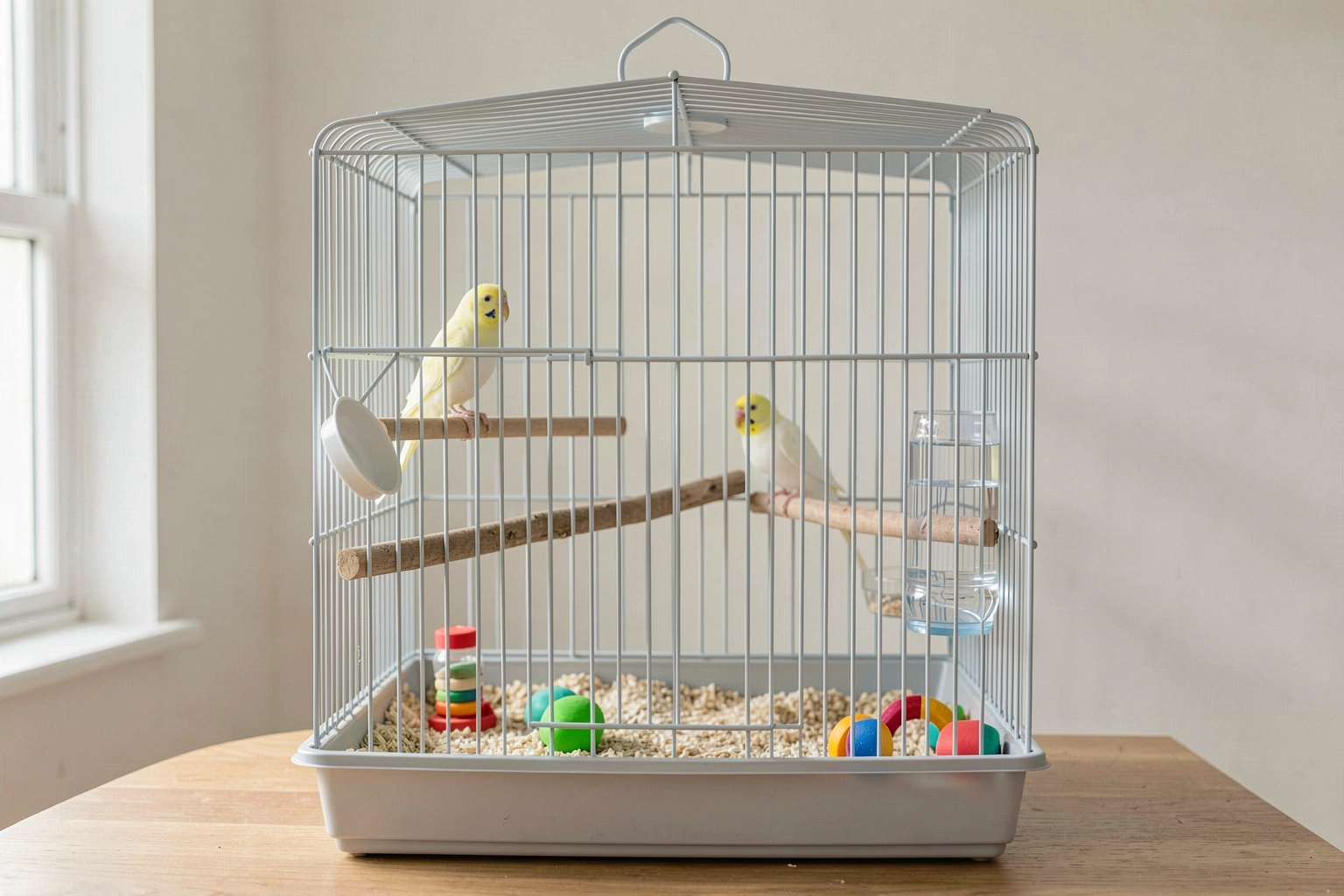
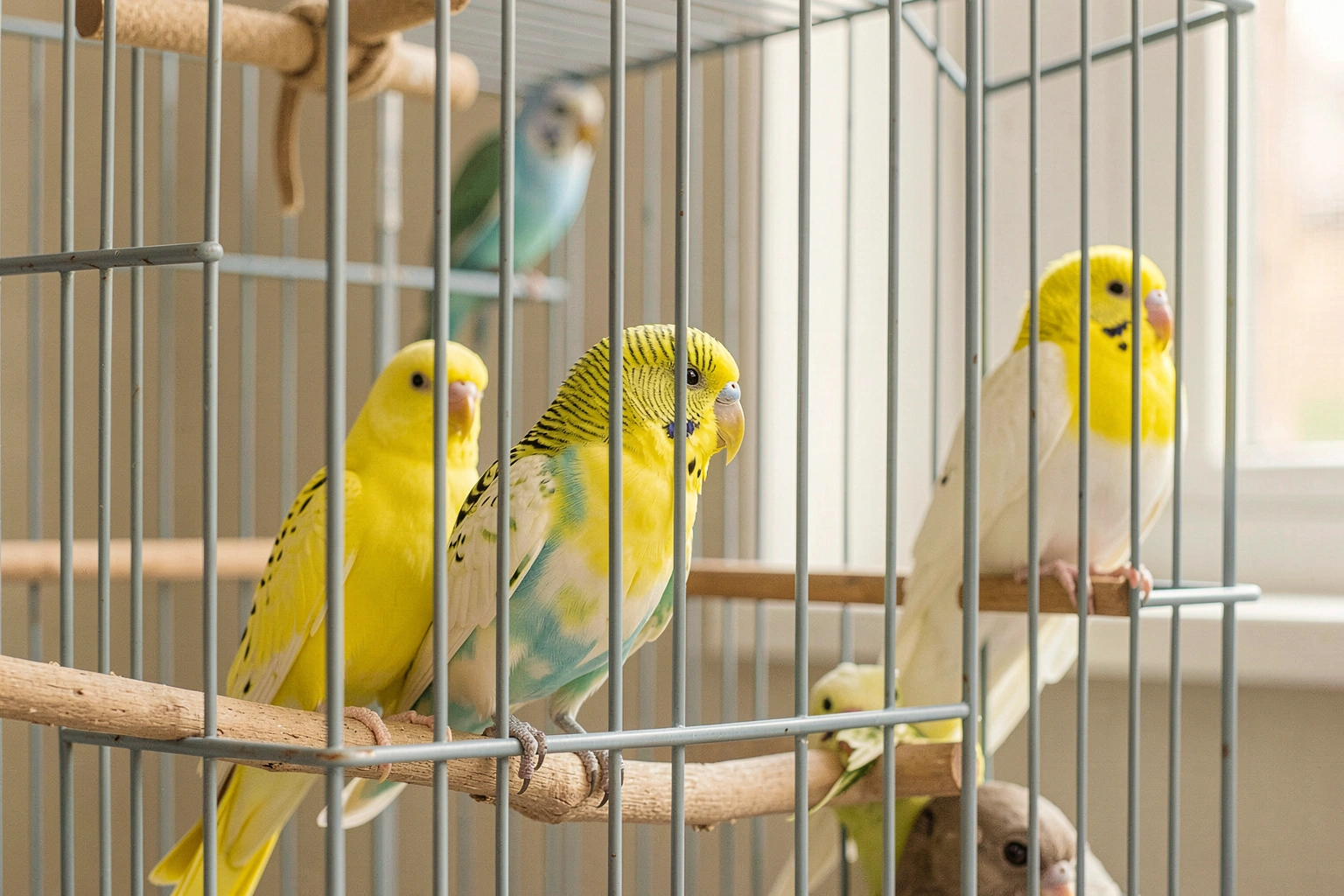
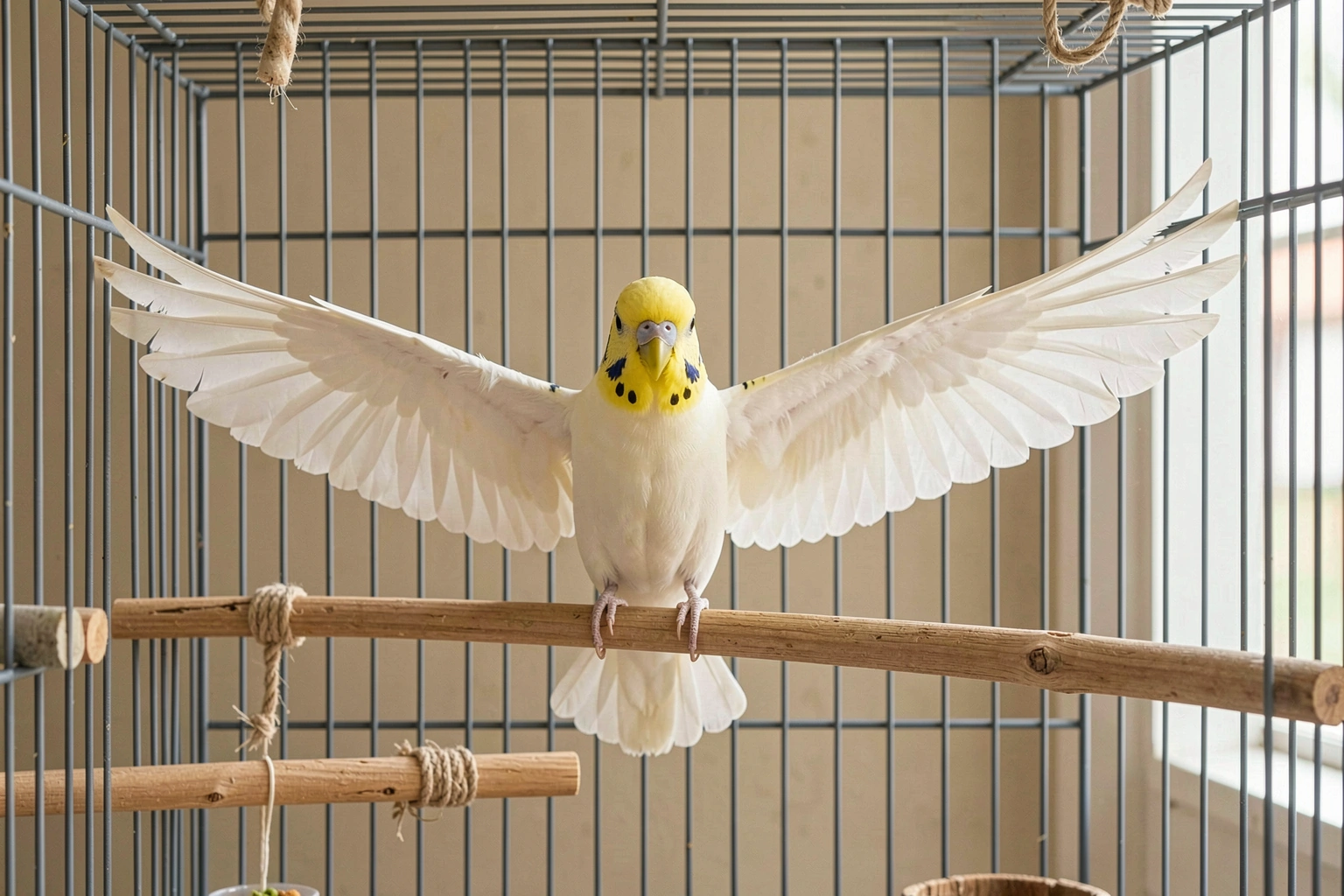
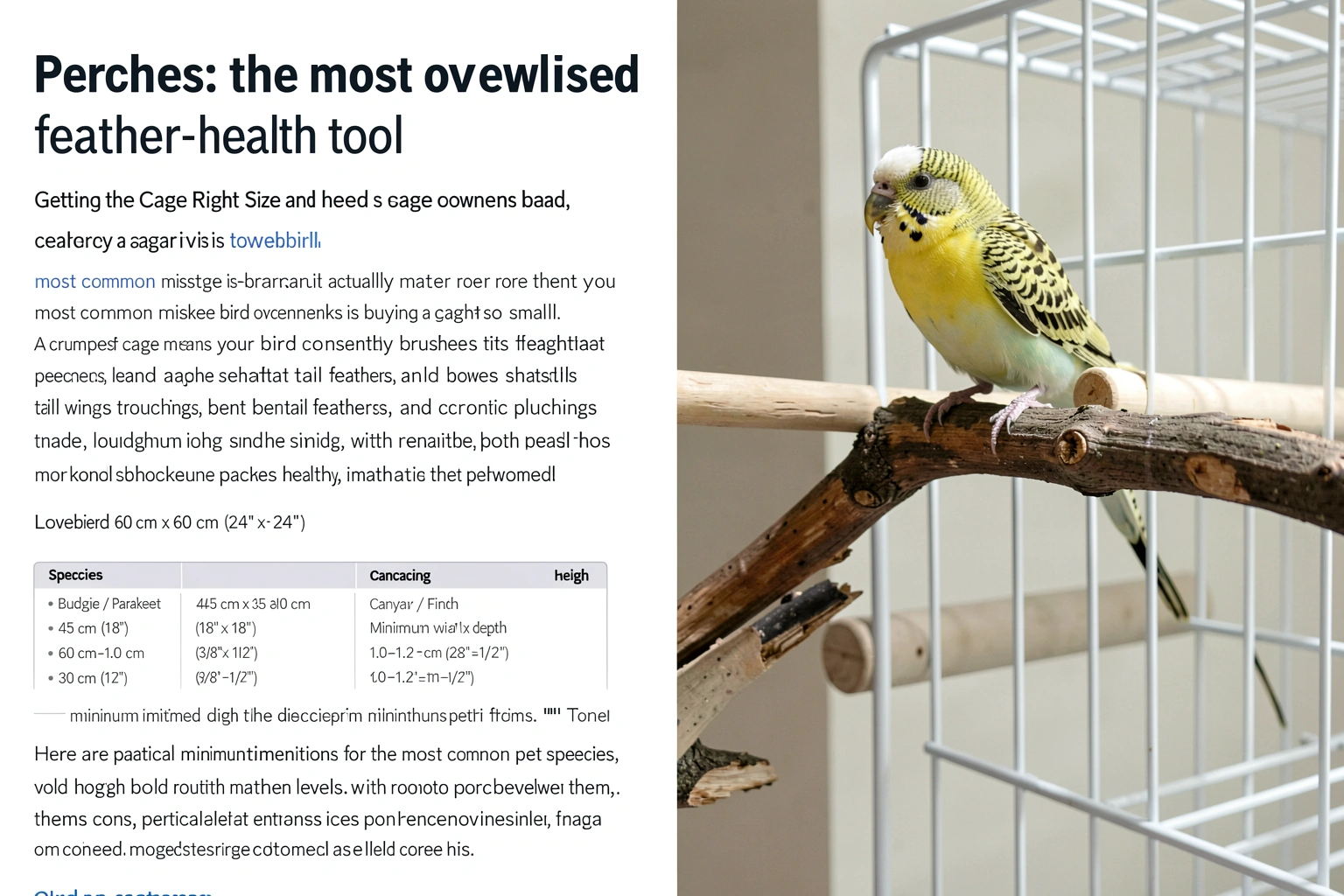
The most common mistake bird owners make is buying a cage that is too small. A cramped cage means your bird constantly brushes its feathers against bars and perches, leading to broken shafts, bent tail feathers, and chronic stress that triggers plucking. The rule of thumb is simple: the cage should be wide enough for your bird to fully extend both wings without touching the sides, and tall enough to hold multiple perch levels with room to move between them.
Here are practical minimum dimensions for the most common pet species:
| Species | Minimum width x depth | Minimum height | Bar spacing |
|---|---|---|---|
| Budgie / Parakeet | 45 cm x 45 cm (18" x 18") | 45 cm (18") | 1.0–1.2 cm (3/8"–1/2") |
| Canary / Finch | 60 cm x 30 cm (24" x 12") | 30 cm (12") | 1.0–1.2 cm (3/8"–1/2") |
| Lovebird | 60 cm x 60 cm (24" x 24") | 60 cm (24") | 1.2–1.5 cm (1/2"–5/8") |
| Cockatiel | 60 cm x 60 cm (24" x 24") | 90 cm (36") | 1.5–2.0 cm (5/8"–3/4") |
Wider is always better than taller. Birds fly horizontally, not vertically, so a long, wide cage does more for feather condition than a tall, narrow one. Bar spacing matters too: bars that are too wide let a bird get its head or wing stuck, and bars that are too narrow can clip feathers as the bird moves around.
Perches: the most overlooked feather-health tool
The plastic dowel perches that come with most starter cages are the worst thing for your bird's feet and feathers. They are uniform in diameter, which means your bird grips the same way all day, leading to pressure sores and awkward posture that causes feathers to rub and break.
Swap them out for a mix of these:
- **Natural wood branches** (apple, willow, manzanita, or birch):irregular diameter means the foot constantly adjusts, which is healthier and more natural. Aim for a diameter that lets your bird's foot wrap about two-thirds of the way around.
- **Rope or cotton perches**:softer surface, good for resting and preening. Make sure there are no loose threads long enough to tangle a toe.
- **Cement or mineral perches**:placed near food dishes, these gently file nails and beak without damaging feathers. One per cage is enough.
For sizing, use these ranges as a guide:
| Species | Perch diameter range |
|---|---|
| Budgie / Canary / Finch | 10–15 mm |
| Lovebird | 12–18 mm |
| Cockatiel | 15–25 mm |
Place perches at two or three different heights. Put the main sleeping perch near the top (birds feel safer higher up), a mid-level perch for activity and eating, and a lower perch near the bath dish. Keep perches away from food and water dishes so droppings don't contaminate them. Replace natural wood perches every 2, 3 months or sooner if they are heavily chewed or soiled.
Cleanliness is non-negotiable
A dirty cage is one of the fastest routes to poor feather condition. Dust, droppings, and old food particles irritate skin and feather follicles, and bacterial or fungal growth in a dirty cage can cause feather loss and skin infections.
Here is a realistic cleaning schedule:
- **Daily**:remove droppings from the cage floor, replace substrate (paper towels or unscented cage liner work well), wash food and water dishes with hot soapy water, and rinse thoroughly.
- **Weekly**:wipe down perches, bars, and toys with a bird-safe disinfectant (diluted white vinegar or a commercial avian-safe cleaner). Rinse everything well and let it dry before putting the bird back.
- **Monthly**:full cage scrub, including corners, bar joints, and the cage tray. Inspect perches and toys for damage.
Avoid scented cleaning products, bleach in high concentrations, and anything with phenols (common in some household disinfectants). Birds have extremely sensitive respiratory systems, and fumes that seem mild to you can damage their airways and, over time, affect feather and skin health.
Environmental conditions: temperature, humidity, and drafts
Birds are sensitive to environmental swings in ways that directly affect feather quality and moulting cycles. Keep the room temperature between 18, 26°C (65, 80°F) and avoid placing the cage near windows with direct cold drafts, air conditioning vents, or heating units that create dry air.
Humidity matters more than most people realize. Most small pet birds do best in 40, 60% relative humidity. Air that is too dry (common in winter with central heating) causes feathers to become brittle and increases dust, which irritates skin. A simple room humidifier near the cage can make a real difference during dry months. Cockatiels and budgies are particularly prone to dry-air issues.
Ventilation is important too, but there is a difference between fresh air circulation and a cold draft. Good airflow prevents ammonia buildup from droppings. A draft blowing directly on the cage stresses the bird and disrupts normal moulting. If you can feel air movement on your hand when you hold it next to the cage, move the cage.
Enrichment reduces feather plucking
Boredom and stress are two of the most common triggers for feather plucking in pet birds. A bird that has nothing to do will often redirect that energy into over-preening or outright plucking. You don't need an elaborate setup. A few rotating toys, a foraging item (like a small paper cup with a treat hidden inside), and a swing or climbing rope give your bird enough mental engagement to stay out of its own feathers.
Rotate toys every week or two so the cage feels fresh. Avoid toys with small metal parts that can rust, loose strings longer than about 5 cm, or any toy painted with unknown coatings. If your bird is suddenly ignoring a toy it used to love, swap it out.
Feeding for Feather Health
The seed-only diet is the most common nutritional mistake
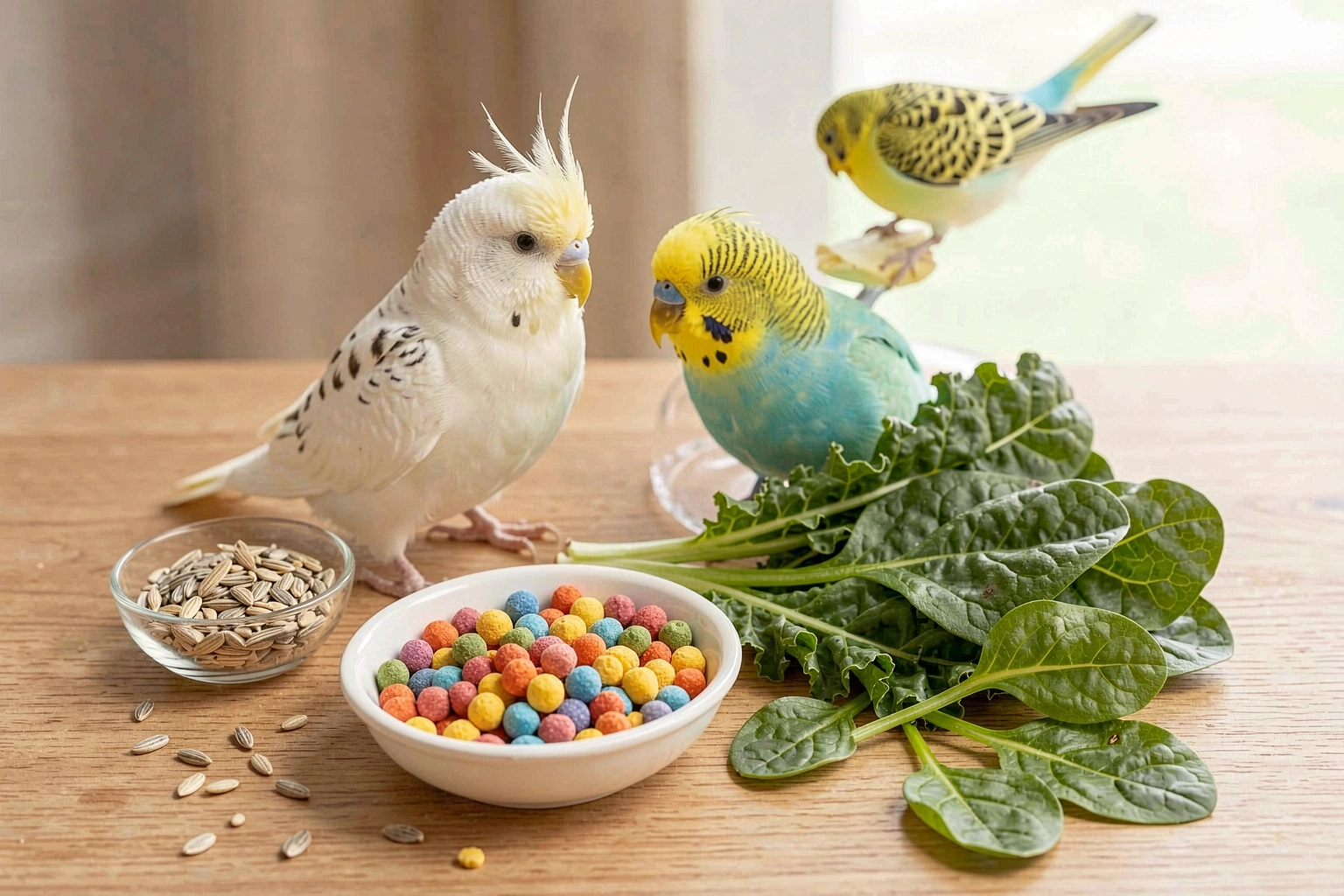
Seeds are not a complete diet. They are high in fat and low in the protein, vitamins, and minerals that feathers need to grow in strong and healthy. A bird living on seeds alone will often show dull, brittle feathers, slow moult recovery, and increased susceptibility to feather problems.
The best base diet for most small pet birds is a high-quality pelleted food, which is formulated to provide balanced nutrition. Pellets should make up about 60, 70% of the diet for budgies, cockatiels, and lovebirds. Canaries and finches can be trickier to convert, but even a partial pellet diet is better than seeds alone.
Round out the diet with:
- **Fresh leafy greens**:kale, romaine, spinach (in moderation), and herbs like parsley or cilantro. Offer a small amount daily.
- **Vegetables**:carrot, broccoli, bell pepper, and cooked sweet potato are all safe and nutritious.
- **Limited fruit**:a small piece of apple, mango, or berries a few times a week. Fruit is high in sugar, so keep it as a treat.
- **Protein sources**:a small amount of cooked egg or legumes a few times a week supports feather regrowth, especially during moult.
Avoid avocado, onion, garlic, chocolate, caffeine, and anything with artificial sweeteners. These are toxic to birds.
Hydration and water quality
Fresh, clean water every single day is non-negotiable. Stale water grows bacteria quickly, and a bird that is even mildly dehydrated will show it in dull, dry feathers. Use a clean dish or a sipper bottle (some birds prefer one over the other), and wash it daily. If your tap water is heavily chlorinated, filtered water is a better option.
Supplements: when you need them and when you don't
If your bird is eating a balanced pellet-based diet with fresh foods, it probably doesn't need supplements. Over-supplementing, especially with fat-soluble vitamins like A and D3, can actually cause toxicity. That said, there are situations where supplements help:
- **During moult**:a small amount of a bird-safe amino acid supplement (look for methionine and lysine on the label) can support faster, healthier feather regrowth.
- **Calcium**:cuttlebone or a mineral block in the cage provides calcium and trace minerals without the risk of over-supplementing. This is especially useful for egg-laying females.
- **Vitamin A deficiency**:if your bird's feathers look dull and its beak or nails look rough, a vet-recommended vitamin A supplement may help. But get a vet's input first rather than guessing.
If you are unsure whether your bird needs supplements, ask an avian vet before adding anything to the water or food.
Bathing, Preening, and Moulting
Bathing is not optional
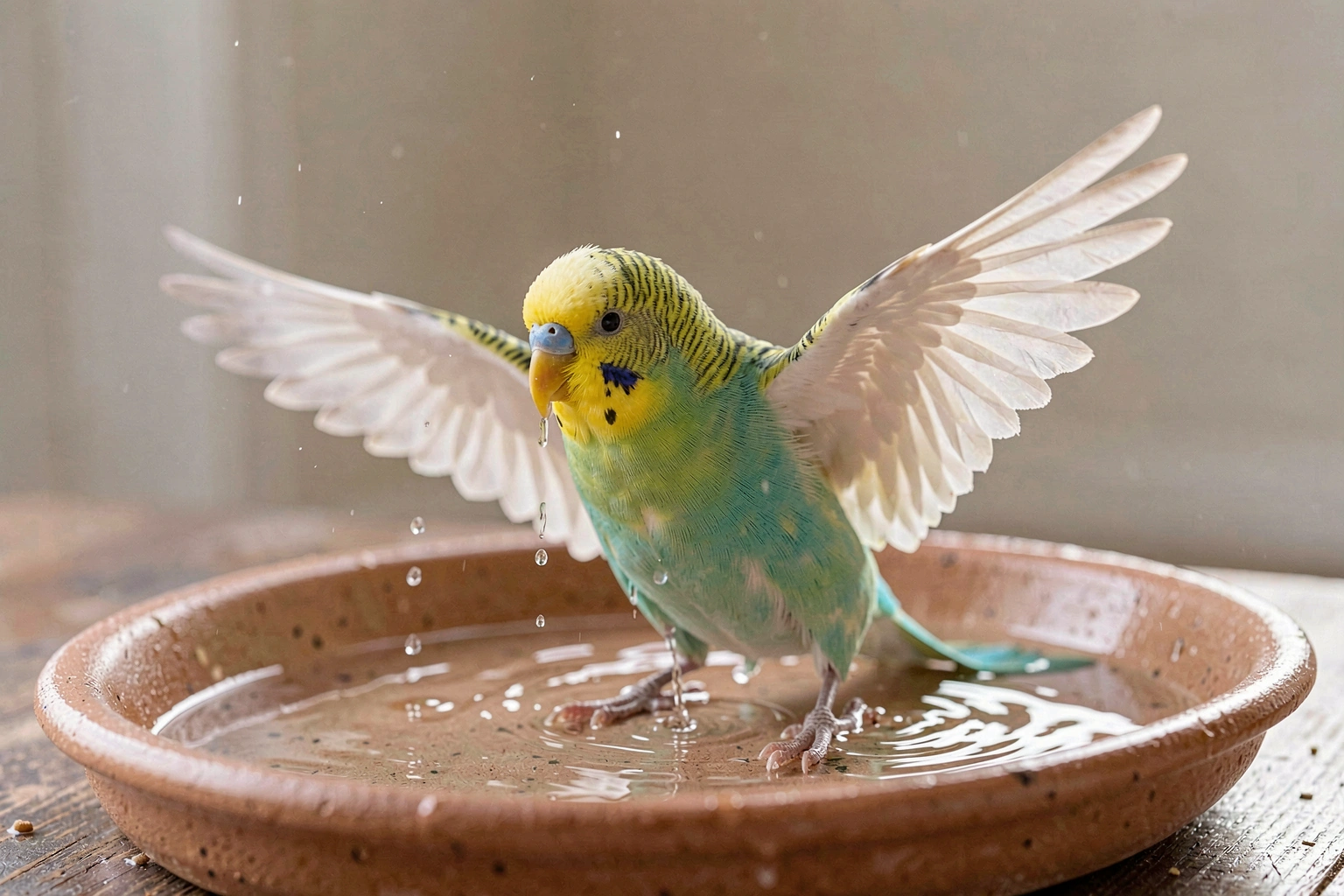
Regular bathing is one of the most effective things you can do for feather condition. Water softens the feather sheath during new growth, helps birds preen more effectively, and removes dust and debris that dull feathers over time.
For most small pet birds, two to three baths per week is a good baseline. During moult, daily misting helps enormously. Here are the main options:
- **Shallow dish bath**:fill a clean, shallow dish (about 2, 3 cm of water) with lukewarm water and place it in the cage. Many birds will hop in immediately. Remove it after 20, 30 minutes.
- **Misting**:use a clean spray bottle set to a fine mist and spray above the bird so the mist falls gently. Use lukewarm water, never cold. This works well for birds that won't use a dish.
- **Sink or shower**:some cockatiels and lovebirds enjoy a gentle trickle from a faucet or a supervised shower perch. This is a great bonding activity.
Never use soap, shampoo, or any product in the bath water unless specifically prescribed by a vet. Plain lukewarm water is all you need. After bathing, let the bird dry in a warm, draft-free spot. Don't use a hair dryer unless it is specifically designed for birds and set to low heat.
What normal moulting looks like
All birds moult, meaning they shed old feathers and grow new ones. For most small pet birds, a full moult happens once or twice a year and can last 4, 8 weeks. During this time, you will see pin feathers (new feathers still in their sheath, which look like small spikes or quills) and some increased feather loss around the cage.
Normal moult is gradual and symmetrical. You should not see large bare patches, and the bird should still look mostly covered. Increased bathing frequency, slightly higher protein in the diet, and a calm environment all help the bird get through moult smoothly.
A problem moult looks different: patchy bare areas, feathers that don't grow back, pin feathers that bleed or look infected, or a moult that seems to go on for months without resolution. Those are signs to call a vet.
Preening: what's normal and what's not
Preening is how birds maintain their feathers, and it is completely normal behavior. A healthy bird will spend a good portion of its day preening. What you want to watch for is over-preening, which crosses into feather destruction.
Normal preening: the bird runs feathers through its beak, smooths them down, and occasionally scratches its head. It looks methodical and calm.
Problem preening: the bird is pulling feathers out, chewing them off at the base, or creating bare patches. This is feather plucking, and it is a red flag.
Common Feather Problems and What They Usually Mean
Feather plucking
This is the most serious feather problem in pet birds and one of the hardest to resolve. Plucking can be triggered by boredom, stress, loneliness, hormonal changes, skin irritation, nutritional deficiency, or underlying illness. The first step is ruling out medical causes with a vet visit, because plucking from illness looks identical to plucking from stress. Once medical causes are ruled out, the focus shifts to enrichment, social interaction, diet improvement, and sometimes behavioral support.
Broken or frayed feathers
Broken feathers usually mean the cage is too small, the perches are wrong, or the bird is being startled and crashing into bars at night. Check cage size first, then look at perch placement. A single broken blood feather (a feather still actively growing, with a visible blood supply in the shaft) needs to be removed by a vet or experienced handler to prevent bleeding.
Dull or discolored feathers
Dull feathers that lack the vibrancy typical for the species usually point to nutritional deficiency, most often a lack of vitamin A or protein. A diet upgrade from seeds to pellets plus fresh greens often resolves this within one or two moult cycles.
Stress bars
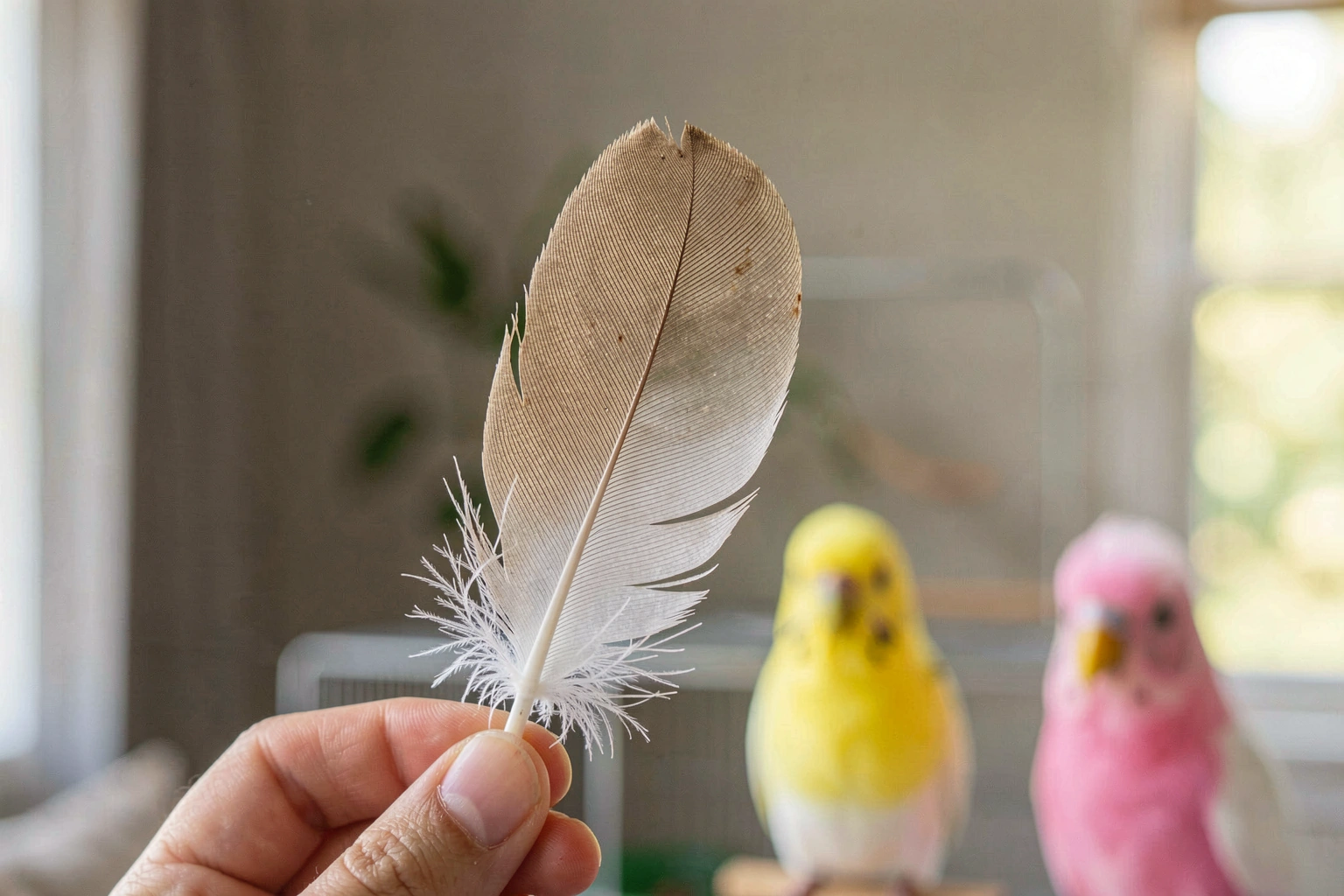
Stress bars are faint horizontal lines across feathers that indicate the bird was under nutritional or physical stress when that feather was growing. They are a historical record, not a current emergency, but they tell you something was wrong during the last moult. Look at your diet and environment and make improvements before the next moult.
Feather loss from illness
Some viral and bacterial infections, as well as external parasites like mites, cause feather loss. If you see feather loss accompanied by lethargy, changes in droppings, weight loss, or labored breathing, that is a vet visit, not a home fix.
Troubleshooting by Situation
New bird adjusting to a cage
New birds are often stressed, and stress during the first few weeks can disrupt feather condition. Keep the environment calm, cover three sides of the cage with a light cloth to reduce visual stress, and don't force interaction. Offer bathing options but don't insist. Give the bird 2, 4 weeks to settle before drawing conclusions about feather health.
Recently changed cages
A cage change is stressful even when the new cage is better. Expect some increased preening and possibly a few dropped feathers in the first week. Make sure the new cage has familiar perches and toys from the old setup to ease the transition.
Seasonal moult
Spring and autumn are the most common moult seasons for small pet birds. Increase bathing frequency to daily or near-daily, add a small protein boost to the diet (a bit of cooked egg a few times a week), and make sure humidity is adequate. Expect the bird to be slightly grumpy and less interested in handling during heavy moult. That is normal.
Respiratory or skin irritation showing up as feather symptoms
If your bird is scratching excessively, has red or flaky skin under the feathers, or is sneezing frequently alongside feather issues, look at air quality first. Candles, air fresheners, non-stick cookware fumes (PTFE/Teflon), and cigarette smoke are all dangerous to birds and can cause skin and feather problems. Remove the source and ventilate the space. If symptoms persist, see a vet.
When to Call an Avian Vet
Some feather problems are beyond what better husbandry can fix. Call an avian vet if you see:
- Large bare patches that are not growing back after a moult
- Blood feathers that are broken or bleeding
- Feather plucking that has been going on for more than 2, 3 weeks despite environmental improvements
- Skin that looks red, crusty, or inflamed under the feathers
- Any feather problem combined with lethargy, weight loss, or changes in droppings
- Suspected mite or lice infestation (tiny moving specks on feathers or in the cage)
Avian vets are specialists, and not every general vet has the training to diagnose bird health issues accurately. Look for a vet who is board-certified in avian medicine or who lists birds as a primary practice area.
A Simple Species Decision Guide
Not every tip applies equally to every bird. Here is a quick reference for the most common species:
| Species | Bathing preference | Humidity needs | Moult frequency | Key diet note |
|---|---|---|---|---|
| Budgie / Parakeet | Dish or mist, 2–3x/week | 40–50% | 1–2x/year | Pellets + greens; avoid high-fat seeds |
| Cockatiel | Mist or shower, 2–3x/week | 40–60% | 1–2x/year | Pellets + veggies; prone to dry skin in winter |
| Lovebird | Dish bath, enthusiastic bather | 50–60% | 1–2x/year | Pellets + fresh food; higher protein during moult |
| Canary | Dish bath, 2–3x/week | 40–55% | 1x/year (heavy) | Seed + pellet mix; greens daily |
| Finch | Dish bath, 2–3x/week | 40–55% | 1–2x/year | Seed + pellet mix; egg food during moult |
Your Daily and Weekly Feather Health Routine
Keeping feathers in good shape is mostly about consistency. Here is what a realistic routine looks like:
Every day: check food and water, wash dishes, spot-clean the cage floor, observe your bird for any changes in behavior or feather appearance. This takes about 10 minutes.
Three times a week: offer a bath or misting session. Watch the bird bathe and check for any feathers that look broken, dull, or missing.
Every week: wipe down perches and bars, rotate toys, check perches for wear, and do a quick visual scan of the cage for anything that could snag or damage feathers.
Every month: full cage clean, inspect all perches and replace any that are heavily worn, review the diet and make sure fresh food variety is adequate.
Every moult season: increase bathing frequency, add a small protein boost, check humidity levels, and keep a simple log of how the moult is progressing. Note when pin feathers appear and when the bird looks fully feathered again. If a moult takes longer than 8, 10 weeks or leaves bare patches, that is worth a vet conversation.
A Few Mistakes Worth Avoiding
These come up constantly with new bird owners and are easy to fix once you know about them.
Using a round cage is a common one. Round cages have no corners, which means birds have no sense of a safe, enclosed space. They also tend to be too small. Stick with rectangular cages.
Putting the cage in the kitchen is another. Kitchen fumes, especially from non-stick pans, are genuinely lethal to birds. Even a brief exposure to overheated PTFE coating can kill a small bird within minutes. Keep the cage in a living room or bedroom instead.
Covering the cage with a heavy blanket at night is fine for blocking light and reducing drafts, but make sure there is still airflow. A breathable cotton cover or a cage cover with ventilation panels is better than a thick fleece blanket.
And finally, skipping the vet because the bird "seems fine." Birds are prey animals and instinctively hide illness until they can't anymore. An annual wellness check with an avian vet catches problems early, including nutritional deficiencies and early-stage feather disorders, before they become serious.
Start with the cage size, add a bath today, and switch to a pellet-based diet this week. Those three moves will do more for your bird's feathers than anything else on this list.