A disabled bird cage setup is not about stripping the cage down to nothing. It is about rethinking every element, from perch height to floor texture, so your bird can reach food, water, and resting spots without climbing, falling, or injuring already-vulnerable feet. Whether your bird is recovering from a leg injury, living with chronic arthritis, or has a permanent mobility limitation, the same core principles apply: lower everything, stabilize every surface, and remove any hazard that a fully mobile bird might shake off but a limited-mobility bird cannot.
Disabled Bird Cage Setup: Step-by-Step Safe Layout Guide

Maya Bennett
21 Apr 2026
Start by understanding your bird's actual mobility needs
Before you move a single perch, spend a day watching your bird closely. What can they do right now? A bird recovering from a broken leg for two weeks needs a different setup than one with lifelong neurological issues or end-stage arthritis. The signs that tell you a bird needs a modified setup include less climbing than usual, reluctance to step up, trouble gripping a perch, spending most of the time low in the cage, and visible changes on the bottoms of the feet like redness, swelling, shiny skin, or sores. Any repeated falling, inability to perch at all, bleeding, or obvious deformity means a vet visit before you do anything else.
Once you know what your bird can and cannot do, you can sort their needs into one of two rough categories. Partial mobility means the bird can still grip and move but tires quickly, slips sometimes, or avoids certain heights. Full or severe limitation means the bird is mostly on the cage floor, cannot grip a standard perch reliably, or cannot climb at all. Your setup choices branch from that assessment, and the rest of this guide will flag which decisions apply to which level.
- Partial mobility: bird still uses low perches, may grip weakly, benefits most from low-set padded perches, anti-slip ramps, and repositioned food and water
- Full or severe limitation: bird lives primarily on the cage floor or a platform, needs soft flooring throughout, and all food, water, and enrichment must be at floor or platform level
- Recovery or temporary disability: setup is similar to full limitation during healing, then gradually reintroduced perch options as the vet clears progress
Pick the right cage size and features before you customize
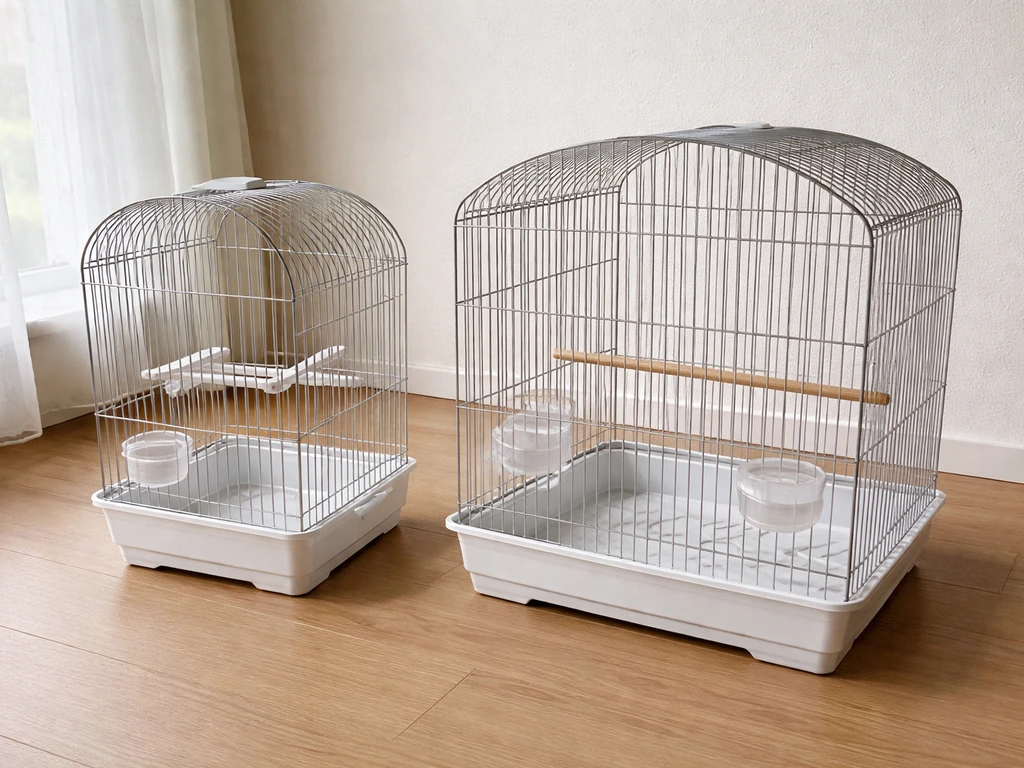
Cage size matters more for a disabled bird than for a healthy one, because floor space partially replaces vertical climbing space. A bird that lives mostly on the bottom needs room to move around, spread wings, and access multiple resources without stacking them on top of each other.
For a budgie or small parakeet, a minimum of 18 by 18 by 24 inches is a reasonable starting point, but wider is better when the bird cannot use the upper two-thirds of the cage. For a more step-by-step bird cage setup, including size decisions and feature choices, follow the guidance on how to set up a bird cage for a budgie.
If you are doing a parakeet bird cage setup for mobility needs, also prioritize low-access perches, safe spacing, and soft flooring For a budgie or small parakeet. If you need a complete walkthrough, you can also use these steps for how to set up perches in bird cage low-access perches. For conures and similarly sized birds, aim for at least 24 by 24 by 36 inches. Larger parrots need proportionally more floor space.
Bar spacing is a safety baseline you cannot skip. The AVMA and animal welfare guidance for bird shelters also notes that bar spacing should not exceed 1/2 inch to help prevent birds poking their heads through [Bar spacing is a safety baseline you cannot skip. ](https://www. avianwelfare.
org/shelters/pdf/NBDsheltershousing_birds. pdf). The wrong spacing causes wing, head, or foot entrapment, which is a serious risk for any bird but catastrophic for one that cannot quickly free itself. Budgerigars, cockatiels, lovebirds, and parrotlets need 0.
5-inch bar spacing. Conures, Poicephalus, caiques, and miniature macaws need 0. 75-inch spacing. African greys, Amazons, and small cockatoos also work at 0.
75 inches. If you are cross-referencing cage options for budgies or conures specifically, bar spacing is the first filter to apply before you look at anything else.
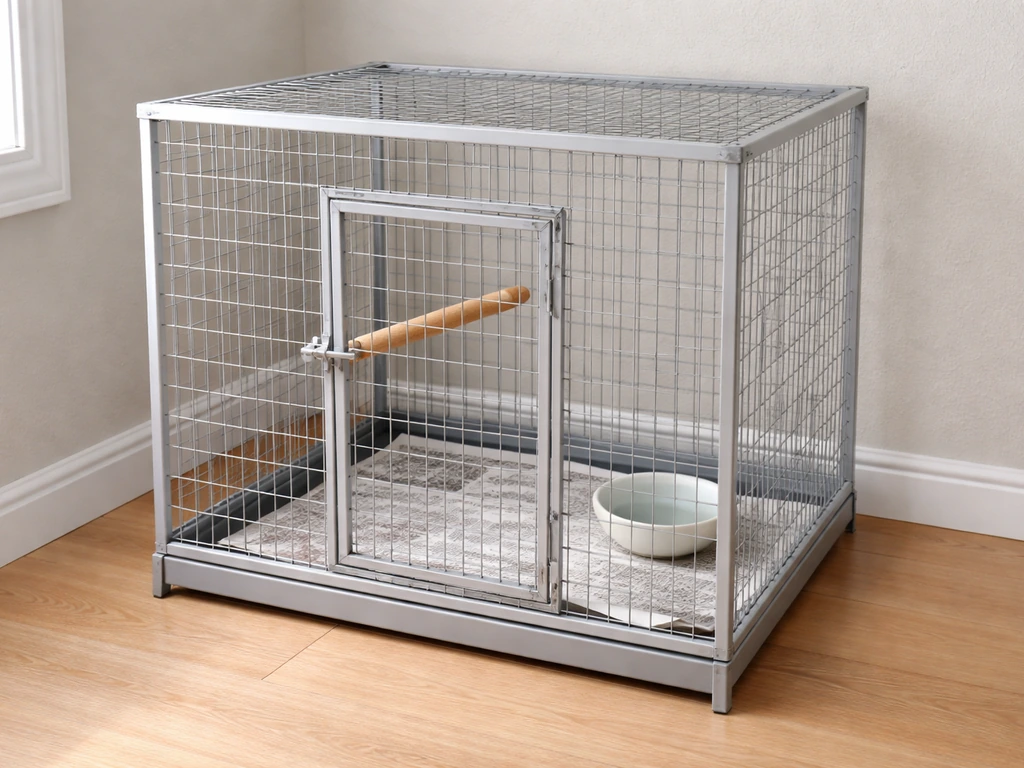
Beyond size and bar spacing, look for these features when choosing or evaluating a cage for a disabled bird. A wide front-opening door (or double doors) makes it easier to reach the bird without them having to navigate to a specific exit. Horizontal bar sections at low heights give a weak-gripping bird something to brace against without needing to climb. A removable grate above the floor pan is important, because most disabled birds should not be living on a grate. A deep pull-out tray makes daily cleaning far easier and less disruptive. Avoid cages with sharp internal protrusions, exposed wire twist-ends, or wheels on the base if the cage will sit in an area where it could roll unexpectedly.
How to lay out the cage: low perches, platforms, ramps, and clear paths
Remove the grate from the floor pan first. Then pull out any perches that are positioned in the upper half of the cage. For a partial-mobility bird, keep one or two perches at the lowest possible positions, no higher than about one-third of the cage height. For a full-limitation bird, remove all standard perches entirely and replace them with a flat platform positioned just a few inches off the floor.
Perch choices that protect weak or painful feet
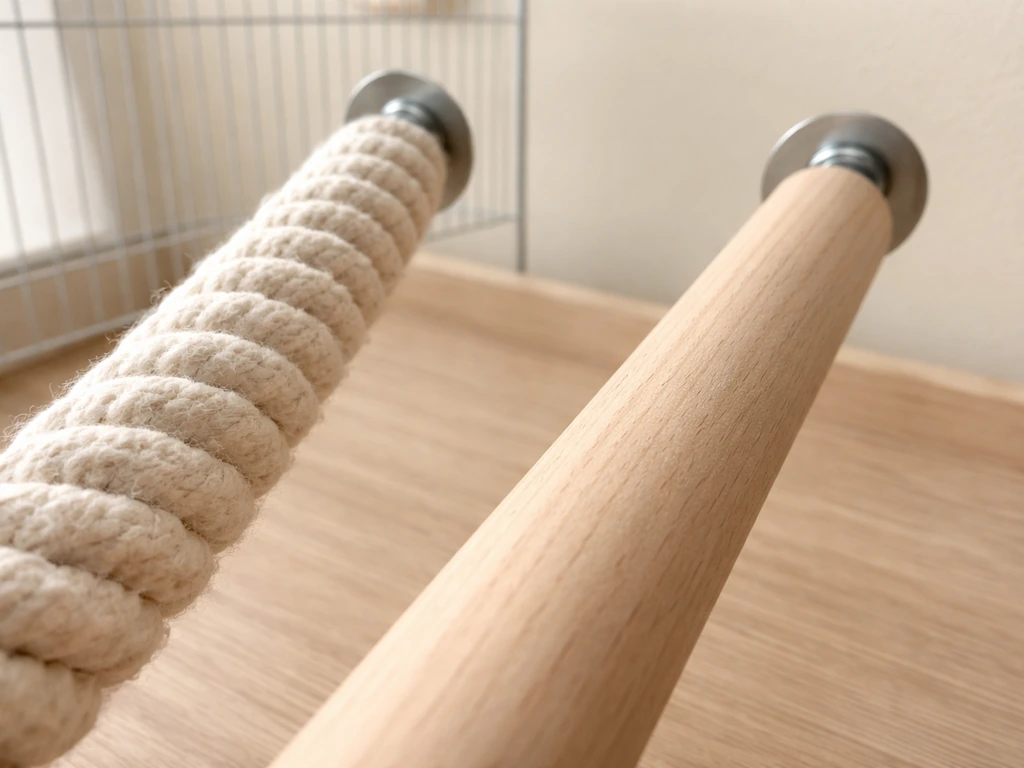
Standard wooden dowel perches are a poor choice for a disabled bird. They are uniform in diameter, which means the foot sits in the same position every time, and that constant pressure on the same spots is exactly what progresses into pressure sores and eventually bumblefoot (pododermatitis).
USDA APHIS (May 2025 AC Aids) describes pododermatitis (bumblefoot) as inflammation and infection of the skin on the bottom of the foot and notes the importance of managing predisposing conditions like arthritis, with prompt consultation with an avian veterinarian [pressure sores and eventually bumblefoot (pododermatitis)](https://www. aphis. usda. gov/sites/default/files/ac-aid-pododermatitis-bumblefoot-in-birds.
pdf). Pododermatitis develops when pressure necrosis leads to bacterial infection, and it can become an abscess quickly if not addressed. Concrete perches are worse because the abrasive texture adds friction and can cause sores on the underside of the foot. What works better: rope or soft-fabric perches that conform to the foot, natural-wood perches with variable diameters, and specifically padded perches designed for birds with arthritis or foot weakness.
Changing perch texture and diameter is a recognized part of managing avian arthritis. Products designed for elderly or mobility-limited birds, such as flat no-slip platform perches, give the foot a broad contact surface that distributes weight rather than concentrating it.
Adding a sleeping platform
A flat shelf or sleeping platform positioned just above floor level is one of the most effective additions you can make for a bird with arthritis or chronic mobility issues. It gives them a stable, non-grip resting surface for overnight sleeping and long rest periods, which reduces the demand on foot and leg muscles. Some bird owners add a small heat source under or near the platform for arthritic birds, which can help with comfort, but check with your vet on appropriate temperature ranges for your species before doing this.
Ramps: angle, traction, and stability
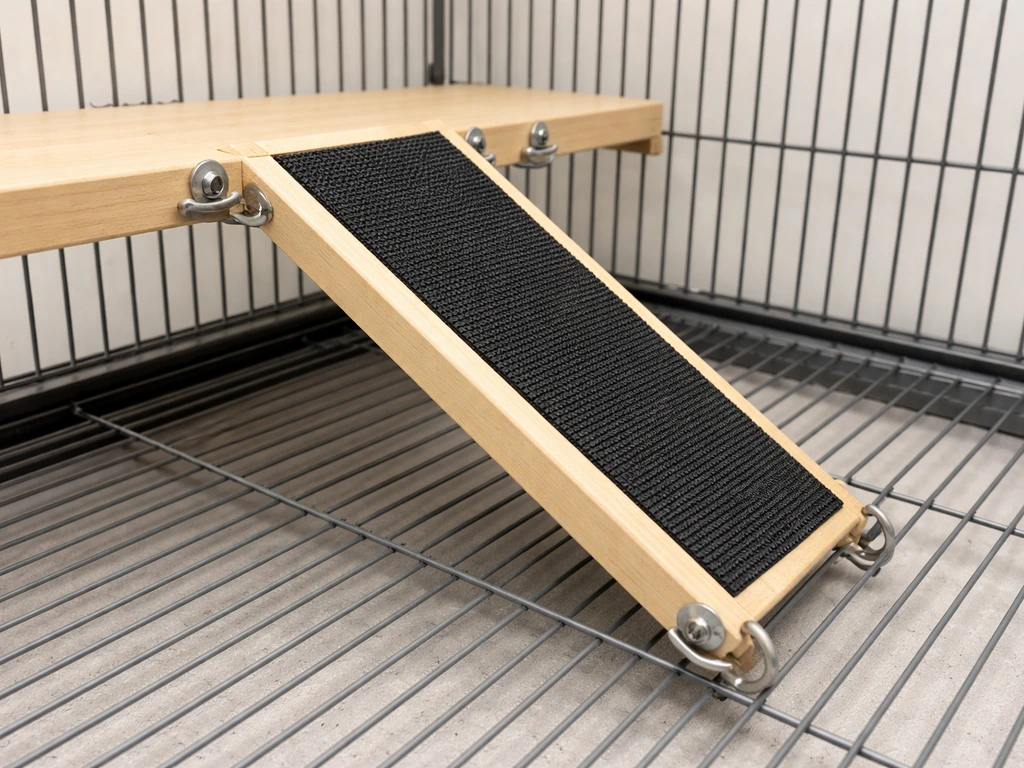
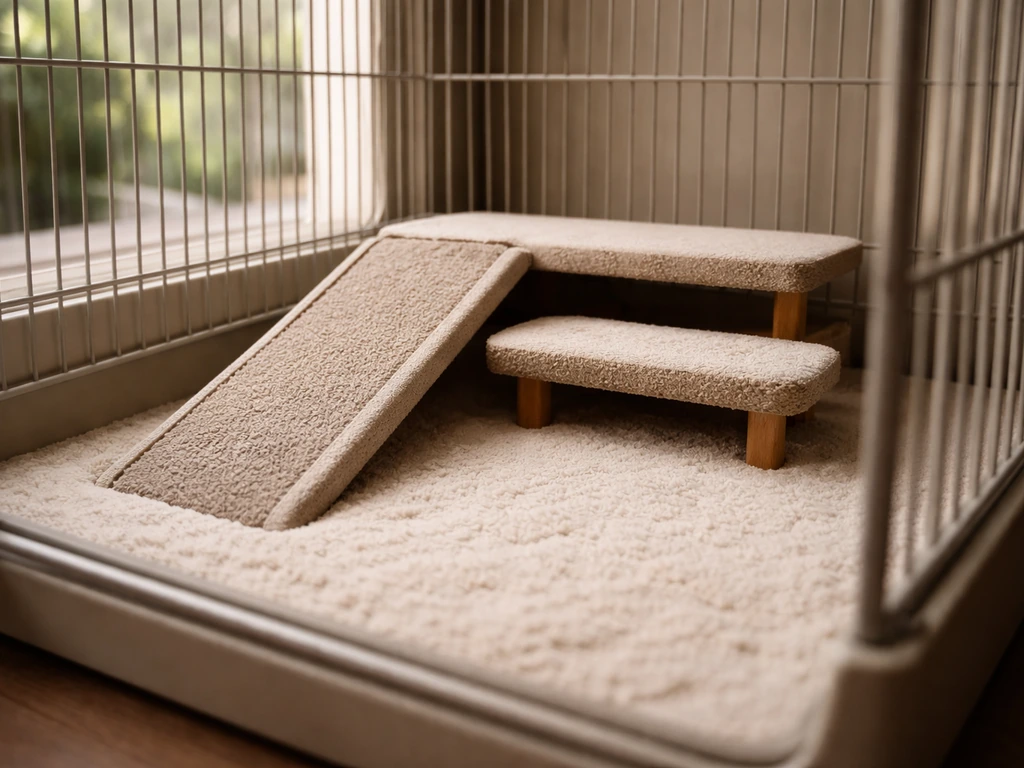
If your bird needs to move between floor level and a low platform or perch, a ramp is safer than a ladder. Ladders require grip and vertical effort that many disabled birds cannot manage reliably. A ramp should be as shallow as possible. The standard accessibility guideline for ramps is a 1:12 slope, meaning one inch of rise for every 12 inches of run.
That is a gentler angle than most cage ladders and dramatically reduces the effort needed to climb and the fall severity if the bird slips. The ramp surface must have traction. Bare wood, smooth plastic, and untreated metal are all slip hazards. Cover ramp surfaces with a grip material: sisal rope wrapped tightly around the ramp, non-toxic rubberized shelf liner cut to fit, or a purpose-made ramp cover that slides over the surface.
Check that the ramp is firmly fixed at both the top and bottom so it cannot shift or tip when the bird climbs it. A wobbly ramp is more dangerous than no ramp.
Clear paths and fall prevention
Keep the cage interior uncluttered at floor and low-platform level. A disabled bird that stumbles into a hanging toy or trips over a heavy foraging block is at real risk of injury. Hang toys from the top of the cage or position them against the side bars, not in the central movement path. If your bird has zero gripping ability and lives entirely on the floor, treat the cage interior the way you would a floor-level enclosure and keep the bottom third clear of anything with sharp edges, small gaps, or unstable bases.
Food, water, and toys at heights your bird can actually reach
Standard cage cups clip to the side bars at whatever height the manufacturer chose, which is usually mid-cage or higher. For a disabled bird, every food and water station needs to be repositioned to the lowest possible mounting point, or placed directly on the floor. If you are tailoring a conure bird cage setup for limited mobility, focus on lower perches, easy access to food and water, and soft, non-abrasive flooring. Dishes on the floor work fine but get contaminated faster with droppings and bedding, so you may need to clean and refill more often. A low-mounted clip cup just a few inches from the floor is a good compromise: it stays cleaner than a floor dish but is still reachable without climbing.
Use heavy ceramic or stainless steel dishes rather than lightweight plastic ones. A bird with limited mobility that tips over their only water source and cannot move away from the wet bedding is in trouble, especially if you are not home. Heavy dishes are also easier to sterilize thoroughly. If your bird has head tremors or beak issues in addition to mobility problems, a slightly deeper water dish helps them drink without needing precise aim.
Toys and enrichment should be placed at a height where the bird can interact with them from their primary resting position, whether that is a low perch, platform, or the floor. Foraging toys that sit flat or hang very low are more accessible than ones that require climbing to reach. Avoid toys with loops, chains, or openings large enough to catch a foot or head, because a disabled bird is less able to free itself quickly. Check all toy hardware for sharp edges before placing anything in the cage.
The right flooring makes a huge difference for feet and skin
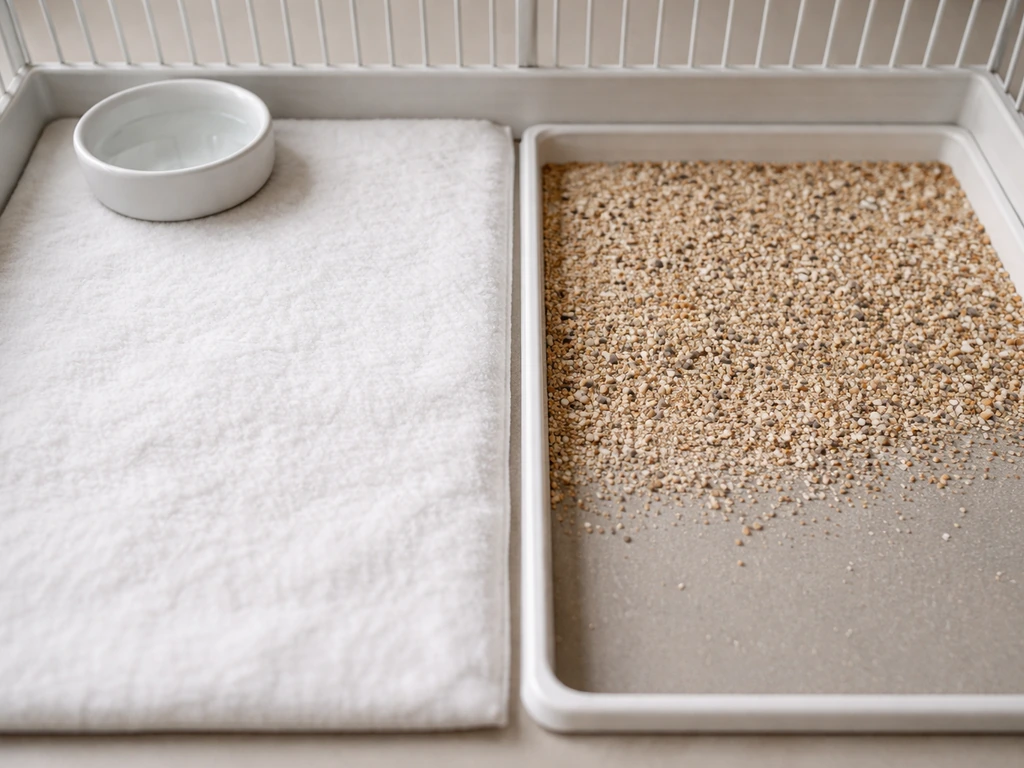
Because a disabled bird spends far more time on the cage floor than a healthy bird, flooring is probably the most important single variable in your setup. The safest daily-use option is plain disposable paper: newspaper, butcher paper, or paper towels layered over the floor pan. This is the recommendation from both veterinary and avicultural sources. Paper is soft, non-abrasive, easy to inspect for droppings and discharge, quick to change, and free of any chemical or particulate risk.
There is a long list of substrates to avoid, especially for a bird with compromised foot health. Wood chips and shavings (particularly cedar and pine, which release aromatic oils) are respiratory and skin irritants. Corncob bedding, clay, cat litter, walnut shell, sand, gravel, and sandpaper cage liners are all either abrasive, dusty, or harbor bacteria in ways that accelerate foot problems. For a disabled bird already at higher risk of pododermatitis, none of these belong in the cage.
If you want a softer surface than bare paper, you can place a folded layer of clean fleece or a small non-slip bath mat cut to fit the floor pan under the paper layer. This gives the bird a slightly cushioned surface while keeping the paper on top as the absorbent, easy-change layer. Wash any fabric liner separately from household laundry using unscented detergent, and replace it as soon as it shows soiling that has soaked through the paper.
| Flooring option | Safety for disabled birds | Ease of cleaning | Recommended |
|---|---|---|---|
| Newspaper / butcher paper | Soft, non-abrasive, easy to inspect | Change daily, no scrubbing needed | Yes |
| Paper towels | Same as newspaper, slightly more absorbent | Change daily | Yes |
| Fleece liner under paper | Adds cushion, non-abrasive | Wash 2-3x per week | Yes, as underlayer only |
| Wood shavings (pine/cedar) | Aromatic oils irritate respiratory tract and skin | Messy, hard to spot-check | No |
| Corncob bedding | Harbors mold and bacteria, non-absorbent for droppings | Difficult | No |
| Sand or gravel | Abrasive on vulnerable feet | Difficult to fully clean | No |
| Sandpaper liners | Severely abrasive, causes sores | N/A | No |
| Cat litter / clay | Dust risk, ingestion risk, abrasive | Difficult | No |
Cage placement, covers, and seasonal protection without blocking access
Where you put the cage affects your bird's health year-round, and it matters more for a disabled bird because they cannot move away from drafts, temperature swings, or bright light the way a healthy bird might. Place the cage against a solid wall on at least one side so the bird has a sense of security without being completely enclosed. Keep it away from windows that get direct afternoon sun, air conditioning vents, exterior doors, and the kitchen. Birds are highly sensitive to airborne fumes, and a disabled bird's reduced activity makes them even less able to handle respiratory stress.
A cage cover at night helps regulate sleep and reduces stress, which matters for any bird recovering from illness or injury. Use a breathable fabric cover, not plastic sheeting. The cover should drape over the top and sides but leave the bottom open or only lightly covered so air continues to circulate. Critically, make sure the cover does not press against the bars in a way that could trap a bird that has moved to a low position or is resting on the floor. Check the first few nights that your bird is not getting tangled in any overhang.
In winter, if your home temperature drops below about 65 degrees Fahrenheit at night, consider a supplemental low-wattage bird-safe ceramic heat emitter positioned at the side of the cage rather than directly above it. Direct overhead heat can dry out respiratory passages. In summer, make sure air can circulate around the cage and that the bird is not sitting in direct sun for hours. A disabled bird that overheats cannot move themselves to a cooler spot.
Cleaning routines that protect sensitive birds
Daily cleaning is non-negotiable. Change all paper liners every day, or more often if your bird has diarrhea or soils the floor heavily. Rinse and refill food and water dishes daily. Wipe down any perches or platforms that have droppings on them. Before you start cleaning, wet the surfaces first rather than dry-sweeping. Dry-sweeping aerosolizes fine particles including dried fecal dust, which is both a respiratory risk for your bird and a potential psittacosis exposure risk for you.
Once or twice a month, do a full cage scrub. Remove all accessories, spray the cage down with hot water, scrub with a non-toxic bird-safe disinfectant soap, rinse thoroughly, and let it dry completely before putting the bird back in. The rinse step is not optional: chemical residues left on surfaces can cause foot and skin irritation, which is the last thing a disabled bird needs. For food and water dishes specifically, the cleaning protocol during any illness period should be daily disinfection, not just rinsing.
For a disabled bird that cannot be moved to a separate temporary enclosure during cleaning, keep a small travel cage or secure carrier set up and ready. Trying to clean a full cage with the bird inside is stressful for both of you and makes it hard to do a thorough job. A few minutes in a safe carrier while you clean properly is far better than a partial clean with the bird present.
Troubleshooting the problems that come up most often
The ramp keeps sliding or tipping
This is the most common ramp problem and it is fixable with secure attachment points. Most cage-clip ramps are not designed to carry the repeated dynamic load of a bird walking up and down. Add a second attachment point at the top of the ramp using a small carabiner or a cable tie looped through the cage bars and the ramp's upper edge. At the bottom, a small strip of non-slip material under the ramp's base keeps it from sliding on the floor pan. Test it by pressing down with your hand before reintroducing your bird.
The bird keeps falling off low perches
If a bird with partial mobility is still falling from even the lowest perches, the perch is probably the wrong diameter or texture. A soft rope perch at the correct diameter for your species lets the foot wrap slightly and provides more grip surface. If falls continue despite perch changes, move to a full platform-only setup and remove the perches entirely. Some birds simply reach a point where perch-gripping is not safe, and a flat platform is the right answer.
Foot sores are developing despite padded perches and soft flooring
First, get a vet check. Active pododermatitis needs medical treatment, not just environmental changes. Once the vet has assessed the situation, look at how long your bird is spending in one position. Inactivity itself increases pressure on the same foot spots. If your bird is mostly sedentary, try gently rotating which foot they tend to stand on by repositioning enrichment items to encourage shifts in weight. Make sure the flooring is changed more than once daily if needed to keep it dry, because wet paper against compromised foot tissue accelerates skin breakdown.
The cage cover is blocking the door or tangling with low-perch accessories
Trim or tuck the cover so it does not hang below the bottom of the cage door opening. A cover that drapes over the front of the door makes it harder for you to do a quick morning check and refill without disturbing the bird. Clip the cover to the top of the cage with binder clips or small clamps so it holds position rather than shifting overnight.
Cleaning is too disruptive for a stressed or fragile bird
Break the daily cleaning into the smallest possible steps and do it at the same time each day so it becomes routine. Sliding out the paper liner from below without reaching into the cage is less startling than full hand-access. For the deep monthly clean, schedule it for a time when the bird is naturally more alert and less likely to be mid-rest. If your bird is on a recovery protocol from a vet, ask specifically whether any cleaning products or disinfectants need to be avoided during the treatment period.
Pest prevention without compromising hygiene or adding irritants
Mites and feather lice are more of a risk in cages where organic debris accumulates, which is a bigger concern when a disabled bird is producing more floor-level mess than usual. The best pest prevention is the daily paper change and the monthly deep clean, not chemical sprays. Never use pesticide strips, flea sprays, or insecticide-treated cage accessories around birds. If you suspect an active mite infestation, cover the cage with a white sheet overnight and check it in the morning for moving red or black specks, then consult your vet for a bird-safe treatment plan.
A quick reference for different mobility levels
| Setup element | Partial mobility | Full or severe limitation | Recovery (temporary) |
|---|---|---|---|
| Perches | 1-2 soft or padded perches at lowest bar position | Remove all perches; platform only | None initially; reintroduce per vet guidance |
| Platform | Optional sleeping platform | Essential; main resting surface | Essential during recovery |
| Ramp | Helpful if moving between floor and platform | Not needed if bird is fully floor-level | Use if bird can weight-bear partially |
| Flooring | Paper liner over optional fabric cushion | Paper liner over fabric cushion; change 1-2x daily | Paper liner; change frequently |
| Food and water height | Lowest clip-cup position | Floor-level or near-floor dishes | Floor-level dishes |
| Toys and enrichment | Low-hung or floor-level | Floor-level, flat foraging items | Minimal stimulation initially, increase gradually |
| Cage cover | Standard night cover, check for tangle risk | Standard night cover, leave bottom open | Standard night cover |
| Deep clean frequency | 1-2x monthly | 2x monthly minimum | As directed by vet; more frequent if immune-compromised |
Every disabled bird setup is a work in progress. Your bird will tell you what is working and what is not through their behavior, the condition of their feet and skin, and how much they are eating and drinking each day. Check the bottoms of the feet at least every few days and watch for any changes in how they move around the cage. When something stops working, adjust it. The goal is a cage where your bird can reach everything they need safely, rest comfortably, and stay clean without depending entirely on physical ability they may not have right now.
FAQ
How do I tell if my disabled bird should move from perches to an all-platform setup?
If your bird keeps losing footing even after you switch to soft or properly sized rope perches, or they spend most of the day back on the floor because stepping onto any perch is consistently avoided, treat that as a signal to remove standard perches and use a flat platform only. Also consider an all-platform setup if you notice new pressure points on the toes after perch changes, since rotating behavior alone may not be enough.
Can I use a grate anyway if I change it often?
For disabled birds, a grate typically still increases risk because it exposes the foot to constant uneven pressure and can cause irritations even when kept clean. If the grate is part of your cage, remove it and use paper or a paper-plus-cushion liner on the floor pan instead. If you are worried about sanitation, focus on daily liner swaps and faster clean routines rather than switching back to grate use.
What ramp material should I use if I cannot find sisal rope or a purpose-made cover?
Use any grip surface that stays non-slip and is easy to remove for washing. A cut-to-fit non-toxic rubberized shelf liner often works well, because it provides traction without abrasive friction. Avoid smooth vinyl or bare plastic, and always secure the ramp at both ends and test stability with firm pressure from multiple points before your bird uses it.
My bird tips over the food or water dish, what’s the best fix?
First switch to heavier stainless steel or ceramic dishes, then choose a mounting option that prevents tipping (for example, a dish placed in a shallow tray or recessed platform, or a low-mounted holder designed for the dish weight). If your bird drinks from a deeper dish due to head tremors, make sure the water surface stays reachable without requiring forward stretching that can shift balance and cause spills.
How often should I disinfect dishes for a disabled bird?
At minimum, rinse and refill daily, then fully disinfect at least during illness periods (and use a thorough disinfect-and-rinse schedule rather than relying on rinsing alone). If your bird’s foot health is fragile, avoid any disinfectant residue by rinsing very thoroughly and letting items dry completely before returning them.
Are there any cage covers or liners I should never use with a disabled bird?
Avoid plastic or tightly fitted coverings that can press against the bars when your bird is resting low, since trapped positioning can increase injury risk. For flooring, avoid sandpaper liners and dusty or abrasive bedding types, even if they seem “clean,” because they can worsen pododermatitis by increasing friction and contamination exposure on already-compromised feet.
What’s the safest way to place toys if my bird cannot maneuver well?
Place toys at the bird’s primary resting height, and keep the bottom third of the cage clear of anything that can snag a foot or head. Also check toy design details, remove any loops or hardware with openings that could catch a toe, and hang toys from the top or side bars so they do not intrude into the central walking path.
Do I need a vet check immediately if I see foot redness?
If you see redness, swelling, shiny skin, or sores, schedule a vet check promptly, especially if there is repeated falling, bleeding, or visible deformity. Environmental changes help, but active pododermatitis can worsen quickly and may need medical treatment, so delaying for only cage adjustments can increase the severity.
How can I reduce dust exposure while cleaning?
Wet surfaces first instead of dry-sweeping, and avoid actions that stir dried fecal material into the air. Use gentle wiping and immediate paper removal, and consider cleaning when the bird is temporarily in a secure travel carrier so you can do a thorough job without prolonged disturbance.
Should I rotate which foot my bird uses, and how do I do it safely?
Yes, but gently and indirectly. Reposition enrichment items and resting preferences to encourage weight shifts, rather than handling the bird’s legs or forcing stepping. If inactivity continues, increase flooring changes to keep surfaces dry, since wet paper against compromised tissue can accelerate breakdown even when enrichment is adjusted.
Next Articles
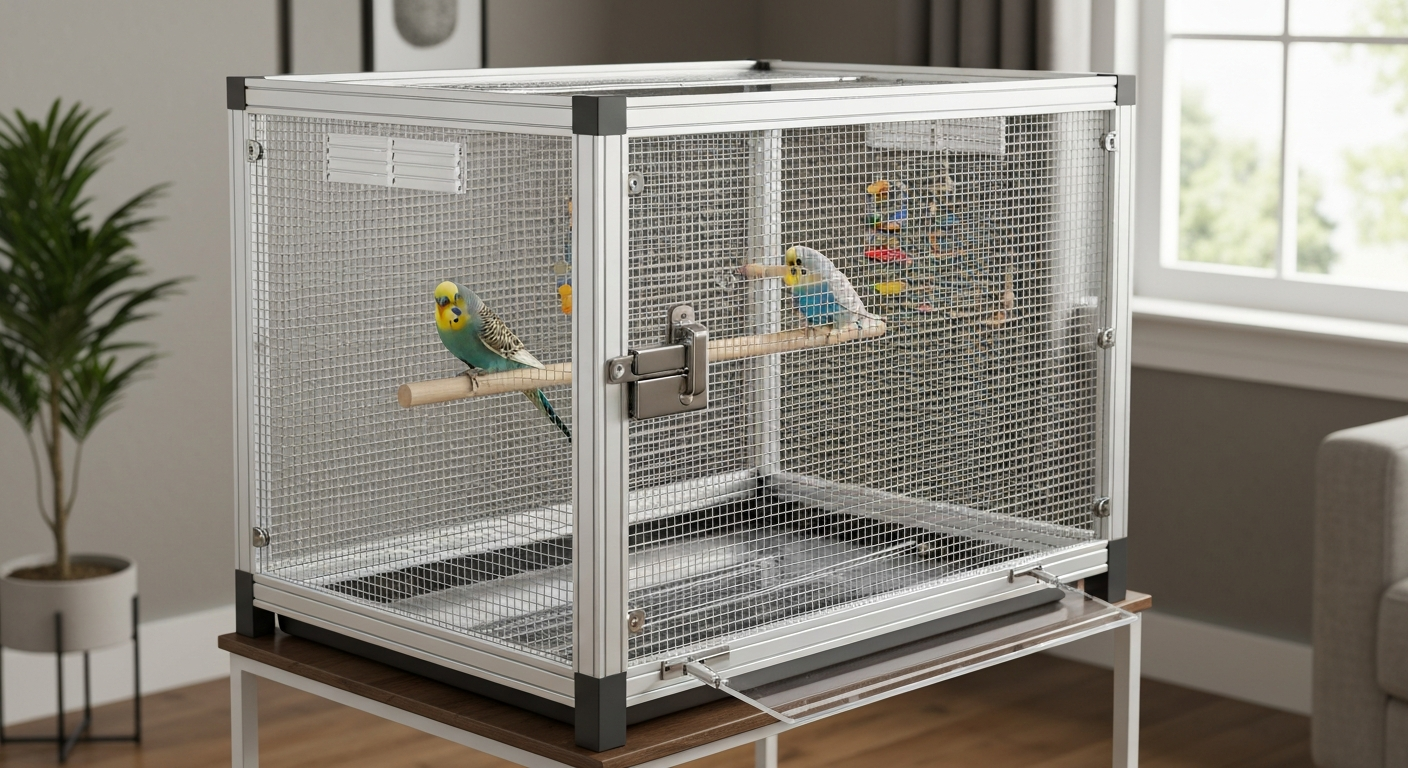
How to Make an Acrylic Bird Cage: Complete Species‑Safe Guide
Step-by-step guide: how to make an acrylic bird cage with species-specific designs, safe materials, templates, and door/
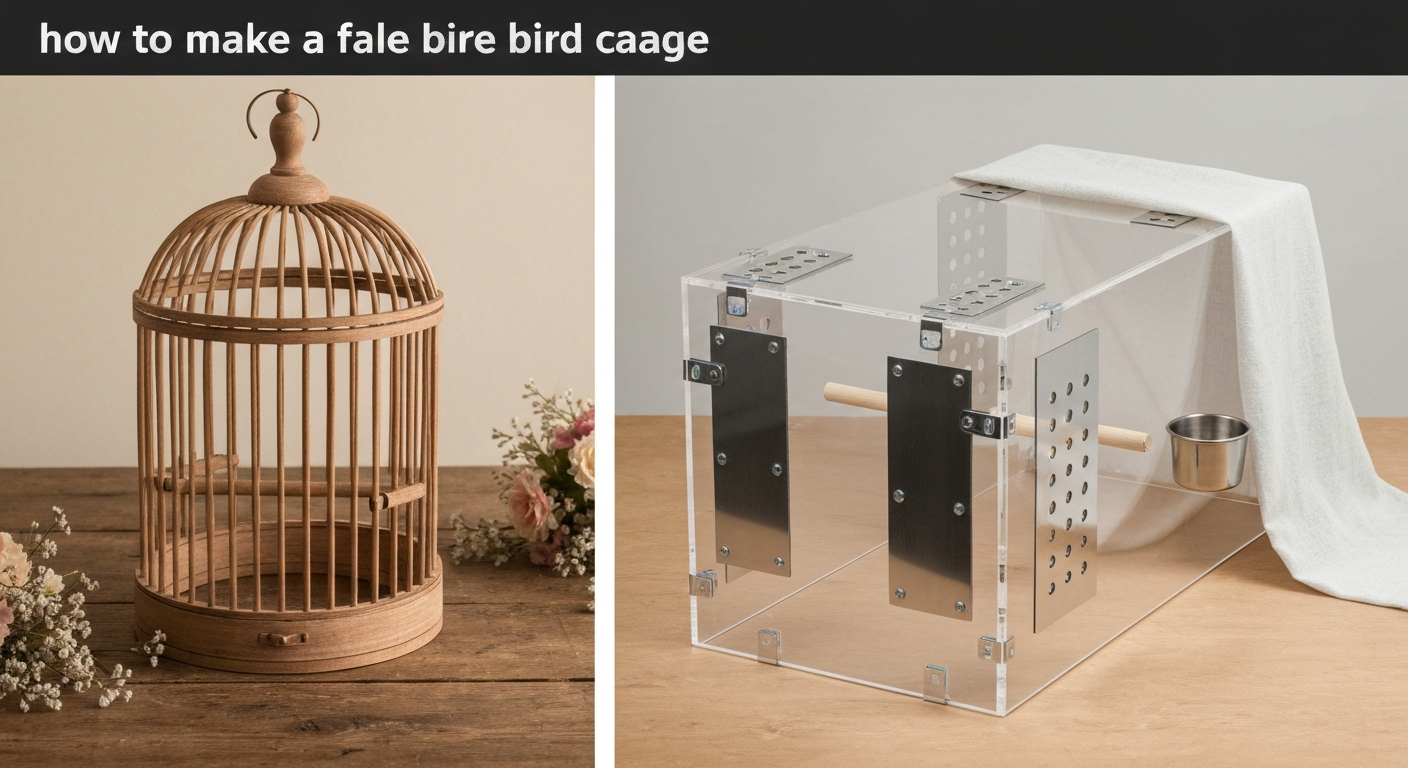
How to Make a Fake Bird Cage: Safe DIY Plans & Rules
DIY guide: how to make a fake bird cage safely, plans, materials, measurements, ventilation, and welfare checks.
How to Make a Temporary Bird Cage Step by Step
Step-by-step DIY guide to build a safe temporary bird cage now, with sizing, bar spacing, materials, and safety checks.